
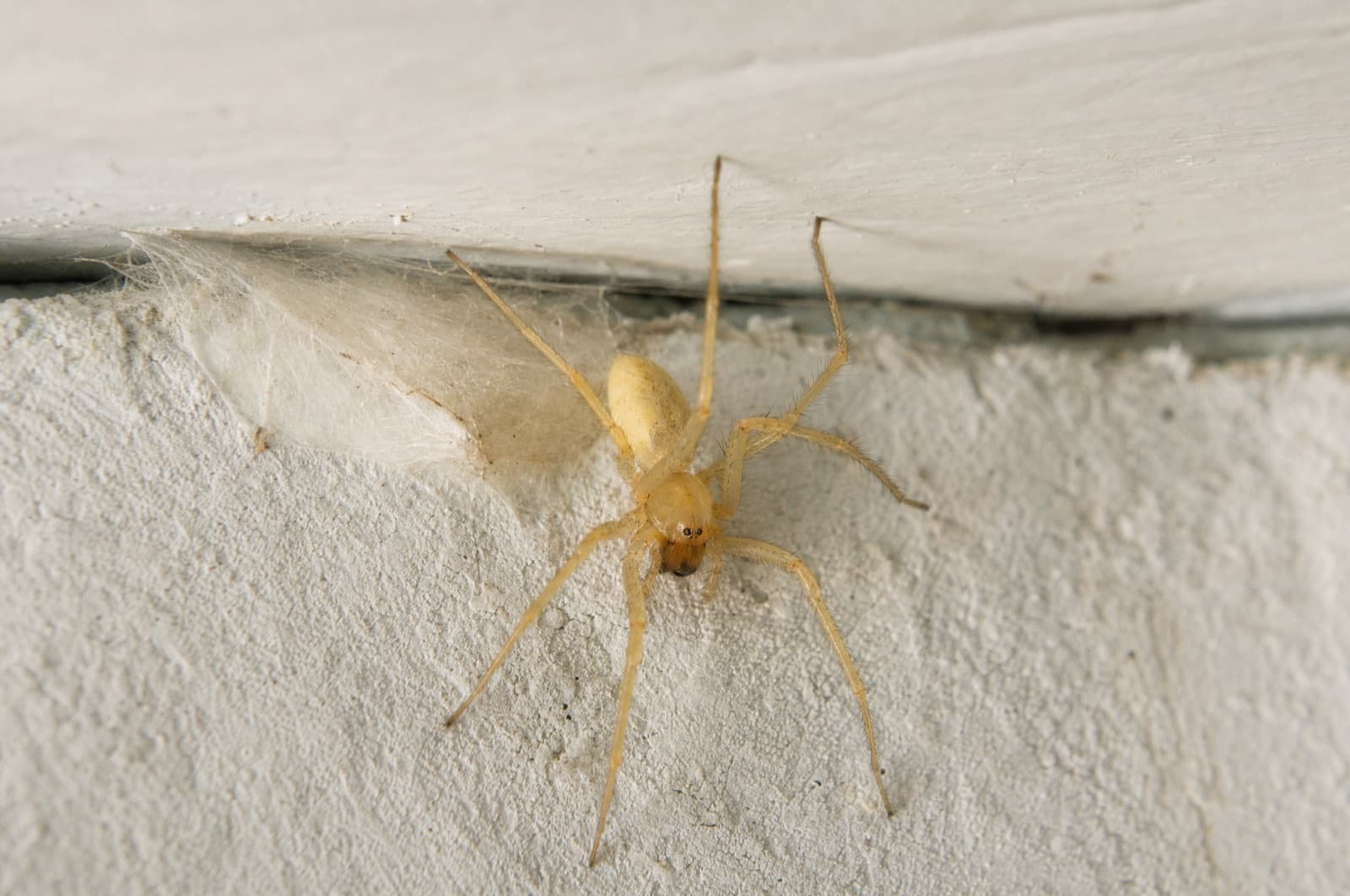
How to Get Rid of Yellow Sac Spiders
At a glance
- Difficulty: Beginner
- Time: An evening for a first sweep; a few minutes per follow-up
- Cost: Low — vacuum, caulk, a flashlight
- Success: Good with consistent sac removal and sealing
Can you DIY Yellow Sac Spider?
The verdict on Yellow Sac Spider DIY
A doable DIY — this is the spider most likely to actually bite you, but the bite is mild, not the recluse-level wound it's often blamed for.
Yellow sac spiders (Cheiracanthium mildei) are nocturnal ambush hunters common throughout the Northeast that build a silken retreat sac in corners and ceiling-wall junctions rather than a capture web. They're one of the more commonly implicated spiders in defensive indoor bites simply because they live in close contact with people — but reviewed case studies find no necrosis in verified U.S. bites. The job is finding and removing the sacs, not treating a dangerous infestation.
The 5 DIY methods — honestly graded
Every approach graded for this species, in IPM order — prevention first, chemistry late. Pick a method to see how it works, the steps, and what it actually takes.
Prevention / Exclusion
Works wellThe most effective long-term fix — removes their retreat sites and closes the gaps they enter through.
Yellow sac spiders build a silken sac retreat rather than a capture web, tucked into corners, behind picture frames, and along sills. Vacuuming those sacs out and sealing the cracks they use to move between outside and in removes both shelter and entry.
Best for: Breaking the cycle of sacs reappearing in the same spots
Vacuum out the sacs
Check wall-ceiling corners, behind hanging pictures, window sills, and along exterior siding for small silken sacs and vacuum them up.
TipA flashlight at a low angle makes the silk retreats easier to spot against a wall.Seal the gaps
Caulk cracks around windows, doors, and siding, and reduce exterior lighting near entry points that attracts the insects they hunt.
Tools & materials
Why DIY falls short here
Not scare tactics — the specific, proportionate reasons a home attempt can stall for this species.
Misdiagnosis drives overreaction
Michigan State University Extension notes yellow sac spider bites are 'sometimes misdiagnosed as brown recluse bites by health care providers,' which fuels unnecessary fear and, sometimes, unnecessary chemical treatment.
Hidden sacs get missed
Sacs tucked into upper corners, behind furniture, or in wall-ceiling voids are easy to overlook — incomplete removal lets the population persist even after an initial sweep.
One-and-done removal
A single vacuuming pass catches the sacs you can see, but new spiders can move in from outside if entry points aren't also sealed.
How risky is it, really?
An honest read — most nuisance species are genuinely low risk, and we say so.
Yellow sac spiders bite more readily than most household spiders because they share close quarters with people, but the bite is a mild, self-limiting local reaction — not the necrotic wound long (and wrongly) attributed to it. This is one of the spiders most often mistaken for a brown recluse, which isn't established in New Hampshire at all.
- Painful initial bite with local redness, swelling, and itchingOccasional
A review of 20 verified U.S./Australian bites found NO necrosis; a broader review of 39 international bites found only one mild case, in a different European species
American Journal of Tropical Medicine and Hygiene
- Mild systemic symptoms (fever, malaise, nausea)Rare
Possible but uncommon, and much less severe than a black widow bite
American Journal of Tropical Medicine and Hygiene
- Misdiagnosis as a brown recluse biteOccasional
Documented pattern in the medical literature that fuels unnecessary fear
Michigan State University Extension
Persistent Sac Spiders? Get an Inspection.
Most yellow sac spider problems clear up with removal and sealing, but a persistent population is worth a professional look. Anchor Pest Services serves southern and central New Hampshire, family-owned since 2017, NH license #782664.
Call a pro when…
- Sacs keep reappearing despite regular removal and sealing
- You want entry points identified and sealed professionally
- A bite site is worsening and you want it distinguished from other causes (see a physician first for the bite itself)
General Pest Control
Most yellow sac spider problems resolve with consistent sac removal and sealing. A pro is worth it for a persistent population despite your own efforts, or if you'd rather have entry points professionally sealed and treated in one visit.
Keep them out
- Vacuum silk retreat sacs from corners and sills regularly, especially in late summer
- Seal cracks around windows, doors, and siding
- Reduce exterior lighting near entry points to cut down on prey insects
Yellow sac spiders in New Hampshire
Yellow sac spiders are established throughout much of the Northeast, including New Hampshire, and are most active as nocturnal hunters through the warmer months, building retreat sacs as cooler weather sets in ahead of the first hard frost, about October 19–29 in Manchester (NOAA). A late-summer sweep for sacs, paired with sealing, is the highest-leverage window.
Peak season
Summer through early fall
First-frost anchor
Manchester first hard frost ~Oct 19 (50%) / Oct 29 (80%), NOAA 1991–2020
Make sure it's a Yellow Sac Spider
Two quick detours worth taking — confirm the ID, then learn what drew it in so it doesn't come back.
Frequently asked
Sources & further reading(4)
- [1]Michigan State University Extension — Yellow Sac Spiders
Misdiagnosis as brown recluse, hidden-retreat behavior
extensionverified 2026-07-13 - [2]American Journal of Tropical Medicine and Hygiene — Verified bite case review
No necrosis in 20 verified U.S./Australian bites; systemic symptom severity
academicverified 2026-07-13 - [3]Virginia Cooperative Extension — Sac Spiders (ENTO-73)
Species biology and behavior
extensionverified 2026-07-13 - [4]Spider Bytes — Yellow Sac Spiders (Family Eutichuridae)
Retreat sac behavior and identification
academicverified 2026-07-13
Written & reviewed by
VerifiedDaniel Brady
NH-Licensed Pesticide Applicator · License #782664 (NHDAMF, RSA 430)
Daniel Brady is the New Hampshire–licensed applicator behind Anchor Pest Services, a family-owned pest control company serving the Manchester area since 2017.
Last updated July 2026
Other species you can tackle
Same category — the dot shows each one's DIY verdict at a glance (green = friendly, amber = doable with care, red = call a pro).
Professional Pest Control
Persistent Sac Spiders? Get an Inspection.
Most yellow sac spider problems clear up with removal and sealing, but a persistent population is worth a professional look. Anchor Pest Services serves southern and central New Hampshire, family-owned since 2017, NH license #782664.
- Targeted entry-point sealing
- NH-licensed applicators (#782664)
- Free inspection — same-day service across southern NH
NH License #782664 · No obligation · We answer in person