
Skip to content
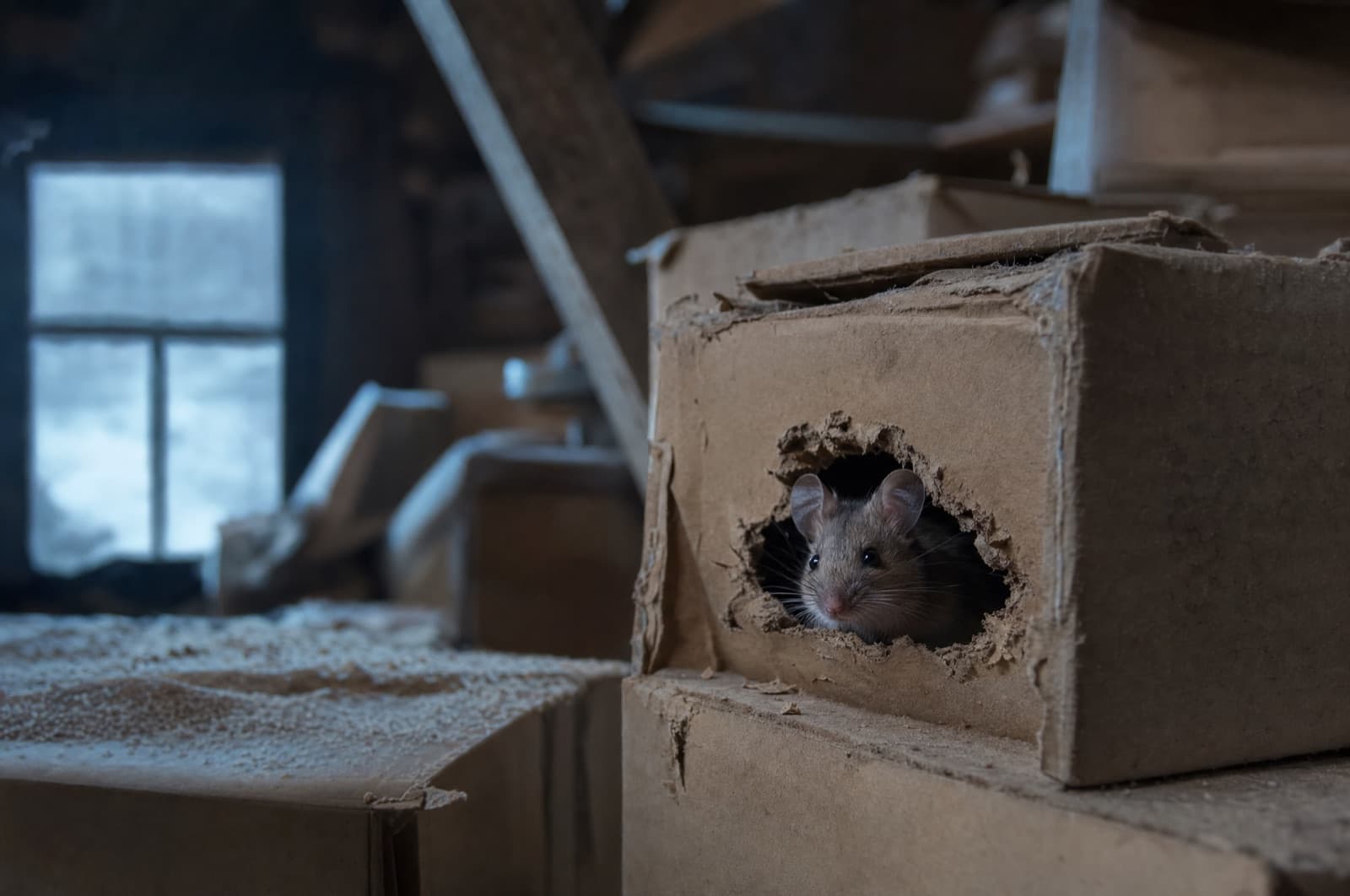
A house mouse in a gnawed cardboard storage box in a cold New Hampshire attic
Daniel Brady · NH-Licensed Pesticide Applicator · License #782664
Reviewed by Daniel Brady

Do pests carry outdoor germs into homes during winter?

Caution — rodents specifically, not insects generally
Caution, and the concern is specific rather than general.Rodents — mice and rats — can carry documented pathogens including hantavirus, Salmonella and leptospirosis, transmitted mainly through contact with their urine, droppings and nesting material, or by inhaling dust stirred up from dried waste. Overwintering nuisance insects like cluster flies, Asian lady beetles and stink bugs are not known to carry diseases of medical importance to humans, so the honest winter health concern in this hub narrows almost entirely to rodents.

At a glance

  • The verdict: Caution — rodents specifically, not insects generally
The honest answer

The short of it

The verdict
Caution — rodents specifically, not insects generally

Rodents can carry documented pathogens like hantavirus indoors through their droppings and urine; overwintering nuisance insects such as cluster flies are not known to carry human disease.

The health angle

Named, proportionate — and routed to a doctor

Rodent-borne pathogens specifically — hantavirus, spread when dust from dried rodent droppings, urine or nesting material is stirred into the air and inhaled, plus Salmonella and leptospirosis from contact with rodent waste (CDC). Overwintering nuisance insects such as cluster flies are documented as not carrying diseases of medical importance to humans (Penn State Extension).

Caution
Who is at risk
  • Anyone cleaning up a heavy rodent presence in an enclosed, poorly ventilated space (attic, shed, cabin, garage) without ventilating first
  • Immunocompromised individuals and those with existing respiratory conditions
  • Households where rodent droppings accumulate unnoticed over a winter before being disturbed
Precautions
  • Don't sweep or vacuum dry rodent droppings directly — that can stir contaminated dust into the air
  • Ventilate an enclosed space (open windows or doors, leave the area) for at least 30 minutes before cleaning it
  • Wash hands thoroughly after handling firewood, traps, or anything with likely rodent contact
  • Prioritize rodent exclusion so droppings and contamination don't accumulate in the first place
When to seek care

Fever, muscle aches or shortness of breath appearing days to weeks after exposure to rodent droppings or a rodent-infested space warrant prompt medical attention — see a doctor and specifically mention the rodent exposure, since early hantavirus symptoms can resemble the flu and are easy to miss without that context.

Health guidance from: CDC — About Hantavirus; CDC — Hantavirus Prevention; Penn State Extension — Cluster Flies

In depth

The full picture

01

What's actually documented, and what isn't

It's tempting to assume that anything that's been outside all winter and then gets into your house brings some general germ risk with it, but the evidence doesn't support treating winter pests as a uniform category here. CDC documentation is specific: rodents can carry hantavirus, Salmonella and leptospirosis, transmitted through contact with urine, droppings and nesting material, or by inhaling airborne particles from dried waste that's been disturbed. That's a real, named, well-documented risk with a clear transmission pathway.

The overwintering nuisance insects covered elsewhere in this hub — cluster flies, Asian lady beetles, stink bugs, boxelder bugs — don't carry an equivalent risk. Penn State Extension states plainly that cluster flies "are not known to carry any diseases of medical importance to humans." They may leave small excrement spots on windowsills or walls, which is a nuisance and a cleaning issue, not a documented health hazard.

02

Why rodents are the real concern, not the overwintering insects

The distinction matters because it shapes where any actual caution should go. Rodent droppings, urine and nesting material accumulate in exactly the kind of undisturbed, enclosed spaces — attics, wall voids, storage areas — that a New Hampshire winter creates plenty of, and CDC guidance treats disturbing that accumulated material (through sweeping, vacuuming, or handling it without ventilation) as the actual moment of risk, not merely the presence of rodents somewhere in the structure.

Overwintering insects, by contrast, don't accumulate waste in a way that carries a documented pathogen risk, and handling or cleaning up after them doesn't call for the same precautions. This is a case where narrowing the concern to the right pest, rather than treating "winter pests" as one undifferentiated risk, is the honest and useful answer.

03

What this means for winter cleanup

The practical guidance here is general prevention, not a specific cleanup protocol — CDC guidance on rodent-contaminated areas involves ventilating before disturbing material and avoiding actions (sweeping, vacuuming dry material) that put dust into the air, plus routine handwashing after contact with anything a rodent may have touched, including firewood and traps. The more effective long-term step is preventing the accumulation in the first place: sealing entry points and addressing any rodent presence promptly, which is covered in depth in this hub's exclusion and monitoring content, keeps this from becoming a cleanup question at all.

Key takeaways
5 points
  • Rodents specifically can carry hantavirus, Salmonella and leptospirosis via droppings, urine and nesting material — a documented, named risk.
  • Overwintering nuisance insects (cluster flies, lady beetles, stink bugs) are not known to carry diseases of medical importance to humans.
  • The moment of actual risk is disturbing accumulated rodent waste in an enclosed space, not simply having rodents somewhere in the structure.
  • Ventilate before cleaning an area with heavy rodent droppings, and avoid dry-sweeping or vacuuming them directly.
  • Preventing rodent entry in the first place is more effective than any cleanup step — this is a health note, not a diagnosis or a cleanup protocol.
New Hampshire context

Why this matters for woods-adjacent New Hampshire homes

The rodent that carries hantavirus in the Northeast is the deer/white-footed mouse (Peromyscus), and CDC identifies that genus -- not the common house mouse -- as the hantavirus-relevant group here. Peromyscus is exactly the mouse that moves indoors on rural and wooded New Hampshire properties as cold sets in; wildlife-damage research (ICWDM) notes these native mice don't hibernate and simply push toward warm structures once temperatures drop. Manchester's first hard frost typically lands October 19 to 29 (NOAA), the stretch when that indoor movement peaks.

So the practical caution is highest in the settings a New Hampshire winter creates plenty of: undisturbed cabins, sheds, garages and attics where Peromyscus droppings accumulate unseen. Follow CDC's guidance -- ventilate the space first, then wet-clean rather than dry-sweep or vacuum, which would aerosolize Sin Nombre virus. Sealing entry points before the fall frost window is what keeps that accumulation from happening at all.

  • NH-licensed #782664

    Southern New Hampshire

  • Family-owned

    Since 2017

  • Honest routing

    Even when it isn’t us

We serve these communities

ManchesterNashuaConcordDerryBedfordSalemHudsonAmherst

The real health risk narrows to rodents, not bugs.

Prevention beats cleanup — sealing entry points keeps droppings from accumulating at all. If rodents are already active in your home, exclusion is genuinely our job.

Follow-up questions

Frequently asked

Sources & citations(3)
  1. CDC — About Hantavirus

    Hantavirus transmission pathways and symptoms

    govverified 2026-07-16
  2. CDC — Hantavirus Prevention

    Ventilation before cleanup; avoiding dry-sweeping/vacuuming accumulated rodent waste; rodent exclusion

    govverified 2026-07-16
  3. Penn State Extension — Cluster Flies

    Cluster flies not known to carry diseases of medical importance to humans

    extensionverified 2026-07-16

Written & reviewed by

Verified

Daniel Brady

NH-Licensed Pesticide Applicator · License #782664 (NHDAMF, RSA 430)

Daniel Brady is the New Hampshire–licensed applicator behind Anchor Pest Services, a family-owned pest control company serving the Manchester area since 2017.

Verify license

Last updated Jul 2026

Honest pest help for New Hampshire homes

We Name the Real Risk, Not a Vague One.

Overwintering insects aren't a documented health concern. Rodents demonstrably are, and Anchor Pest Services' winter exclusion and trapping work is aimed at preventing exactly the kind of accumulation that turns into a cleanup risk. Family-owned since 2017, NH license #782664, serving Manchester, Nashua, Concord and nearby towns.

  • Honest, proportionate health information — never a scare tactic
  • NH-licensed applicators (#782664) — free inspection, same-day service
  • Rodent exclusion and winter pest control across southern and central New Hampshire

NH License #782664 · No obligation · We answer in person