Discover common fly species in your area with Hudson Pest Control’s Area-Specific Pest Directory. Learn how to identify and manage local flies for a pest-free home.
Average response time
Satisfaction guarantee

CEO at AnchorPest Services

Updated August, 16

Key Characteristics of House Fly in Hudson Pest Control: Size, Habitat and Unique Features
📏 Overall Size & Shape
6 to 7 mm
🎨 Covering & Coloration
House flies are usually gray with black stripes and reddish eyes.

Head
The head of a house fly is large, rounded, and features prominent compound eyes, short antennae, and specialized mouthparts adapted for sponging up liquids.
🦵 Appendages
House flies have six jointed legs, each attached to the thorax, which they use for walking, grooming, and tasting surfaces.
⭐ Features
House flies have specialized mouthparts adapted for sponging up liquids, allowing them to feed on a wide variety of substances. They possess rapid reproductive cycles, with females laying hundreds of eggs that develop quickly. House flies can taste with their feet, detecting sugars and other chemicals upon landing. They are known for their agility in flight, capable of quick maneuvers and hovering. House flies also play a role in the transmission of diseases, as their bodies can carry and spread pathogens from one surface to another.
📍 Habitat
House flies are most commonly found in areas where humans live and food waste is present. Typical locations include kitchens, garbage bins, compost piles, animal shelters, food processing facilities, markets, and near pet food or animal manure. They are attracted to decaying organic matter, moisture, and accessible food sources.
Professional pest control eliminates troubles immediately. Our safe, effective treatments protect your loved ones from dangerous diseases.
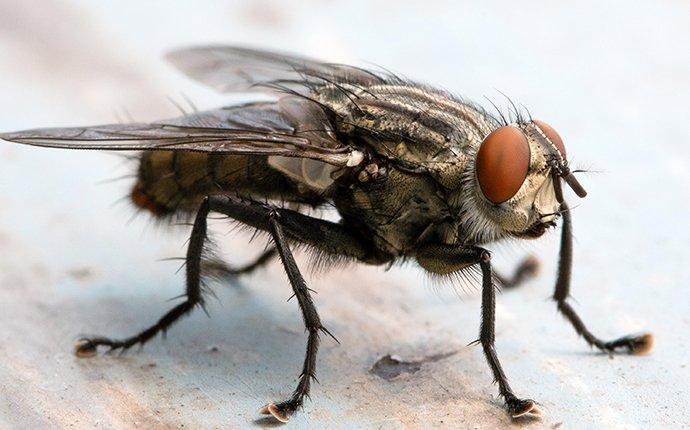
Key Characteristics of Cluster Fly in Hudson Pest Control: Size, Habitat and Unique Features
📏 Overall Size & Shape
8–10 mm
🎨 Covering & Coloration
Dark gray with golden or yellowish hairs on thorax.
Head
The head of a cluster fly is short and broad, with large reddish-brown compound eyes and short, feathery antennae.
🦵 Appendages
Cluster flies have six legs, like all insects, which are slender and adapted for walking and clinging to surfaces.
⭐ Features
Cluster flies are unique in that their larvae develop as parasites inside earthworms, rather than feeding on decaying matter or other insects. Adults are known for their tendency to enter homes in large numbers during autumn to hibernate, often clustering together in attics or wall voids. They are sluggish fliers and emit a distinctive, slightly sweet odor when disturbed. Unlike many other flies, cluster flies do not breed indoors or pose a health risk to humans, as they do not lay eggs in human food or waste.
📍 Habitat
Cluster flies are most commonly found in attics, wall voids, basements, and unused rooms of homes and buildings, especially during autumn and winter. Outdoors, they are often found in grassy areas, fields, and gardens where earthworms (their larval hosts) are present.
Don't risk your pets' health. Our certified technicians can be at your property within 24 hours.
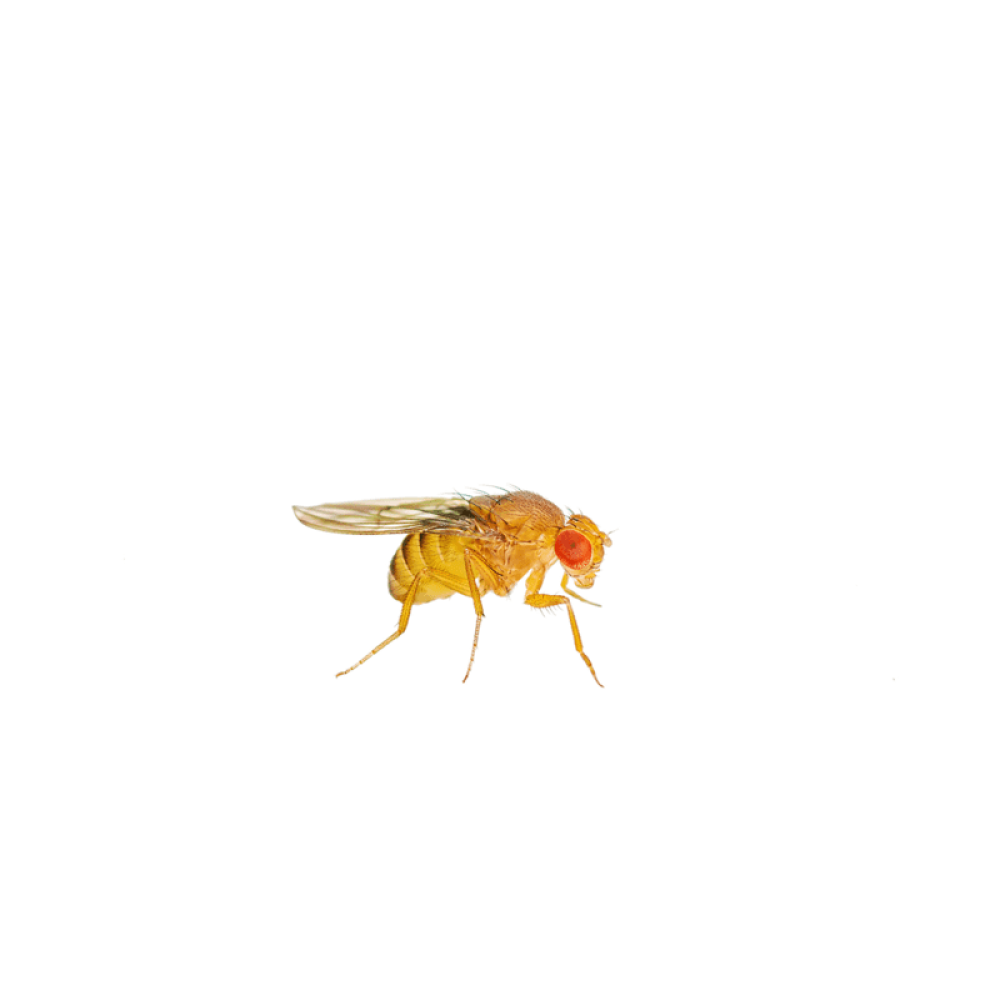
Key Characteristics of Fruit Fly in Hudson Pest Control: Size, Habitat and Unique Features
📏 Overall Size & Shape
2–4 mm
🎨 Covering & Coloration
Fruit flies are typically tan or yellow-brown with red eyes.
Head
The head of a fruit fly is small, rounded, and features large red compound eyes, short antennae, and specialized mouthparts for feeding on soft, decaying fruit.
🦵 Appendages
Fruit flies have six jointed legs attached to their thorax, which they use for walking, climbing, and grooming.
⭐ Features
Fruit flies have an exceptionally rapid life cycle, allowing them to reproduce quickly and adapt to changing environments. They possess remarkable genetic diversity and are widely used in scientific research due to their simple genome and ease of genetic manipulation. Fruit flies exhibit sophisticated courtship behaviors, including complex mating dances and pheromone communication. They also have specialized sensory organs that enable them to detect and respond to a wide range of chemical cues, particularly those related to fermenting fruit. Their ability to develop resistance to toxins and adapt to various food sources is another unique feature.
📍 Habitat
The most common areas where you can find fruit flies are kitchens, garbage cans, compost bins, drains, and areas where fruits and vegetables are stored or left out. They are also frequently found near recycling bins, mop buckets, and any place with fermenting or rotting organic matter.
The average homeowner spends $200+ on failed DIY attempts before calling professionals. Meanwhile, the infestation grows worse.
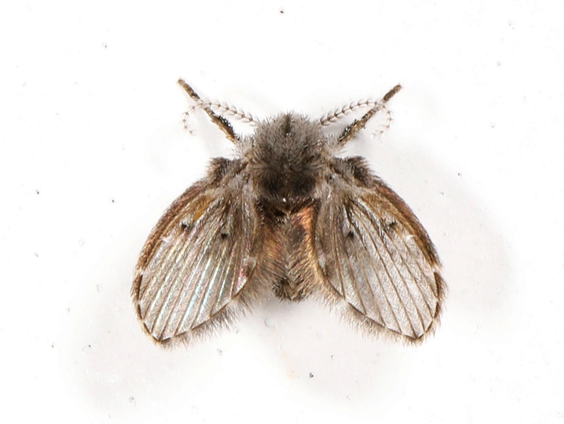
Key Characteristics of Drain Fly in Hudson Pest Control: Size, Habitat and Unique Features
📏 Overall Size & Shape
1.5 to 5 mm
🎨 Covering & Coloration
Drain flies are gray or brown with fuzzy, moth-like wings.
Head
The head of a drain fly is small, rounded, and features large, prominent compound eyes and short, fuzzy antennae.
🦵 Appendages
Drain flies have six short, hairy legs that help them cling to surfaces near drains and moist areas.
⭐ Features
Drain flies have distinctive fuzzy, moth-like wings covered in fine hairs, which give them a unique, velvety appearance. Their wings are held roof-like over the body when at rest. They are known for their erratic, short flights and tendency to remain near breeding sites. Drain flies are also notable for their ability to thrive in moist, organic-rich environments, feeding on decaying matter and biofilm. Their larvae play a role in breaking down organic material, contributing to the decomposition process. Additionally, drain flies are resistant to many common household cleaning agents, making them persistent in domestic settings.
📍 Habitat
The most common areas where you can find drain flies are bathroom sinks, kitchen sinks, shower drains, bathtub drains, floor drains, and areas around leaking pipes or standing water. They are attracted to moist, organic matter and often breed in the slimy film inside drains and pipes. You may also find them near sump pumps, sewage treatment areas, and damp basements.
Smell skunk near your home or under your deck? Learn what attracts skunks, how to identify them, and when to call NH pest control. Same-day response.
Read MoreLorem ipsum dolor sit amet, consectetur adipiscing elit, sed do eiusmod tempor incididunt ut labore et dolore magna aliqua. Ut enim ad minim veniam, quis nostrud exercitation ullamco laboris nisi ut aliquip ex ea commodo consequat. Duis aute irure dolor in reprehenderit in voluptate velit esse cillum dolore eu fugiat nulla pariatur.
Block quote
Ordered list
Unordered list
Bold text
Emphasis
Superscript
Subscript
Smell something dead in your walls, attic, or under the floor? Learn how to locate the source, when to call a pro, and how Anchor Pest removes dead animals safely in NH.
Read MoreLorem ipsum dolor sit amet, consectetur adipiscing elit, sed do eiusmod tempor incididunt ut labore et dolore magna aliqua. Ut enim ad minim veniam, quis nostrud exercitation ullamco laboris nisi ut aliquip ex ea commodo consequat. Duis aute irure dolor in reprehenderit in voluptate velit esse cillum dolore eu fugiat nulla pariatur.
Block quote
Ordered list
Unordered list
Bold text
Emphasis
Superscript
Subscript
Musty or mildew smell in your basement, crawl space, or attic? Learn what causes it, whether pests are involved, and how NH pest control pros eliminate the source.
Read MoreLorem ipsum dolor sit amet, consectetur adipiscing elit, sed do eiusmod tempor incididunt ut labore et dolore magna aliqua. Ut enim ad minim veniam, quis nostrud exercitation ullamco laboris nisi ut aliquip ex ea commodo consequat. Duis aute irure dolor in reprehenderit in voluptate velit esse cillum dolore eu fugiat nulla pariatur.
Block quote
Ordered list
Unordered list
Bold text
Emphasis
Superscript
Subscript
Notice a smell after pest treatment? Learn what’s normal (chemical off-gassing, dead pest odor) vs. when to call your exterminator back. Anchor Pest explains.
Read MoreLorem ipsum dolor sit amet, consectetur adipiscing elit, sed do eiusmod tempor incididunt ut labore et dolore magna aliqua. Ut enim ad minim veniam, quis nostrud exercitation ullamco laboris nisi ut aliquip ex ea commodo consequat. Duis aute irure dolor in reprehenderit in voluptate velit esse cillum dolore eu fugiat nulla pariatur.
Block quote
Ordered list
Unordered list
Bold text
Emphasis
Superscript
Subscript
Sharp ammonia or urine smell in your basement, attic, walls, or crawl space? Rodent urine is the #1 cause. NH pest control experts explain the signs and solutions.
Read MoreLorem ipsum dolor sit amet, consectetur adipiscing elit, sed do eiusmod tempor incididunt ut labore et dolore magna aliqua. Ut enim ad minim veniam, quis nostrud exercitation ullamco laboris nisi ut aliquip ex ea commodo consequat. Duis aute irure dolor in reprehenderit in voluptate velit esse cillum dolore eu fugiat nulla pariatur.
Block quote
Ordered list
Unordered list
Bold text
Emphasis
Superscript
Subscript
Fishy, chemical, sulfur, or burning smell indoors? It could be roaches, overheating wires, or hidden mold. NH pest pros explain the 5 most common causes and fixes.
Read MoreLorem ipsum dolor sit amet, consectetur adipiscing elit, sed do eiusmod tempor incididunt ut labore et dolore magna aliqua. Ut enim ad minim veniam, quis nostrud exercitation ullamco laboris nisi ut aliquip ex ea commodo consequat. Duis aute irure dolor in reprehenderit in voluptate velit esse cillum dolore eu fugiat nulla pariatur.
Block quote
Ordered list
Unordered list
Bold text
Emphasis
Superscript
Subscript
.svg)
Our certified technicians eliminate pest infestations completely and permanently.
Here's what you get:
🔍
Trained experts identify entry points and nesting areas
🛡️
Pet and family-friendly methods used
🎯
Targets entire colony, not just visible insects or rodents
📋
Long-term exclusion strategies
🧽
Proper cleanup and sanitization
✅
Service warranty and follow-up visits
Complete property assessment within 24 hours
Safe, effective treatment of entire colony
Long-term exclusion and monitoring
Join thousands of satisfied customers who chose professional pest control.
100% satisfaction guarantee.
Yearly Subscription Plans • Licensed & Insured • Same-Day Start • 100% Satisfaction Guarantee
License: 782664