
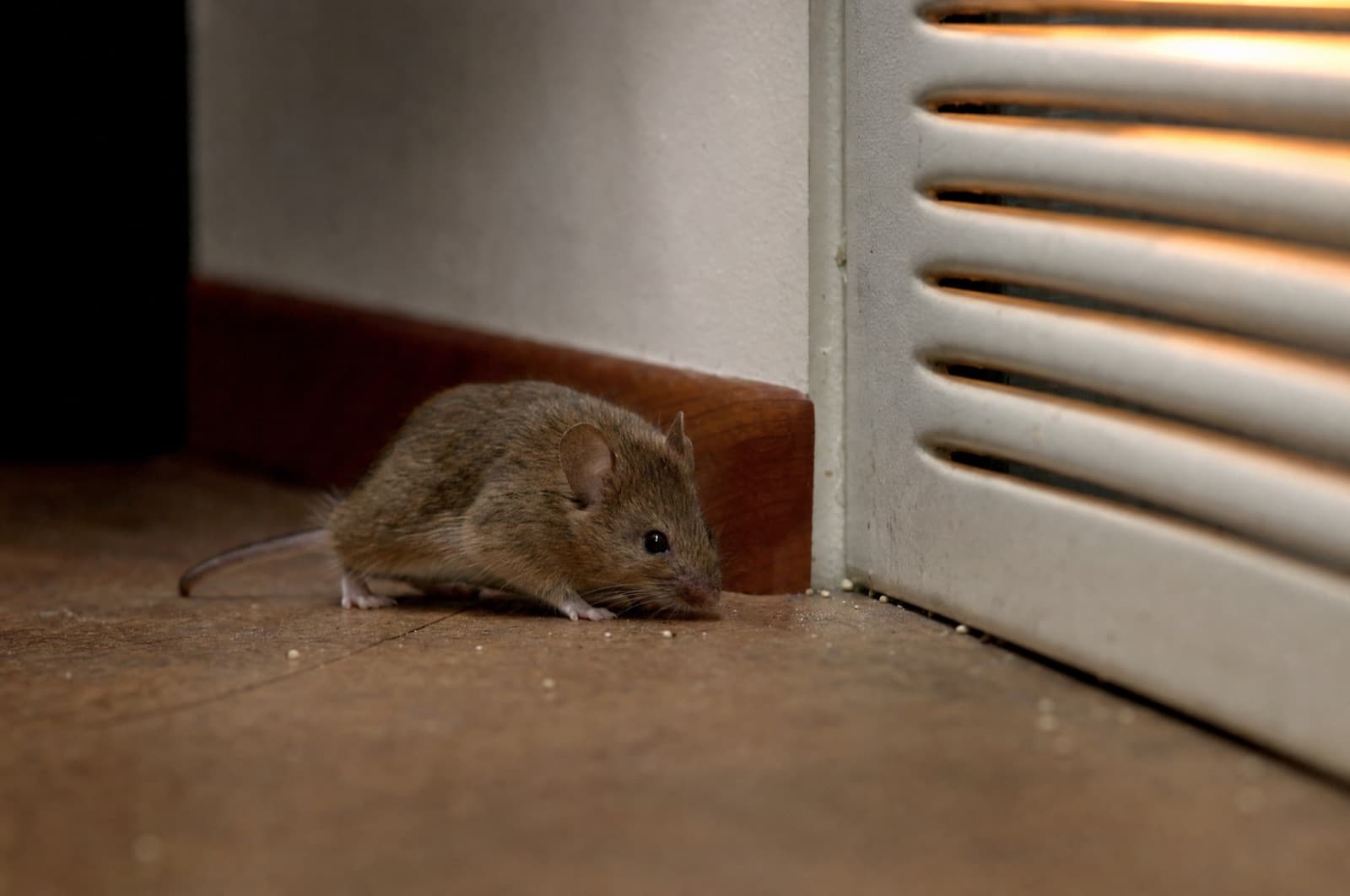
Can Rodents Access Homes Through Heating-Related Openings?
Yes — but the heating system doesn't create the rodents, it just supplies some of the easiest holes. Cold weather sends rodents looking for shelter, and gaps around flue pipes, boiler lines, and HVAC penetrations are exactly the kind of opening they exploit.
This is exclusion work, not an emergency. A house mouse needs only about a quarter-inch gap, so unsealed penetrations around heating equipment are worth fixing methodically rather than panicking over.
At a glance
- The mechanism: Heat draws them in
- Who fixes it: A licensed pest pro
- The rest lives at: What steps prevent mice from entering a home?
Yes — but the heating system doesn't create the rodents, it just supplies some of the easiest holes. Cold weather sends rodents looking for shelter, and gaps around flue pipes, boiler lines, and HVAC penetrations are exactly the kind of opening they exploit.
This is exclusion work, not an emergency. A house mouse needs only about a quarter-inch gap, so unsealed penetrations around heating equipment are worth fixing methodically rather than panicking over.
Heat doesn't spawn pests — it changes what you notice
The season and the building set the stage before the thermostat ever comes on. Here's the honest chain of events, spelled out.
What's really happening
Outdoor temperatures drop in fall, so commensal rodents seek warmth and shelter and start following the exterior of the structure looking for gaps. Penetrations where furnace flue pipes, boiler lines, radiator supply pipes, and HVAC refrigerant or condensate lines pass through the exterior wall are frequently unsealed or loosely gapped around the pipe, and a rodent that finds one goes in. The heat inside didn't summon them — the cold outside did, and the penetration gave them the hole.
Source:UNH Cooperative Extension— "How Can I Get Rid of the Mice in My House?" — seal gaps larger than 1/4 inch, especially where pipes and utilities enter the home
Is this an HVAC problem or a pest problem?
Who actually fixes it
A licensed pest pro
Finding and sealing these openings, plus controlling any rodents already inside, is exclusion and pest-control work — a licensed professional can inspect the full building envelope and Anchor offers a free quote.
The opening sits directly on or around heating equipment itself — a poorly sealed flue penetration or a gap where a boiler line exits — bring in an HVAC technician so the seal doesn't compromise combustion venting or equipment clearances.
This hub owns the heating-system angle
General winter behavior, rodent control, and equipment-damage severity live in siblings that already earn them. Here's exactly where.
This page owns the heating-system angle — which heating-related penetrations rodents use and why warmth-seeking peaks during heating season. Full exclusion strategy and interior control belong to our mice & rats FAQ.
How this calibrates for NH
New Hampshire's heating season is long. Population-weighted heating degree day data from NOAA's Climate Prediction Center place New England among the highest-demand heating regions in the country, and UNH's New Hampshire Climate Assessment 2021 documents a heating-dominated climate that, despite winter warming trends, still logs thousands of annual heating degree days. That means a stretch running roughly October through April when the indoor-outdoor temperature gradient keeps pulling rodents toward heating penetrations.
NH-licensed applicator #782664 (NHDAMF, RSA 430) · NEPMA member · family-owned since 2017.
Frequently asked
Sources(3)
- [1]UNH Cooperative Extension
"How Can I Get Rid of the Mice in My House?" — 1/4-inch gap threshold; seal where pipes and utilities enter the home
- [2]NOAA Climate Prediction Center
Heating Degree Days — New England regional averages
- [3]UNH
New Hampshire Climate Assessment 2021 — heating-dominated climate and heating degree day trends
Written & reviewed by
VerifiedDaniel Brady
NH-Licensed Pesticide Applicator · License #782664 (NHDAMF, RSA 430)
Daniel Brady is the New Hampshire–licensed applicator behind Anchor Pest Services, a family-owned pest control company serving the Manchester area since 2017.
Anchor Pest Services
Worth a professional pest inspection?
We've protected Southern New Hampshire homes since 2017. Free inspection, same-day service — we tell you what's actually there before we treat anything.
- NH-licensed applicator
- Same-day service
- Pet & family-conscious
NH License #782664 · No obligation · We answer in person