
How Do Pests Enter Walls Near Heating Lines?
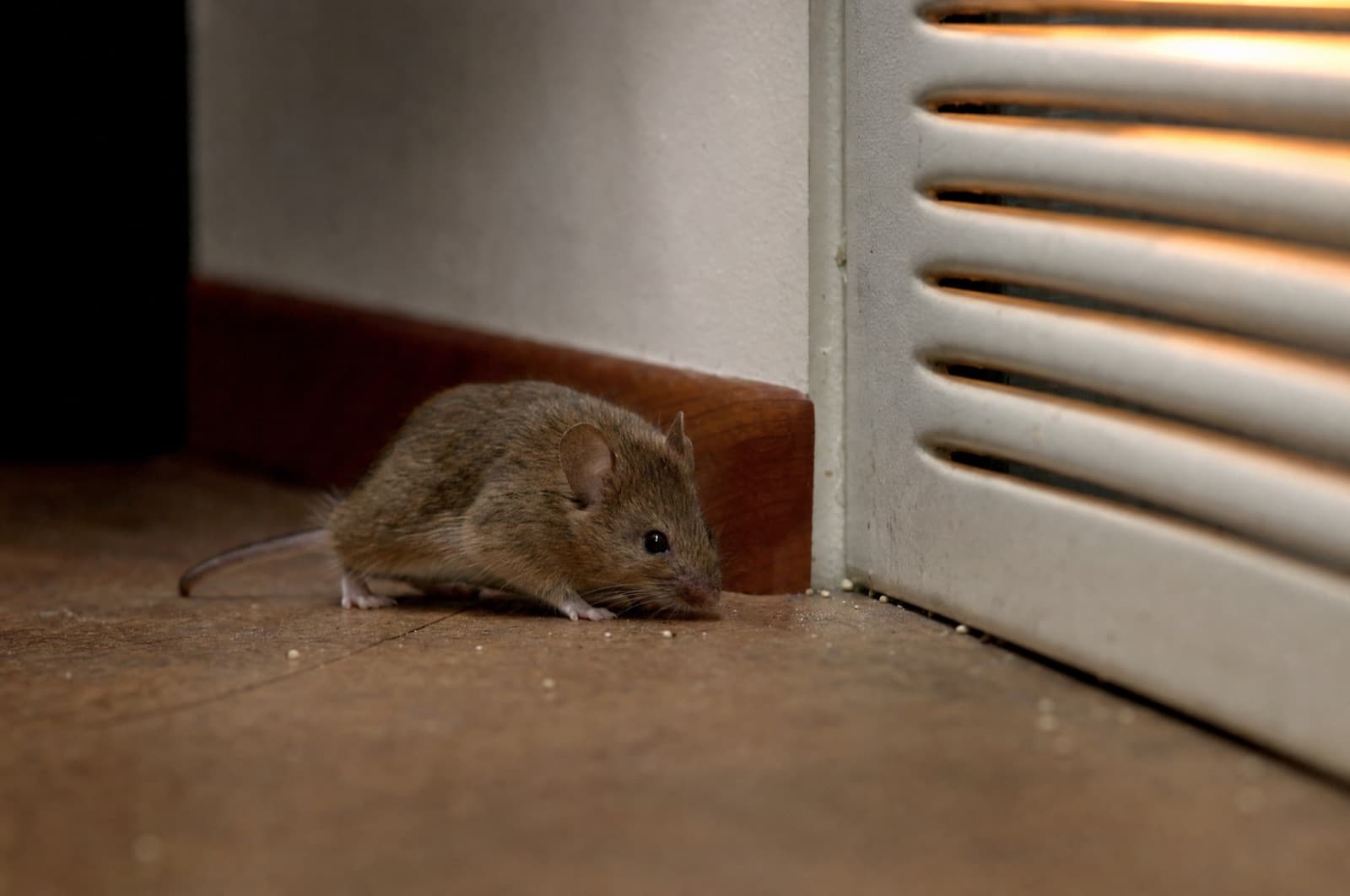
Penetrations where heating lines — hydronic pipes, steam or hot-water supply and return, radiant manifold lines, refrigerant and condensate lines — pass through the building shell and interior framing are ready-made gaps, and the warmth radiating from those lines makes the adjacent wall void an attractive place to enter and settle.
Standard exclusion territory. Find the penetration, seal it correctly.
At a glance
- The mechanism: Heat draws them in
- Who fixes it: A licensed pest pro
- The rest lives at: How big of a hole can a rat squeeze through?
Penetrations where heating lines — hydronic pipes, steam or hot-water supply and return, radiant manifold lines, refrigerant and condensate lines — pass through the building shell and interior framing are ready-made gaps, and the warmth radiating from those lines makes the adjacent wall void an attractive place to enter and settle.
Standard exclusion territory. Find the penetration, seal it correctly.
Heat doesn't spawn pests — it changes what you notice
The season and the building set the stage before the thermostat ever comes on. Here's the honest chain of events, spelled out.
What's really happening
Heating lines require holes through the exterior wall or foundation and through interior framing, and those holes are frequently left gapped around the pipe rather than fully sealed. Rodents, needing only about a quarter inch of clearance for mice and roughly half an inch for rats, and some insects use these gaps to enter the wall void, and the warmth of the line running through it makes that void a preferred harborage once they're in. UNH Extension explicitly flags where pipes and utilities enter the home as a priority sealing zone.
Source:UNH Cooperative Extension— "How Can I Get Rid of the Mice in My House?" — priority sealing zone where pipes and utilities enter the home
Is this an HVAC problem or a pest problem?
Who actually fixes it
A licensed pest pro
Identifying and sealing pest entry with durable materials — metal mesh or hardware cloth backed by sealant, per Extension guidance — plus controlling any interior pests is exclusion and pest-control work.
Sealing a penetration could affect a heating line's clearance, insulation, or a combustion vent — that assessment is HVAC technician work.
This hub owns the heating-system angle
General winter behavior, rodent control, and equipment-damage severity live in siblings that already earn them. Here's exactly where.
This page owns heating-line penetrations as entry points. Whole-home exclusion strategy belongs to our mice & rats FAQ.
How this calibrates for NH
New Hampshire's older housing stock, with many pre-1970 homes carrying retrofitted heating systems, tends to have numerous, loosely sealed pipe penetrations at the sill and foundation — prime rodent entries during the long heating season when the temperature difference between a warm wall void and the frozen ground outside is steepest.
NH-licensed applicator #782664 (NHDAMF, RSA 430) · NEPMA member · family-owned since 2017.
Frequently asked
Sources(2)
- [1]UNH Cooperative Extension
"How Can I Get Rid of the Mice in My House?" — 1/4-inch gap threshold, seal pipe/utility penetrations with durable material
- [2]University of Wisconsin
Rodent and pest-bird management guidance — seal exterior openings larger than a quarter-inch
Written & reviewed by
VerifiedDaniel Brady
NH-Licensed Pesticide Applicator · License #782664 (NHDAMF, RSA 430)
Daniel Brady is the New Hampshire–licensed applicator behind Anchor Pest Services, a family-owned pest control company serving the Manchester area since 2017.
Anchor Pest Services
Worth a professional pest inspection?
We've protected Southern New Hampshire homes since 2017. Free inspection, same-day service — we tell you what's actually there before we treat anything.
- NH-licensed applicator
- Same-day service
- Pet & family-conscious
NH License #782664 · No obligation · We answer in person