
Skip to content
rats — where they go in a New Hampshire winter
Winter: ON
Daniel Brady · NH-Licensed Pesticide Applicator · License #782664
Reviewed by Daniel Brady

Where Do Rats Go In The Winter?

Winter moves them in — and keeps them going
Rats don't go anywhere to wait out winter — they come toward you. As outdoor food dries up and temperatures fall, Norway rats burrow along your foundation and slip into basements and ground-floor wall voids, while the less common roof rat climbs into attics and upper walls, and once inside a heated structure neither one slows down at all. Winter is genuinely the worst rat season of the year for a homeowner, not a break from it, because your house now out-competes every outdoor site for warmth, food and cover.

At a glance

  • Winter’s effect: Winter moves them in — and keeps them going
  • Where they go: Inside your heated home
  • How far: Inside your house
The honest answer

The short of it

The verdict
Winter moves them in — and keeps them going

Rats don't hibernate. Winter is when your house becomes the warmest, best-fed structure for miles — and that's exactly where they go.

The one question nobody else answers

Does winter actually help you?

Every reader assumes the answer is yes — that winter is a break. For the pests that matter most in a New Hampshire home, it is the opposite. Here is where this one lands.

The winter switch
Winter moves them in — and keeps them going

Rats don't hibernate. Winter is when your house becomes the warmest, best-fed structure for miles — and that's exactly where they go.

Does winter help you?

For Rats, the winter switch is ONwinter makes it worse.

Most people assume

That rats hibernate, or at least go dormant somewhere underground once it gets cold, the way many wild mammals do — so a quiet yard in January means the rat problem is over until spring.

What actually happens

Rats do not hibernate and are, in the words of UC Statewide IPM, "active throughout the year." University of Arizona Cooperative Extension is just as direct: rodents "do not hibernate but are less active during cold months" — active outdoors, not gone. As outdoor cover dies back and food sources disappear, commensal rats press toward structures; UC IPM warns that once rats are established in the yard, "it is only a matter of time before you find evidence of them indoors." The rat you stopped seeing outside in November didn't go dormant. It moved into your basement, ground floor, or attic, where it has stable warmth, food, water and nesting material in one place — and it keeps feeding and breeding on exactly that schedule through January.

Not one animal — not one answer
  • ON

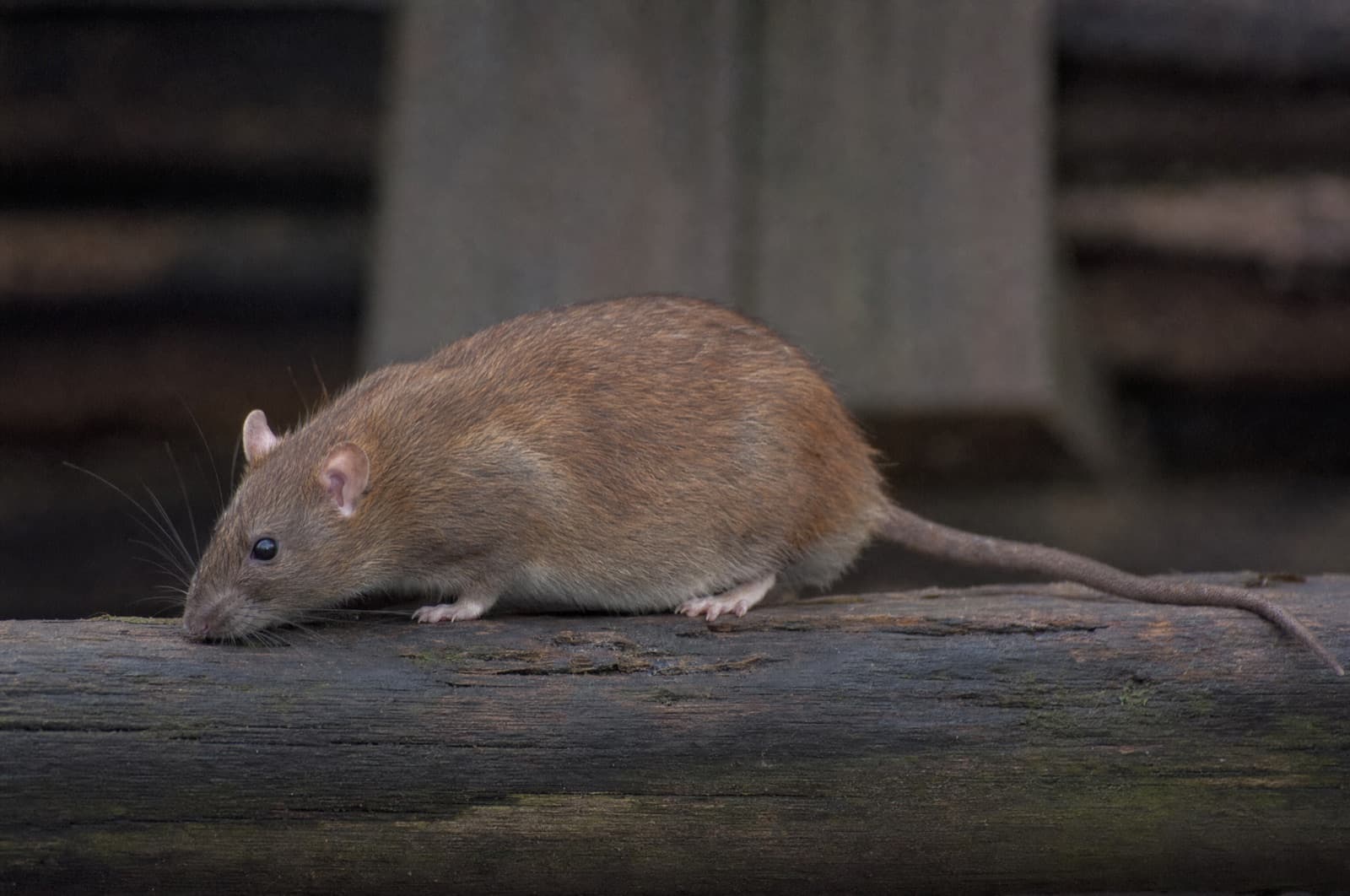
    Norway rat (Rattus norvegicus)

    The dominant rat in New Hampshire. Burrows along foundations and, per UC IPM, tends to "remain in basements or on the ground floor" once indoors. Check low first: crawl spaces, basements, ground-floor voids.

  • ON

    Roof rat (Rattus rattus)

    An agile climber that favors attics, upper walls and false ceilings when present — but eXtension notes roof rats are "more at home in warm climates" and that most of the interior and northern United States, New Hampshire included, is largely free of them. If you're in NH and see a rat, the basement is the more likely place to start looking, not the attic.

The line

Winter isn't a break from rats. It's when your house becomes the warmest, best-fed structure for miles.

So — does winter help you?
No — winter is genuinely the worst rat season for a homeowner, because a heated structure out-competes anything still available outdoors.
What to do in January
This is the one honest "call now" in this cluster. Inspect the basement and ground floor first (the dominant NH rat, the Norway rat, stays low), check the attic too if you've seen droppings up high, seal gaps larger than about a quarter inch with steel wool and a rigid sealant, set traps rather than relying on bait alone, and remove accessible food and harborage. Waiting for spring lets a small problem become an established one.
The literal question

Where they actually go

Inside your heated home

the basement, ground-floor wall voids, and foundation of your heated house — the attic only if the less-common roof rat is present

How far from you
  1. Inside your house
  2. On your structure
  3. In your yard
  4. Nearby outdoors
  5. Gone

They are inside your house.

What the place actually is

Norway rats, the dominant rat in New Hampshire, burrow along foundations and slip in through foundation gaps, utility penetrations and gaps under doors, then settle into basements, crawl spaces and ground-floor wall voids — UC IPM notes they typically "remain in basements or on the ground floor" of a structure rather than climbing. A basement gives them everything a burrow would have outdoors, minus the cold and the competition: stable temperature, moisture, clutter for cover and, usually, an accessible food source somewhere in the house. Roof rats, where present, do the reverse and climb into attics and upper wall voids — but they are uncommon this far north.

Can you see them?
Rarely — rats are nocturnal and stay hidden by day. What you actually find is indirect evidence: raisin-sized droppings along walls and in cabinets, fresh gnaw marks on wood or wiring, greasy rub marks along baseboards and beams where their fur repeatedly brushes the same path, and the sound of gnawing or scratching inside walls after dark.
Where the myths die

How they actually survive it

The survival mechanism

Stays fully active

Stays fully active — no dormancy of any kind

Is it hibernation? No — stays active
"Hibernate" implies a months-long, profound metabolic shutdown — a rat never does this. A rat indoors in January is behaving exactly as it would in July: foraging nightly, gnawing, and breeding on the same schedule. The only thing winter changes is where that activity happens — from your yard to your basement.
How it works

Rats are warm-blooded and simply thermoregulate by relocating to warmth rather than shutting down metabolically. There is no seasonal reduction in reproductive activity once they have stable food and shelter — UC Statewide IPM describes rats as active year-round, and University of Arizona Cooperative Extension notes only that they are "less active during cold months" outdoors, which is a behavioral shift toward shelter, not a physiological one. Indoors, with heat and food secured, a rat's winter is biologically indistinguishable from its summer.

The winter myth

What everyone gets wrong

The myth

"Rats hibernate or disappear for the winter, so if I'm not seeing them in the yard anymore, the problem has gone away."

Why people believe it

It's a reasonable read of what you actually observe: the rat activity you used to see outdoors — droppings near the compost pile, a burrow by the shed — genuinely does stop being visible once it's cold. Concluding the rats went away, rather than concluding they moved somewhere you can't see, is not an unreasonable leap.

The correction

The activity didn't stop; it relocated indoors, where you're far less likely to notice it. UC IPM and University of Arizona Cooperative Extension both describe rats as active through the cold months, simply less visible outdoors and concentrated in and around structures instead.

Why it matters
Homeowners who believe winter has solved the problem ignore exactly the early signs — a few droppings behind the water heater, one gnaw mark on a baseboard — that would have been cheap and easy to act on in November. By the time it's obvious in February, you're usually dealing with an established, breeding population rather than a handful of newcomers, which is the single most expensive version of this mistake in the whole hub.
What you would actually see

The signs in January

What you would actually see
5
  • Raisin-sized droppings along walls, in cabinets, or near stored food
  • Fresh gnaw marks on wood, baseboards, cardboard, or electrical wiring
  • Greasy rub marks along the same stretch of baseboard or beam, left by repeated fur contact
  • Scratching or gnawing sounds inside walls or the attic after dark
  • A strong, persistent musky odor in an enclosed space with heavy activity
What it means
Any one of these in a heated structure in January means active rats, not leftover summer evidence — rats don't stockpile sign and then go quiet. Fresh droppings or gnawing indicate a current, ongoing presence.
Easily confused with
Gray squirrels occasionally get into attics and leave similar gnawing and scratching sounds, but squirrels are larger, active by day, and rarely leave the fine, consistent droppings rats do. Mice leave similar but noticeably smaller, more pointed droppings.
What to do about it

The honest winter action

What genuinely works right now, and — at equal weight — what does not. This is where we decline the work there is no honest reason to do in January.

The honest verdict
Act now
What works now

Exclusion first: seal gaps larger than about a quarter inch around foundations, utility penetrations, and door thresholds with steel wool packed into a rigid sealant, since rats can chew through unprotected foam or caulk alone. Combine with trapping — UC IPM and University of Georgia Extension both favor traps over broadcast rodenticide for an active indoor population — and remove easy food access (pet food, birdseed, unsecured trash).

What does not work now

Waiting for spring, on the theory that cold weather will thin the population — it won't, because indoors nothing about winter touches a rat's biology. A single snap trap against an already-established colony rarely keeps pace with their breeding rate. And scattering rodenticide broadly, without exclusion first, risks non-target animals and pets without solving the entry problem that let the rats in to begin with.

Our honest lane

This is genuinely the one page in this hub where 'call now' is honest advice rather than an upsell — winter rat exclusion and removal is real, current work, not a seasonal add-on. That said, if you're only seeing rat activity outdoors in the yard, with zero droppings, gnawing, or sound indoors, that's still outdoor activity worth monitoring rather than an indoor emergency — the moment to act hard is when sign shows up inside the structure itself.

The health angle

Named, proportionate — and routed to a doctor

Leptospirosis, salmonellosis, and rat-bite fever, transmitted through contact with rat urine, droppings, or in rare cases a bite — not rabies, which UC IPM notes commensal rats do not carry

Caution
Who is at risk
  • Anyone cleaning up an area with heavy rat droppings or urine without basic precautions
  • Households with young children who may find and handle droppings
  • Anyone bitten while attempting to handle or trap a rat directly
Precautions
  • Avoid sweeping or vacuuming dry droppings, which can aerosolize contaminated dust — ventilate the area and dampen debris before cleanup
  • Wash hands thoroughly after any cleanup near a known rat area
  • Let exclusion and trapping do the work of removing the source rather than handling live or dead rats directly
When to seek care

See a doctor if you develop fever, muscle aches, or flu-like illness in the days to weeks after cleaning up a heavy rat area, or if you're bitten — describe the rodent exposure specifically, since these illnesses are frequently missed without that detail.

Health guidance from: UC Statewide IPM — Rats (Pest Notes); Ebani (2022), Pathogens

In depth

The full picture

01

The generic answer has it exactly backwards

Nearly every quick answer to "where do rats go in winter" says some version of "they seek shelter and warmth indoors" and stops there — true as far as it goes, but it buries the part that actually matters to a homeowner. It isn't just that rats find shelter. It's that once they find it, nothing about their biology changes: they keep eating, gnawing and breeding at the same rate they did outdoors in August. A heated structure isn't a waystation where a rat waits out the cold. It's an upgrade — better than anything left outdoors — and by January it functions as a permanent address, not a shelter of convenience.

02

Norway rat versus roof rat: which one is actually in your house

In New Hampshire, the rat behind a winter indoor problem is overwhelmingly the Norway rat, a burrowing, ground-dwelling animal that UC IPM describes as typically remaining "in basements or on the ground floor" of a structure once it gets inside. It's a strong digger and a comparatively weak climber, so it enters through foundation gaps, utility penetrations and gaps beneath doors and settles low. The roof rat is a different, more agile climbing animal that favors attics, upper walls and false ceilings — but eXtension's wildlife damage management resources note the species is "more at home in warm climates" and that most of the interior and northern United States is largely free of it. That matters practically: if you're in southern or central New Hampshire and finding sign, start your inspection in the basement and at ground level, not the attic, because that's where the dominant local species actually lives.

03

Why cold weather is a push, not a pause

The mechanism behind "winter is worse" isn't mysterious — it's competition for resources. Outdoors, a rat's food sources (garbage, compost, fallen fruit, insects, seed) and cover (dense vegetation, brush piles) both decline sharply after frost. Indoors, none of that changes: your house has stable heat, a kitchen, and structural cover in every wall void and crawl space, twelve months a year. A rat doesn't need to be more motivated in December than in June — the relative advantage of your house over the yard simply grows as the outdoor options thin out, and the rat follows the better option, the same way it always has.

04

The cost of assuming it's handled

The reason this correction matters financially is that rats indoors do measurable structural damage, not just nuisance droppings. UC IPM notes that rats in attics and other structural spaces "may cause considerable damage and present safety concerns (electrical sparks and fires) due to their gnawing and nest-building activities," and that rats will chew directly on gas lines. A peer-reviewed 2022 review in the journal Pathogens confirms rodents are a documented cause of fires through gnawing on electrical wiring. We're deliberately not repeating the specific "X% of fires" statistic that circulates online — we could not verify it against any authoritative source, only pest-industry blogs — but the underlying mechanism, gnawed wiring causing sparks and fires, is well documented on its own and is reason enough to treat winter rat sign as current, not historical.

Key takeaways
6 points
  • Rats don't hibernate — they're active year-round, and cold weather pushes them from your yard into your structure, not into dormancy.
  • In New Hampshire, the dominant species is the ground-dwelling Norway rat: check basements and ground floors first, attics second.
  • Once indoors with heat, food and water, a rat's winter behavior is biologically identical to its summer behavior — no slowdown in feeding or breeding.
  • Waiting for spring lets a handful of newcomers become an established, breeding population — this is the hub's most costly "wait and see" mistake.
  • Gnawing on wiring is a documented fire and safety hazard, not just a nuisance — a real reason winter sign deserves prompt action.
  • Commensal rats do not carry rabies, but they can transmit leptospirosis, salmonellosis and rat-bite fever through droppings, urine or bites.
New Hampshire context

What this looks like in a New Hampshire house

Manchester's first hard frost lands around October 19 to 29 in a typical year (NOAA), and by then outdoor food and cover for rats are already thinning fast — January is the coldest month, with an average high near 30.6°F and an average low around 18°F (NOAA 1991–2020 normals). That's exactly the stretch where a heated basement or crawl space becomes, in relative terms, the single best habitat within reach for a Norway rat working the neighborhood. Older homes with fieldstone or block foundations, unsealed utility penetrations, and a basement used for storage are close to ideal entry points — clutter gives cover, and older foundations rarely seal as tightly as poured concrete.

If you're reading this in January with fresh droppings or gnaw marks, the honest plan is inspection and exclusion now, not a wait for spring. If you're reading it in September, you're early enough to seal before the rats even start looking.

  • NH-licensed #782664

    Southern New Hampshire

  • Family-owned

    Since 2017

  • Honest routing

    Even when it isn’t us

We serve these communities

ManchesterNashuaConcordDerryBedfordSalemHudsonAmherst
The other half of this question

Want the full 12-month picture for rats?

This page answers where they go in winter, and whether winter helps you at all. The timing guide answers the other question — when they are active, month by month, across the whole New Hampshire year.

See the 12-month timing guide

Winter really is the worst rat season — this is the one call worth making now.

Rats don't hibernate. Cold pushes them into basements, wall voids, and (less often, in NH) attics, and once inside, nothing about their feeding or breeding slows down.

Follow-up questions

Frequently asked

Sources & citations(7)
  1. UC Statewide IPM — Rats (Pest Notes)

    Rats active year-round; basement/ground-floor tendency; gnawing fire/safety hazard; commensal rats do not carry rabies

    extensionverified 2026-07-16
  2. University of Arizona Cooperative Extension (ACIS) — Is That A Mouse Or A Rat?

    Rodents do not hibernate but are less active outdoors during cold months

    extensionverified 2026-07-16
  3. MU Extension — Controlling Rats (G9446)

    Norway rat biology and seasonal breeding patterns

    extensionverified 2026-07-16
  4. eXtension / Internet Center for Wildlife Damage Management — Roof Rats

    Roof rat range concentrated in warmer climates; largely absent from the interior/northern US; vertical stratification versus Norway rats

    extensionverified 2026-07-16
  5. NC State Extension — Surveillance and Management of Structure-Invading Rats

    Roof rats occupy upper floors while Norway rats occupy basements and ground floors when both are present

    extensionverified 2026-07-16
  6. Ebani — Commensal Rodents: Still a Current Threat (Pathogens, 2022)

    Rodents are a documented cause of fires through gnawing on electrical wiring

    academicverified 2026-07-16
  7. NOAA National Weather Service, Gray/Portland ME (GYX) — Concord, NH Seasonal Climatology (1991–2020 normals)

    Concord, NH (nearest NWS GYX first-order station to Manchester) First Fall Freeze normal (~Oct 19-29) and January average high/low temperature normals

    govverified 2026-07-16

Written & reviewed by

Verified

Daniel Brady

NH-Licensed Pesticide Applicator · License #782664 (NHDAMF, RSA 430)

Daniel Brady is the New Hampshire–licensed applicator behind Anchor Pest Services, a family-owned pest control company serving the Manchester area since 2017.

Verify license

Last updated Jul 2026

Honest pest help for New Hampshire homes

This Is The One Pest Where 'Call Now' Isn't An Upsell

Most of this hub is about telling you when winter work isn't worth doing yet. Rats are the exception — winter genuinely is peak indoor rat season in New Hampshire, and exclusion plus trapping done now beats waiting for spring every time. Anchor Pest Services provides winter rodent exclusion and removal across Manchester, Nashua, Concord and nearby towns. Family-owned since 2017, NH license #782664.

  • The one genuinely urgent winter call in this hub — and we'll tell you honestly when it isn't
  • NH-licensed applicators (#782664) — free inspection, same-day service
  • Exclusion-first approach: sealing entry points, not just setting traps

NH License #782664 · No obligation · We answer in person