
What Rodents Infest Homes During Heating Season?
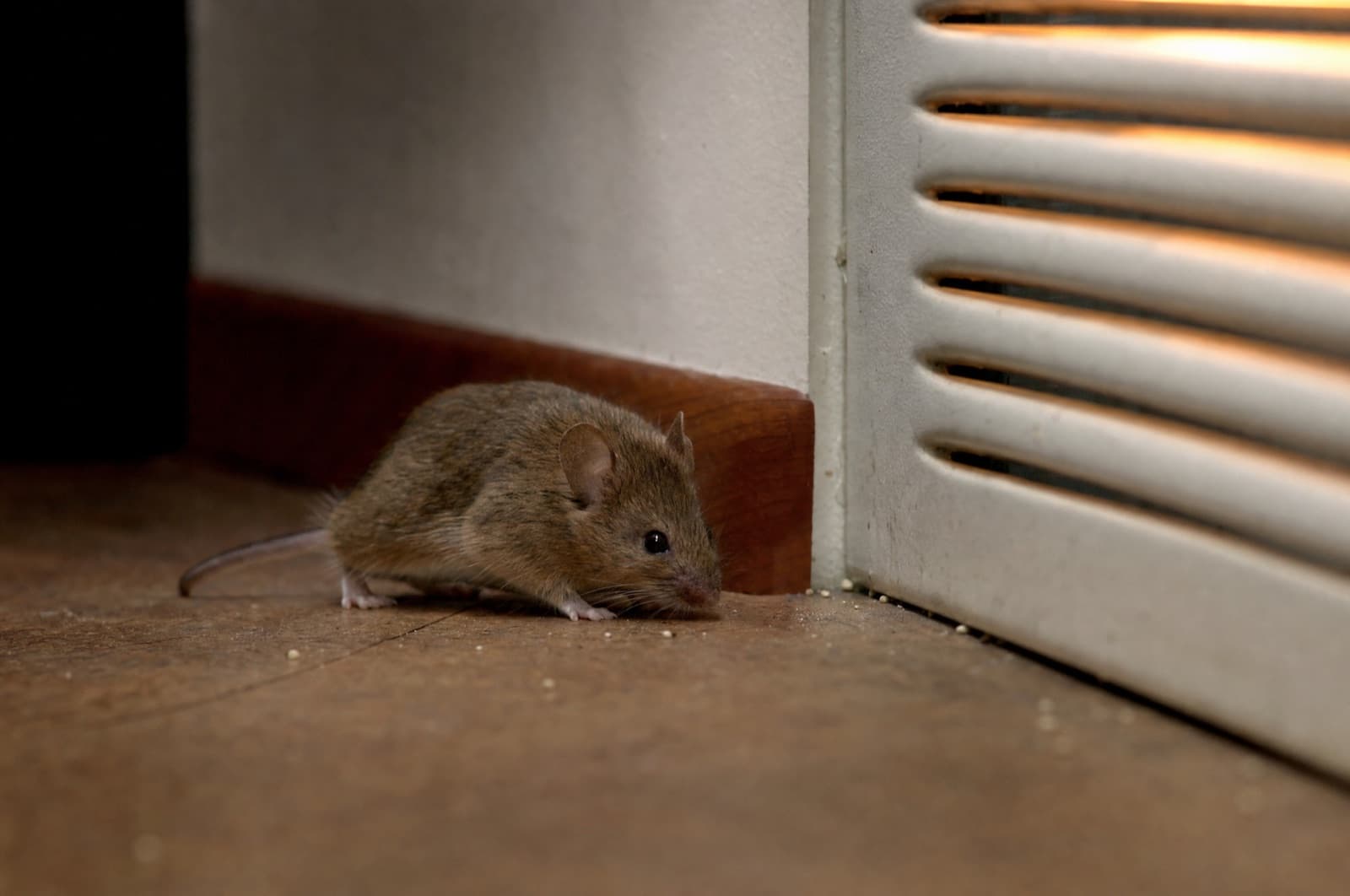
The species that show up indoors during heating season are the ones seeking warmth and shelter from a New Hampshire winter — chiefly the house mouse, along with two native species, the deer mouse and white-footed mouse. Norway rats appear mainly in urban and agricultural settings.
Mostly a nuisance-and-exclusion issue, but the native mice carry a genuine disease consideration, so this is worth doing right rather than ignoring.
At a glance
- The mechanism: Heat draws them in
- Who fixes it: A licensed pest pro
- The rest lives at: What is the difference between a mouse and a rat?
The species that show up indoors during heating season are the ones seeking warmth and shelter from a New Hampshire winter — chiefly the house mouse, along with two native species, the deer mouse and white-footed mouse. Norway rats appear mainly in urban and agricultural settings.
Mostly a nuisance-and-exclusion issue, but the native mice carry a genuine disease consideration, so this is worth doing right rather than ignoring.
Heat doesn't spawn pests — it changes what you notice
The season and the building set the stage before the thermostat ever comes on. Here's the honest chain of events, spelled out.
What's really happening
Fall cold and food scarcity push house mice and native Peromyscus mice out of fields, woodpiles, and burrows and into heated structures. They nest at or near ground level and in warm voids, and they persist all winter because a heated home supports continuous activity and breeding. Deer mice and white-footed mice do not hibernate — family groups nest together through winter and readily use buildings for shelter, which is why sightings continue steadily rather than tapering off once the initial cold snap passes.
Source:eXtension (land-grant)— "White-footed and Deer Mice" — native-mouse nesting in buildings, winter family groups, non-hibernation
Is this an HVAC problem or a pest problem?
Who actually fixes it
A licensed pest pro
Species identification matters here, since native mice versus house mice change the disease and cleanup picture, and Anchor can inspect and quote based on what's actually present.
Droppings or nests need disturbance-free cleanup because of hantavirus risk — follow CDC guidance to seal up, trap up, and clean up, and never dry-sweep or vacuum droppings.
This hub owns the heating-system angle
General winter behavior, rodent control, and equipment-damage severity live in siblings that already earn them. Here's exactly where.
This page owns which rodents show up during heating season and why heat draws them. Species-by-species control and exclusion belong to our mice & rats FAQ; the broader seasonal shift is covered on our winter pests hub.
How this calibrates for NH
In the Northeast, the white-footed mouse is the recognized reservoir for Sin Nombre-type hantavirus, and the CDC identifies both the deer mouse and white-footed mouse as carrier species for hantavirus pulmonary syndrome, with the white-footed mouse specifically the Northeast carrier. NH DHHS treats hantavirus as a reportable, rare-but-serious risk tied to rodent droppings and nests. Practically, rural and wooded New Hampshire homes are more likely to see deer mice or white-footed mice, while homes in more built-up towns tend to see house mice instead.
NH-licensed applicator #782664 (NHDAMF, RSA 430) · NEPMA member · family-owned since 2017.
Frequently asked
Sources(3)
- [1]CDC
"You Can Prevent Hantavirus" — deer mouse and white-footed mouse as HPS carriers; Northeast carrier is the white-footed mouse; seal/trap/clean
- [2]eXtension (land-grant)
"White-footed and Deer Mice" — native-mouse nesting in buildings, winter family groups, non-hibernation
- [3]UC IPM
"Deer Mouse" — biology, hantavirus concern, exclusion
Written & reviewed by
VerifiedDaniel Brady
NH-Licensed Pesticide Applicator · License #782664 (NHDAMF, RSA 430)
Daniel Brady is the New Hampshire–licensed applicator behind Anchor Pest Services, a family-owned pest control company serving the Manchester area since 2017.
Anchor Pest Services
Worth a professional pest inspection?
We've protected Southern New Hampshire homes since 2017. Free inspection, same-day service — we tell you what's actually there before we treat anything.
- NH-licensed applicator
- Same-day service
- Pet & family-conscious
NH License #782664 · No obligation · We answer in person