
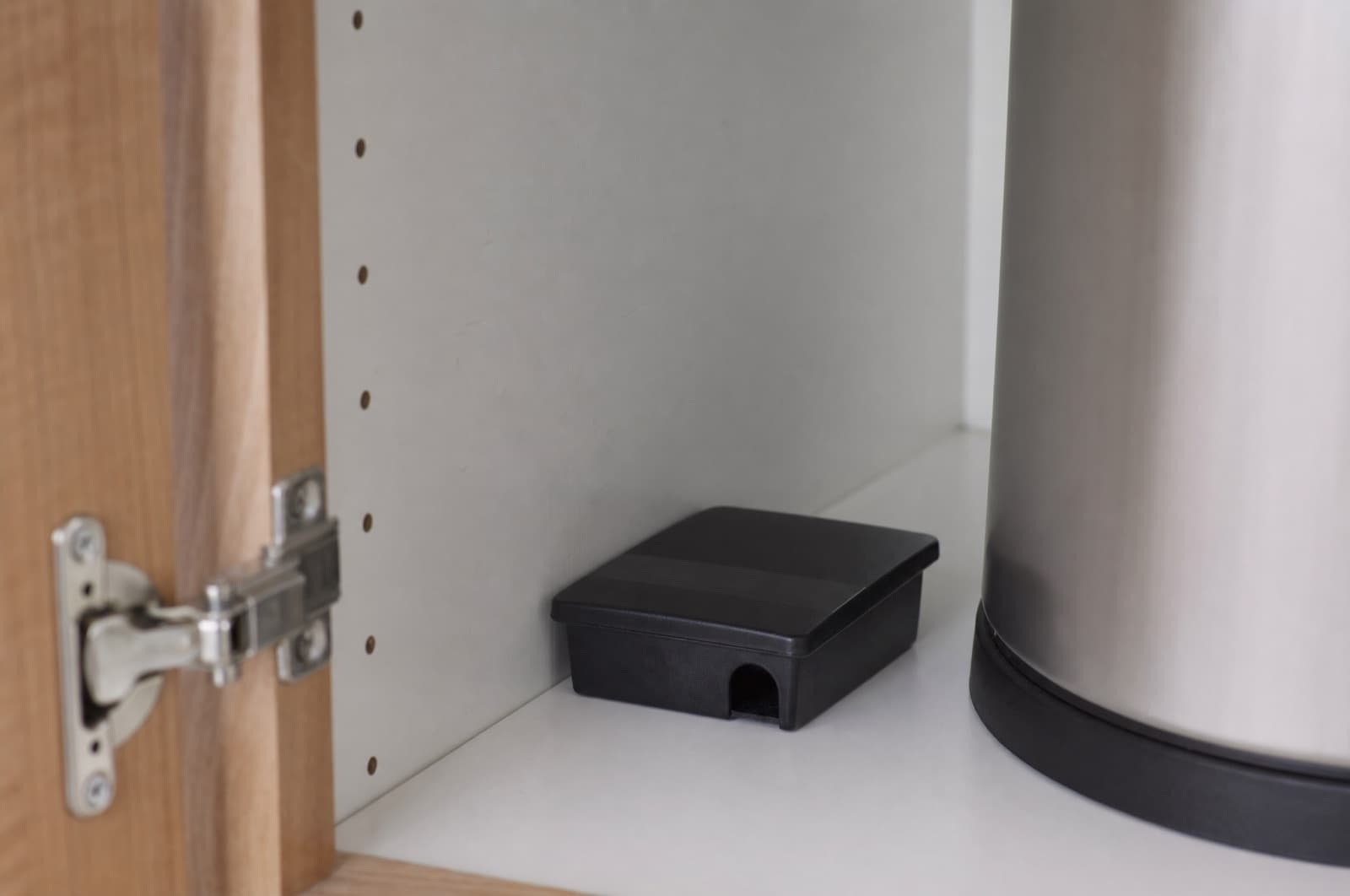
How to Use Max Ant Killing Bait by Combat
At a glance
- Efficacy: Workhorse
- Best job: Colony-level reduction of common household ant trails when every station is deployed at once, on the trail and at entry points
- Format: Enclosed ant bait station (break-apart multi-pack), for indoor and outdoor placement
- Technique: Easy technique
Does this product actually work?
A workhorse for common household ants — fipronil's slow transfer reaches the colony a spray never touches.
Fipronil's slow colony transfer is the same mechanism UC IPM points to when it calls properly used baits 'more effective and safer than sprays,' and the Combat label backs that up directly: it instructs users not to spray insecticide on or around the stations. Used correctly — every station out at once, placed on trails and at entry points, left undisturbed — this earns the workhorse grade for common household ants. It isn't built for carpenter ants or a nest you can't find, and spraying the trail while you bait is the single fastest way to undercut it.
Best for
Trailing household ants (odorous house, pavement, Argentine, little black, cornfield) baited both on the indoor trail and at outdoor entry points.
Skip it for
Carpenter ants and other structural nesting ants — not this product's target, and a wood-destroying pest needs a different approach entirely.
What it is — and what it's really for
The label is the law. Here's the honest read on the format, the one job it does well, and the job people wrongly buy it for.
The technique walkthrough
Where DIY succeeds or fails is in the placement, patience, and the small pro moves the label never mentions. Follow the label; these are the technique details on top of it.
This bait rewards baiting both ends of the problem — the indoor trail and the outdoor entry point — and punishes impatience and spraying near the stations.
Break apart and deploy all stations at once
Separate the full pack and use every station in the first round — the label calls for thorough coverage, not a gradual rollout.
Common mistakeHolding stations in reserve 'to see if it works' — that under-doses the strategy from the start.Place on the trail and where ants are numerous
Set stations by cabinets, next to food areas, and along the entry lines where you actually see ants moving.
Pro moveFollow a trail back to where it enters the room and bait right there so recruited foragers find it immediately.Bait the outdoor entry points too
Outdoors, place stations near cracks, sills, and entry points — the label supports perimeter spacing to intercept ants before they get inside.
Keep sprays away from stations
Do not spray insecticide on or around the bait stations, and don't interfere with feeding ants — the Combat label states this directly.
CautionA repellent residue kills foragers before transfer and drives remaining ants away from the bait.Replace on schedule
Replace stations per the label interval to prevent activity from reappearing, or sooner if a trail goes cold or activity rebounds.
Do & don't
- Use all stations at once, indoors and at outdoor entry points.
- Follow trails to their source before placing a station.
- Leave feeding ants and stations undisturbed.
- Bait the outdoor perimeter to intercept ants before entry.
- Replace per the label interval.
- Don't spray insecticide near or on the stations.
- Don't use just one station against real activity.
- Don't place over food-prep surfaces.
- Don't expect instant kills — this is a colony-transfer bait.
- Don't use it for carpenter ants.
Where it works vs. where it fails
No product fixes everything. This is the honest boundary — the situations it genuinely handles, and the ones it simply won't.
Where it works
- The ants are common household trailers — odorous house, pavement, Argentine, little black, cornfield
- Every station in the pack is deployed at once, both indoors on the trail and outdoors at entry points
- Stations are left undisturbed and free of nearby spray or cleaner contamination
- Patience is given for the full colony-transfer timeline (about a week to start, 1-2 weeks for full effect)
Where it fails
- The ants are carpenter ants or another structural nesting species
- Only one station is deployed against a real trail
- A spray or repellent cleaner contaminates the bait zone
- The outdoor colony source is never baited, so the trail keeps resupplying
Mistakes that waste the product
Spraying the trail while baiting
The Combat label itself warns against this — a repellent spray kills foragers before they can transfer bait and repels the rest from feeding.
Baiting only indoors
If the nest is outdoors, an untreated exterior colony keeps resupplying foragers faster than indoor bait alone can offset.
Sparse placement across the house
A trail with only one bait station nearby mostly goes unnoticed by foraging ants, wasting the rest of the pack sitting unused.
What to expect — and when
This bait works on a colony-dosing timeline — the label points to about a week for less activity, with fuller effect building over the following week or two.
First few days
A brief uptick in ants recruiting to the bait is normal and expected — it means the bait is being carried back to the colony.
About one week
Less activity along the trail, per the label, as the colony is progressively dosed.
1-2 weeks
Activity should be markedly reduced; a plateau at this point usually points to an untreated outdoor nest or an excluded species like carpenter ants.
When to stop DIY & call a pro
Fipronil transfers through the colony well, but a handful of consumer stations can't keep pace with a large or multi-queen ant population. These are the honest triggers to stop DIY:
You see large black ants, wood shavings, or rustling in walls
Those point to carpenter ants nesting in structural wood — not this product's target, and a pest that needs professional inspection.
Trails persist after 1-2 weeks of correct, dense, undisturbed baiting
That's enough time for fipronil's colony-transfer effect to show; continued activity usually means an established or unaddressed nest.
The trail keeps reappearing despite baiting both indoor and outdoor entry points
Recurring reinvasion after correct dual-zone baiting suggests a larger colony or a source you haven't located yet.
You see winged ants swarming indoors
Indoor swarmers can indicate an established nest inside the structure, which warrants a licensed inspection.
When correct, dense baiting at both the trail and the entry points still isn't closing the gap, Anchor's licensed NH technicians locate the actual nest and treat it. Free inspection, same-day service across southern and central New Hampshire.
Ants still trailing after correct, dense baiting?
Is it safe for pets & kids?
The short version lives here; the full per-species verdict lives on this product's pet-safety page.
The stations are child-resistant but should still be kept out of reach of children and pets — fipronil is a genuine pesticide even in a small enclosed dose. The label also prohibits use in or near beehives.
Re-entry: No general re-entry wait is required for the enclosed stations themselves, but keep children and pets from handling, chewing, or prying one open.
Household ants in southern & central New Hampshire
The odorous house, pavement, Argentine, little black, and cornfield ants this bait targets are common in NH homes as warm-weather foraging picks up and again during fall's push indoors — and this product's ability to bait both the indoor trail and the outdoor entry point is a genuine advantage in a climate where ants move seasonally between outdoor nests and indoor food sources. Carpenter ants, the state's more serious structural ant, aren't this bait's target; UNH Cooperative Extension flags them alongside termites as NH's most troublesome structural pests. Anchor Pest Services serves Manchester, Nashua, Concord, and the surrounding towns if you need help telling the two apart or treating a carpenter-ant nest.
Service area
Southern New Hampshire
Anchor Pest Services · NH license #782664 · NEPMA member · family-owned since 2017.
Frequently asked
Sources & further reading(4)
- [1]EPA Pesticide Product Label — Combat Max Ant Killing Bait (fipronil 0.01%), Reg. No. 64240-3
Verified active (fipronil 0.01%), station placement, and 'do not spray near bait' directions
epa_labelverified 2026-07-14 - [2]Combat / Henkel — Max Ant Bait product page
Product format, deployment directions, labeled pest list (facts only, not the efficacy verdict)
manufacturerverified 2026-07-14 - [3]UC IPM — Ants: Pest Notes
Properly used baits are more effective and safer than sprays for ant control
extensionverified 2026-07-14 - [4]UNH Cooperative Extension — Carpenter Ants Fact Sheet
Carpenter ants as NH's structural ant concern, distinct from this bait's labeled target species
extensionverified 2026-07-14
Written & reviewed by
VerifiedDaniel Brady
NH-Licensed Pesticide Applicator · License #782664 (NHDAMF, RSA 430)
Daniel Brady is the New Hampshire–licensed applicator behind Anchor Pest Services, a family-owned pest control company serving the Manchester area since 2017.
Last updated July 2026
Related products in this category
Same shelf, different jobs — the dot shows each product's honest efficacy verdict at a glance.
Professional Pest Control
When Ant Bait Hits Its Ceiling
Fipronil bait genuinely works on common household ants, but carpenter ants and unlocated nests need a different approach. Anchor Pest Services treats the actual source across southern and central New Hampshire. Family-owned since 2017, NH license #782664.
- Nest identification, not just bait placement
- NH-licensed applicators (#782664)
- Free inspection — same-day service across southern NH
NH License #782664 · No obligation · We answer in person
Your next step
- Book a NH pro
Ant Pest Control
Book now - Book a NH pro
Pest Control Services
Licensed, family-owned pest control across southern NH.
Book now - What to do next
Is Combat Max Ant Killing Bait Safe for Pets?
Read the answer - What to do next
Is Combat Max 12-Month Roach Killing Bait Safe for Pets?
Read the answer - Also relevant
Is Combat Max Ant Killing Bait Safe for Pets?
Read the answer - Also relevant
Chemical Ant Control: Why Bait Beats Spray
Read the answer