
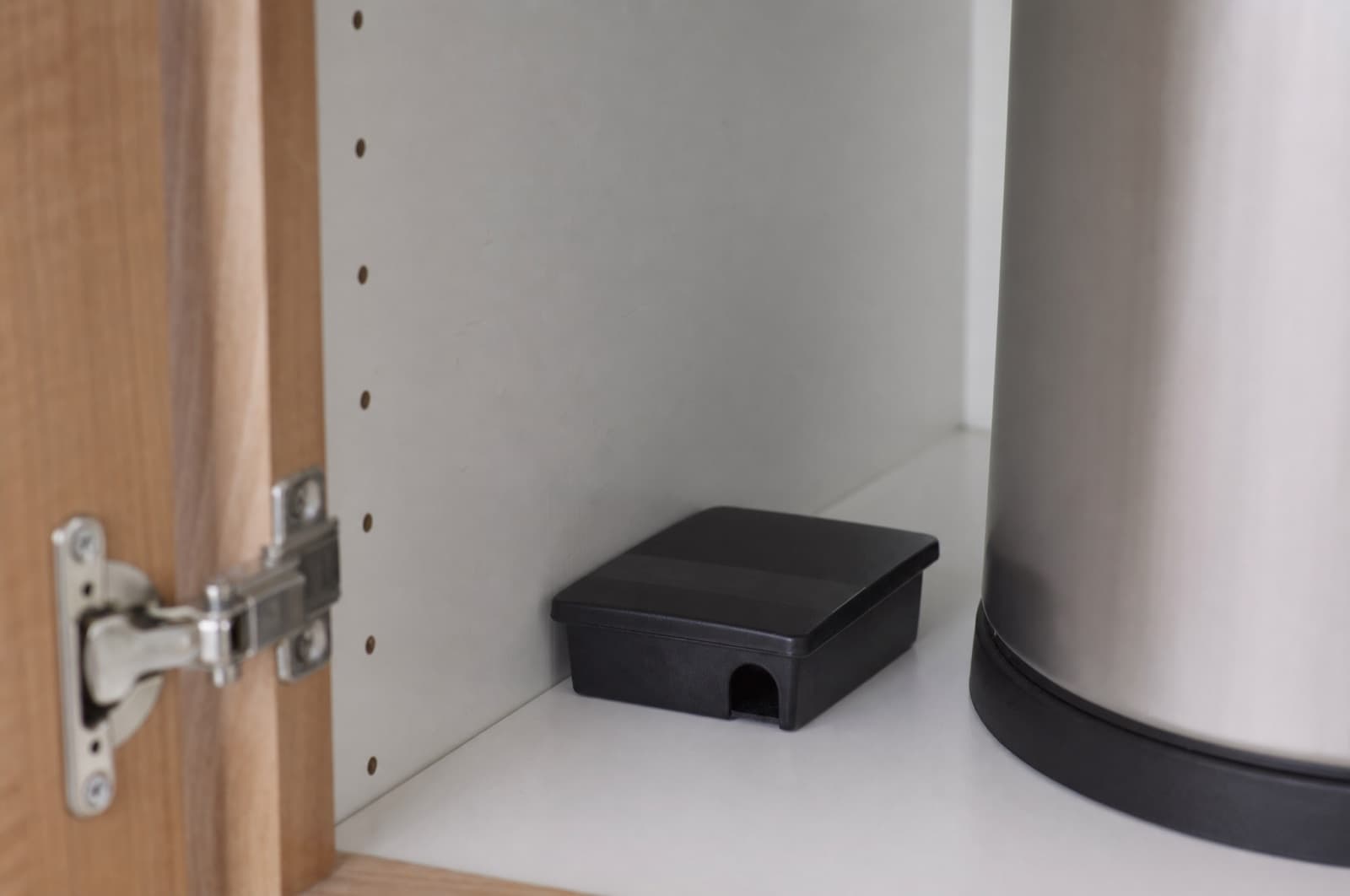
How to Use Multi-Surface Ant Baits (T334) by Terro
At a glance
- Efficacy: Workhorse
- Best job: Colony-level control of sweet/sugar-feeding household ants when many discs are placed directly on active trails
- Format: Prefilled liquid ant bait discs with an adhesive multi-surface backing for placement on walls, counters, and other vertical or horizontal surfaces
- Technique: Easy technique
Does this product actually work?
A genuine workhorse for sweet-feeding household ants — the honesty test is tolerating the ant surge, not the chemistry.
Borax liquid bait is a long-standing, genuinely effective tool for sweet-feeding household ants precisely because it's slow-acting — the same principle UC IPM cites when it recommends baits over sprays for ant control. Terro's own guidance is refreshingly honest about the one behavior that trips people up: 'since this is a bait, initially you will see more ants — but don't worry, this is a good thing,' with complete control taking up to two weeks. Deployed with many placements directly on the trail and left undisturbed through that surge, it earns the workhorse grade. It won't touch carpenter ants, pharaoh ants, or a colony that prefers grease over sugar.
Best for
Sugar/sweet-feeding household ants (odorous house, little black, Argentine, pavement, big-headed) trailing indoors.
Skip it for
Grease/protein-preferring ants that may ignore a sweet bait, carpenter ants, and pharaoh ants.
What it is — and what it's really for
The label is the law. Here's the honest read on the format, the one job it does well, and the job people wrongly buy it for.
The technique walkthrough
Where DIY succeeds or fails is in the placement, patience, and the small pro moves the label never mentions. Follow the label; these are the technique details on top of it.
This bait's single biggest test of patience is the expected ant surge in the first few days — most people who think 'it's not working' are actually watching it work.
Open and place discs on active trails
Open the tab and place stations flat or adhere them near ant trails and wherever ants are numerous — sinks, windowsills, baseboards, corners.
Pro movePut a disc directly on the trail between the entry point and the food source so recruitment funnels ants into the bait.Use many placements
Terro's own guidance is direct: the more bait placements, the better. Don't rely on a single disc for a whole kitchen.
Expect more ants first — and leave them alone
A visible increase in ants at the bait in the first few days is normal and desirable; it means recruitment is working.
Common mistakeWiping up the 'extra' ants or the trail mid-feeding, which breaks colony transfer just as it's getting started.Remove competing food
Clean up crumbs, spilled sugar, and grease near (not on top of) the placements so the bait stays the most attractive option.
Keep sprays away and replace when depleted
Don't spray insecticide near the bait, and replace discs once the liquid is depleted or dried out.
Do & don't
- Use many placements directly on active trails.
- Tolerate the initial surge in ants — it's the bait working.
- Remove competing food near (not on) the placements.
- Replace discs once depleted or dried out.
- Give it up to two weeks for complete colony control.
- Don't spray insecticide near the bait.
- Don't kill or wipe up the feeding ants.
- Don't expect same-day elimination.
- Don't use it for carpenter ants or grease-preferring ants that ignore it.
- Don't remove the disc during the expected ant surge.
Where it works vs. where it fails
No product fixes everything. This is the honest boundary — the situations it genuinely handles, and the ones it simply won't.
Where it works
- The ants are sweet/sugar-feeding household species — odorous house, little black, Argentine, pavement, big-headed
- Many disc placements are used, directly on active trails
- The initial ant surge is tolerated and the trail left undisturbed
- Competing food sources are cleaned up so the bait is the most attractive option
Where it fails
- The ants are carpenter ants or pharaoh ants — not this product's target
- The colony prefers grease/protein and largely ignores a sweet bait
- Only one or two discs are used against real activity
- A spray is used near the bait, killing foragers before transfer or repelling them
- An outdoor nest source is never baited, so the trail keeps resupplying
Mistakes that waste the product
Panicking at the ant surge and spraying or wiping it up
The surge is recruitment working correctly; killing or disturbing those ants breaks the colony-transfer chain before it can reach the nest.
Using only one or two placements
A trail with a single disc nearby often goes mostly untreated, since most foragers never encounter it.
Ignoring the outdoor nest source
If the colony's real nest is outdoors, an untreated exterior source keeps sending foragers in after an indoor trail seems to clear up.
What to expect — and when
This bait works on a colony-transfer timeline, and Terro is explicit that you should expect more ants before you see fewer.
First few days
A visible increase in ants at the bait — this is Terro's stated normal response and a sign of correct recruitment, not a failure.
Following days
Fewer ants as the colony is progressively dosed through shared feeding.
Up to ~2 weeks
Complete colony control, per Terro's own guidance; a plateau at this point points to an untreated nest or a colony that prefers grease over sugar.
When to stop DIY & call a pro
Sweet liquid bait only holds ants that are currently feeding on sugar — a switch to protein, or a colony too big to empty, ends its usefulness fast. These are the honest triggers to stop DIY:
You see large black ants, wood shavings, or rustling in walls
Those point to carpenter ants nesting in structural wood — not this product's target, and a pest that needs professional inspection.
Ants consistently ignore the bait
That usually signals a grease/protein-feeding preference this sweet formula won't satisfy, or a species (like pharaoh ants) that needs a different approach.
Trails persist after up to two weeks of correct, dense, undisturbed baiting
That's the full window Terro's own guidance allows for complete control; continued activity beyond it usually means an untreated or larger nest.
New trails keep appearing from different directions each season
Recurring, shifting activity typically means an unaddressed outdoor colony or entry point that baiting alone can't fully resolve.
When correct, patient baiting still isn't closing a trail, Anchor's licensed NH technicians identify the actual nest and food preference and treat what a retail bait can't reach on its own. Free inspection, same-day service across southern and central New Hampshire.
Still seeing ant trails after two weeks of patient baiting?
Is it safe for pets & kids?
The short version lives here; the full per-species verdict lives on this product's pet-safety page.
Borax is relatively low in toxicity compared with many pesticides, but it is not harmless — keep discs out of reach of children and pets and off food-prep surfaces. The adhesive backing means a disc can be pulled loose and chewed if it's within reach.
Re-entry: Keep children and pets from handling or chewing on the discs; no general re-entry wait applies once discs are placed away from reach.
Sweet-feeding ants in southern & central New Hampshire
Odorous house ants and little black ants — both sweet feeders this bait is genuinely built for — are among the most common ants NH homeowners see trailing across kitchen counters as spring and summer foraging picks up. Because these are indoor-outdoor foragers moving between an outdoor nest and indoor sugar sources, the seasonal surge Terro describes ('more ants first') is especially common here during the spring warm-up. Carpenter ants, NH's more serious structural ant, won't respond to this sweet bait the same way; if you're seeing large black ants or suspect a wall-void nest, Anchor Pest Services serves Manchester, Nashua, Concord, and the surrounding towns with correct identification and treatment.
Service area
Southern New Hampshire
Anchor Pest Services · NH license #782664 · NEPMA member · family-owned since 2017.
Frequently asked
Sources & further reading(4)
- [1]Terro — Multi-Surface Liquid Ant Baits (T334B) product page
Product format, placement guidance, and labeled sweet-feeding ant species (facts only, not the efficacy verdict)
manufacturerverified 2026-07-14 - [2]Terro — Indoor Baiting Guidance
"More ants first" expected-surge guidance and up-to-two-week timeline for complete control (facts/manufacturer guidance, not the efficacy verdict)
manufacturerverified 2026-07-14 - [3]UC IPM — Ants: Pest Notes
Slow-acting bait principle; properly used baits are more effective and safer than sprays
extensionverified 2026-07-14 - [4]Iowa State University Extension — Ant Baits for Small Household Ants
Sweet vs. protein/grease bait preference and correct household ant-baiting technique
extensionverified 2026-07-14
Written & reviewed by
VerifiedDaniel Brady
NH-Licensed Pesticide Applicator · License #782664 (NHDAMF, RSA 430)
Daniel Brady is the New Hampshire–licensed applicator behind Anchor Pest Services, a family-owned pest control company serving the Manchester area since 2017.
Last updated July 2026
Related products in this category
Same shelf, different jobs — the dot shows each product's honest efficacy verdict at a glance.
Professional Pest Control
When Sweet-Bait Technique Hits Its Ceiling
Borax bait genuinely works on sweet-feeding household ants, but carpenter ants, grease-preferring colonies, and unlocated nests need a different approach. Anchor Pest Services identifies the real problem across southern and central New Hampshire. Family-owned since 2017, NH license #782664.
- Correct species and food-preference ID
- NH-licensed applicators (#782664)
- Free inspection — same-day service across southern NH
NH License #782664 · No obligation · We answer in person
Your next step
- Book a NH pro
Ant Pest Control
Book now - Book a NH pro
Pest Control Services
Licensed, family-owned pest control across southern NH.
Book now - What to do next
Is Terro Multi-Surface Ant Baits (T334) Safe for Pets?
Read the answer - Also relevant
Is Terro Multi-Surface Ant Baits (T334) Safe for Pets?
Read the answer - Also relevant
Chemical Ant Control: Why Bait Beats Spray
Read the answer - Related guide
How to Use Terro Liquid Ant Baits (T300)
Read the answer