
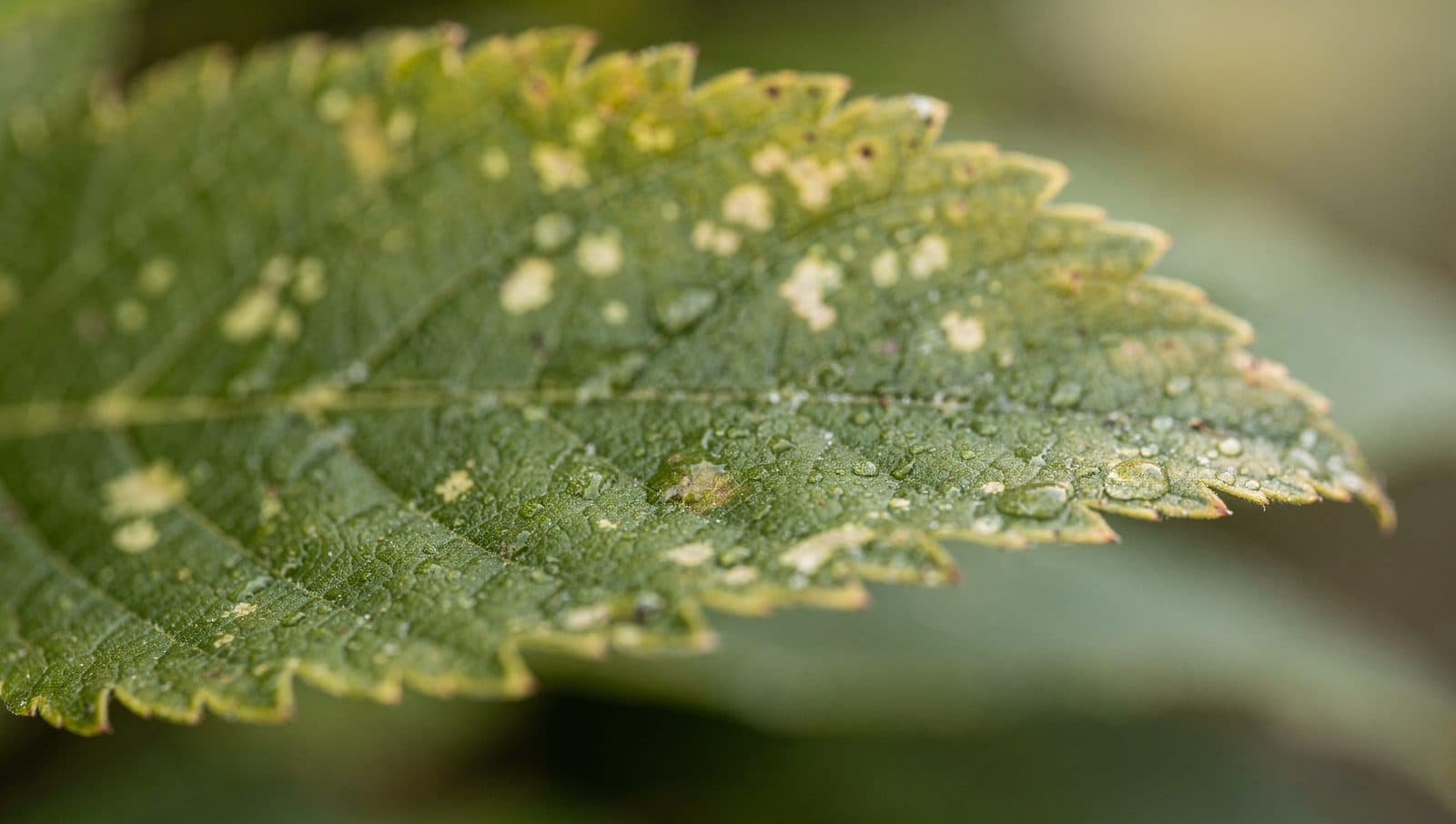
Are Yellowing Leaves Always a Disease?
No: yellowing (chlorosis) is far more often a watering, nutrient, or light problem than a disease, and a few yellow leaves at the base of a plant can simply be normal aging.
At a glance
- The verdict: No — usually not a disease
- Who fixes it: You
- Category: Leaf-Symptom Diagnosis (pest vs disease vs care)
The short answer
No, and this is one of the biggest myths on leaf problems. Yellowing, also called chlorosis, is most commonly caused by cultural factors: over- or under-watering, nitrogen deficiency (uniform yellowing, oldest leaves first), iron or magnesium deficiency (yellowing between the veins), too little light, or high soil pH that locks up nutrients. Disease — root rots, some viruses, and certain leaf-spot fungi — does cause yellowing, but it's a smaller share of cases and almost always comes with other symptoms like lesions, wilting, or root damage. And a few lower leaves turning yellow and dropping on an otherwise healthy plant can just be normal aging, not a problem at all.
Pest, disease, or how you're caring for it?
Most leaf problems aren't pests at all. Here's the honest split — the most likely cause, the less likely ones, and how to tell them apart before you treat anything.
- Care / environmentMost likelythe usual cause
Uniform yellowing on old leaves first (nitrogen deficiency), yellowing between green veins on new growth (iron or magnesium deficiency), or overall pale, yellowish leaves tied to soggy or bone-dry soil.
Over- or under-wateringNitrogen deficiencyIron/magnesium deficiency (often from high soil pH)Insufficient lightNormal aging of the oldest leavesThe tell:Check the pattern: old leaves yellow first and uniformly = likely nitrogen or normal aging; new leaves show yellow between green veins = likely iron/magnesium; check soil moisture either way.
- Diseasea less common cause
Yellowing accompanied by wilting, root rot, visible leaf-spot lesions, or a mottled/mosaic pattern rather than a clean, even color change.
Root or crown rot (Pythium, Phytophthora)Plant viruses (mosaic patterns)Certain leaf-spot fungi that trigger yellowing around lesionsThe tell:Look for accompanying lesions, mushy or discolored roots, or a mottled/blotchy (not uniform) yellow-green pattern.
- Pesta rare cause
Fine yellow stippling or speckling, sometimes with fine webbing on the undersides, or overall pale foliage on a plant with visible sap-suckers or root-feeding pests.
Spider mitesAphids and other sap-suckersRoot-feeding insectsThe tell:Flip the leaf and check the underside for tiny moving specks, webbing, or clustered insects before assuming water or nutrients.
Read the pattern first: uniform yellowing starting on old leaves points to nitrogen or normal aging; yellowing between green veins on new leaves points to iron or magnesium; check soil moisture for over/under-watering. Only after ruling those out — and checking for pests on the underside — does a disease or root-rot cause become more likely, especially if wilting or lesions are also present.
A handful of yellow leaves dropping from the bottom of an otherwise vigorous, healthy plant is frequently just normal leaf aging and turnover, not a problem to fix at all.
Who actually fixes this?
Start here
You
Most yellowing traces to a watering, light, or nutrient pattern that the plant's owner can read and correct directly, without any product or professional needed.
- Garden center — A soil-based nutrient deficiency is confirmed — a garden center can recommend an appropriate fertilizer or soil amendment once the pattern points to nitrogen, iron, or magnesium.
- UNH Extension — Yellowing comes with wilting, mushy roots, or a mottled/mosaic pattern that suggests a root rot or virus — that calls for a diagnostic opinion, not a guess.
The details, straight
Why 'disease' is the wrong default
Chlorosis — the technical term for yellowing leaves — is a description of a symptom, not a diagnosis, and the honest evidence points away from disease as the default explanation. Watering problems (both too much and too little) are consistently cited by extension sources as leading causes of yellowing, alongside nitrogen deficiency, iron or magnesium deficiency, and simply too little light. Disease is a real possibility, but it's one of several, and it typically shows up alongside other signs rather than as isolated, uniform yellowing.
Reading the pattern like an extension diagnostician would
The pattern of yellowing is the single most useful clue. Uniform yellowing that starts on the oldest, lowest leaves and works upward is the classic signature of nitrogen deficiency — the plant is moving what little nitrogen it has to newer growth and sacrificing the old leaves. Yellowing between still-green veins, especially on newer growth, points instead to iron or magnesium deficiency, both of which are commonly locked up by soil that's too alkaline for the plant to access what's actually there. Overwatered and underwatered plants can both show yellowing too, usually alongside wilting or drooping.
When it genuinely is disease — the tells that matter
Disease-driven yellowing usually doesn't travel alone. Root and crown rots (often triggered by waterlogged soil in the first place) bring mushy, discolored roots and a foul smell when you check them. Viral infections often produce a mottled or mosaic pattern — blotchy light and dark green — rather than a clean, even yellow. Some leaf-spot fungi cause a ring of yellowing (a chlorotic halo) around a visible lesion, which is a very different look from whole-leaf uniform yellowing. If none of those accompanying signs are present, disease is the less likely explanation.
Sometimes it's just... normal
Plants continuously shed their oldest leaves as part of natural growth and renewal, and a few lower leaves yellowing and dropping from an otherwise green, vigorous plant is frequently nothing more than that — normal turnover, not a problem calling for any intervention. The signal to actually worry about is yellowing that's spreading to new growth, affecting a large share of the plant quickly, or showing up alongside wilting, spots, or pests.
Key takeaways
- No — yellowing is far more often cultural (watering, nutrients, light) or simply normal aging than a sign of disease.
- Uniform yellowing starting on old leaves points to nitrogen deficiency or normal aging; interveinal yellowing on new leaves points to iron/magnesium.
- Disease-driven yellowing usually comes with wilting, mushy roots, lesions, or a mottled pattern — not clean, even color change alone.
- A pest cause (mites, aphids, root feeders) shows up with stippling, webbing, or visible insects on the underside.
- A few yellow leaves dropping from the base of a healthy plant is often just normal aging, not a symptom to treat.
Don't reach for a fungicide before checking the pattern
Yellow leaves are usually water, light, or nutrients — read the pattern first and you'll usually skip the disease diagnosis altogether.
See the full pest-vs-disease triageA note for New Hampshire gardeners
High soil pH and nutrient lockup are common causes of yellowing on ornamentals across southern New Hampshire's varied soils, and UNH Cooperative Extension's soil testing service (via the Ask UNH Extension Infoline, 1-877-EXT-GROW) is a free, evidence-based way to confirm whether a nutrient or pH issue is really behind the color change before buying any product. If the pattern instead suggests root rot or disease, UNH's Plant Diagnostic Lab has at times referred samples to the University of Maine or Cornell — worth checking current status. Anchor Pest Services focuses on structural and yard pests, not plant nutrition, but we're glad to point you the right way.
NH-licensed applicator #782664 (NHDAMF, RSA 430) · NEPMA member · family-owned since 2017.
Related questions
Sources(2)
- [1]University of Maryland Extension — Nutrient Deficiency of Trees and Shrubs
Chlorosis patterns tied to nitrogen, iron, and magnesium deficiency; interveinal vs uniform yellowing
extensionverified 2026-07-14 - [2]UC Master Gardeners San Luis Obispo County — Yellow Citrus Leaves
Overwatering, nitrogen, iron, and salt as common causes of leaf yellowing
extensionverified 2026-07-14
Written & reviewed by
VerifiedDaniel Brady
NH-Licensed Pesticide Applicator · License #782664 (NHDAMF, RSA 430)
Daniel Brady is the New Hampshire–licensed applicator behind Anchor Pest Services, a family-owned pest control company serving the Manchester area since 2017.
Last updated 2026-07-14
Your next question
Honest pest help for New Hampshire homes
Yellow Leaves Are Plant Care — Your Home Is Our Job
Diagnosing yellowing foliage is horticulture, and we'll say so plainly rather than oversell a service you don't need. Where Anchor Pest Services genuinely helps is the pests around your home — rodents, ants, ticks, and moisture pests drawn to leaf litter and debris against the foundation. Family-owned since 2017, NH license #782664, serving Manchester, Nashua, Concord and nearby towns.
- We call it what it is — most yellow leaves are a care issue, not a disease
- State-licensed in NH (#782664) — free estimate and prompt scheduling
- Structural and yard pests around the home — southern and central New Hampshire
NH License #782664 · No obligation · We answer in person
Your next step
- Related guide
Why Are the Leaves on My Plants Turning Yellow?
Read the answer - Related guide
Why Do Tomato Plant Leaves Turn Yellow?
Read the answer - Related guide
Why Do Leaves Turn Black After Watering?
Read the answer - Related guide
Can Overwatering Make Leaves Unhealthy?
Read the answer - Related guide
Can Infected Leaves Spread Disease to Other Plants?
Read the answer