
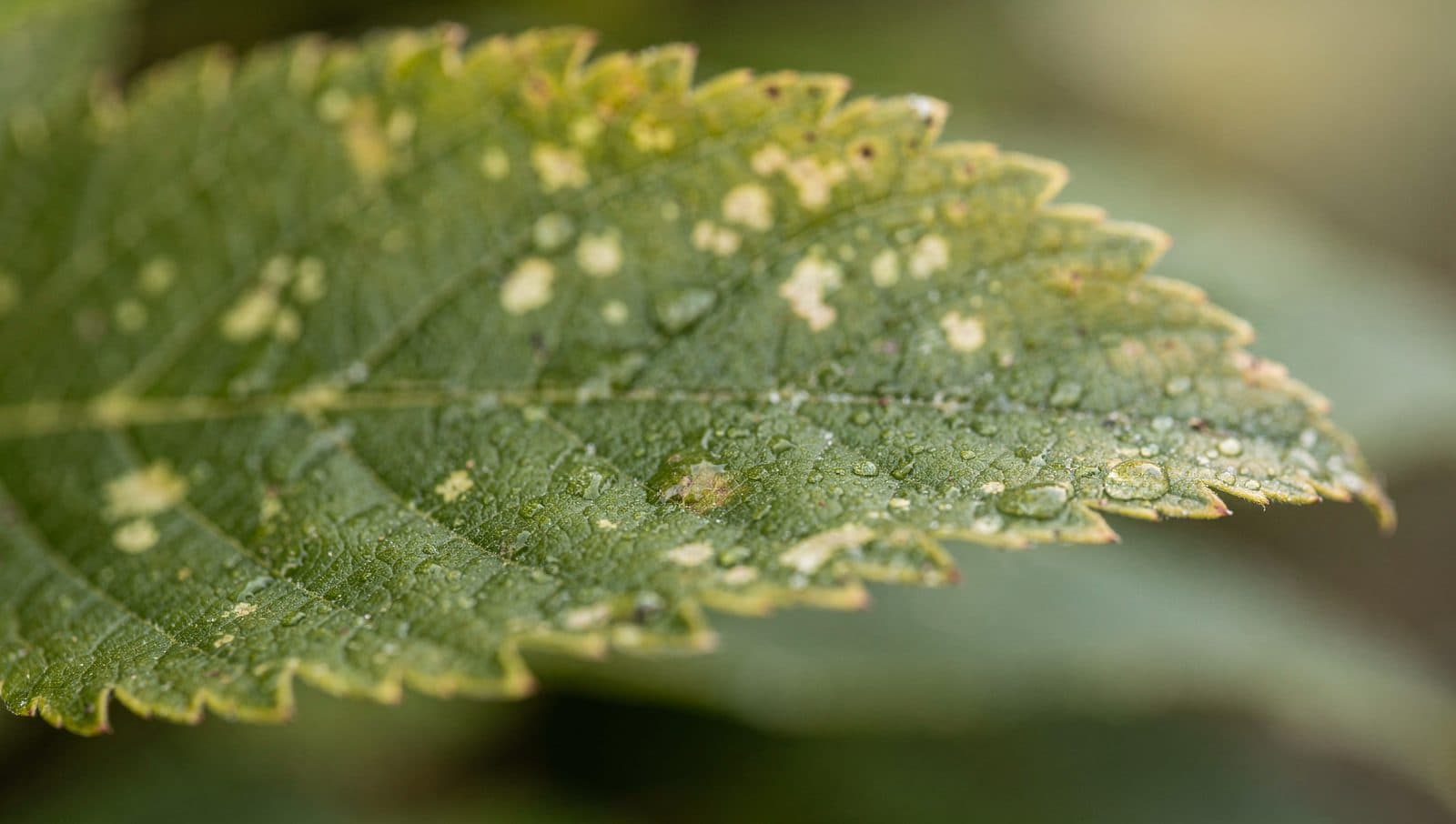
Why Do Tomato Plant Leaves Turn Yellow?
Yellow tomato leaves with brown spots that start low and climb are usually a fungal leaf-spot disease; clean, uniform yellowing is more likely nitrogen or a watering issue — and a few yellow leaves at the bottom of a healthy plant is often just normal aging.
At a glance
- The verdict: Depends on the pattern — disease and care both common
- Who fixes it: You
- Category: Leaf-Symptom Diagnosis (pest vs disease vs care)
The short answer
Tomato yellowing genuinely splits between disease and cultural causes, which is why the pattern matters more than the color alone. Yellow leaves with tan or dark spots (often with concentric rings or a yellow halo) that start on the lowest, oldest leaves and climb upward in wet weather point to early blight or Septoria leaf spot — both common, both fungal. Clean, spot-free yellowing that's uniform across old leaves usually means a nitrogen deficiency or a watering problem instead. Yellow leaves with distorted new growth or visible insects point to aphids, whiteflies, or spider mites. And a handful of yellowing lower leaves on an otherwise thriving plant is frequently just normal aging.
Pest, disease, or how you're caring for it?
Most leaf problems aren't pests at all. Here's the honest split — the most likely cause, the less likely ones, and how to tell them apart before you treat anything.
- DiseaseMost likelythe usual cause
Yellowing paired with distinct spots — target-like concentric rings (early blight) or small tan-centered spots (Septoria) — starting on the lowest, oldest leaves and spreading upward, worse after rain or overhead watering.
Early blight (Alternaria)Septoria leaf spotFusarium or Verticillium wilt (vascular, often one-sided)The tell:Look for defined spots with rings or halos on the yellowing leaves, starting low on the plant and worsening in wet weather.
- Care / environmenta less common cause
Uniform, clean yellowing with no spots, typically on the oldest leaves first, or overall pale foliage tied to soggy or dry soil.
Nitrogen deficiencyOver- or under-wateringMagnesium or potassium deficiencyNormal lower-leaf aging as the plant maturesThe tell:No spots or lesions present; yellowing is smooth and even, and soil moisture or recent fertilizing history explains the timing.
- Pesta rare cause
Yellowing combined with distorted, curled new growth, sticky honeydew, fine stippling, or visible insects on the undersides of leaves.
AphidsWhitefliesSpider mitesStress from a heavy hornworm infestationThe tell:Flip the leaves and check for insects, webbing, or honeydew before assuming disease or nutrients.
Check for spots first: rings, halos, or lesions on yellowing leaves, especially starting low on the plant, point to early blight or Septoria. No spots at all, with a smooth, even color change, points to nitrogen or water. Distorted new growth or visible bugs point to a pest. A mix of clearly healthy and clearly yellow leaves on the same plant leans disease; a gradual, uniform fade across older leaves leans nutrient or water.
It's common for a tomato plant to have more than one of these going on at once — a plant stressed by uneven watering is also more susceptible to early blight, and a heavily pest-stressed plant can show nutrient-deficiency symptoms too.
Who actually fixes this?
Start here
You
Sanitation (removing affected lower leaves), consistent watering, and correcting nitrogen are homeowner-level fixes for the majority of tomato yellowing cases.
- Garden center — Early blight or Septoria is confirmed by the spot pattern — a garden-center fungicide labeled for tomato leaf spot, applied per the label, is the standard next step alongside sanitation.
- UNH Extension — You're not sure whether it's early blight, Septoria, or something else, or if wilting is one-sided and suggests a vascular disease — UNH Extension's diagnostic services can confirm it.
The details, straight
Why the bottom of the plant is where to look first
Both the leading fungal diseases and the leading nutrient issue on tomatoes share a habit: they show up on the oldest, lowest leaves first. Early blight and Septoria leaf spot both typically begin low on the plant and progress upward over the season, especially in humid or rainy stretches, since fungal spores spread easily by water splash from the soil onto lower foliage. Nitrogen deficiency also shows up on old leaves first because the plant reallocates its limited nitrogen to newer growth. That shared starting point is exactly why the spots — not just the yellow color — are what separates the two.
The two common fungal leaf-spot diseases
Early blight, caused by the fungus Alternaria, produces yellowing leaves with dark, target-like concentric rings, often with a yellow halo around each spot. Septoria leaf spot produces smaller, more numerous spots with tan or gray centers and dark borders. Both thrive in wet, humid conditions and spread from splashing water, which is why staking plants for airflow, watering at the base instead of overhead, and removing affected lower leaves are standard extension advice — alongside a garden-center fungicide labeled for the specific disease if it's spreading.
When it's really about nitrogen or water, not disease
Clean, spot-free yellowing that's uniform across the older leaves — without any rings, halos, or lesions — points toward nitrogen deficiency or an inconsistent watering schedule rather than a pathogen. Extension guidance notes that adequate nitrogen can even help delay disease development, so a plant that's underfed is doing double duty as more vulnerable to blight later in the season. Checking soil moisture and considering a balanced vegetable fertilizer, rather than reaching for a fungicide, is the right first move when no spots are present.
Ruling out pests and normal aging
Aphids, whiteflies, and spider mites can all cause yellowing alongside their own tells — sticky honeydew, distorted curled new growth, or fine stippling and webbing on leaf undersides. And it's worth remembering that tomato plants naturally shed their lowest, oldest leaves as the season progresses and the plant puts energy into fruit; a few yellow leaves near the soil line on an otherwise vigorous, fruiting plant is often just that, not a problem calling for treatment.
Key takeaways
- Spots with rings or halos on yellowing leaves, starting low and spreading up, point to early blight or Septoria leaf spot — both fungal.
- Clean, spot-free, uniform yellowing on old leaves points to nitrogen deficiency or a watering issue instead.
- Distorted new growth, honeydew, or visible insects point to aphids, whiteflies, or spider mites.
- A few yellow leaves at the base of an otherwise healthy, fruiting plant can just be normal lower-leaf aging.
- Sanitation, base-level watering, and airflow (staking) handle most cases; a garden-center fungicide is the next step only if spots confirm a fungal disease.
Spots or no spots — that's the whole question
Yellow tomato leaves split almost evenly between disease and care issues. Check for rings and halos before you reach for a fungicide.
See the full pest-vs-disease triageA note for New Hampshire vegetable gardeners
Humid New England summers favor early blight and Septoria leaf spot on tomatoes, and UNH Cooperative Extension's diagnostic services (via the Ask UNH Extension Infoline, 1-877-EXT-GROW) can confirm which one you're dealing with, along with soil testing if a nutrient deficiency is suspected. Removing and disposing of affected lower leaves rather than composting them helps limit fungal spread between plants. Anchor Pest Services focuses on the structural and yard pests around your home, not vegetable-garden disease, but we're glad to point you to UNH Extension for a confirmed diagnosis.
NH-licensed applicator #782664 (NHDAMF, RSA 430) · NEPMA member · family-owned since 2017.
Related questions
Sources(3)
- [1]University of Maryland Extension — Key to Common Problems of Tomatoes
Early blight, Septoria leaf spot, and Fusarium/Verticillium wilt diagnostic patterns on tomato
extensionverified 2026-07-14 - [2]UMass Extension — Tomato, Leaf Blights
Early blight and Septoria biology, spread by water splash, and nitrogen's role in disease resistance
extensionverified 2026-07-14 - [3]West Virginia University Extension — Septoria Leaf Spot
Septoria leaf spot symptoms and distinction from early blight
extensionverified 2026-07-14
Written & reviewed by
VerifiedDaniel Brady
NH-Licensed Pesticide Applicator · License #782664 (NHDAMF, RSA 430)
Daniel Brady is the New Hampshire–licensed applicator behind Anchor Pest Services, a family-owned pest control company serving the Manchester area since 2017.
Last updated 2026-07-14
Your next question
Honest pest help for New Hampshire homes
Tomato Leaves Are Garden Care — Your Home Is Our Job
Diagnosing yellow tomato leaves is vegetable-garden work, and we'll say so plainly. Where Anchor Pest Services genuinely helps is the pests around your home — rodents, ants, ticks, and moisture pests drawn to leaf litter and debris against the foundation. Family-owned since 2017, NH license #782664, serving Manchester, Nashua, Concord and nearby towns.
- We route tomato-garden questions to the right fix, even when it isn't us
- Licensed New Hampshire applicators, #782664 — free, no-pressure quote
- Structural and yard pest control for Manchester, Nashua, Concord and nearby towns
NH License #782664 · No obligation · We answer in person
Your next step
- Related guide
Why Are the Leaves on My Plants Turning Yellow?
Read the answer - Related guide
Are Yellowing Leaves Always a Disease?
Read the answer - Related guide
Why Do Leaves Turn Black After Watering?
Read the answer - Related guide
Can Too Much Fertilizer Burn Leaves?
Read the answer - Related guide
Why Do Leaves Fall Off Suddenly?
Read the answer