
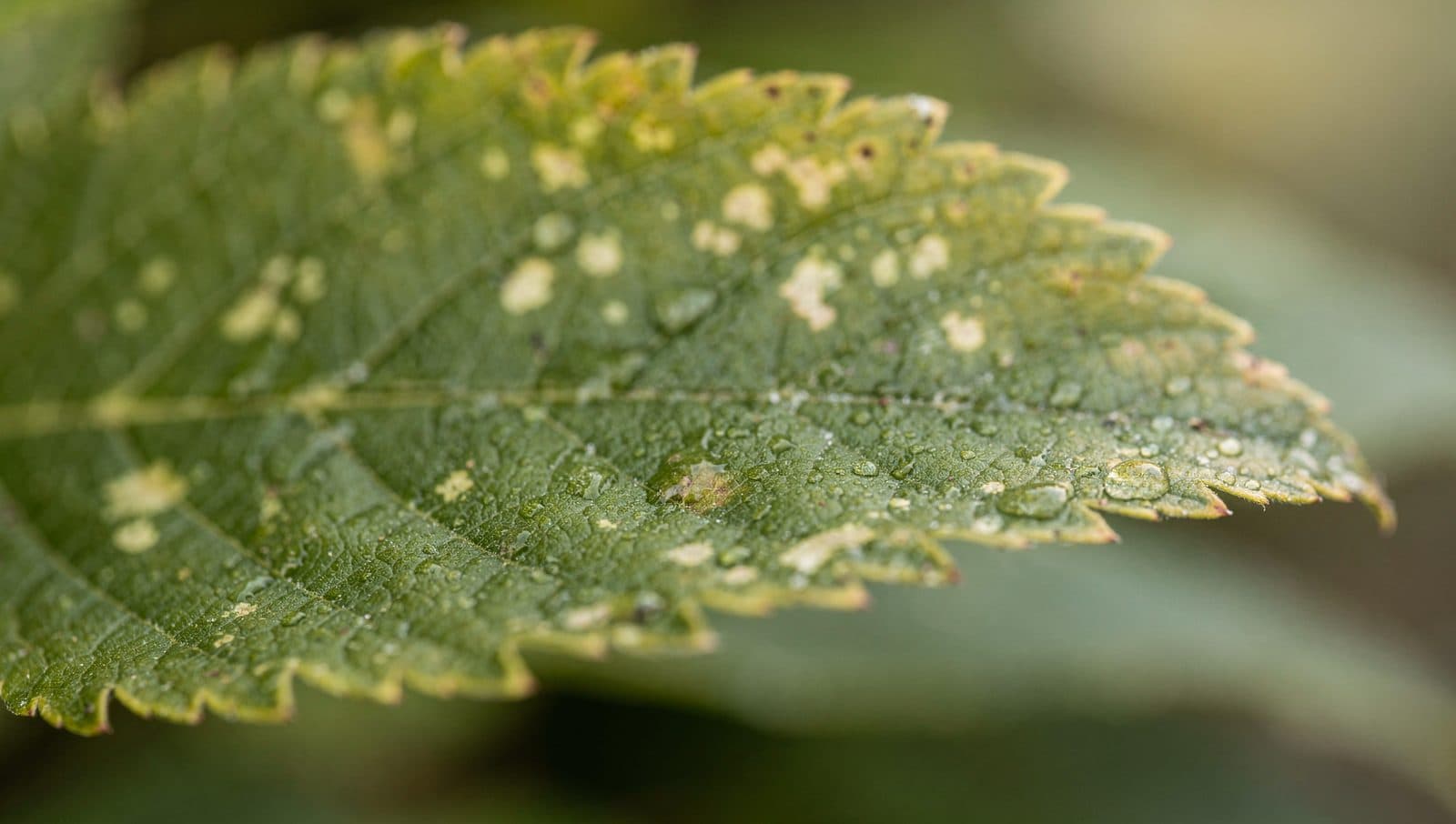
Why Are the Leaves on My Plants Turning Yellow?
Yellowing leaves are most often a watering or nutrient issue — not automatically a disease or a bug.
At a glance
- The verdict: Usually a care issue
- Who fixes it: You
- Category: Leaf-Symptom Diagnosis (pest vs disease vs care)
The short answer
Yellowing, technically called chlorosis, is one of the broadest symptoms a plant can show, and cultural causes dominate: over- or under-watering, nitrogen deficiency showing up uniformly on old leaves first, and iron or magnesium deficiency showing up as green veins with pale tissue between them. Root rot, viruses, and some leaf-spot diseases account for a real but smaller share, usually paired with lesions or root symptoms. Sap-sucking insects, spider mites, and root feeders are the least likely cause and almost always come with visible pests. Reading the pattern — which leaves, uniform or interveinal — narrows this down fast.
Pest, disease, or how you're caring for it?
Most leaf problems aren't pests at all. Here's the honest split — the most likely cause, the less likely ones, and how to tell them apart before you treat anything.
- Care / environmentMost likelythe usual cause
A gradual yellowing that follows a recognizable pattern by leaf age or position, tracking with watering habits or feeding schedule.
Over- or under-watering — one of the leading causes of yellowing overallNitrogen deficiency — uniform yellowing, oldest leaves firstIron or magnesium deficiency — interveinal yellowing, veins stay greenHigh soil pH limiting nutrient uptake, poor drainage restricting root functionThe tell:Check soil moisture first, then note the pattern — uniform yellowing on old leaves points to nitrogen or watering; green veins with yellow tissue between them points to iron or magnesium.
- Diseasea less common cause
Yellowing paired with lesions, wilting, or root symptoms rather than a clean pattern tied to leaf age.
Root rot restricting water and nutrient transportViral infections producing mottling alongside yellowingSome leaf-spot diseases that trigger yellowing and premature leaf drop around a lesionThe tell:Look for spots, lesions, or mushy roots accompanying the yellowing — a disease rarely produces yellowing in isolation.
- Pesta rare cause
Yellowing or stippling concentrated where insects are actively feeding, often on the undersides of leaves.
Aphids, scale, or whiteflies feeding and excreting honeydewSpider mites causing fine stippling that reads as yellow or bronzeRoot-feeding pests limiting water and nutrient uptakeThe tell:Flip the leaf and check the undersides and stem joints for insects, webbing, or honeydew before assuming a nutrient cause.
Read the pattern first: which leaves are affected (old vs. new) and whether the yellowing is uniform or interveinal (veins staying green). Check soil moisture next. Only after ruling out watering and nutrients should you flip the leaves for pests or look for lesions and root symptoms that would point to disease.
Who actually fixes this?
Start here
You
The great majority of yellowing traces back to watering habits or nutrient availability, both of which you can adjust directly, often confirmed with a simple soil test.
- UNH Extension — You want to confirm a nutrient deficiency, soil pH problem, or suspected disease rather than guess — UNH Cooperative Extension offers soil testing and plant diagnostics.
- Garden center — You've confirmed a pest like aphids or spider mites and need an insecticidal soap or horticultural oil.
The details, straight
Why yellowing is so often about water or nutrients
Chlorophyll production depends on the plant having enough water, light, and specific nutrients moving through its system, so yellowing is often the first visible sign that one of those inputs is off. Over- and under-watering are both leading causes: waterlogged soil suffocates roots and blocks nutrient uptake, while dry soil starves the plant of the water it needs to move nutrients at all — both can produce the same yellow result through different mechanisms. Nitrogen deficiency adds a specific, recognizable pattern on top of this: because nitrogen is mobile within the plant, a nitrogen-short plant pulls it from older leaves to support new growth, so uniform yellowing starting with the oldest leaves is a classic nitrogen tell.
Reading interveinal yellowing
Iron, manganese, and magnesium deficiencies behave differently from nitrogen because these nutrients don't move around the plant as easily, producing a distinctive interveinal pattern — the veins stay green while the tissue between them turns yellow. High soil pH is a common underlying driver, since it can lock up iron and other micronutrients even when they're present in adequate amounts in the soil, which is why simply adding more fertilizer doesn't always fix the problem and a soil pH test is often the more useful diagnostic step.
When yellowing points to disease
Root rot, certain viral infections, and some leaf-spot diseases can all cause yellowing, but they rarely do so in isolation. Root rot typically comes with wilting and, on inspection, mushy or foul-smelling roots. Viral infections often produce a mottled or mosaic pattern rather than clean, uniform yellowing. Leaf-spot diseases that trigger yellowing usually show a visible lesion or spot at the center of the affected area rather than an even color change across the whole leaf. If yellowing shows up alongside any of these signs, treat disease as the more likely explanation and consider an extension diagnostic.
Ruling pests in or out
Sap-sucking insects like aphids, scale, and whiteflies, along with spider mites, can all cause yellowing, either through direct feeding damage or the stress of a heavy infestation, but this is the least common of the three buckets for plain yellowing. The check is straightforward: flip the leaf and inspect the undersides and stem joints for insects, fine webbing, or a sticky honeydew residue. If none of that is present, a pest is an unlikely explanation regardless of how yellow the plant looks.
Key takeaways
- Watering and nutrition cause the large majority of yellowing — check soil moisture and the leaf pattern first.
- Uniform old-leaf yellowing usually means nitrogen or a watering issue; interveinal yellowing (green veins) usually means iron or magnesium.
- Yellowing paired with lesions, mottling, or mushy roots points toward disease, not a nutrient gap.
- Pests are the least likely cause of plain yellowing and almost always come with visible insects or webbing.
- This is rarely a pest-control job — watering, nutrition, and a soil test resolve most cases.
Not sure it's watering or a pest?
Learn the five at-home checks that separate pests, disease, and care problems before you fertilize or spray.
See how to tell pest from diseaseA note for New Hampshire gardeners
New Hampshire's clay-heavy soils in some areas can hold water longer than expected, making overwatering-driven yellowing a common issue even for gardeners who feel like they're watering carefully. UNH Cooperative Extension offers soil testing that can confirm pH and nutrient levels rather than leaving you to guess, and the free Ask UNH Extension Infoline (1-877-EXT-GROW) is a good first call for a diagnostic second opinion. Anchor Pest Services handles the structural and yard pests around your home, not the nutrient program for your garden.
NH-licensed applicator #782664 (NHDAMF, RSA 430) · NEPMA member · family-owned since 2017.
Related questions
Sources(4)
- [1]University of Maryland Extension — Nutrient Deficiency of Trees and Shrubs
Nitrogen deficiency causing uniform old-leaf yellowing; iron/magnesium causing interveinal yellowing
extensionverified 2026-07-14 - [2]UC Master Gardeners San Luis Obispo — Yellow Citrus Leaves
Overwatering, nitrogen/iron deficiency, and high soil pH as leading causes of leaf yellowing
extensionverified 2026-07-14 - [3]UC Statewide IPM Program — Spider Mites
Spider mite feeding as a pest-driven cause of yellowing/stippling, confirmed by flipping the leaf
extensionverified 2026-07-14 - [4]UNH Cooperative Extension — Soil Testing, Insect & Arthropod ID, and Plant Diagnostic Lab
Free NH soil testing and diagnostic services for confirming nutrient or disease causes of yellowing
extensionverified 2026-07-14
Written & reviewed by
VerifiedDaniel Brady
NH-Licensed Pesticide Applicator · License #782664 (NHDAMF, RSA 430)
Daniel Brady is the New Hampshire–licensed applicator behind Anchor Pest Services, a family-owned pest control company serving the Manchester area since 2017.
Last updated 2026-07-14
Your next question
Honest pest help for New Hampshire homes
Yellowing Leaves Are Plant Care — But Your Home Is Our Job
Correcting watering and nutrition is garden work, and we'll always tell you so. Where Anchor Pest Services genuinely helps is the pests around your home — rodents, ants, ticks, and moisture pests drawn to leaf litter and debris against the foundation. Family-owned since 2017, NH license #782664, serving Manchester, Nashua, Concord and nearby towns.
- We read yellow leaves as watering and nutrition first, not a pest
- NH-licensed (#782664) — free assessment, same-day service when it's ours
- Yard and structural pest control from Nashua to Concord and nearby towns
NH License #782664 · No obligation · We answer in person
Your next step
- Book a NH pro
Pest Control Services
Licensed, family-owned pest control across southern NH.
Book now - Related guide
Are Yellowing Leaves Always a Disease?
Read the answer - Related guide
Why Do Tomato Plant Leaves Turn Yellow?
Read the answer - Related guide
Why Do Leaves Turn Black After Watering?
Read the answer - Related guide
Why Are My Leaves Turning Pale or Losing Color?
Read the answer - Related guide
Can Infected Leaves Spread Disease to Other Plants?
Read the answer