
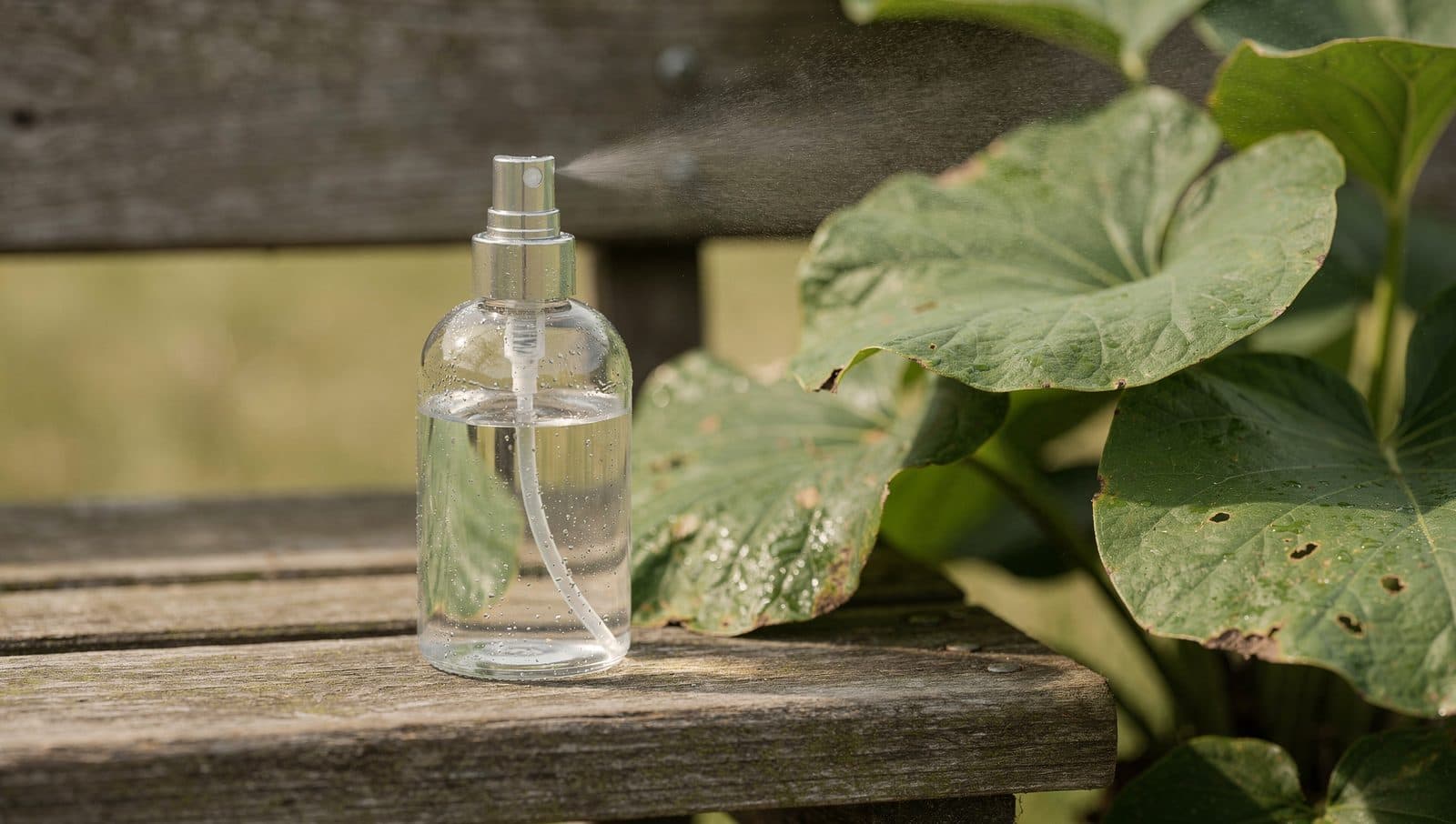
Can I Use Vinegar to Kill Pests on Leaves?
Vinegar doesn't reliably kill leaf pests, and its acetic acid burns the very leaves you're trying to save — it's a contact herbicide, not an insecticide.
At a glance
- The verdict: Harmful — don't
- Who fixes it: Garden center
- Category: Leaf Treatments & Remedy Myths
The short answer
Skip it. Household vinegar is a weak, non-selective contact acid that has little reliable effect on insects but readily scorches leaf tissue. Extension and weed-science sources classify vinegar as a contact herbicide — it desiccates green tissue on contact — which is exactly why spraying it on a plant you want to keep backfires. If you have soft-bodied pests like aphids or mites, use a product actually built and registered for the job: insecticidal soap or horticultural oil. Vinegar is the number-one 'please don't' on this whole hub.
The honest efficacy grade
Household vinegar sprayed on plant leaves
harmful- The claim
- A vinegar spray is a cheap, natural bug killer that wipes pests off your leaves without chemicals.
- The reality
- University of Maryland Extension describes vinegar products as 'non-selective, foliar sprays that kill most broad-leaved weeds' — a contact herbicide, not a proven insecticide. Pest-control sources agree its effect on insects is short-lived and unreliable; it works at best as a temporary scent disruptor, not a killer, so it never addresses the source of an infestation.
Source:University of Maryland Extension; Western Exterminator; UC Master Gardener Program
Who actually fixes this?
Start here
Garden center
This is a plant-care question, and the honest fix is a product actually registered to control leaf pests — a garden-center insecticidal soap or horticultural oil — not a kitchen acid that damages the plant.
- You — The problem is light — hosing pests off and improving airflow/light often handles a small aphid or mite flare-up without any spray.
- UNH Extension — You're not sure what the pest (or the problem) actually is — UNH Cooperative Extension's Insect & Arthropod ID service can confirm it before you treat.
The details, straight
What vinegar actually does to a leaf
Vinegar's active ingredient is acetic acid, and acetic acid is a desiccant — it breaks down the waxy cuticle that protects a leaf and draws moisture out of the cells underneath. That's why weed scientists and extension programs treat vinegar as a burndown herbicide, not a bug spray: sprayed on green tissue, it scorches it. University of Maryland Extension classifies vinegar products as 'non-selective, foliar sprays that kill most broad-leaved weeds.' A plant you're trying to save is broad-leaved green tissue too — so the spray can't tell your leaf from a weed.
Why it doesn't even work on the pests
Even setting the plant damage aside, vinegar is an unreliable insecticide. Its effect on insects is brief and inconsistent — it can disrupt a scent trail or irritate a bug on direct contact, but it leaves no residual control and doesn't touch eggs or protected stages. As one pest-control source puts it, 'because vinegar is not a true insecticide, it won't address the root of an infestation.' So the honest scorecard is the worst of both worlds: high risk to the plant, low reward against the pest.
The phytotoxicity problem, in plain terms
Standard household vinegar is about 5% acetic acid, and that's enough to cause rapid foliar burn — dark blotches, bleached patches, and crispy edges, often within a day of spraying, especially in sun. Tomatoes, peppers, and most ornamentals are easily damaged. 'Horticultural' vinegar sold at 20% or more is marketed as stronger and 'natural,' but it's a genuine skin and eye hazard that requires gloves and goggles, and it burns leaves even faster. Natural does not mean safe for your plant.
What to reach for instead
Match the tool to the pest. For soft-bodied pests — aphids, spider mites, whiteflies, mealybugs — a registered insecticidal soap or horticultural oil is the honest starting point: cheap, low-toxicity, and actually designed to kill the bug without wrecking the leaf. Spray thoroughly on the undersides of leaves where pests hide, and avoid applying in direct sun or high heat, which is when even the right product can burn foliage. Homemade acid, soap, and garlic concoctions are not tested for efficacy or safety and aren't registered pesticides; UC's Master Gardener program warns they 'have the potential to harm human health, damage plants, be toxic to pets and wildlife, and pollute the environment.' If you don't know what the pest is — or whether it's a pest at all versus a disease or a watering problem — get it identified first.
Key takeaways
- Vinegar is a contact herbicide, not an insecticide — it's designed to burn green leaves.
- 5% household vinegar causes rapid foliar burn; 20%+ 'horticultural' vinegar is a skin/eye hazard.
- Its effect on insects is brief and unreliable, with no residual control — high risk, low reward.
- Use a registered insecticidal soap or horticultural oil instead, on leaf undersides, out of hot sun.
- Not sure what the pest is? Get it identified (UNH Extension) before spraying anything.
Not sure it's even a pest?
Half of all 'leaf problems' are diseases or watering mistakes, not bugs. Identify the cause before you spray — it saves the plant and your time.
See how to tell pest from diseaseA note for New Hampshire gardeners
Leaf-pest questions are plant-care questions, and New Hampshire has an excellent free resource for them: UNH Cooperative Extension's Insect & Arthropod ID service and the Ask UNH Extension Infoline (1-877-EXT-GROW) can identify what's on your plant before you treat it. (Note: UNH's plant-disease diagnostic lab has been referring disease samples to the University of Maine and Cornell labs — worth checking current status if the problem turns out to be a disease rather than a pest.) Anchor Pest Services handles the structural and yard pests around your home, not the leaves on your houseplants — but we're glad to point you to the right fix.
NH-licensed applicator #782664 (NHDAMF, RSA 430) · NEPMA member · family-owned since 2017.
Related questions
Sources(4)
- [1]University of Maryland Extension — Vinegar as an Alternative to Glyphosate
Vinegar classified as a non-selective contact herbicide for broad-leaved plants; leaves perennial roots alive
extensionverified 2026-07-14 - [2]Western Exterminator — Does Vinegar Repel Insects?
Vinegar is not a true insecticide and won't address the root of an infestation; short-lived effect
academicverified 2026-07-14 - [3]UC Master Gardener Program — Dangers of Homemade Pest Control Remedies
Untested homemade acid/soap/garlic sprays can damage plants, harm pets/wildlife, and are unregistered
extensionverified 2026-07-14 - [4]UNH Cooperative Extension — Insect & Arthropod Identification
Free NH insect/arthropod ID service for identifying a pest before treatment
extensionverified 2026-07-14
Written & reviewed by
VerifiedDaniel Brady
NH-Licensed Pesticide Applicator · License #782664 (NHDAMF, RSA 430)
Daniel Brady is the New Hampshire–licensed applicator behind Anchor Pest Services, a family-owned pest control company serving the Manchester area since 2017.
Last updated 2026-07-14
Your next question
Honest pest help for New Hampshire homes
Leaf Pests Are Plant Care — But Your Home Is Our Job
Treating leaves on your plants is garden work, and we'll always tell you so. Where Anchor Pest Services genuinely helps is the pests around your home — rodents, ants, ticks, and moisture pests drawn to leaf litter and debris against the foundation. Family-owned since 2017, NH license #782664, serving Manchester, Nashua, Concord and nearby towns.
- No upsell — DIY questions like vinegar get a straight answer, not a quote
- New Hampshire applicators' license #782664 — no-cost quote, quick response
- Around-the-home pest control for southern and central New Hampshire
NH License #782664 · No obligation · We answer in person
Your next step
- Book a NH pro
Pest Control Services
Licensed, family-owned pest control across southern NH.
Book now - What to do next
Natural Ant Control: Why Bait Beats Spray, Even the Organic Kind
Read the answer - What to do next
How to Get Rid of Fruit Flies
Read the answer - Also relevant
Does Apple Cider Vinegar Help Repel Fleas?
Read the answer - Related guide
How Can I Stop Fungal Growth on Leaves?
Read the answer - Related guide
What Happens If I Don't Remove Dead Leaves in Autumn?
Read the answer