
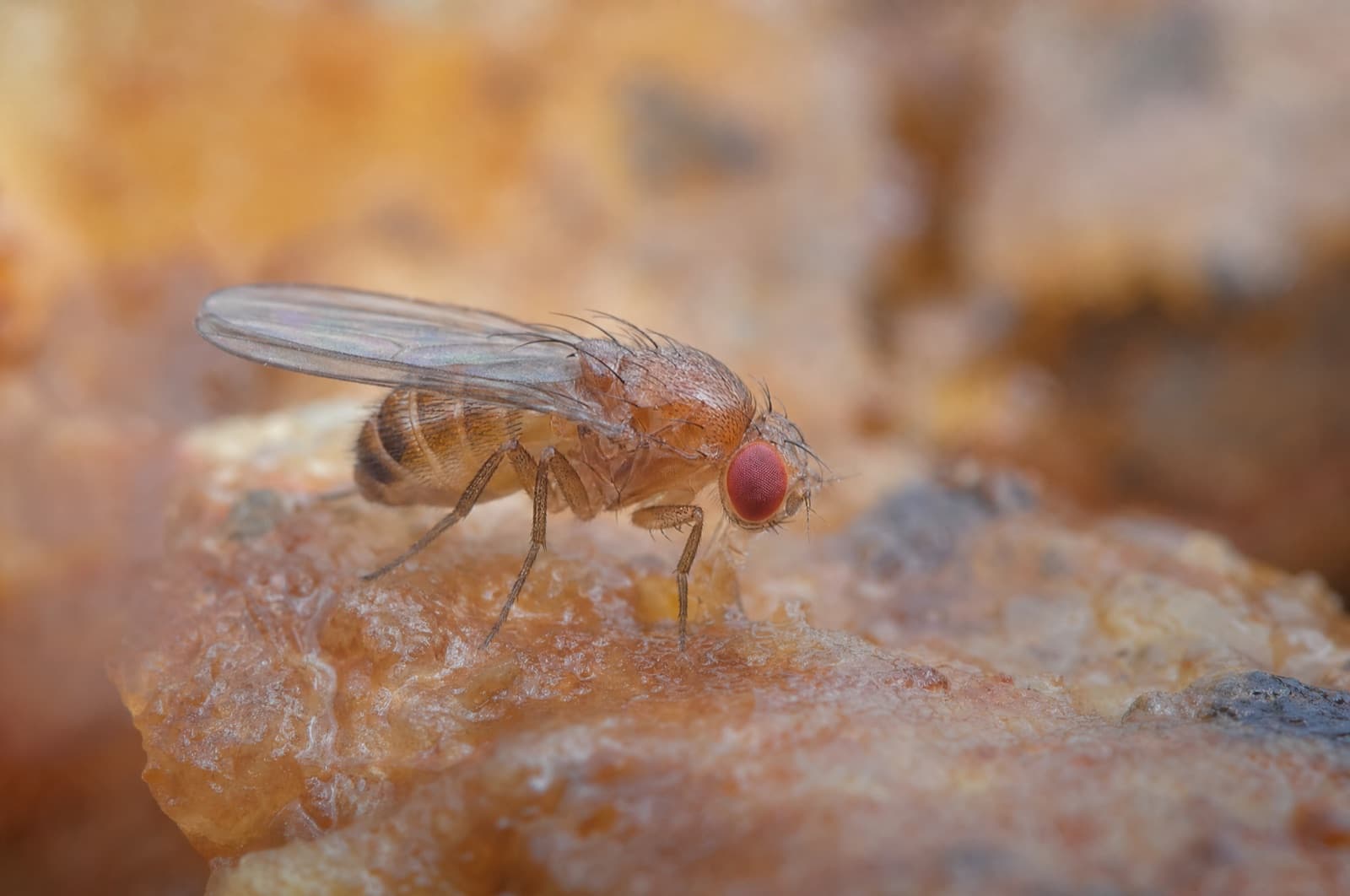
How to Get Rid of Fruit Flies
At a glance
- Difficulty: Beginner
- Time: Minutes to set up; a few days for full resolution
- Cost: Very low — apple cider vinegar, dish soap, a jar
- Success: High within a few days when the trap is paired with source removal
Can you DIY Fruit Fly?
The verdict on Fruit Fly DIY
One of the cleanest DIY wins in pest control — a kitchen-cabinet trap that actually works.
Fruit flies breed in fermenting fruit and organic residue — overripe produce, drain film, recycling containers with sticky residue. The apple-cider-vinegar-and-dish-soap trap is a genuinely effective, well-documented DIY method, not a myth: the vinegar mimics the fermentation scent that attracts them, and a drop of dish soap breaks the water's surface tension so flies that land sink instead of resting on top. Combined with removing the breeding source, most fruit fly problems clear up within days using nothing but kitchen staples.
The 5 DIY methods — honestly graded
Every approach graded for this species, in IPM order — prevention first, chemistry late. Pick a method to see how it works, the steps, and what it actually takes.
Prevention / Exclusion
Works wellRemoving ripe produce and organic residue is the other half of the fix, alongside the trap.
Fruit flies breed in fermenting fruit and any organic residue, so removing or refrigerating that material eliminates the source feeding new generations.
Best for: Every case, alongside the vinegar trap
Remove or refrigerate ripe produce
Store ripe fruit in the refrigerator rather than on the counter, or use it quickly once fully ripe.
Clean spills, recycling, and drains
Wipe up spills promptly, rinse recycling containers before storing them, and clean drains that can hold organic residue.
Take out organic trash regularly
Empty compost and organic waste bins frequently rather than letting them accumulate.
Tools & materials
Why DIY falls short here
Not scare tactics — the specific, proportionate reasons a home attempt can stall for this species.
Trap without source removal
The trap catches adults, but new flies keep emerging until the breeding residue — rotting produce or drain film — is actually cleaned up.
Plain vinegar with no soap
Without a drop of dish soap to break the surface tension, flies land on the vinegar and escape instead of drowning — the soap is essential to the trap working.
How risky is it, really?
An honest read — most nuisance species are genuinely low risk, and we say so.
Fruit flies are a pure sanitation nuisance around produce, trash, and drains. They don't bite and pose negligible home disease risk.
- Nuisance around produce, trash, and drainsCommon
Cosmetic and annoying, not hazardous
Western Pest Services
- Disease transmissionRare
Negligible in a home setting
Western Pest Services
Fruit Flies Still Around After a Week?
A persistent problem despite trapping and cleanup can mean a hidden source. Anchor Pest Services offers full inspections across southern and central New Hampshire. Family-owned since 2017, NH license #782664.
Call a pro when…
- Flies persist beyond a week or two despite trapping and thorough sanitation
- You suspect a hidden drain or organic buildup source you can't locate
- A recurring problem despite consistent kitchen sanitation
General Pest Control
Fruit flies are rarely a pro job. If the vinegar trap and thorough source removal don't clear a persistent problem within a week or two, there may be a hidden breeding source, like a drain, worth a professional inspection.
Keep them out
- Store ripe produce in the refrigerator
- Clean drains and recycling containers regularly
- Take out organic trash and compost frequently
Fruit flies in New Hampshire homes
Fruit fly pressure in NH kitchens tracks the state's own harvest calendar, not a generic 'late summer' guess. UNH Extension's New Hampshire Harvest Season chart puts local field tomatoes in season from roughly July through the first fall frost and the NH apple harvest running from late August into October — the same weeks farmstand and pick-your-own produce piles up on kitchen counters and ripens fast. That overlap is why NH fruit fly complaints cluster in that August-to-October window; a refrigeration habit during those specific harvest weeks heads off most problems before they start.
Peak season
August through October, tracking the NH tomato and apple harvest (UNH Extension NH Harvest Season chart)
Make sure it's a Fruit Fly
Two quick detours worth taking — confirm the ID, then learn what drew it in so it doesn't come back.
Frequently asked
Sources & further reading(4)
- [1]Orkin — Apple Cider Vinegar Fruit Fly Traps
Trap mechanism and effectiveness
industryverified 2026-07-13 - [2]Western Pest Services — How Apple Cider Vinegar Fruit Fly Traps Actually Work
Trap mechanism, sanitation guidance, risk framing
industryverified 2026-07-13 - [3]PestPolicy — Vinegar and Dawn Dish Soap Trap for Fruit Flies
Surfactant mechanism confirmation
industryverified 2026-07-13 - [4]UNH Cooperative Extension — The NH Harvest Season [chart]
New Hampshire harvest timing for field tomatoes (July into fall) and apples (late August through October)
extensionverified 2026-07-22
Written & reviewed by
VerifiedDaniel Brady
NH-Licensed Pesticide Applicator · License #782664 (NHDAMF, RSA 430)
Daniel Brady is the New Hampshire–licensed applicator behind Anchor Pest Services, a family-owned pest control company serving the Manchester area since 2017.
Last updated July 2026
Other species you can tackle
Same category — the dot shows each one's DIY verdict at a glance (green = friendly, amber = doable with care, red = call a pro).
Professional Pest Control
Fruit Flies Still Around After a Week?
A persistent problem despite trapping and cleanup can mean a hidden source. Anchor Pest Services offers full inspections across southern and central New Hampshire. Family-owned since 2017, NH license #782664.
- NH-licensed applicators (#782664)
- Free inspection — same-day service across southern NH
NH License #782664 · No obligation · We answer in person
Your next step
- What to do next
Fruit Flies in New Hampshire — ID, Where They Come From & Control
Read the answer - What to do next
Is Terro Fruit Fly Trap (T2503) Safe for Pets?
Read the answer - Also relevant
How to Use Fruit Fly Trap (T2503) by Terro
Read the answer - Also relevant
Where Do Flies Go in the Winter? NH Cluster Fly Timing
Read the answer - Related guide
Does Apple Cider Vinegar Help Repel Fleas?
Read the answer