
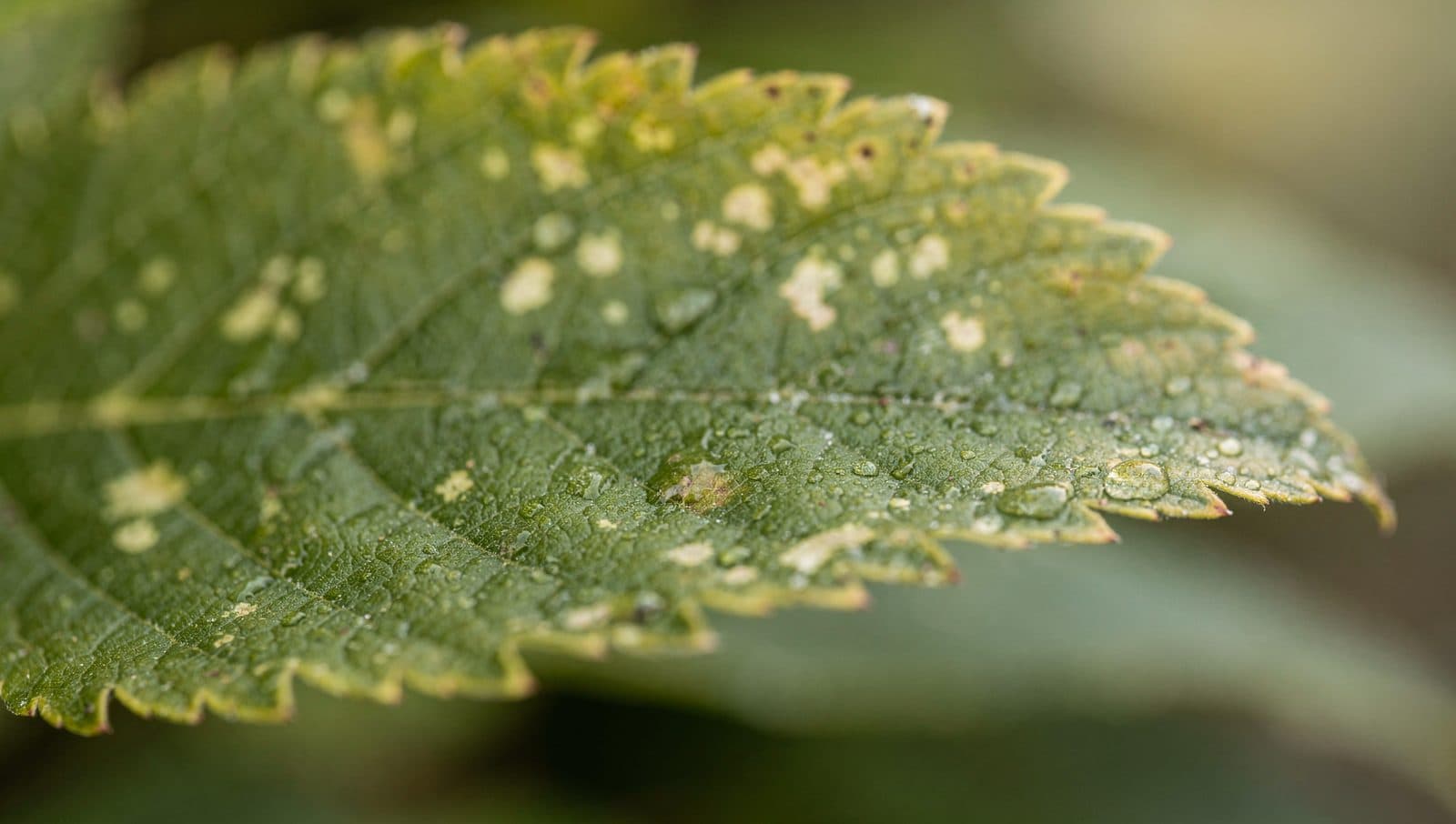
Do Leaf Problems Mean My Soil Is Bad?
Not necessarily: soil pH, drainage, and salt buildup genuinely cause a good share of leaf problems, but plenty of yellowing, spotting, and wilting comes from pests, disease, or a watering habit that has nothing to do with the soil itself — a soil test is the cheapest way to know which.
At a glance
- The verdict: Sometimes — not automatically
- Who fixes it: You
- Category: Leaf-Symptom Diagnosis (pest vs disease vs care)
The short answer
Not automatically, though soil is a real and common contributor. Soil-linked leaf problems include high pH locking up iron (causing yellowing between the veins), nitrogen deficiency, salt or fertilizer buildup (marginal leaf burn), poor drainage that suffocates roots, and compaction. But a substantial share of leaf symptoms — sap-sucking pests, chewing insects, fungal leaf spots, powdery mildew, watering mistakes independent of the soil's actual quality — have nothing to do with the soil at all. A soil test from UNH Cooperative Extension is the honest, evidence-based way to find out whether your soil is actually the culprit rather than guessing from the leaves alone.
Pest, disease, or how you're caring for it?
Most leaf problems aren't pests at all. Here's the honest split — the most likely cause, the less likely ones, and how to tell them apart before you treat anything.
- Care / environmentMost likelythe usual cause
Yellowing between green veins on new growth (iron lockup from high pH), uniform old-leaf yellowing (nitrogen), crisp brown leaf margins (salt/fertilizer buildup), or generally poor vigor tied to compacted or poorly draining soil.
High soil pH locking up iron/manganeseNitrogen deficiencySoluble-salt or over-fertilizer buildupPoor drainage / soil compactionThe tell:The pattern matches a known nutrient or salt signature, and a soil test confirms pH, nutrient levels, or salt content directly rather than guessing.
- Diseasea less common cause
Wilting or dieback tied to a soilborne pathogen rather than the soil's chemistry — the soil is the vector, not a nutrient problem.
Verticillium wilt (a soil fungus)Root and crown rots (Pythium, Phytophthora)The tell:One-sided wilt with vascular staining, or mushy discolored roots, points to a soilborne pathogen rather than a nutrient or pH issue.
- Pesta rare cause
Chewed leaves, sticky honeydew, stippling, or visible insects — problems that live and feed on the foliage itself, unrelated to what's happening below ground.
Aphids, whiteflies, scaleCaterpillars and chewing beetlesSpider mitesThe tell:Flip the leaf for insects, webbing, or chewing damage — none of which have anything to do with soil quality.
A soil test is the single most reliable differential here — it directly measures pH, nutrient levels, and salts rather than relying on inference from leaf symptoms. If the test comes back within normal ranges but leaf problems persist, look to pests (flip the leaf) or disease (check for lesions, wilting, or root rot) as the more likely explanation instead.
Soil quality and other causes aren't mutually exclusive — poor soil drainage, for instance, can both directly stress roots (cultural) and create the wet conditions that let a soilborne disease take hold.
Who actually fixes this?
Start here
You
General soil care — adjusting watering, avoiding over-fertilizing, improving drainage — is within the homeowner's control, and it's the right starting point before assuming the soil is fundamentally 'bad.'
- UNH Extension — You want a definitive answer rather than a guess — UNH Cooperative Extension's soil testing service measures pH, nutrients, and salts directly and is the honest way to confirm or rule out soil as the cause.
- Garden center — A soil test confirms a specific deficiency or pH imbalance — a garden center can recommend the right amendment (lime, sulfur, a balanced fertilizer) once you know what's actually needed.
The details, straight
When soil really is the driver
Soil chemistry genuinely explains a real share of leaf problems. High soil pH is a classic culprit: it locks up iron and manganese so a plant's roots can't absorb them even when they're physically present in the soil, producing the distinctive yellow-between-green-veins look on new growth known as interveinal chlorosis. Nitrogen deficiency, often tied to poor, depleted, or heavily leached soil, causes uniform yellowing starting on old leaves. Excess fertilizer or de-icing salt buildup pulls moisture out of root tissue and shows up as crisp, burned leaf margins. And soil that's compacted or drains poorly suffocates roots much the way overwatering does, regardless of what's actually in the soil chemically.
When the leaves are the problem, not the ground beneath them
A large share of leaf symptoms have nothing to do with soil at all. Sap-sucking pests like aphids and scale feed directly on foliage and stems; chewing insects and slugs damage leaves from above; fungal leaf-spot diseases and powdery mildew spread through spores in the air and on wet foliage, not through the soil. Even some watering mistakes — like letting a houseplant's soil surface dry out between infrequent, heavy waterings versus a steady rhythm — are about scheduling and habit rather than the soil's inherent quality. Blaming 'bad soil' for a problem that's actually aphids or powdery mildew leads to the wrong fix.
The soilborne-disease middle ground
Some plant problems genuinely originate in the soil without being a soil-quality issue in the nutrient sense — Verticillium wilt is a soil-dwelling fungus that infects roots and clogs a plant's vascular system, and root rots like Pythium and Phytophthora are soil-borne pathogens that take hold especially in waterlogged conditions. These are diagnosable through symptoms (one-sided wilt with internal staining, or mushy discolored roots) and confirmed through a diagnostic lab, not a standard soil nutrient test, which is a useful distinction to keep straight.
Why a soil test is the honest answer, not a guess
Rather than trying to reverse-engineer soil quality from leaf symptoms alone — which, as shown above, can be caused by plenty of things unrelated to soil — a soil test measures pH, nutrient levels, and soluble salts directly. UNH Cooperative Extension's Soil Testing Service processes several thousand samples a year from New Hampshire homeowners and gardeners, and pairing the result with what the leaves are actually showing (spots vs. no spots, insects vs. none, pattern of yellowing) gives a far more reliable answer than assuming either soil or something else without checking.
Key takeaways
- Not automatically — soil pH, salts, nitrogen, and drainage genuinely cause a real share of leaf problems, but far from all of them.
- Interveinal yellowing on new growth (iron/pH), uniform old-leaf yellowing (nitrogen), and crisp burned margins (salts) point to the soil.
- Pests (chewing, honeydew, stippling) and airborne fungal diseases (leaf spot, powdery mildew) have nothing to do with soil quality.
- Some problems, like Verticillium wilt and root rot, originate in the soil as pathogens rather than as a nutrient or pH issue.
- A soil test is the cheapest, most honest way to confirm or rule out soil as the actual cause before treating anything.
Don't blame the soil until you've tested it
A soil test settles pH, nutrients, and salts directly — far more reliable than guessing from the leaves alone.
See the full pest-vs-disease triageA note for New Hampshire gardeners
New Hampshire soils vary widely by region, and UNH Cooperative Extension's Soil Testing Lab is the most direct way to confirm pH, nutrient levels, and salts for your specific yard or garden bed; the lab publishes homeowner sampling instructions and interpretation guides. If a leaf problem turns out to be a soilborne disease rather than a nutrient issue, UNH Extension's Plant Diagnostic Lab is the authority to consult. Anchor Pest Services handles the structural and yard pests around your home, not soil chemistry, but we'll happily point you to Extension.
NH-licensed applicator #782664 (NHDAMF, RSA 430) · NEPMA member · family-owned since 2017.
Related questions
Sources(3)
- [1]UNH Cooperative Extension — Soil Testing, Insect & Arthropod ID, and Plant Diagnostic Lab
UNH's soil testing service and the Ask UNH Extension Infoline
extensionverified 2026-07-14 - [2]University of Maryland Extension — Nutrient Deficiency of Trees and Shrubs
pH-driven nutrient lockup and interveinal chlorosis patterns
extensionverified 2026-07-14 - [3]University of Maryland Extension — Excess Fertilizer or Salt Damage on Flowers
Soluble-salt injury and marginal leaf burn from over-fertilizing
extensionverified 2026-07-14
Written & reviewed by
VerifiedDaniel Brady
NH-Licensed Pesticide Applicator · License #782664 (NHDAMF, RSA 430)
Daniel Brady is the New Hampshire–licensed applicator behind Anchor Pest Services, a family-owned pest control company serving the Manchester area since 2017.
Last updated 2026-07-14
Your next question
Honest pest help for New Hampshire homes
Soil Questions Are Extension's Job — Your Home Is Our Job
Confirming soil quality is a job for a soil test, not a pest inspection, and we'll say so plainly. Where Anchor Pest Services genuinely helps is the pests around your home — rodents, ants, ticks, and moisture pests drawn to leaf litter and debris against the foundation. Family-owned since 2017, NH license #782664, serving Manchester, Nashua, Concord and nearby towns.
- Honest routing — a bad-soil hunch is a soil test, not a service call
- NH-licensed applicators (#782664) for the structural pests around your home
- Serving Manchester, Nashua, Concord and nearby NH towns — free quote
NH License #782664 · No obligation · We answer in person
Your next step
- Related guide
Can Professional Pest Control Help With Leaf Problems?
Read the answer - Related guide
Can Poor Drainage Cause Leaf Disease?
Read the answer - Related guide
Is Leaf Mold Harmful to People or Pets?
Read the answer - Related guide
What Are the Signs It's Time to Call a Pest Expert for Leaf Problems?
Read the answer - Related guide
How Much Does Leaf Pest Control Cost?
Read the answer