
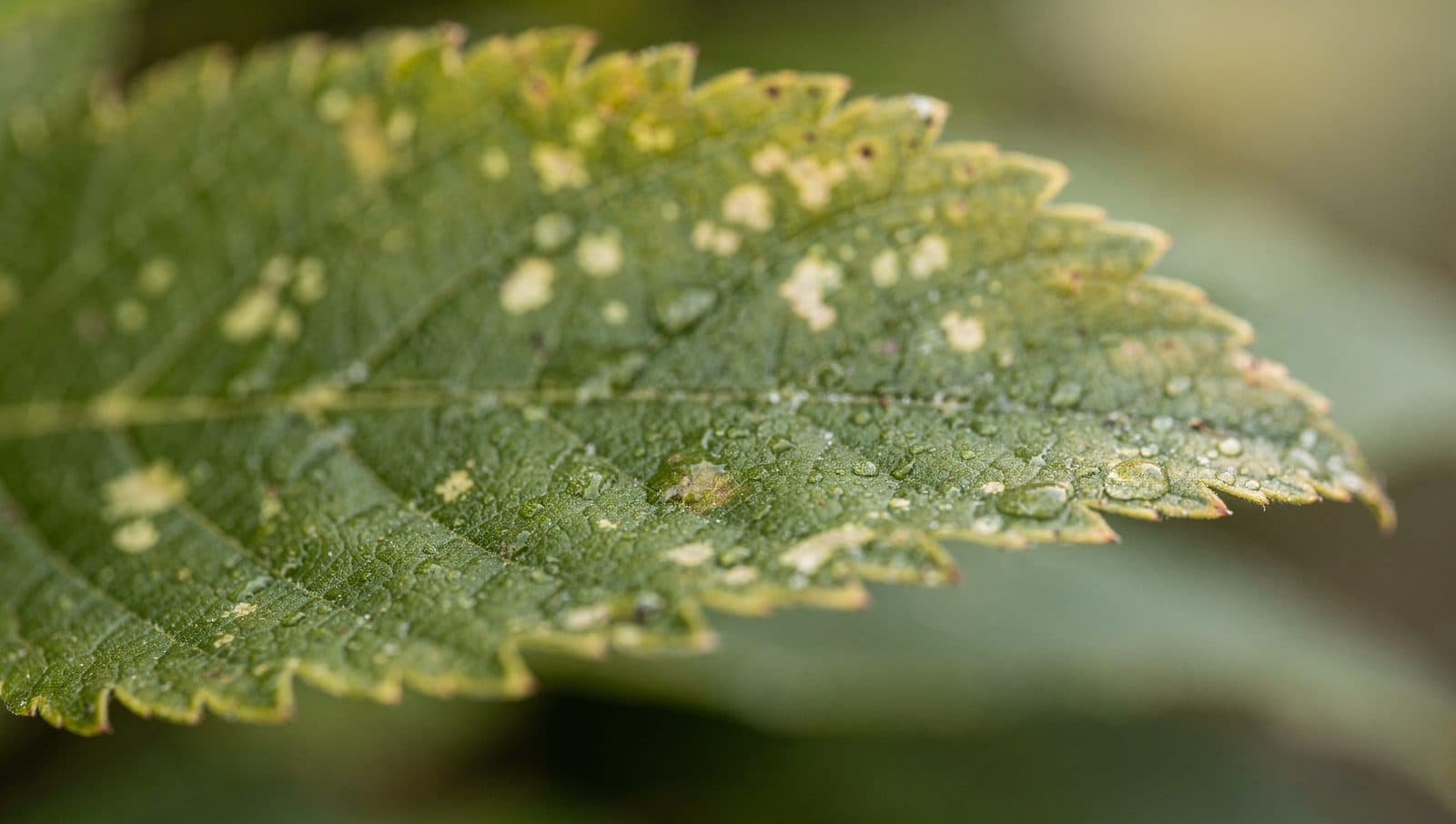
Can Too Much Fertilizer Burn Leaves?
Yes: excess fertilizer salts pull water out of root tissue and scorch leaf margins, and it's a care error, not a pest or a disease.
At a glance
- The verdict: Yes — cultural, a care error
- Who fixes it: You
- Category: Leaf-Symptom Diagnosis (pest vs disease vs care)
The short answer
Yes. Applying more fertilizer than a plant can use, or applying it too often, builds up soluble salts in the soil that pull moisture out of root tissue instead of letting roots draw water in, which shows up in the leaves as marginal yellowing, browning, wilting, or crisp scorched edges. Direct contact between concentrated fertilizer and foliage can also burn leaves on the spot. This is a purely cultural problem tied to how much and how often you feed, not a pest and not an infectious disease, and it's most common in hot, dry weather when salts concentrate fastest. The fix is flushing the soil and correcting your feeding rate, not a spray or a pest treatment.
Pest, disease, or how you're caring for it?
Most leaf problems aren't pests at all. Here's the honest split — the most likely cause, the less likely ones, and how to tell them apart before you treat anything.
- Care / environmentMost likelythe usual cause
Crisp, brown, uniform margins or tips, sometimes a visible white salt crust on the soil surface or pot rim, following a recent feeding, worse in hot or dry weather.
Over-application of granular or liquid fertilizerFeeding too frequently without flushing between applicationsDirect fertilizer contact with foliageThe tell:Recent fertilizing plus uniform, crisp margins with no halo or lesion, and a soil surface that may show a white mineral crust.
- Diseasea less common cause
Marginal browning or spotting that can superficially resemble salt burn but comes with lesions, halos, or a pattern that spreads over time in wet weather.
Marginal leaf-spot or bacterial scorch look-alikesThe tell:Look for a defined lesion with a halo or ring, or spread to nearby leaves over days, rather than a one-time scorch tied to a feeding event.
- Pesta rare cause
Heavy sap-sucking pest activity can occasionally produce a similar-looking marginal browning as leaves lose vigor.
Heavy aphid, scale, or spider mite infestation stressing the plantThe tell:Visible insects, webbing, or honeydew present, and the damage doesn't correlate with a recent feeding.
Ask what changed recently: a recent feeding, especially in hot or dry weather, plus crisp, uniform margins and no insects or lesions, points squarely to fertilizer or salt burn. A white crust on the soil or pot is a strong confirming sign.
No specific fertilizer rates, dosages, or dilution ratios are given here; always follow the product label for your specific fertilizer and plant.
Who actually fixes this?
Start here
You
This is a feeding-rate and soil-flushing fix you can do yourself: water thoroughly to leach excess salts out of the root zone and adjust how much and how often you fertilize going forward.
- Garden center — You want a lower-strength or slow-release fertilizer better suited to the plant, or help choosing an appropriate feeding schedule.
- UNH Extension — You want the soil tested to confirm salt buildup or nutrient levels, especially in garden beds rather than containers.
The details, straight
How fertilizer actually burns a leaf
Fertilizer is a concentration of soluble mineral salts, and roots normally draw water into the plant because the water outside the root has a lower salt concentration than the fluid inside root cells. When too much fertilizer builds up in the soil, that balance reverses: the soil solution becomes saltier than the root tissue, and water is pulled out of the roots rather than into them, essentially a reverse-osmosis effect that mimics drought stress even in soil that's perfectly moist. University of Maryland Extension describes this directly, noting that soluble salts can pull moisture out of root tissue and cause wilting, marginal yellowing, and stunting, and that leaf burn or scorch can also result from fertilizer making direct contact with foliage.
Why it looks the way it does, and when it's worse
Because the mechanism is about water movement rather than infection, fertilizer and salt burn typically shows up as crisp, uniform browning concentrated at leaf margins and tips, the areas farthest from the water supply and often the first to run short. It tends to appear fairly soon after a heavy feeding, and it's worse in hot, dry weather when soil moisture is already limited and salts concentrate faster as water evaporates. Containers are especially vulnerable since there's a smaller soil volume to buffer and dilute excess salts compared with an in-ground bed, which is why potted plants show fertilizer burn more often and more severely than the same plant grown in open soil.
How to fix it and prevent it going forward
If you suspect fertilizer or salt burn, flush the soil by watering thoroughly and slowly enough that water runs through and out of the drainage holes several times, which leaches excess salts out of the root zone; do this a few times over a week or two rather than all at once. Going forward, follow the product label's recommended rate rather than guessing or applying extra for faster results, water before and after feeding rather than fertilizing dry soil, and consider a slower-release or lower-strength product for sensitive plants. Trim off severely burned leaf tissue once new growth appears, since the damaged leaves themselves won't recover.
Key takeaways
- Yes, too much fertilizer can and does burn leaves — it's a soluble-salt problem, not a pest or a disease.
- Excess salts pull water out of root tissue, mimicking drought even in moist soil.
- The tell is crisp, uniform margin browning after a recent feeding, sometimes with a white salt crust on the soil.
- Containers burn more easily than in-ground beds because there's less soil to dilute the salts.
- The fix is flushing the soil and correcting the feeding rate, following the product label rather than a fixed dosage.
Crisp brown margins after feeding?
Fertilizer burn has a distinct signature — uniform crisp margins, no insects, no lesions. See how it compares to pest and disease damage.
See the full pest-vs-disease-vs-care triageA note for New Hampshire gardeners
Fertilizer and salt burn questions climb in New Hampshire both in spring, when eager gardeners over-feed new plantings, and in late fall and winter along walkways and driveways where de-icing salt runs off into nearby beds and can cause a very similar marginal scorch on shrubs and perennials. If browning shows up on plants near a driveway or walkway after winter, de-icing salt is worth considering alongside fertilizer rate. UNH Cooperative Extension's soil testing service can confirm salt or nutrient levels in garden beds if you want it measured rather than guessed at.
NH-licensed applicator #782664 (NHDAMF, RSA 430) · NEPMA member · family-owned since 2017.
Related questions
Sources(3)
- [1]University of Maryland Extension — Excess Fertilizer or Salt Damage on Flowers
Soluble salts pulling moisture from root tissue causing wilting, marginal yellowing, and stunting
extensionverified 2026-07-14 - [2]University of Maryland Extension — Fertilizer or Pesticide Burn on Vegetable Leaves
Direct foliar contact with fertilizer causing leaf burn
extensionverified 2026-07-14 - [3]University of Maryland Extension — Salt or Fertilizer Damage on Trees
Marginal browning from salt and fertilizer damage on woody plants
extensionverified 2026-07-14
Written & reviewed by
VerifiedDaniel Brady
NH-Licensed Pesticide Applicator · License #782664 (NHDAMF, RSA 430)
Daniel Brady is the New Hampshire–licensed applicator behind Anchor Pest Services, a family-owned pest control company serving the Manchester area since 2017.
Last updated 2026-07-14
Your next question
Honest pest help for New Hampshire homes
Fertilizer Burn Is Plant Care — But Your Home Is Our Job
Leaf scorch from over-feeding is a soil and watering issue, and we'll always say so rather than oversell a treatment you don't need. Where Anchor Pest Services genuinely helps is the pests around your home: rodents, ants, ticks, and moisture pests drawn to leaf litter and debris against the foundation. Family-owned since 2017, NH license #782664, serving Manchester, Nashua, Concord and nearby towns.
- We tell you when it's a feeding mistake, not a bug — no needless spray
- Fully NH-licensed under #782664, with same-day scheduling and free quotes
- Covering Manchester and the surrounding southern and central New Hampshire towns
NH License #782664 · No obligation · We answer in person
Your next step
- Related guide
Should I Burn or Compost Diseased Leaves?
Read the answer - Related guide
Why Are My Hydrangea Leaves Brown?
Read the answer - Related guide
Why Do Tomato Plant Leaves Turn Yellow?
Read the answer - Related guide
Why Do New Leaves Die Before They Grow?
Read the answer - Related guide
Why Are My Leaves Turning Pale or Losing Color?
Read the answer - Related guide
Why Are Citrus Leaves Curling?
Read the answer