
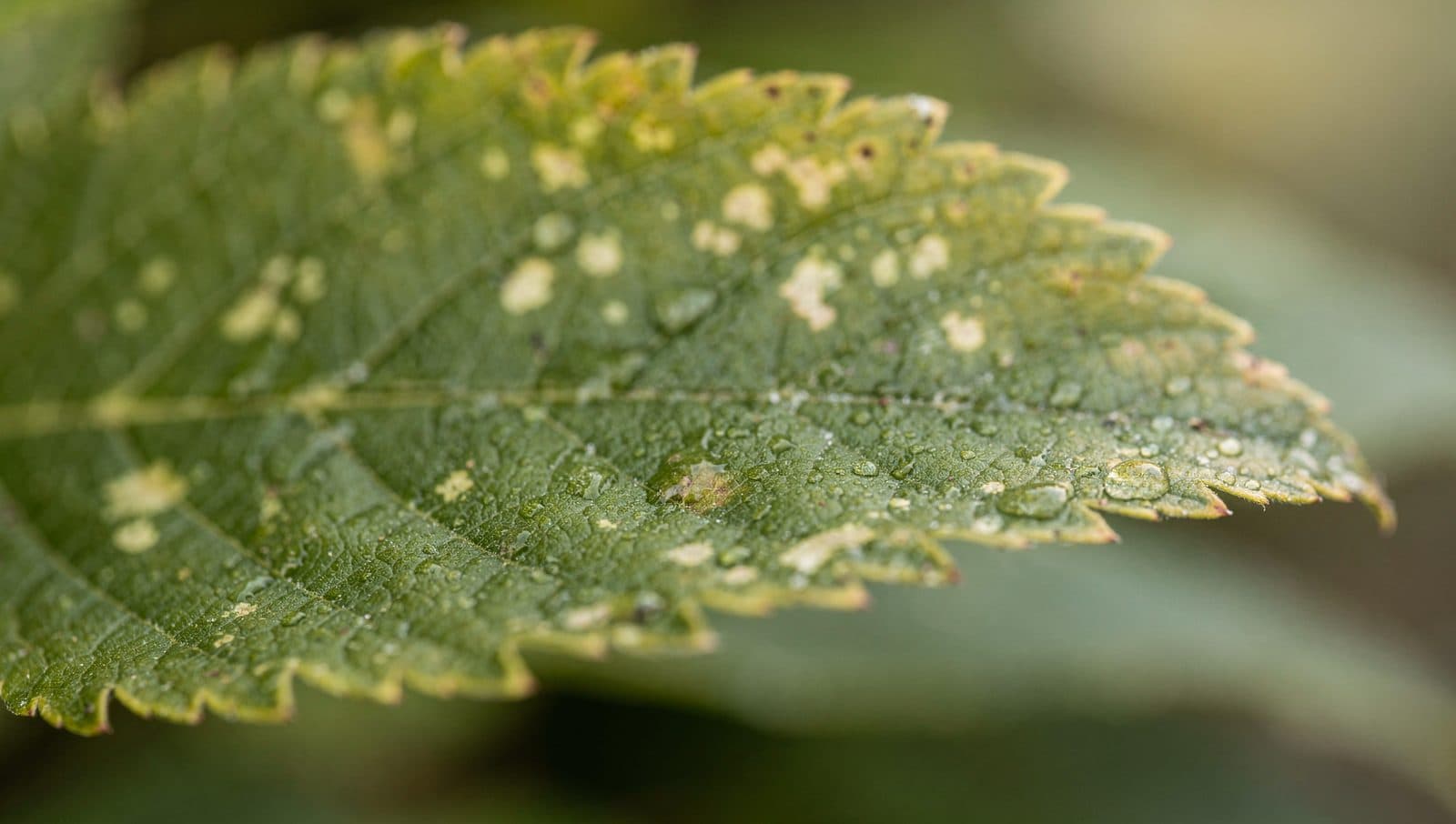
Why Are My Indoor Plant Leaves Sticky?
Sticky indoor leaves are honeydew from sap-sucking insects — find the bug, and the stickiness stops.
At a glance
- The verdict: Usually a pest
- Who fixes it: You
- Category: Leaf-Symptom Diagnosis (pest vs disease vs care)
The short answer
Sticky, glossy residue on indoor plant leaves is almost always honeydew, the sugary waste that aphids, soft scale, mealybugs, or whiteflies excrete after feeding on plant sap. Flip the leaves and check stem joints and new growth for small, soft-bodied insects or waxy bumps — that's the source. A black sooty mold fungus often grows on top of the honeydew afterward, but that mold is a downstream symptom, not the cause, so cleaning it off without controlling the insect just lets it come back. The fix is a garden-center insecticidal soap or horticultural oil applied to leaf undersides, not a structural pest treatment.
Pest, disease, or how you're caring for it?
Most leaf problems aren't pests at all. Here's the honest split — the most likely cause, the less likely ones, and how to tell them apart before you treat anything.
- PestMost likelythe usual cause
Aphids, soft scale, mealybugs, or whiteflies feeding on sap and excreting excess sugar as honeydew, which coats leaves in a glossy, tacky film. Black sooty mold fungus often follows, growing on top of the honeydew.
aphidssoft scalemealybugswhitefliesThe tell:Flip the leaves and check stem joints and new growth for small soft-bodied insects, waxy bumps, or cottony masses; the residue itself is glossy and tacky to the touch.
- Care / environmenta less common cause
Some houseplants (certain ficus, cacti, and succulents) naturally exude a bit of sap, or sap drips from a mechanical wound; honeydew can also drip down from a heavily infested plant sitting above another one on a shelf.
natural sap exudationmechanical wound sapdrip from an infested plant aboveThe tell:No insects are found on the plant itself, and the sticky spot traces to a wound, a naturally sappy species, or a plant positioned directly above it.
- Diseasea rare cause
Essentially none — plant pathogens don't cause a sticky, glossy leaf surface. Any black film on a sticky leaf is sooty mold growing on honeydew, not an independent disease of the leaf tissue.
sooty mold (secondary, growing on honeydew, not a true leaf pathogen)The tell:There's no true disease tell here — sticky leaves are functionally a pest symptom; a black coating on top confirms honeydew rather than a separate infection.
Wipe a leaf clean and check it again in a day or two. If it turns sticky again, an active pest is still feeding — re-inspect leaf undersides, stem joints, and new shoots closely, since aphids and scale are easy to miss at a glance.
Who actually fixes this?
Start here
You
Sticky houseplant leaves from honeydew-producing insects are treated with garden-center products — insecticidal soap or horticultural oil applied thoroughly to leaf undersides — not with structural pest-control treatments.
- Garden center — You've confirmed insects and want a specific insecticidal soap or horticultural oil product to treat the plant.
- UNH Extension — You can't identify the insect, or the infestation is severe and spreading to other houseplants — UNH Cooperative Extension's Insect & Arthropod ID service can confirm it.
The details, straight
The honeydew chain, explained
Aphids, soft scale, mealybugs, and whiteflies are sap-suckers: they tap into a plant's phloem to feed and, because that sap is high in sugar and low in the protein they need, they excrete the excess sugar as a sticky liquid called honeydew. University of Maryland Extension describes this directly in its guidance on honeydew and sooty mold — the sticky residue on your leaves, shelves, or the floor beneath a houseplant is that excreted sugar, not a leaf secretion or a disease symptom. A heavy infestation on a single plant can make honeydew drip visibly onto lower leaves or nearby surfaces.
Why the black mold that follows isn't the real problem
Once honeydew is on a leaf, sooty mold — a group of dark fungi — often grows directly on top of it. UF/IFAS Extension states plainly, 'the way to control sooty mold is to control these insects,' because the mold itself isn't a plant pathogen; University of Maryland Extension notes these fungi 'are not plant parasites and do not directly cause plant disease' but can still stress the plant by blocking light and interfering with photosynthesis. That's the core insight: the black film is a downstream symptom of the pest problem, not an independent disease, so scrubbing it off without addressing the insect just means it returns.
Finding and fixing the source
Check leaf undersides, stem joints, and new tender growth carefully — aphids and mealybugs cluster in these spots, and soft scale can look like small, immobile brown or tan bumps that are easy to mistake for part of the plant. Once you've found the insect, wash it off with a strong stream of water for a light infestation, or use an insecticidal soap or horticultural oil from a garden center for anything more established — both are contact-only treatments, so thorough coverage of leaf undersides matters, and both should be applied out of direct heat or hot sun to avoid burning the foliage. If the residue keeps returning after cleaning, the pest is still active somewhere on the plant.
Key takeaways
- Sticky indoor leaves are almost always honeydew from aphids, scale, mealybugs, or whiteflies — a pest symptom, not disease.
- Black sooty mold that follows grows on the honeydew; it's a downstream sign, not the cause, and won't stay gone until the pest is controlled.
- Check leaf undersides, stem joints, and new growth closely — that's where these insects cluster.
- Treat with a garden-center insecticidal soap or horticultural oil on leaf undersides, out of direct heat or sun.
- This is houseplant care, not a structural pest-control job — Anchor handles the pests around your home, not your plants.
Not sure if it's a pest or just plant sap?
Flipping the leaf and checking stem joints is the fastest way to confirm honeydew-producing insects before you treat anything.
See the full pest-vs-disease triageA note for New Hampshire indoor gardeners
Overwintering houseplants indoors in New Hampshire's long heating season can concentrate pest problems, since dry indoor air and closed windows let aphid, scale, and mealybug populations build without natural predators. If you can't identify the insect, UNH Cooperative Extension's Insect & Arthropod ID service and the free Ask UNH Extension Infoline (1-877-EXT-GROW) can help. Plant sap and honeydew residue can also mildly irritate skin in sensitive people — wash hands after handling an infested plant. Anchor Pest Services focuses on the structural pests around your home, not the bugs on your houseplants, but we're glad to point you to the right resource.
NH-licensed applicator #782664 (NHDAMF, RSA 430) · NEPMA member · family-owned since 2017.
Related questions
Sources(4)
- [1]University of Maryland Extension — Honeydew and Sooty Mold
Honeydew production by sap-sucking insects and its role in sooty mold growth
extensionverified 2026-07-14 - [2]UF/IFAS Extension Okaloosa County — Sooty Mold
Sooty mold control requires controlling the insect source
extensionverified 2026-07-14 - [3]Clemson HGIC — Insecticidal Soaps for Garden Pest Control
Contact-only efficacy and phytotoxicity caveats of insecticidal soap
extensionverified 2026-07-14 - [4]ASPCA Animal Poison Control Center
24-hour pet poison hotline for treated-plant exposure concerns
veterinaryverified 2026-07-14
Written & reviewed by
VerifiedDaniel Brady
NH-Licensed Pesticide Applicator · License #782664 (NHDAMF, RSA 430)
Daniel Brady is the New Hampshire–licensed applicator behind Anchor Pest Services, a family-owned pest control company serving the Manchester area since 2017.
Last updated 2026-07-14
Your next question
Honest pest help for New Hampshire homes
Houseplant Pests Are Plant Care — Your Home Is Our Job
Sticky leaves on your houseplants are a garden-care issue, and we'll always say so rather than overselling a treatment you don't need from us. Where Anchor Pest Services genuinely helps is the structural and yard pests around your home — rodents, ants, ticks, and moisture pests. Family-owned since 2017, NH license #782664, serving Manchester, Nashua, Concord and nearby towns.
- We name houseplant honeydew as a plant-care issue, not a structural one
- Fully NH-licensed under #782664, with same-day scheduling and free quotes
- Covering Manchester and the surrounding southern and central New Hampshire towns
NH License #782664 · No obligation · We answer in person
Your next step
- Related guide
What Causes Sticky Residue on Leaves?
Read the answer - Related guide
Why Do Leaves Get Sticky Under Trees?
Read the answer - Related guide
Why Do Leaves Look Sticky or Shiny?
Read the answer - Related guide
Do Indoor Leaves Get Pests Too?
Read the answer - Related guide
Why Are My Houseplant Leaves Drooping?
Read the answer - Related guide
What’s Eating My Gardenia Leaves?
Read the answer