
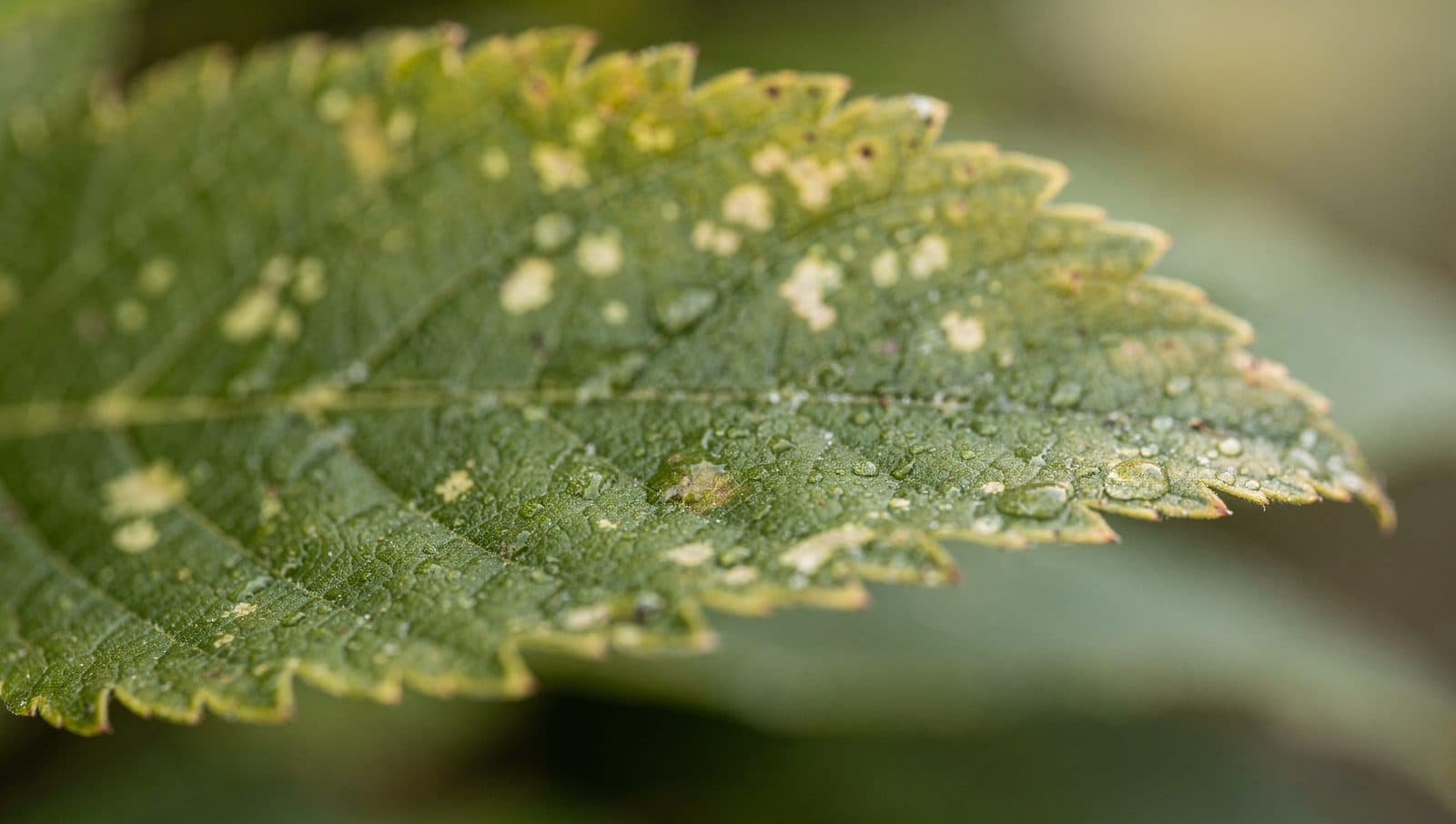
What’s Eating My Gardenia Leaves?
Gardenia damage is usually sap-sucking insects — whiteflies, scale, or aphids — often signaled by sticky leaves and black sooty mold rather than chewed holes.
At a glance
- The verdict: Usually a pest
- Who fixes it: You
- Category: Leaf-Symptom Diagnosis (pest vs disease vs care)
The short answer
Despite the phrase 'eating,' gardenia leaf damage is most often not chewing at all — it's sap-sucking insects like citrus whitefly, soft scale, aphids, or spider mites feeding on the leaves, which shows up as yellowing, distorted new growth, sticky honeydew, and a black sooty mold film rather than holes. A meaningful share of gardenia complaints are actually cultural: gardenias are acid-loving shrubs, and high soil pH or iron deficiency causes interveinal yellowing that looks disease-like but has nothing to do with insects. Flip the leaves and check for whiteflies, scale bumps, or sticky residue before assuming anything is chewing on your plant. This is a garden-shrub problem, not a job for a pest-control company.
Pest, disease, or how you're caring for it?
Most leaf problems aren't pests at all. Here's the honest split — the most likely cause, the less likely ones, and how to tell them apart before you treat anything.
- PestMost likelythe usual cause
Citrus whitefly, soft scale, aphids, thrips, and two-spotted spider mites feeding on sap. Clemson HGIC lists symptoms as 'yellowing leaves, distorted new growth, honeydew, sooty mold, curled foliage, flower damage, leaf drop.'
citrus whiteflysoft scaleaphidsthripsspider mitesThe tell:Honeydew and sooty mold on the leaves, insects or waxy bumps on the undersides, and whiteflies fluttering up when the plant is disturbed.
- Care / environmenta less common cause
Chlorosis (yellowing) from high soil pH or iron deficiency, since gardenias are acid-loving shrubs; cold stress or inconsistent watering can also cause yellowing and bud drop.
iron deficiency/high pH chlorosiscold or water stressThe tell:Yellowing is interveinal (green veins, yellow tissue between them) and concentrated on new leaves, with no insects present anywhere on the plant.
- Diseasea rare cause
Sooty mold growing on honeydew (cosmetic, not a tissue pathogen) and occasional true leaf-spot fungal disease.
sooty mold (secondary to pest honeydew)occasional fungal leaf spotThe tell:A black film that wipes off cleanly points to sooty mold on honeydew (a pest signal); embedded, defined spots point to true leaf-spot disease.
Check leaf undersides first for whiteflies, scale bumps, or sticky honeydew — that points to pests. If yellowing is interveinal on new growth with no insects present, suspect a pH/iron nutrient issue instead, which is a soil and fertilizer question, not a pest one.
Who actually fixes this?
Start here
You
Gardenia pest and nutrient problems are fixed with garden-center products — insecticidal soap or horticultural oil for the insects, or a soil pH correction/iron supplement for chlorosis — not with structural pest control.
- Garden center — You've confirmed insects (soap/oil) or chlorosis (soil acidifier or iron supplement) and want a specific product.
- UNH Extension — You can't identify the cause, or the shrub keeps declining despite treatment — UNH Cooperative Extension can help diagnose it.
The details, straight
Why 'eating' is usually the wrong word
Gardenia complaints often start with the assumption that something is chewing the leaves, but the classic gardenia problem is sap-sucking, not chewing. Clemson HGIC's factsheet on gardenia insects and related pests lists citrus whitefly, soft scale, aphids, thrips, and spider mites as the main insect culprits, with symptoms described as 'yellowing leaves, distorted new growth, honeydew, sooty mold, curled foliage, flower damage, leaf drop' — a sticky, discolored, distorted picture rather than clean chewed holes. NC State Extension separately confirms citrus whitefly as a recurring gardenia pest in the Southeast, feeding the same way.
The nutrient piece: gardenias are acid-lovers
A meaningful share of gardenia leaf problems have nothing to do with insects at all. Gardenias are acid-loving shrubs, and when soil pH is too high, they can't take up iron effectively even if iron is present in the soil, producing chlorosis — yellowing between the leaf veins while the veins themselves stay green, usually worst on new growth. Cold snaps, inconsistent watering, and transplant stress can compound this, sometimes triggering bud drop as well. This cultural bucket is worth ruling out before assuming a pest, since the fix (a soil test and pH correction or iron supplement) is completely different from a pest treatment.
What to actually do
Flip a few leaves and inspect the undersides and stem joints for whiteflies (which flutter up when disturbed), scale (small, immobile bumps), or aphids, and note whether the leaves feel sticky or show black sooty mold. If insects are present, an insecticidal soap or horticultural oil from a garden center, applied thoroughly to leaf undersides and out of direct sun, is the standard treatment — both are contact-only, so coverage matters. If yellowing is interveinal with no insects present, a soil test can confirm pH, and a garden center can recommend a soil acidifier or iron supplement suited to gardenias specifically.
Key takeaways
- Gardenia leaf damage is usually sap-sucking insects — whitefly, scale, aphids, thrips, or mites — not chewing pests.
- Watch for honeydew, sooty mold, distorted new growth, and leaf drop as the pest signature, rather than holes.
- A meaningful share of gardenia problems are cultural: interveinal yellowing from high soil pH or iron deficiency.
- Flip the leaf and check undersides for insects before assuming anything is 'eating' the plant.
- This is garden-shrub care, not a job for a pest-control company — Anchor routes it to a garden center or Extension.
Check the underside before you blame a bug
Gardenia damage is often sap-sucking pests, not chewing — and sometimes it's not a pest at all, just soil pH.
See the full pest-vs-disease triageA note for New Hampshire gardenia growers
Gardenias are marginally hardy in New Hampshire and are often grown as container or indoor/patio plants, which concentrates whitefly, scale, and aphid problems in the same way overwintered houseplants do. If you can't tell a pest issue from a pH/nutrient issue, UNH Cooperative Extension's Insect & Arthropod ID service and soil testing, plus the free Ask UNH Extension Infoline (1-877-EXT-GROW), can help. Anchor Pest Services focuses on the structural and yard pests around your home, not ornamental shrub pests, but we're glad to point you to the right resource.
NH-licensed applicator #782664 (NHDAMF, RSA 430) · NEPMA member · family-owned since 2017.
Related questions
Sources(4)
- [1]Clemson HGIC — Gardenia Insects & Related Pests
Gardenia pest list and symptom description (honeydew, sooty mold, distorted growth)
extensionverified 2026-07-14 - [2]Clemson HGIC — Gardenia Diseases & Other Problems
Sooty mold as cosmetic, not a tissue pathogen; nutrient/pH issues
extensionverified 2026-07-14 - [3]NC State Extension — Pests of Gardenia
Citrus whitefly and related pests on gardenia
extensionverified 2026-07-14 - [4]UGA CAES Newswire — Bugs' meals on leaves cause black fungus
Sooty mold on gardenia and crape myrtle from honeydew-producing pests
extensionverified 2026-07-14
Written & reviewed by
VerifiedDaniel Brady
NH-Licensed Pesticide Applicator · License #782664 (NHDAMF, RSA 430)
Daniel Brady is the New Hampshire–licensed applicator behind Anchor Pest Services, a family-owned pest control company serving the Manchester area since 2017.
Last updated 2026-07-14
Your next question
Honest pest help for New Hampshire homes
Gardenia Pests Are Garden Care — Your Home Is Our Job
Damage on your gardenia is a garden-shrub issue, and we'll always say so rather than overselling a treatment you don't need from us. Where Anchor Pest Services genuinely helps is the structural and yard pests around your home — rodents, ants, ticks, and moisture pests. Family-owned since 2017, NH license #782664, serving Manchester, Nashua, Concord and nearby towns.
- Honest routing — ornamental shrub pests go to a garden center or Extension, not us
- NH-licensed (#782664) for the structural and yard pests around your home
- Serving Manchester, Nashua, Concord and nearby New Hampshire communities
NH License #782664 · No obligation · We answer in person
Your next step
- Related guide
How Can I Stop Caterpillars From Eating Leaves?
Read the answer - Related guide
What Causes Sticky Residue on Leaves?
Read the answer - Related guide
Why Are My Indoor Plant Leaves Sticky?
Read the answer - Related guide
Should I Use Insecticidal Soap on Leaves?
Read the answer - Related guide
Why Are There Black Dots or Mold on My Leaves?
Read the answer