
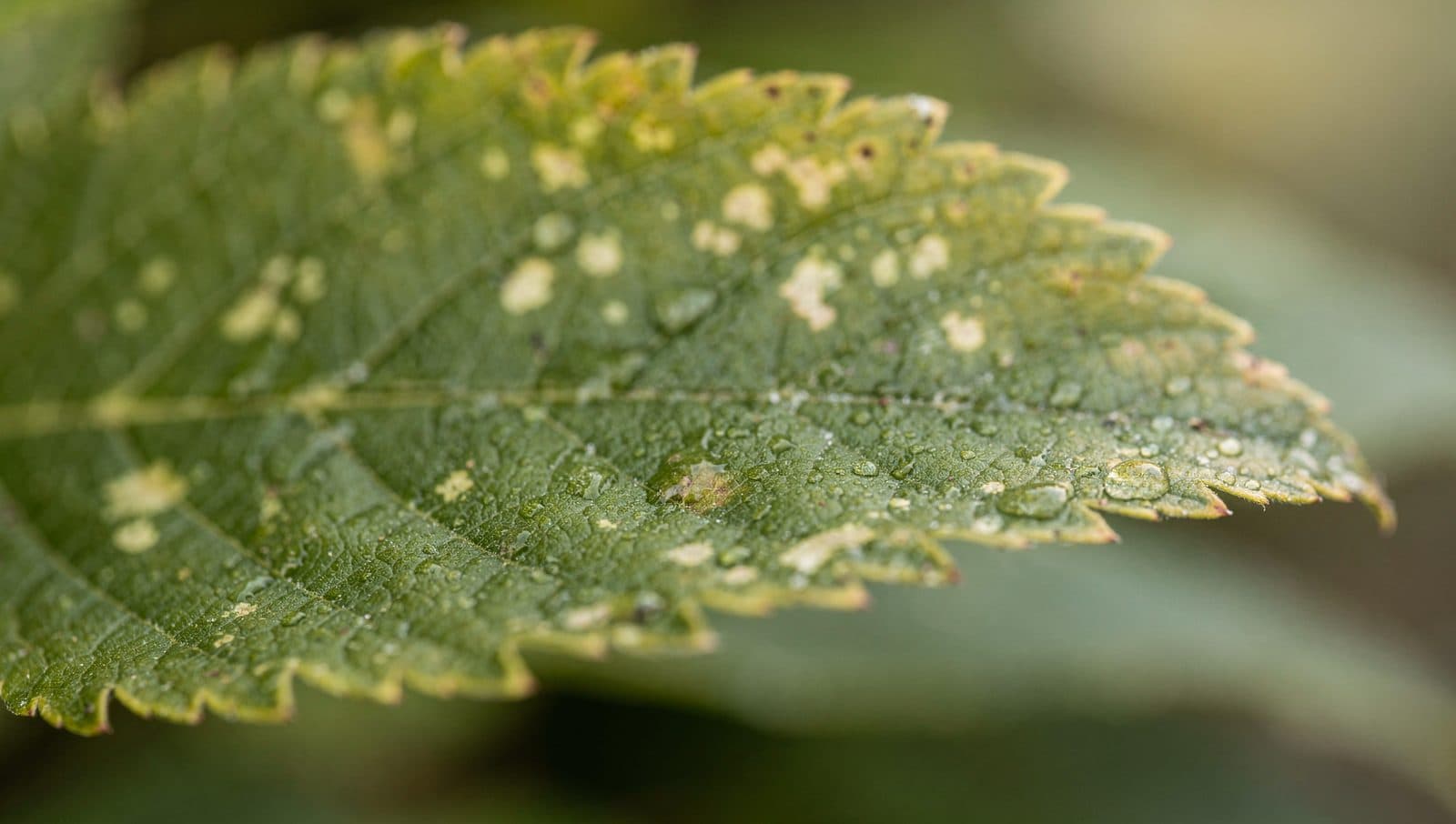
Why Do Leaves Get Sticky Under Trees?
That sticky film on leaves, cars, and decks under a tree is honeydew — sugary excrement from aphids, scale, or other sap-suckers feeding somewhere in the branches above you.
At a glance
- The verdict: A pest problem — up in the canopy
- Who fixes it: Certified arborist
- Category: Leaf-Symptom Diagnosis (pest vs disease vs care)
The short answer
This is one of the few leaf symptoms that really is a pest problem almost every time. Sap-sucking insects — aphids, soft scale, lace bugs, and similar species — feed high in a tree's canopy, take in more sugar than they can use, and excrete the excess as honeydew, which rains down and coats everything below: leaves, patio furniture, cars, sidewalks. A black sooty mold fungus often grows on top of the honeydew afterward, which is a downstream cosmetic problem, not the cause. Because the insects are usually far up in a mature tree, this is typically an arborist's job rather than a homeowner spray project.
Pest, disease, or how you're caring for it?
Most leaf problems aren't pests at all. Here's the honest split — the most likely cause, the less likely ones, and how to tell them apart before you treat anything.
- PestMost likelythe usual cause
A widespread, glossy, tacky coating on everything beneath the canopy — not just the tree's own leaves, but whatever sits under the drip line.
AphidsSoft scaleLace bugsOther canopy-dwelling sap-suckersThe tell:Look up: check branches and leaf undersides in the canopy for clusters of insects, and watch for ants trailing up the trunk (they 'farm' the honeydew).
- Care / environmenta less common cause
Localized stickiness near a wound, pruning cut, or a specific damaged branch, rather than a broad area under the whole canopy.
Tree sap oozing from a pruning cut or storm-damaged limbThe tell:The sticky area is confined to directly under one wound, not spread evenly across the whole area under the tree.
- Diseasea rare cause
Essentially none on its own — stickiness itself is not a disease symptom; any black coating that follows is sooty mold growing on the honeydew, not a pathogen attacking the tree.
The tell:If a black film wipes off cleanly and the surface underneath is sticky, that confirms sooty mold on honeydew, not a leaf disease.
If everything under the tree's drip line is glazed and tacky — cars, decks, the ground — that's honeydew from insects up in the canopy, not a leaf problem on the tree itself. A localized sticky patch near one cut or wound is more likely sap. Either way, a fungus is not the source.
The black sooty mold that often shows up afterward is a separate, secondary organism growing on the sugary honeydew film — treating the mold without addressing the insects in the canopy just means it comes back.
Who actually fixes this?
Start here
Certified arborist
The insects producing the honeydew are almost always high in a mature tree's canopy, where treating them isn't a practical homeowner project — spraying a large tree from the ground is both impractical and largely ineffective, so an ISA-certified arborist is the honest call.
- UNH Extension — You want the specific insect identified, or you're weighing whether treatment is even worthwhile for a large, otherwise-healthy tree.
- You — The affected tree is small enough to inspect and treat yourself — check leaf undersides and new growth for aphids or scale and consider an insecticidal soap or horticultural oil sized to a manageable shrub, not a mature shade tree.
The details, straight
The honeydew chain, from the top down
Aphids, soft scale, lace bugs, and several related sap-feeding insects tap into a tree's phloem to drink its sugary sap, but they take in far more sugar than they can digest and use. The excess passes through them and drips out as a sticky, sugar-rich liquid called honeydew. University extension sources describe honeydew and its accompanying sooty mold as 'by-products of aphid, scale, leafhopper or whitefly activity' — a direct signature of insects feeding somewhere above, even if you can never actually see them from the ground.
Why it lands on your car and patio, not just the tree
Because the insects are up in the canopy, gravity does the rest: honeydew drips down through the branches and coats everything sitting under the tree's drip line — parked cars, outdoor furniture, sidewalks, mulch, and of course the tree's own lower leaves. That wide, even coverage under the whole canopy — rather than a stain near just one spot — is the strongest clue that you're dealing with an insect population up top rather than a localized sap leak from a single wound.
The black mold that follows isn't the real problem
Once honeydew coats a surface, a group of dark fungi collectively called sooty mold often grows on top of it, turning leaves and bark blotchy black. These fungi are not plant parasites in the usual sense — they don't infect the tree's tissue — but a heavy coating can block light and interfere with photosynthesis on the tree's own leaves. Extension guidance is consistent on this point: the way to control sooty mold is to control the insects producing the honeydew underneath it, since scrubbing the mold off does nothing about the ongoing insect activity.
Why this is usually an arborist's call, not a DIY spray
A mature shade tree can be 40 to 60 feet tall with a canopy spread to match, and reaching the insects feeding at that height with a homeowner sprayer is neither practical nor effective — the coverage needed to actually treat the pest population simply isn't achievable from the ground. That's the honest reason this symptom, despite being a genuine pest problem, routes to a certified arborist rather than a DIY remedy: they can assess whether the tree's health actually warrants treatment, and if so, apply it correctly at height.
Key takeaways
- Sticky residue under a tree is honeydew — excess sugar excreted by aphids, scale, or similar insects feeding in the canopy above.
- Wide, even stickiness under the whole drip line points to canopy insects; a localized sticky spot near one wound is more likely sap.
- Black sooty mold often grows on the honeydew afterward — it's a downstream cosmetic symptom, not the cause, and controlling it means controlling the insects.
- Spraying a mature tree from the ground is rarely practical or effective — this is genuinely an ISA-certified arborist's job, not a homeowner project.
- A small, accessible shrub with the same symptom can sometimes be treated at home with insecticidal soap or horticultural oil on leaf undersides.
It's the canopy, not the ground, that needs attention
Sticky leaves under a tree trace back to insects feeding high in the branches — a certified arborist can confirm the source and whether treatment is worth it.
See how the honeydew chain worksA note for New Hampshire homeowners
Big shade trees — maples, oaks, lindens — are common street and yard trees across Manchester, Nashua, and Concord, and honeydew from canopy aphids or scale is a familiar late-summer nuisance under them. UNH Cooperative Extension's Ask UNH Extension Infoline (1-877-EXT-GROW) is a free resource for a first opinion on whether treatment is worthwhile, and an ISA-certified arborist can inspect and treat a mature tree safely. Anchor Pest Services handles the structural and yard pests around your home's foundation, not the insects living in your shade trees, but we're glad to point you to the right resource.
NH-licensed applicator #782664 (NHDAMF, RSA 430) · NEPMA member · family-owned since 2017.
Related questions
Sources(3)
- [1]UC ANR Ventura County — Honeydew and Sooty Mold
Honeydew and sooty mold as by-products of aphid/scale/leafhopper/whitefly activity
extensionverified 2026-07-14 - [2]UF/IFAS Extension Okaloosa County — Sooty Mold
Sooty mold control requires controlling the underlying insects
extensionverified 2026-07-14 - [3]University of Maryland Extension — Honeydew and Sooty Mold
Sooty mold fungi are not plant parasites but block light and interfere with photosynthesis
extensionverified 2026-07-14
Written & reviewed by
VerifiedDaniel Brady
NH-Licensed Pesticide Applicator · License #782664 (NHDAMF, RSA 430)
Daniel Brady is the New Hampshire–licensed applicator behind Anchor Pest Services, a family-owned pest control company serving the Manchester area since 2017.
Last updated 2026-07-14
Your next question
Honest pest help for New Hampshire homes
Canopy Pests Are a Tree Question — Your Home Is Our Job
Treating insects high in a shade tree's canopy is an arborist's job, and we'll say so plainly. Where Anchor Pest Services genuinely helps is the pests around your home — rodents, ants, ticks, and moisture pests drawn to leaf litter and debris against the foundation. Family-owned since 2017, NH license #782664, serving Manchester, Nashua, Concord and nearby towns.
- We tell you sticky is canopy honeydew — a tree-health question, not structural
- State-licensed in NH (#782664) — free estimate and prompt scheduling
- Structural and yard pests around the home — southern and central New Hampshire
NH License #782664 · No obligation · We answer in person
Your next step
- Book a NH pro
Pest Control Services
Licensed, family-owned pest control across southern NH.
Book now - Related guide
What Causes Sticky Residue on Leaves?
Read the answer - Related guide
Why Are My Indoor Plant Leaves Sticky?
Read the answer - Related guide
Why Do Leaves Look Sticky or Shiny?
Read the answer - Related guide
What Insects Live on Tree Leaves?
Read the answer - Related guide
What Insects Live Under Leaves?
Read the answer