
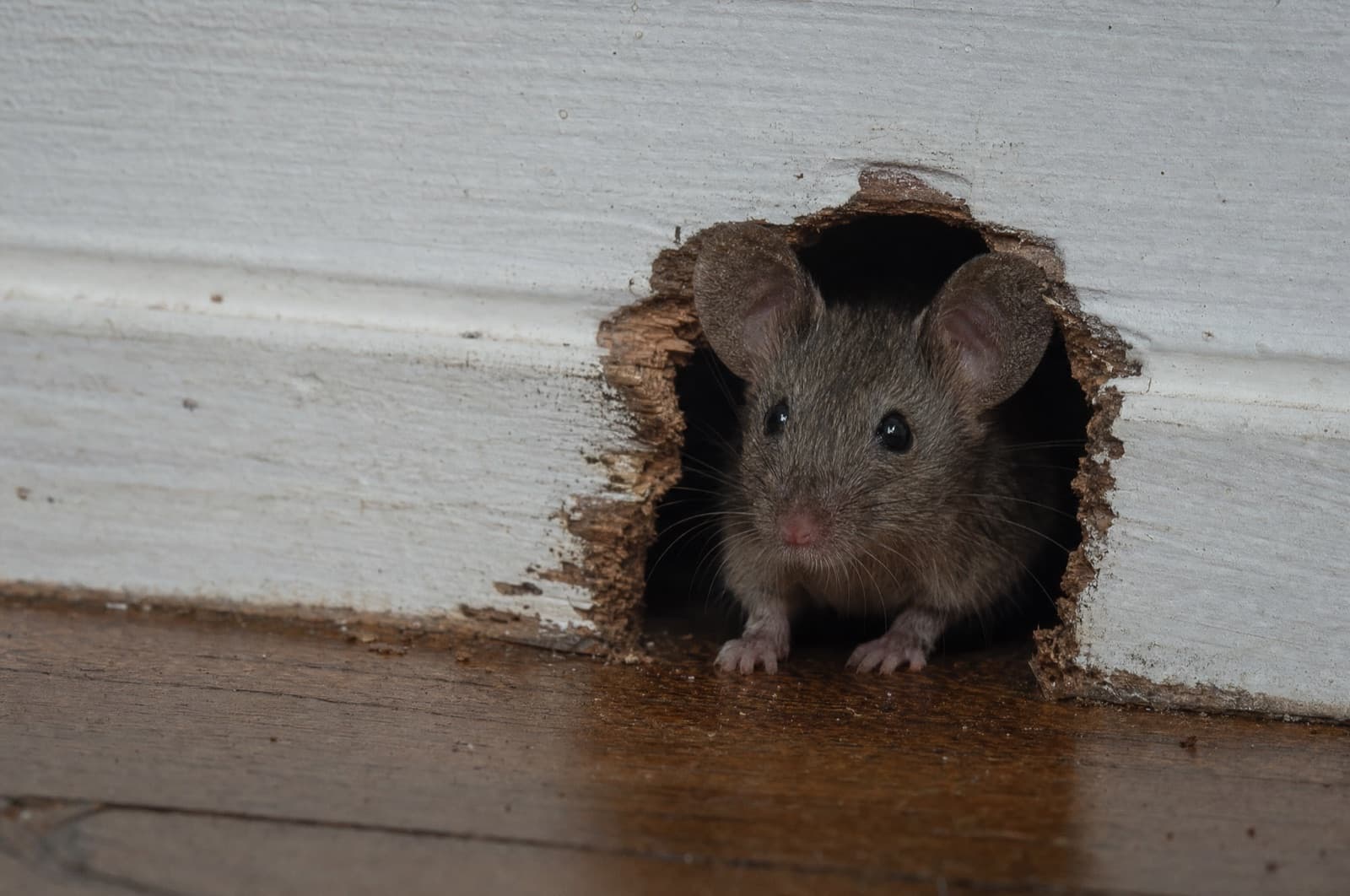
How Do I Get Rid of Rats Under a Deck?
At a Glance
- Short answer: Confirm burrows, trap the colony, then install a buried hardware-cloth barrier.
- Key fact: Rats chew through chicken wire — only ¼-inch galvanized hardware cloth stops digging under a deck.
- NH relevance: Wooded NH yards give Norway rats prime deck cover; recheck the barrier yearly after freeze-thaw.
- Action needed: Trap before you exclude — sealing a colony in place doesn't remove it, it just relocates the problem.
The short of it
Decks give Norway rats prized overhead protection from predators, so a burrow system underneath is common in wooded New Hampshire yards. The reliable protocol has three parts, in order: locate and confirm active burrow entrances, pre-bait and trap the colony along runways, then physically exclude with a buried hardware-cloth skirting so rats can't dig back underneath. Skipping the exclusion step means a new colony can simply re-burrow once the old one is trapped out — so 'getting rid of them' has to include the digging barrier, not just the trapping.
How Do I Get Rid of Rats Under a Deck — By the Numbers
2–4 in
Typical Norway rat burrow opening diameter
~18 in
Typical burrow tunnel depth, with escape bolt holes
12 in
Trench depth for a hardware-cloth digging barrier
¼ inch
Hardware-cloth mesh size — chicken wire is not sufficient
The full picture
Step 1: Find and confirm active burrows
Norway rat burrow openings are typically 2–4 inches across, smooth-edged, and often have fan-shaped excavated soil at the entrance, with tunnels running about 18 inches deep and escape 'bolt holes' nearby. Confirm which burrows are actively used by loosely plugging entrances with newspaper or grass and rechecking in 24–48 hours — displaced plugs mean a live burrow, undisturbed ones likely mean it's abandoned.
Step 2: Reduce the colony with trapping, not poison
Pre-bait unset snap traps for two to three days near burrow entrances and travel routes, since Norway rats are neophobic and avoid new objects at first. Then set them. Skip poison here — a poisoned rat that dies underneath a deck decays in an inaccessible spot, creating an odor problem and a secondary-poisoning risk to any pet or wildlife that finds the carcass.
Step 3: Exclude with a buried hardware-cloth barrier
Dig a trench about 12 inches deep along the deck's perimeter and install ¼-inch galvanized hardware cloth — not chicken wire, which rats can chew through. Bend the buried portion outward into an L-shape pointing away from the deck, which stops rats from simply digging under the vertical barrier. Backfilling the trench with loose stone adds another layer of digging discouragement.
Finish by removing what attracted them
Trim the bottom foot of vegetation around the deck, clear clutter and woodpiles that provide cover, and eliminate food sources like fallen fruit, open compost, and accessible pet food. Recheck the barrier yearly, especially after freeze-thaw cycles that can shift buried mesh.
Bottom line — Confirm active burrows, trap the colony out (never poison under a deck), then install a buried ¼-inch hardware-cloth barrier and clear harborage. Trapping without the barrier just invites the next colony to re-dig the same spot.
Burrow under your deck?
Anchor installs buried hardware-cloth exclusion barriers and handles the trapping — so the next colony can't just re-dig the same spot.
Why this matters in New Hampshire
Wooded lots across southern and central New Hampshire give Norway rats abundant cover leading right up to a deck's edge, and burrow activity often intensifies as Manchester's first hard frost approaches — about October 19 at 50% probability, October 29 at 80% (NOAA 1991–2020) — pushing rats to dig in for winter. A hardware-cloth barrier installed before that seasonal push is far more effective than trapping alone after a colony is already established for winter.
Key local data
Norway rats are established across New Hampshire's cities and towns (UNH Cooperative Extension); roof rats are essentially absent from the Northeast (Cornell).
- NH-licensed applicator · #782664
- Same-day service
- Family-owned since 2017
Service Area Map
Southern New Hampshire
Frequently asked
Written & reviewed by
VerifiedDaniel Brady
NH-Licensed Pesticide Applicator · License #782664 (NHDAMF, RSA 430)
Daniel Brady is the New Hampshire–licensed applicator behind Anchor Pest Services, a family-owned pest control company serving the Manchester area since 2017.
Professional Rodent Control
Deck Exclusion Done Right, in the Right Order
Trapping first, barrier second — Anchor Pest Services builds burrow exclusion for NH decks with ¼-inch galvanized hardware cloth, not chicken wire. Family-owned since 2017, NH license #782664.
- Same-day service across southern NH
- NH-licensed applicators (#782664)
- Free inspection — no flat-price guesswork
NH License #782664 · No obligation · We answer in person
Your next step
- Book a NH pro
Rodent Control
Book now - Next step
How can I tell if I have rodents in my walls during winter?
Read the answer - Related guide
What Should I Do If I See a Rat in My Yard?
Read the answer - Related guide
Where Do Rats Build Nests Around Homes?
Read the answer - Related guide
What Materials Can Rats Not Chew Through?
Read the answer - Related guide
When Are Rats Most Active Indoors?
Read the answer