
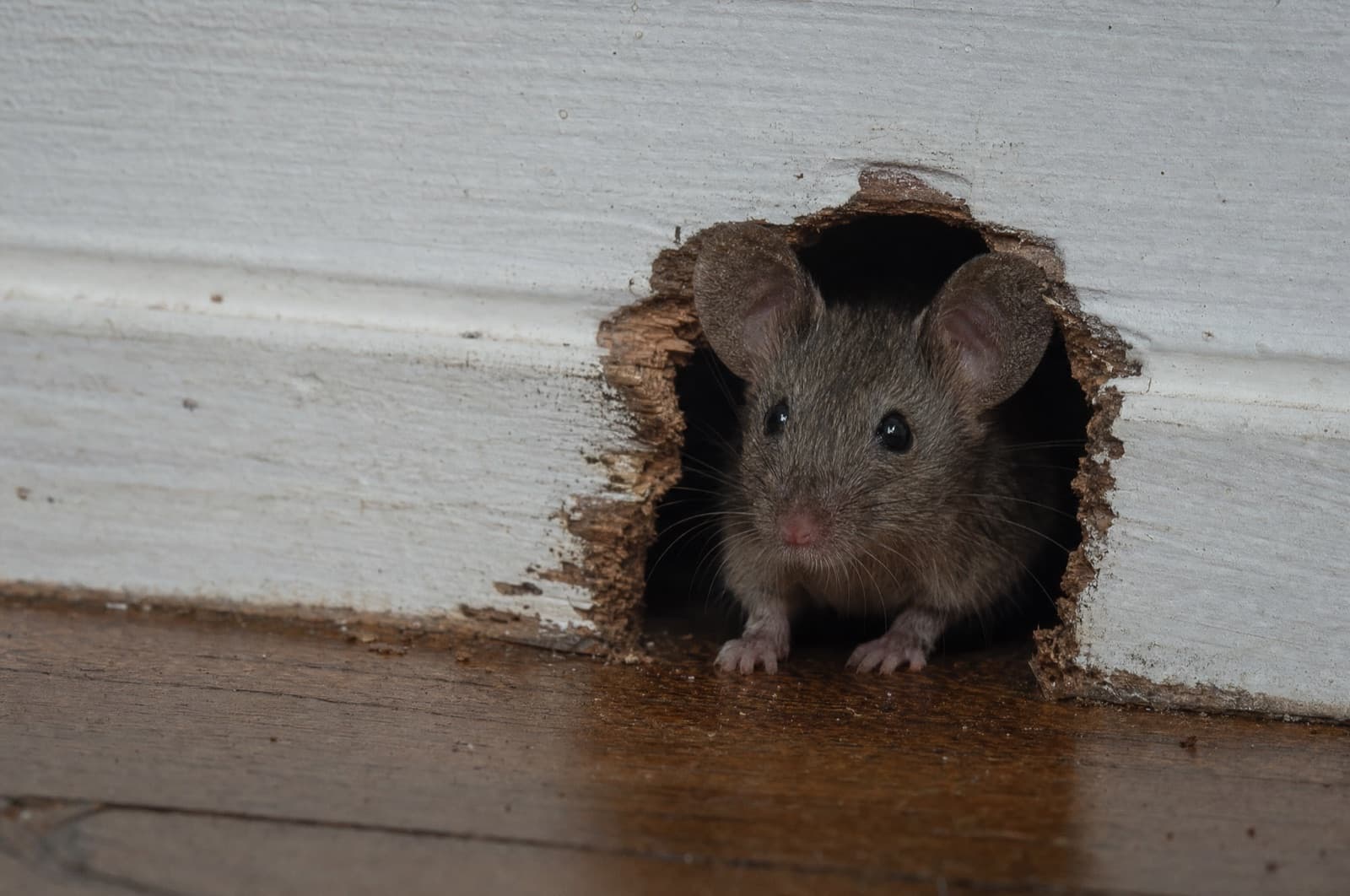
What Should I Do If I See a Rat in My Yard?
At a Glance
- Short answer: Inspect for burrows, droppings, and runways before you assume an infestation.
- Key fact: A lone dispersing rat can appear without a colony being established yet.
- NH relevance: Wooded southern NH yards give rats cover right up to foundations, sheds, and decks — inspect those first.
- Action needed: Multiple signs (not just one sighting) mean it's time to trap and exclude.
The short of it
A single rat crossing your yard is sometimes just that: a lone dispersing rat, often a young male, passing through without an established colony present. The right first move is inspection, not panic — walk the property for burrows, droppings, grease marks, and worn runways. If you find those signs, or see rats repeatedly, escalate to trapping and exclusion. If it was a one-off with nothing else, sanitation and a few weeks of watching may be all you need.
What Should I Do If I See a Rat in My Yard — By the Numbers
2–4 in
Diameter of an active Norway rat burrow opening
½–¾ in
Length of blunt-ended rat droppings
150 ft
Typical foraging range from a rat's nest (up to 1 mile if stressed)
12 in
How low to trim shrubs to remove ground cover
The full picture
Inspect before you escalate
Walk the property looking for the specific signs of an active colony: smooth-edged burrow openings 2–4 inches across near foundations, sheds, decks, and dense vegetation, often with fan-shaped excavated soil at the entrance; droppings about ½–¾ inch long with blunt ends; dark grease or rub marks where oily fur repeatedly brushes a wall or pipe; and flattened runways worn into grass or mulch. One or two of these together, not just a single sighting, is what points to an established population.
Remove what attracted it, either way
Regardless of what the inspection turns up, cut off the resources that draw rats to a yard: secure trash cans and compost bins, pick up fallen fruit and birdseed, don't leave pet food out overnight, and trim the bottom foot of shrubs and groundcover so rats lose ground-level cover. Norway rats typically forage within about 150 feet of their nest, ranging up to a mile if food is scarce — so a well-fed yard nearby is often the real draw.
When to move to trapping and exclusion
If you find active burrows, repeated droppings, or see rats more than once, escalate: pre-bait unset snap traps near burrows and travel routes for a few days (rats are wary of new objects), then set them, and seal foundation gaps and utility penetrations larger than ½ inch. Skip poison as a first response outdoors near burrows — it doesn't address entry points and carries non-target risk to pets and wildlife. If signs are absent after a one-off sighting, sanitation plus a few weeks of monitoring is a reasonable, proportionate response.
Bottom line — One rat sighting alone isn't proof of an infestation. Inspect for burrows, droppings, grease marks, and runways; remove food and ground cover either way; and only move to trapping and exclusion once you've confirmed real activity.
Seeing rats in your yard?
Anchor inspects for active burrows and signs before recommending treatment — no guesswork, no unnecessary poison.
Why this matters in New Hampshire
Wooded lots across southern and central New Hampshire give rats abundant outdoor cover, and yard activity often picks up as Manchester's first hard frost approaches — about October 19 at 50% probability, October 29 at 80% (NOAA 1991–2020) — as rats seek shelter for winter. A yard sighting in September or October is worth a prompt inspection, since a rat that finds a foundation gap before the frost gains a warm refuge for the whole season.
Key local data
UNH Cooperative Extension: Norway rats are commonly found in New Hampshire's urban and town settings.
- NH-licensed applicator · #782664
- Same-day service
- Family-owned since 2017
Service Area Map
Southern New Hampshire
Frequently asked
Written & reviewed by
VerifiedDaniel Brady
NH-Licensed Pesticide Applicator · License #782664 (NHDAMF, RSA 430)
Daniel Brady is the New Hampshire–licensed applicator behind Anchor Pest Services, a family-owned pest control company serving the Manchester area since 2017.
Professional Rodent Control
A Yard Inspection Before You Escalate
Anchor Pest Services checks for burrows, droppings, and runways before recommending trapping or exclusion — an honest read on what's really out there. Family-owned since 2017, NH license #782664.
- Same-day service across southern NH
- NH-licensed applicators (#782664)
- Free inspection — no flat-price guesswork
NH License #782664 · No obligation · We answer in person
Your next step
- Book a NH pro
Rodent Control
Book now - Next step
Where Do Mice Go in the Winter? NH Mouse Timing Guide
Read the answer - Related guide
How Do I Get Rid of Rats Under a Deck?
Read the answer - Related guide
Where Do Rats Build Nests Around Homes?
Read the answer - Related guide
When Are Rats Most Active Indoors?
Read the answer - Related guide
What Are the Signs of a Rat Infestation?
Read the answer