
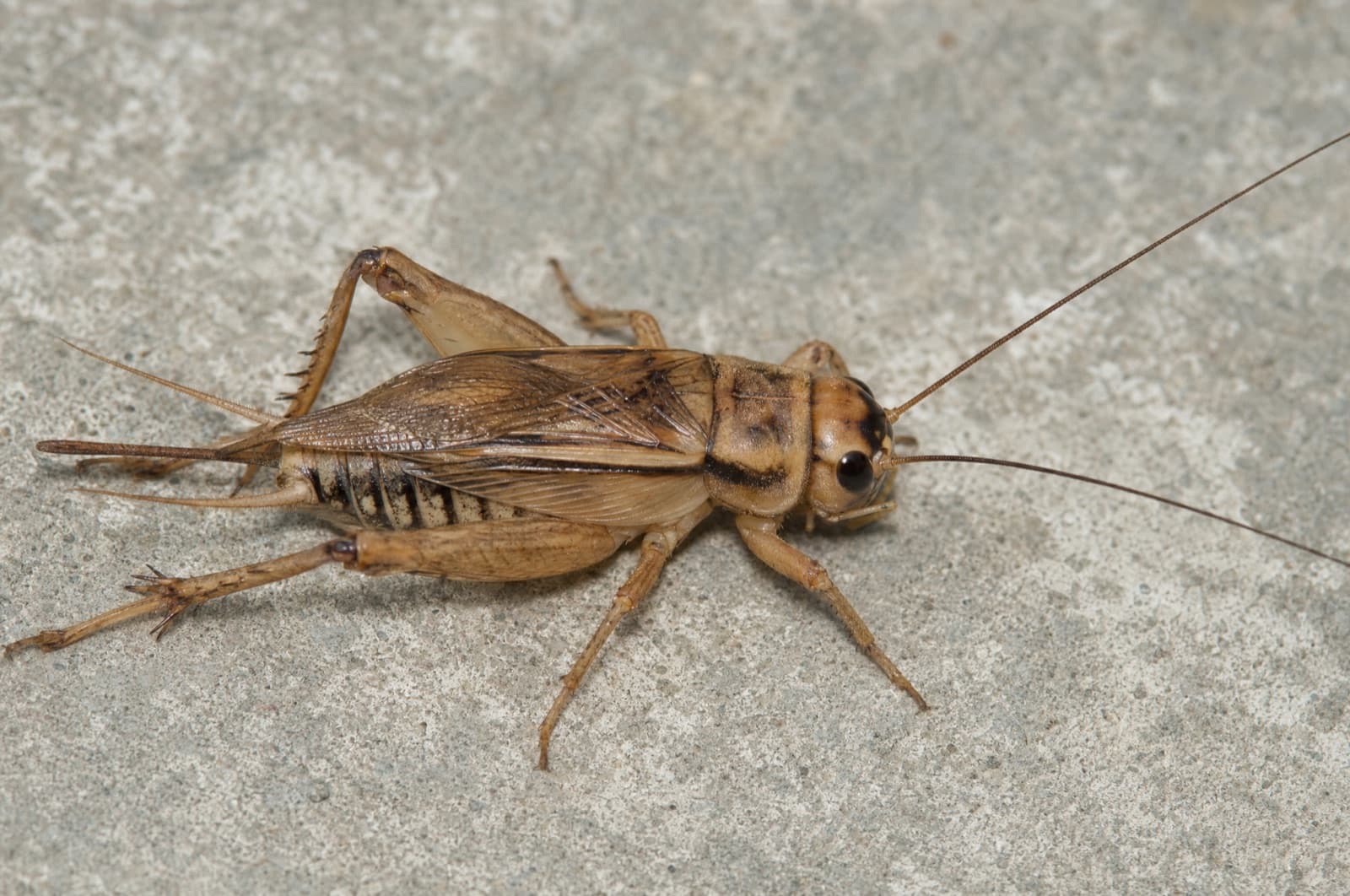
When Do Crickets Come Inside? NH Cricket Timing Guide
At a glance
- Entry window: Late summer–fallField crickets especially invade in fall as nighttime temperatures cool.
- Camel crickets: Silent, humpbacked, moisture-lovingDon't chirp; overwinter in damp basements and crawlspaces.
- Field crickets indoors: Die by early winterEnter in fall but don't lay eggs or overwinter successfully indoors.
- House crickets: Chirp; can survive/breed near warmthRoughly 3/4 to 7/8 inch long; found anywhere warmth is available indoors.
Entry window
Late summer–fall
Field crickets especially invade in fall as nighttime temperatures cool.
Camel crickets
Silent, humpbacked, moisture-loving
Don't chirp; overwinter in damp basements and crawlspaces.
Field crickets indoors
Die by early winter
Enter in fall but don't lay eggs or overwinter successfully indoors.
House crickets
Chirp; can survive/breed near warmth
Roughly 3/4 to 7/8 inch long; found anywhere warmth is available indoors.
The short of it
Crickets come inside mostly in late summer and fall as nights cool — camel crickets to damp basements, house crickets to warmth, field crickets that die off by winter.
When are they active — the whole year at a glance
Crickets in New Hampshire follow a clear seasonal split: peak outdoor chirping in midsummer, a hard entry window in late summer and fall, and a winter where only camel and house crickets remain indoors.
Best window to act · Late summer through September — seal foundation cracks and utility gaps, add door sweeps and weather-stripping, screen crawlspace vents, and reduce basement moisture with a dehumidifier or by fixing leaks, since dampness is the key camel-cricket draw.
Peak reflects the late-summer/fall indoor entry window, anchored to Manchester's first frost (~Oct 19, 50% probability — NOAA 1991–2020 Climate Normals).
Winter behavior
Whether crickets 'overwinter' in your house depends entirely on which of the three common species you're dealing with.
Hides indoors
Camel crickets settle into damp, dark basements, crawlspaces, garages, and utility rooms — a moisture-driven choice — and overwinter there as nymphs or adults. House crickets seek warmth throughout the home and can survive, and even breed, indoors. Field crickets enter in fall but typically die off by early winter and do not overwinter or breed indoors.
Move in
Late summer through the first frost (~Oct 19), via foundation cracks, utility gaps, and unscreened doors or vents.
Hides indoors
Camel crickets settle into damp, dark basements, crawlspaces, garages, and utility rooms — a moisture-driven choice — and overwinter there as nymphs or adults. House crickets seek warmth throughout the home and can survive, and even breed, indoors. Field crickets enter in fall but typically die off by early winter and do not overwinter or breed indoors.
Spring exit
Surviving camel and house crickets may lay eggs indoors in spring; field crickets, by contrast, are already dead by that point and never re-emerge.
A year in the life
Cricket activity in New Hampshire runs from peak outdoor chirping in summer to a fall entry surge and a winter where only two of the three common species remain active indoors.
- 01
Spring
Outdoor eggs hatch and camel crickets begin laying in soil. Very few crickets are seen indoors this season, apart from lingering camel or house crickets that survived winter in a basement.
- 02
Summer
Peak outdoor activity and chirping, especially on warm nights. Late-summer heat and dryness begin pushing crickets toward building foundations as outdoor conditions become less favorable.
- 03
Fall
The main entry season. Cooling nights heading toward the ~Oct 19 frost drive field and house crickets indoors, while camel crickets move in from mulch beds, woodpiles, and other damp perimeter areas around the foundation.
- 04
Winter
Field crickets have died off outdoors by this point. Camel crickets persist in damp basements and crawlspaces, and house crickets can survive — and in some cases breed — near indoor heat sources.
Crickets in southern New Hampshire
In Manchester, Nashua, and Concord, older basements and crawlspaces with even moderate dampness are the main draw for camel crickets, which is why homeowners on wooded or low-lying lots tend to see the heaviest numbers. House and field crickets are a more general fall entry problem tied to New Hampshire's cooling nighttime temperatures, moving toward any home with accessible foundation gaps. Because field crickets don't overwinter successfully indoors, a New Hampshire winter naturally resolves that portion of the problem — but camel and house crickets can persist for months if entry points and moisture aren't addressed.
Key local data
Manchester's first hard frost averages October 19 (50% probability), the point by which outdoor field-cricket populations have largely died off and fall indoor entry has peaked (NOAA 1991–2020 Climate Normals).
We serve these communities
- NH-licensed applicator · #782664
- Same-day service
- Family-owned since 2017
Service Area Map
Southern New Hampshire
Timing your treatment
Because camel crickets in particular are a moisture indicator, the best prevention window also doubles as a basic home-maintenance check.
General Pest Control
Free inspection and same-day service across southern New Hampshire. NH-licensed #782664.
Learn more about this pestFrequently asked
Sources & references
- University of Minnesota Extension — Crickets
fall entry timing, field crickets die off, no indoor eggs
- University of Missouri Extension — Crickets (G7366)
late-summer/fall entry timing
- NC State Extension — Camel Crickets
silent, moisture-driven behavior, overwintering
- University of Maryland Extension — Crickets
house vs. camel vs. field cricket comparison, sizes, damage potential
- NOAA — Can Crickets Tell Temperature? The Answer Is in Their Chirp
Dolbear's Law chirp-to-temperature formula
- Garden.org — Manchester, NH Frost Dates
~Oct 19 Manchester first-frost anchor (NOAA 1991–2020)
Editorial disclaimer: This content is provided for informational purposes only and does not constitute pest control advice. Every property is unique — consult a licensed professional for guidance specific to your situation. Anchor Pest Services is licensed in New Hampshire (#782664).
Written & reviewed by
VerifiedDaniel Brady
NH-Licensed Pesticide Applicator · License #782664 (NHDAMF, RSA 430)
Daniel Brady is the New Hampshire–licensed applicator behind Anchor Pest Services, a family-owned pest control company serving the Manchester area since 2017.
Last updated Jul 2026
Anchor Pest Services
Whatever the season — we handle the timing for you.
Same-day service across Southern New Hampshire. NH-licensed #782664, family-owned since 2017. We track the local calendar so you don't have to guess the right window.
- NH-licensed applicator
- Same-day service
- Pet & family-conscious
NH License #782664 · No obligation · We answer in person
Your next step
- Fall guide
Fall Pest Control in New Hampshire
What matters before frost: the fall invader window, mice at the foundation, and what to seal first.
Read the answer - Related guide
Box Elder Bugs in the House in Winter — NH Timing Guide
Read the answer - Related guide
When Are Spiders Most Active in the House? NH Spider Guide
Read the answer - Related guide
Where Do Moths Go in the Winter? NH Moth Timing Guide
Read the answer - Also relevant
House Crickets in New Hampshire — ID, the Chirp & Control
Read the answer - Also relevant
How to control indoor crickets in fall?
Read the answer