
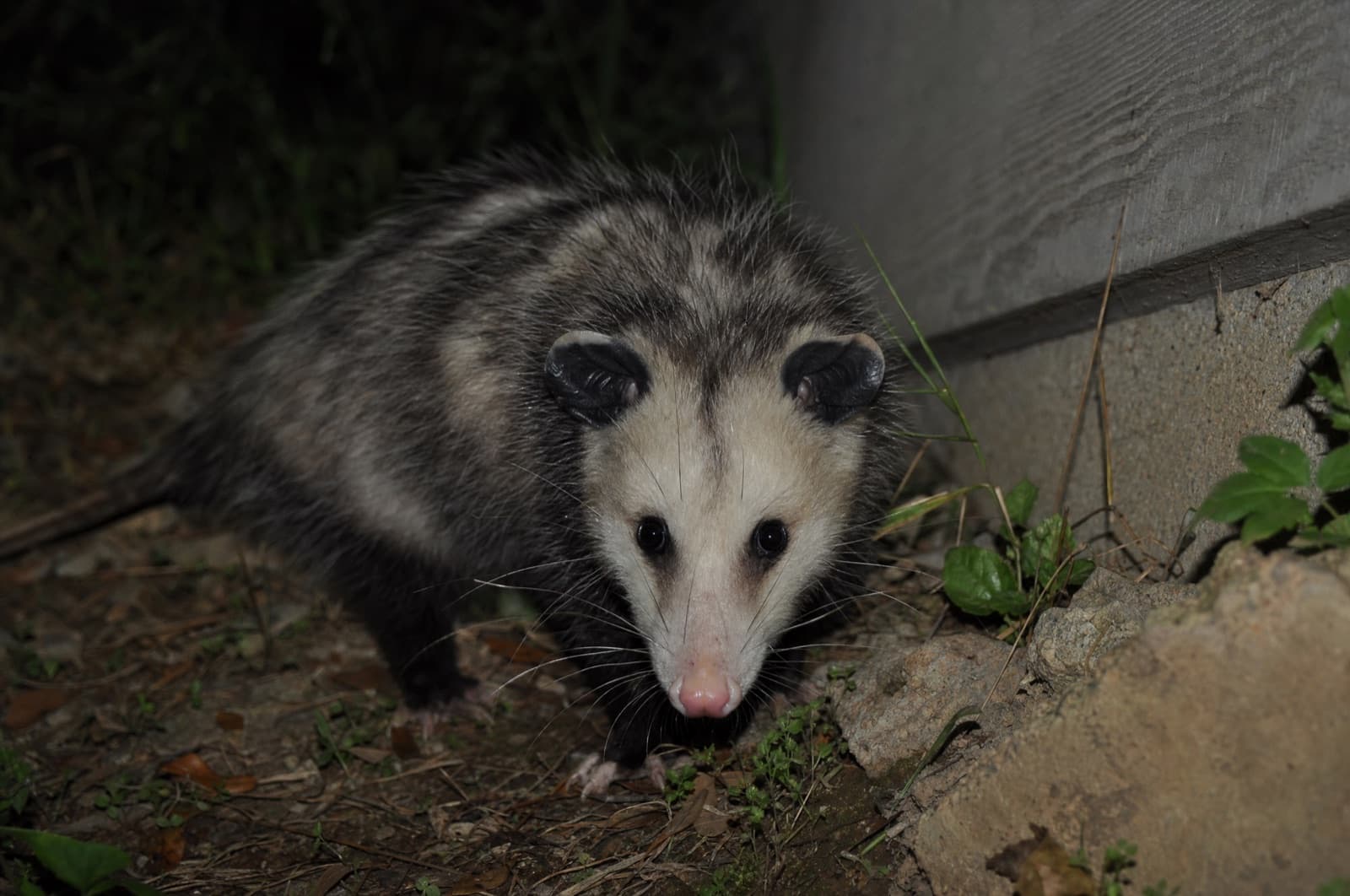
Where Do Opossums Live in the Winter? NH Timing Guide
At a glance
- Activity pattern: NocturnalForages after dusk, usually near the den, though home ranges can span up to ~50 acres — Northern Woodlands / Animal Diversity Web
- Winter strategy: No hibernation, no true torporDens a few days in extreme cold, otherwise active; may shift to daytime foraging in cold snaps — Mass Audubon / Animal Diversity Web
- Range: Central NH/VT + southern ME = northern range edgeNorthern opossums rarely live more than two years — Northern Woodlands
- Cold vulnerability: Hairless tail, ears, feet suffer frostbiteBiologists age northern opossums by frostbitten tails and ears — Menunkatuck / Northern Woodlands
Activity pattern
Nocturnal
Forages after dusk, usually near the den, though home ranges can span up to ~50 acres — Northern Woodlands / Animal Diversity Web
Winter strategy
No hibernation, no true torpor
Dens a few days in extreme cold, otherwise active; may shift to daytime foraging in cold snaps — Mass Audubon / Animal Diversity Web
Range
Central NH/VT + southern ME = northern range edge
Northern opossums rarely live more than two years — Northern Woodlands
Cold vulnerability
Hairless tail, ears, feet suffer frostbite
Biologists age northern opossums by frostbitten tails and ears — Menunkatuck / Northern Woodlands
The short of it
Opossums do NOT hibernate — nocturnal and frostbite-prone at NH's northern range edge, they must forage all winter, denning briefly in sheds, crawlspaces, and attics during the coldest spells.
When are they active — the whole year at a glance
Opossums show no sharp seasonal dormancy — activity dips only during the coldest stretches. The calendar below tracks foraging intensity, breeding, and fall shelter-seeking toward homes.
Best window to act · Fall, before the ~Oct 19 frost drives shelter-seeking, or any mild period once you've confirmed no dependent pouch young are present. Seal under sheds, porches, and decks with buried mesh, and cap crawlspace and foundation gaps.
No true dormancy — activity dips only in the coldest spells. Shelter-seeking toward homes rises ahead of Manchester's ~Oct 19 first frost (50% probability, NOAA 1991–2020).
What time of day are they active?
Opossums are nocturnal, waking shortly after sunset to forage through the night. Winter can bend that pattern when the cold makes nighttime foraging too costly.
In winter cold snaps, opossums may break their nocturnal pattern and feed in warmer daylight because nights are too cold and food too scarce — a winter daytime opossum is usually just cold and hungry, not sick. Opossums also have very low rabies rates, thought to be linked to their low body temperature, making a daytime opossum a far lower rabies concern than a daytime raccoon. Still, never handle wildlife by hand.
A day in their clock
- Dusk (foraging onset)active
- Nightpeak
- Pre-dawnactive
- Daytimelow
Winter behavior
Because opossums can't hibernate, the question of where they live in winter has real stakes — NH's cold is genuinely dangerous for them.
Active all winter
Hollow logs, brush piles, rock crevices, abandoned burrows — and increasingly human structures: sheds, crawlspaces, attics, and spaces under decks and porches, lined with leaves and grass. When snow buries natural burrows, they shelter in or against homes instead.
Move in
Fall shelter-seeking rises ahead of the ~Oct 19 frost, concentrating on one or a few insulated dens by November and December.
Active all winter
Hollow logs, brush piles, rock crevices, abandoned burrows — and increasingly human structures: sheds, crawlspaces, attics, and spaces under decks and porches, lined with leaves and grass. When snow buries natural burrows, they shelter in or against homes instead.
Spring exit
There is no hibernation exit — opossums are active year-round. As it warms in March and beyond, they range out again across multiple dens rather than staying put.
A year in the life
Opossum behavior shifts modestly through the New Hampshire year, but the animal never goes dormant.
- 01
Spring
Breeding begins in late winter and continues into early spring, with reproductive activity lowest at midwinter. Pouch young develop through this period, so it's best to avoid sealing a den if a female may be carrying young.
- 02
Summer
Peak foraging season, with young opossums dispersing from their mothers and the animals actively using multiple dens across their home range rather than settling on just one.
- 03
Fall
Opossums build modest fat reserves and increasingly seek warm shelter toward homes as temperatures fall toward the ~Oct 19 frost — this is the best exclusion window of the year, once no young are present.
- 04
Winter
Despite the cold, opossums must keep foraging; they can only hole up for a few days at a stretch during the harshest weather. Frostbite risk is highest now, and many northern opossums don't survive their first New Hampshire winter.
Opossums in southern New Hampshire
Manchester, Nashua, and Concord sit near the opossum's northern range limit, an area the species has expanded into over the past century. Because they can't hibernate and store little fat, New Hampshire's long, cold winters are a genuine survival challenge — which is why sheds, crawlspaces, and attics near homes have become increasingly important shelter as natural burrows fill with snow.
Key local data
Southern New Hampshire sits at the opossum's northern range edge — a distribution the species has pushed into over the past century as winters have moderated — and northern opossums rarely survive past about two years, with cold-driven frostbite to their unfurred tails and ears a leading limit on survival (Northern Woodlands; Animal Diversity Web). Shelter-seeking toward sheds, crawlspaces, and attics accelerates as temperatures fall toward Manchester's ~Oct 19 average first hard frost (NOAA 1991–2020).
We serve these communities
- NH-licensed applicator · #782664
- Same-day service
- Family-owned since 2017
Service Area Map
Southern New Hampshire
Timing your treatment
Because opossums are largely beneficial and non-aggressive, exclusion — not lethal control — is the right approach, timed to avoid dependent young.
Wildlife & Exclusion
Free inspection and same-day wildlife & exclusion service across southern New Hampshire. NH-licensed #782664. Opossums are beneficial, non-aggressive animals, so exclusion is recommended over lethal control.
Learn more about this pestFrequently asked
Sources & references
- Northern Woodlands — Opossums Find Cold Comfort in New England's Winters
northern range edge, frostbite biology, cold-weather survival
- Mass Audubon — Opossums
no hibernation, nocturnal activity, brief cold-weather denning, den sites
- Menunkatuck Audubon Society — Opossums Suffer from Frostbite
frostbite on ears, feet, and tail
- The Nature Conservancy Blog — How Extreme Winter Weather Affects Wildlife
cold-weather survival stress on wildlife
- Animal Diversity Web — Didelphis virginiana (Virginia opossum)
nocturnal foraging, home range (~10–50 acres), solitary behavior, lifespan
- NH Fish & Game — Nuisance Wildlife
wildlife status and relocation rules
- Garden.org — Frost Dates, Manchester NH (NOAA 1991–2020)
Manchester first hard frost ~Oct 19
Editorial disclaimer: This content is provided for informational purposes only and does not constitute pest control advice. Every property is unique — consult a licensed professional for guidance specific to your situation. Anchor Pest Services is licensed in New Hampshire (#782664).
Written & reviewed by
VerifiedDaniel Brady
NH-Licensed Pesticide Applicator · License #782664 (NHDAMF, RSA 430)
Daniel Brady is the New Hampshire–licensed applicator behind Anchor Pest Services, a family-owned pest control company serving the Manchester area since 2017.
Last updated Jul 2026
Anchor Pest Services
Whatever the season — we handle the timing for you.
Same-day service across Southern New Hampshire. NH-licensed #782664, family-owned since 2017. We track the local calendar so you don't have to guess the right window.
- NH-licensed applicator
- Same-day service
- Pet & family-conscious
NH License #782664 · No obligation · We answer in person
Your next step
- Fall guide
Fall Pest Control in New Hampshire
What matters before frost: the fall invader window, mice at the foundation, and what to seal first.
Read the answer - What to do next
Opossum in New Hampshire — ID, Signs & Honest Facts
Read the answer - Related guide
When Are Raccoons Active? Winter, Night & NH Timing
Read the answer - Related guide
Where Do Squirrels Go in the Winter? NH Timing Guide
Read the answer - Also relevant
Opossum in New Hampshire — ID, Signs & Honest Facts
Read the answer - Also relevant
How to Get Rid of Opossums
Read the answer