
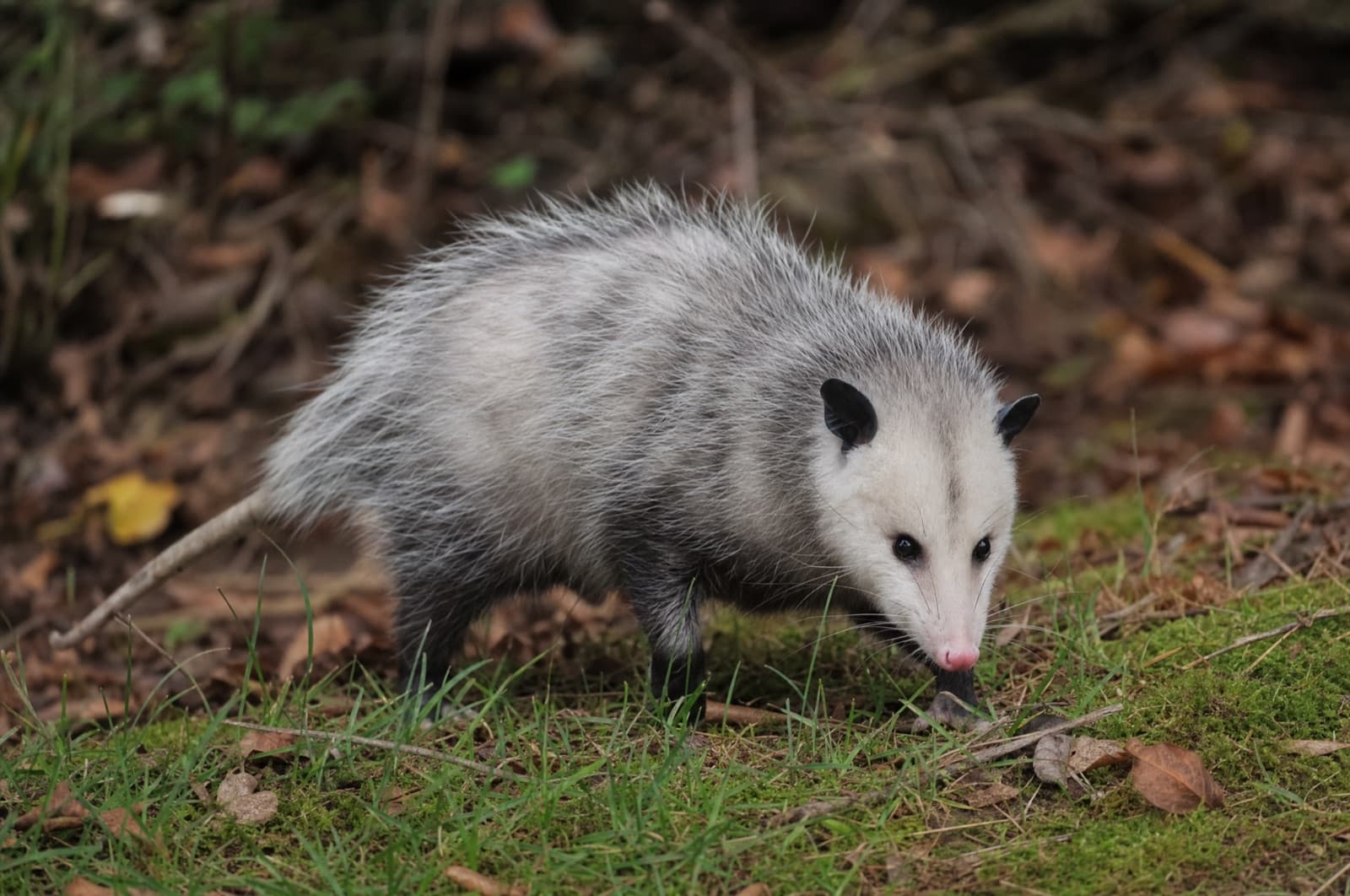
How to Get Rid of Opossums
At a glance
- Difficulty: Beginner
- Time: A weekend to seal access points; ongoing attractant management
- Cost: Low — hardware cloth, stakes, secured trash/pet-food containers
- Success: Good — opossums are generally docile and move on once attractants are removed
Can you DIY Opossum?
The verdict on Opossum DIY
One of the most DIY-tractable wildlife species — and one of the least feared for good reason.
Virginia opossums are transient den-users, not chewers, and they readily move on once an attractant is removed. They're also widely and incorrectly feared as a rabies risk: opossums have a notably low body temperature, commonly cited around 94–97°F, that makes them a poor host for the rabies virus compared with raccoons, skunks, or foxes, and confirmed rabid opossums are exceedingly rare. Securing food/trash and sealing access under a deck, shed, or porch resolves most homeowner situations without a trap.
The 5 DIY methods — honestly graded
Every approach graded for this species, in IPM order — prevention first, chemistry late. Pick a method to see how it works, the steps, and what it actually takes.
Prevention / Exclusion
Works wellHighly effective — opossums are transient den-users, not chewers, so a properly built exclusion barrier reliably keeps them out.
Opossums shelter opportunistically under decks, sheds, and porches rather than digging or chewing their way in. A buried L-footer barrier denies that access without needing to trap or relocate anything.
Best for: Permanently closing off den access under structures
Build an L-footer barrier
Close off spaces under decks, sheds, and porches with galvanized ¼- to ½-inch hardware cloth, buried and angled outward about 12 inches so a digging animal hits the horizontal shelf and gives up.
Cap window wells and secure attractants
Cap open window wells, secure trash cans with locking lids, and bring in pet food overnight.
Tools & materials
Why DIY falls short here
Not scare tactics — the specific, proportionate reasons a home attempt can stall for this species.
Recurring food attractant
Unsecured trash or pet food left out keeps drawing new animals even after one opossum is excluded, making it look like exclusion "failed."
Denning young under a structure
Exclusion needs to wait until young are mobile — sealing a den with dependent young inside orphans them.
How risky is it, really?
An honest read — most nuisance species are genuinely low risk, and we say so.
Opossums are widely and incorrectly feared as a rabies risk. In reality, their notably low body temperature makes them a poor host for the rabies virus, and confirmed rabid opossums are exceedingly rare — this is a genuine myth correction, not a case of understating a real risk. They're also generally docile, rarely bite, and eat ticks and insects.
- RabiesRare
Myth correction: opossums' low body temperature (roughly 94–97°F) makes them a poor rabies host compared with raccoons, skunks, or foxes — confirmed rabid opossums are exceedingly uncommon
Veterinary/wildlife literature
- Leptospirosis via urine-contaminated soil or waterOccasional
Standard hygiene precautions (gloves, hand-washing) after yard cleanup are sufficient
CDC
- Defensive hissing or "playing dead"; bites uncommonRare
Opossums are generally docile and avoid confrontation rather than seek it
Wildlife literature
Want the Den Sealed Without the Guesswork?
Anchor Pest Services confirms vacancy and installs lasting exclusion barriers across southern and central New Hampshire. Family-owned since 2017, NH license #782664.
Call a pro when…
- A den with young you need addressed sooner than a wait-it-out timeline allows
- Repeated denning under a structure despite your own sealing attempts
- You want confirmed-vacancy exclusion done for you
General Pest Control
Most opossum situations are entirely DIY. Call a pro if a den under your structure has young you can't safely wait out, or if exclusion keeps failing because of a persistent food source you can't control.
Keep them out
- Secure trash cans with locking lids
- Don't leave pet food out overnight
- Seal under-deck and under-shed access with a buried L-footer barrier
Opossums in New Hampshire
In New Hampshire, opossums are active year-round and don't hibernate, though cold snaps often push them to seek shelter under decks, sheds, and porches during winter — the same access points worth sealing before the coldest months arrive. Their short, thin, unfurred ears and tail are also genuinely vulnerable to frostbite in New Hampshire winters, part of why they seek warm cover so readily.
Peak season
Year-round; increased shelter-seeking in cold months
Make sure it's a Opossum
Two quick detours worth taking — confirm the ID, then learn what drew it in so it doesn't come back.
Frequently asked
Sources & further reading(3)
- [1]
- [2]NH Fish & Game — Nuisance Wildlife / Wildlife Control Operators
Trapping licensing and relocation constraints
govverified 2026-07-13 - [3]WildlifeHelp.org (NH Fish & Game partner resource) — Opossum Conflicts
Recommended on-site release/animal-proofing approach
industryverified 2026-07-13
Written & reviewed by
VerifiedDaniel Brady
NH-Licensed Pesticide Applicator · License #782664 (NHDAMF, RSA 430)
Daniel Brady is the New Hampshire–licensed applicator behind Anchor Pest Services, a family-owned pest control company serving the Manchester area since 2017.
Last updated July 2026
Professional Pest Control
Want the Den Sealed Without the Guesswork?
Anchor Pest Services confirms vacancy and installs lasting exclusion barriers across southern and central New Hampshire. Family-owned since 2017, NH license #782664.
- Humane, confirmed-vacancy exclusion
- NH-licensed technicians (#782664)
- Free inspection — same-day service across southern NH
NH License #782664 · No obligation · We answer in person
Your next step
- Book a NH pro
Pest Control Services
Licensed, family-owned pest control across southern NH.
Book now - What to do next
Opossum in New Hampshire — ID, Signs & Honest Facts
Read the answer - Also relevant
Opossum in New Hampshire — ID, Signs & Honest Facts
Read the answer - Also relevant
Wildlife Exclusion: Evict First, Then Seal — Never Reverse
Read the answer - Also relevant
Where Do Opossums Live in the Winter? NH Timing Guide
Read the answer - Also relevant
Where Do Opossum Go In The Winter?
Read the answer