
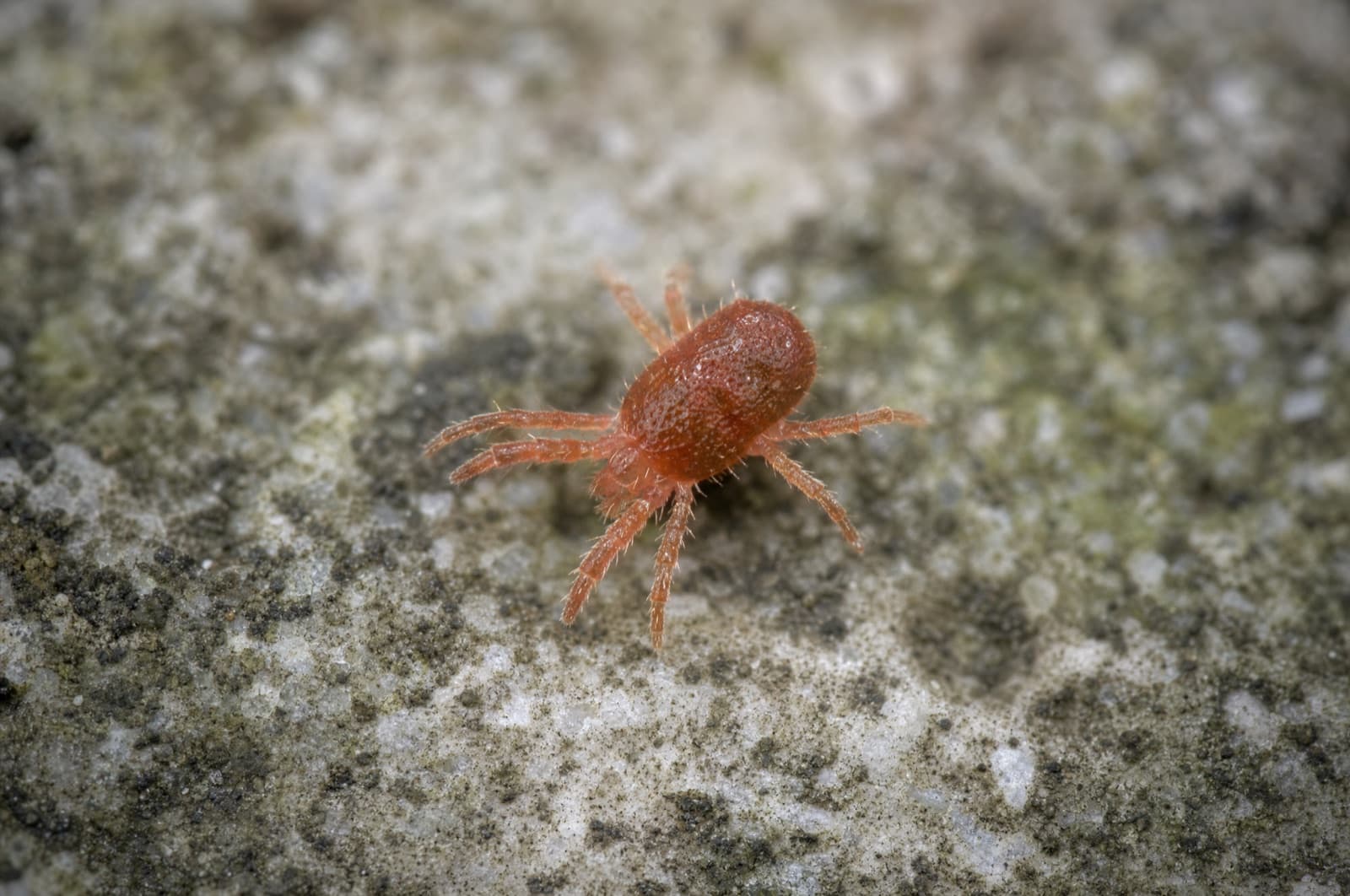
How to Get Rid of Clover Mites
At a glance
- Difficulty: Beginner
- Time: A weekend to establish the foundation barrier; ongoing light vacuuming during spring/fall migrations
- Cost: Low — gravel or mulch, caulk, and a vacuum
- Success: High for reducing entry with a maintained barrier and sealed gaps; some seasonal entry is normal even with good exclusion
Can you DIY Clover Mite?
The verdict on Clover Mite DIY
A pure nuisance invader — no bites, no disease, and a beginner-friendly fix once you know not to crush them.
Clover mites (Bryobia praetiosa) feed only on plant sap from grass and clover, not blood, and do not bite people or pets or transmit any disease. The whole job is a vegetation-free barrier around the foundation, sealed cracks, and vacuuming — never crushing — the ones that get inside. No exterminator needed for a typical home.
The 5 DIY methods — honestly graded
Every approach graded for this species, in IPM order — prevention first, chemistry late. Pick a method to see how it works, the steps, and what it actually takes.
Prevention / Exclusion
Works wellThe most durable fix — a maintained foundation barrier reduces entry across every migration, not just this one.
Clover mites migrate off lush, over-fertilized grass toward sunny walls looking for overwintering or oversummering sites. Removing the vegetation they travel across and sealing the cracks they use to get inside cuts off both the path and the draw.
Best for: Reducing entry across every spring and fall migration, not just a one-time fix
Build a vegetation-free barrier
Maintain an 18-24 inch band of gravel or mulch around the foundation, prioritizing sunny south, southwest, and east-facing walls where mites concentrate.
Ease off fertilizer near the house
Avoid over-fertilizing lawn areas close to the foundation — lush, well-fed grass is more attractive to clover mites.
Seal entry cracks
Caulk cracks around windows, doors, and the foundation to close off the paths mites use to get inside.
Tools & materials
Why DIY falls short here
Not scare tactics — the specific, proportionate reasons a home attempt can stall for this species.
Crushing instead of vacuuming
Clover mites contain a reddish pigment (not blood) that stains light surfaces, carpet, and curtains when crushed — sweeping or wiping hard causes the exact problem you're trying to avoid.
Skipping the vegetation barrier
Without a gravel or mulch band and reduced fertilizer near the foundation, lush grass keeps drawing mites toward the house every migration, so vacuuming alone becomes a recurring chore.
Reactive rather than maintained exclusion
Spring and fall migrations are unpredictable in timing, so trying to time a one-off treatment is less reliable than keeping the barrier and sealed cracks in place year-round.
How risky is it, really?
An honest read — most nuisance species are genuinely low risk, and we say so.
Clover mites pose no bite, disease, or structural-damage risk at all — the only real issue is cosmetic staining from crushing large numbers, plus the sheer nuisance of mass entry during migrations. Any legacy framing of clover mites as a health risk is inaccurate.
- Reddish staining on light surfaces when crushedCommon
Only when mites are crushed or swept — vacuum them instead
UConn Home & Garden Education Center
- Bites to humans or petsRare
Not documented — clover mites feed only on plant sap, not blood
University of Maryland Extension
- Disease transmissionRare
None documented for this species
University of Maryland Extension
Tired of the Seasonal Clover Mite Surge?
Establishing a foundation barrier on a large property is a bigger job than it sounds. Anchor Pest Services handles exclusion and correctly-timed exterior treatment across southern and central New Hampshire. Family-owned since 2017, NH license #782664.
Call a pro when…
- Year after year of heavy migrations despite your own barrier and sealing
- A large property where establishing the vegetation-free barrier isn't practical alone
- You want a timed exterior treatment applied correctly during migration season
General Pest Control
You almost never need a pro for clover mites — this is a barrier-and-vacuum job. The exception is a home under heavy, recurring migration pressure where a correctly-timed exterior treatment is worth handing off.
Keep them out
- Maintain the vegetation-free barrier at the foundation year-round
- Avoid over-fertilizing lawn areas near the house
- Vacuum promptly rather than wiping or crushing
Clover mites in New Hampshire
In New Hampshire, clover mites typically migrate toward homes twice a year — a spring surge as overwintering eggs hatch and temperatures warm, and a fall surge as mites seek shelter before winter. Well-fertilized lawns right up against the foundation are the biggest local driver, so easing off fertilizer near the house and maintaining a gravel or mulch barrier are the most effective preventive steps for NH homeowners.
Peak season
Spring and fall migrations
Make sure it's a Clover Mite
Two quick detours worth taking — confirm the ID, then learn what drew it in so it doesn't come back.
Frequently asked
Sources & further reading(4)
- [1]UConn Home & Garden Education Center — Clover Mites
Species biology, staining, non-biting confirmation
extensionverified 2026-07-13 - [2]University of Missouri Extension — Clover Mites (G7358)
Vegetation-free barrier, fertilizer link
extensionverified 2026-07-13 - [3]University of Maryland Extension — Clover Mites
No bites, no disease, no structural damage
extensionverified 2026-07-13 - [4]University of Kentucky Entomology — Clover Mites (EF627)
Exclusion timing, chemical control guidance
extensionverified 2026-07-13
Written & reviewed by
VerifiedDaniel Brady
NH-Licensed Pesticide Applicator · License #782664 (NHDAMF, RSA 430)
Daniel Brady is the New Hampshire–licensed applicator behind Anchor Pest Services, a family-owned pest control company serving the Manchester area since 2017.
Last updated July 2026
Professional Pest Control
Tired of the Seasonal Clover Mite Surge?
Establishing a foundation barrier on a large property is a bigger job than it sounds. Anchor Pest Services handles exclusion and correctly-timed exterior treatment across southern and central New Hampshire. Family-owned since 2017, NH license #782664.
- Correctly-timed exterior barrier treatment
- NH-licensed applicators (#782664)
- Free inspection — same-day service across southern NH
NH License #782664 · No obligation · We answer in person
Your next step
- What to do next
Clover Mites in NH: Tiny Red Bugs That Don't Bite
Read the answer - Also relevant
What Attracts Clover Mites to Your House?
Read the answer - Also relevant
Do Mites Die in the Winter? NH Mite Activity Guide
Read the answer - Also relevant
Natural Mite & Tick Control: The Honest, No-Instant-Cure Guide
Read the answer