
How to Get Rid of Common Garden Spiders
At a glance
- Difficulty: Beginner
- Time: A few minutes, only for webs in the way
- Cost: Low to none
- Success: High — relocation or removal resolves any actual conflict immediately
Can you DIY Common Garden Spider?
The verdict on Common Garden Spider DIY
The most honest verdict here is simple: you may not need to do anything at all.
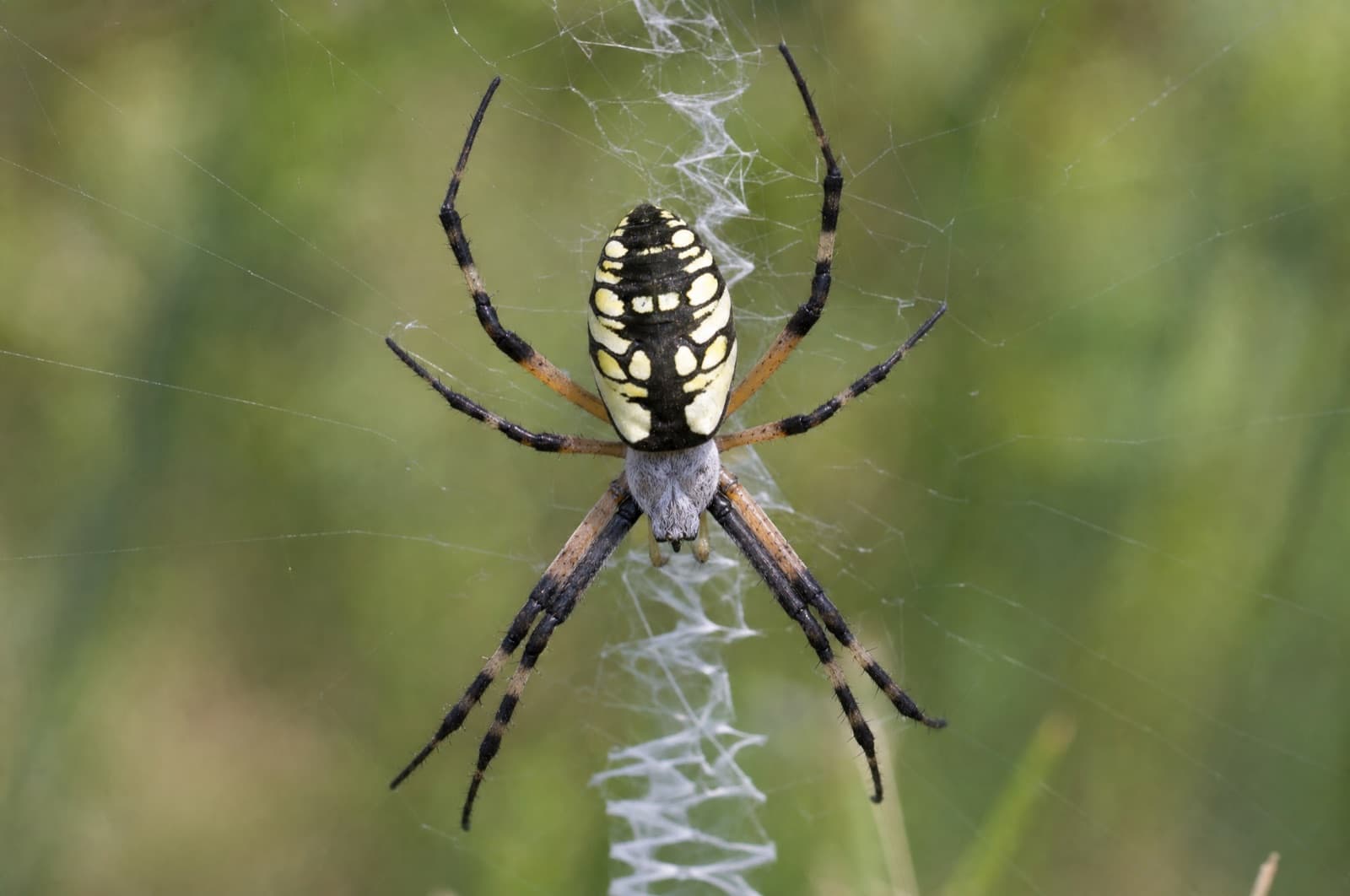
The yellow garden spider (Argiope aurantia) is a large, showy orb-weaver of late summer, easily identified by the bold zigzag 'stabilimentum' pattern woven into its web. It's a beneficial predator that eats mosquitoes, flies, grasshoppers, and even wasps, and UF/IFAS describes it as 'relatively harmless' — it 'will generally flee rather than attack when disturbed.' The intimidating size is the whole story; there's genuinely no urgency here unless a web is blocking a doorway or walkway.
The 5 DIY methods — honestly graded
Every approach graded for this species, in IPM order — prevention first, chemistry late. Pick a method to see how it works, the steps, and what it actually takes.
Prevention / Exclusion
SituationalOnly relevant where a web genuinely conflicts with foot traffic — outdoors, these spiders are beneficial and best left alone.
Because garden spiders are outdoor beneficials, 'prevention' here means redirecting rather than eliminating — discouraging web placement across doorways and walkways while leaving garden and shrub webs undisturbed.
Best for: The rare case where a web is genuinely in the way
Leave most webs alone
In garden beds, along fences, and away from foot traffic, simply let the web and spider be — they're providing free pest control.
Discourage doorway placement only if needed
If webs repeatedly appear across a frequently used doorway, gently relocate them rather than leaving a recurring nuisance.
Tools & materials
Why DIY falls short here
Not scare tactics — the specific, proportionate reasons a home attempt can stall for this species.
Unnecessary treatment removes a garden ally
NC State notes control is optional for this species — killing it removes a predator of mosquitoes, flies, and grasshoppers, which often means more of those pests around instead.
Spiders rebuild in prime spots
A sunny, insect-rich location is genuinely valuable web real estate — repeatedly removing a spider from the same prime spot just means persistent effort for no real benefit; better to address only genuine-conflict locations.
How risky is it, really?
An honest read — most nuisance species are genuinely low risk, and we say so.
Common (yellow) garden spiders are large and visually striking, but genuinely harmless. UF/IFAS describes them as 'relatively harmless,' noting they 'will generally flee rather than attack when disturbed.' They're a beneficial predator, not a threat, and this is one of the hub's clearest 'the risk is basically nothing' pages.
- Defensive bite if grabbed or harassedRare
Roughly equivalent to a bee sting in a healthy, non-allergic adult; the spider will flee rather than bite unless directly handled
UF/IFAS
- Allergic reaction in sensitized individualsRare
Possible with any arthropod bite, as with a bee or wasp sting, but not a documented pattern specific to this species
UF/IFAS
General Outdoor Pest Management
Garden spiders don't need treatment, but Anchor Pest Services is here for the pests that do. Serving southern and central New Hampshire, family-owned since 2017, NH license #782664.
Call a pro when…
- You'd like general outdoor pest management as part of broader household care (not specific to this species)
General Pest Control
A pro is essentially never needed for common garden spiders — this is one of the most genuinely 'do nothing' pages in the hub. There's no real scenario here that calls for professional pest control beyond general property maintenance.
Keep them out
- Leave webs in gardens and along fences undisturbed — they're free pest control
- Gently relocate only webs that block doorways or walkways
- Never spray a garden spider or its web
Common garden spiders in New Hampshire
Yellow garden spiders are a familiar late-summer sight in New Hampshire gardens, building their distinctive zigzag-patterned webs among tall plants, fences, and shrubs. They're most visible from mid-summer through fall as they reach full size, and the adults typically die off with the first hard frost, about October 19–29 in Manchester (NOAA), after producing an egg sac that overwinters.
Peak season
Mid-summer through fall
First-frost anchor
Manchester first hard frost ~Oct 19 (50%) / Oct 29 (80%), NOAA 1991–2020
Make sure it's a Common Garden Spider
Two quick detours worth taking — confirm the ID, then learn what drew it in so it doesn't come back.
Frequently asked
Sources & further reading(3)
- [1]UF/IFAS — Yellow Garden Spider
Relatively harmless, flees rather than attacks
extensionverified 2026-07-13 - [2]NC State Extension — Black and Yellow Garden Spider
Control is optional; beneficial predator
extensionverified 2026-07-13 - [3]Wikipedia — Argiope aurantia
General species biology and stabilimentum reference
encyclopediaverified 2026-07-13
Written & reviewed by
VerifiedDaniel Brady
NH-Licensed Pesticide Applicator · License #782664 (NHDAMF, RSA 430)
Daniel Brady is the New Hampshire–licensed applicator behind Anchor Pest Services, a family-owned pest control company serving the Manchester area since 2017.
Last updated July 2026
Other species you can tackle
Same category — the dot shows each one's DIY verdict at a glance (green = friendly, amber = doable with care, red = call a pro).
Professional Pest Control
General Outdoor Pest Management
Garden spiders don't need treatment, but Anchor Pest Services is here for the pests that do. Serving southern and central New Hampshire, family-owned since 2017, NH license #782664.
- Honest, species-specific advice
- NH-licensed applicators (#782664)
- Free inspection — same-day service across southern NH
NH License #782664 · No obligation · We answer in person
Your next step
- What to do next
Common Garden Spider in NH: ID, Web & Is It Dangerous
Read the answer - Also relevant
What Attracts Common Garden Spiders to Your House?
Read the answer - Related guide
How to Get Rid of House Spiders
Read the answer - Also relevant
Natural Spider Control: What Actually Works in New Hampshire
Read the answer