
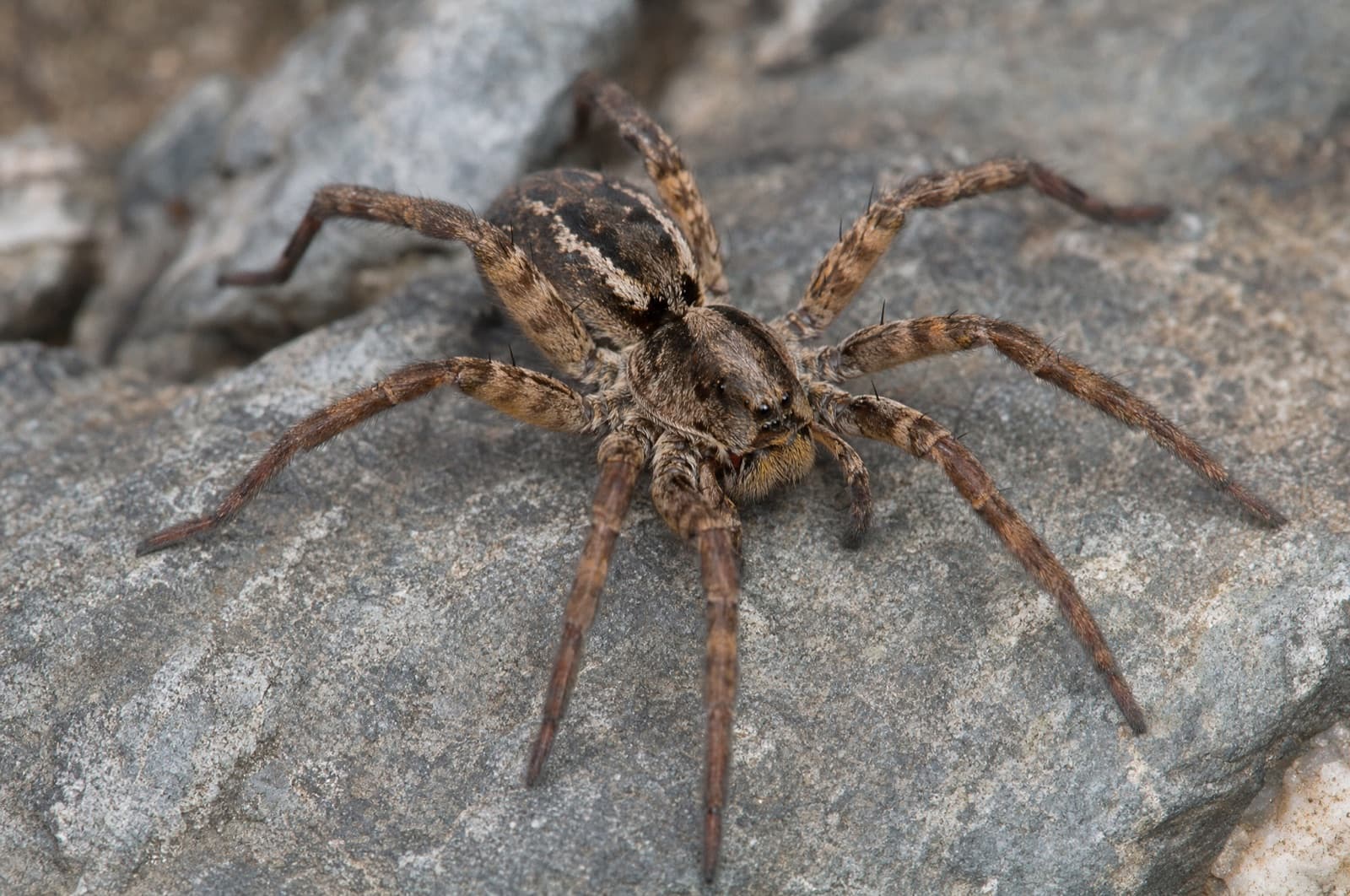
How to Get Rid of Wolf Spiders
At a glance
- Difficulty: Beginner
- Time: A weekend for exclusion; a few minutes per spider for catch-and-release
- Cost: Low — caulk, weatherstripping, a cup and card
- Success: High — most wolf-spider sightings resolve with exclusion and removing a lone wanderer
Can you DIY Wolf Spider?
The verdict on Wolf Spider DIY
Their size is the whole scary story — this is a beginner-friendly, low-stakes DIY job.
Wolf spiders are large, fast, ground-hunting spiders that chase prey rather than trap it in a web, which is exactly why they turn up wandering across a basement floor instead of hanging in a corner. They wander in by accident — usually in fall — and, per University of Minnesota Extension, 'do not survive well indoors and usually do not reproduce indoors.' A bite is rare, defensive-only, and per Cleveland Clinic 'doesn't normally require medical attention.' The job is sealing the gaps they're using to get in and removing the individuals that already have.
The 5 DIY methods — honestly graded
Every approach graded for this species, in IPM order — prevention first, chemistry late. Pick a method to see how it works, the steps, and what it actually takes.
Prevention / Exclusion
Works wellThe most durable fix — closes the gaps wolf spiders use to wander in, before they ever get inside.
Wolf spiders don't come in to nest; they wander in accidentally while hunting, most often in fall as temperatures drop. Sealing the ground-level gaps they slip through, and clearing the debris that shelters them right outside the foundation, removes both the entry route and the staging area.
Best for: Cutting off next season's wandering spiders at the source
Seal the foundation
Caulk foundation cracks, and fit door sweeps and weatherstripping on exterior doors and low windows.
TipDo a flashlight check at night along the foundation — gaps show as thin lines of light from inside.Clear the harborage zone
Move woodpiles, leaf litter, mulch beds, and stored items away from the foundation. Wolf spiders hunt at ground level in exactly this kind of clutter.
CautionPiles right against the house are the single biggest driver of wolf-spider sightings indoors.
Tools & materials
Why DIY falls short here
Not scare tactics — the specific, proportionate reasons a home attempt can stall for this species.
Overtreatment of a harmless wanderer
People spray baseboards chasing a single spider that was never going to nest there — the chemical doesn't address the gap that let it in, and it wasn't needed in the first place.
Misidentification as a brown recluse
Wolf spiders are large, brown, and fast, and are frequently mistaken for brown recluse spiders, which aren't established in New Hampshire. Acting on the wrong ID wastes effort on a threat that doesn't exist.
Chasing a symptom, not the source
Repeated sightings usually mean an exterior harborage problem (woodpiles, leaf litter, gaps) — removing individual spiders without sealing the source means new ones keep wandering in.
How risky is it, really?
An honest read — most nuisance species are genuinely low risk, and we say so.
Wolf spiders look intimidating because of their size and speed, but that's not correlated with danger. They're not aggressive, don't build webs indoors, don't reproduce indoors, and a bite — when it happens at all — is a minor, self-resolving irritation.
- Defensive bite if trapped against skinRare
Mild pain, redness, and swelling that typically resolves in days; Cleveland Clinic notes it 'doesn't normally require medical attention'
Cleveland Clinic
- Allergic reaction in sensitized individualsRare
Possible with any arthropod bite, but not a documented pattern specific to wolf spiders
University of Maryland Extension
- Necrosis or systemic toxicityRare
Not medically significant to humans — this is not a brown-recluse-type venom
University of Minnesota Extension
Tired of Finding Spiders on the Floor?
Most wolf-spider sightings are a quick DIY fix, but a persistent pattern often means an exterior harborage issue worth a professional look. Anchor Pest Services handles inspection and exclusion across southern and central New Hampshire. Family-owned since 2017, NH license #782664.
Call a pro when…
- Recurring wolf-spider sightings despite sealing obvious gaps
- You want a professional inspection to rule out a genuine brown recluse before assuming it's 'just' a wolf spider
- A heavy, unusual concentration around the foundation that suggests an exterior habitat issue
General Pest Control
You almost never need a pro for a wolf spider — this is a seal-and-remove job. The exception is a home with a persistent, heavy pattern of wandering spiders that points to an exterior harborage or entry problem bigger than a weekend of caulking can fix.
Keep them out
- Seal foundation cracks and fit door sweeps before fall, when wandering picks up
- Keep woodpiles, mulch, and leaf litter off the foundation
- Reduce outdoor lighting that draws prey insects to entry points
Wolf spiders in New Hampshire
In New Hampshire, wolf spiders are most often seen wandering indoors in fall as cooler weather sets in and they search for warmth — the same seasonal push that drives many nuisance invaders toward homes ahead of the first hard frost, about October 19–29 in Manchester (NOAA). They're a ground-level pest, not a wall or attic one, so exclusion at the foundation is the highest-leverage move.
Peak season
Late summer into fall, ahead of the first hard frost
First-frost anchor
Manchester first hard frost ~Oct 19 (50%) / Oct 29 (80%), NOAA 1991–2020
Make sure it's a Wolf Spider
Two quick detours worth taking — confirm the ID, then learn what drew it in so it doesn't come back.
Frequently asked
Sources & further reading(4)
- [1]University of Minnesota Extension — Spiders
Wolf spiders don't survive/reproduce well indoors, not aggressive
extensionverified 2026-07-13 - [2]Cleveland Clinic — Wolf Spider Bite
Bite doesn't normally require medical attention
medicalverified 2026-07-13 - [3]University of Maryland Extension — Spiders
General spider biology and risk calibration
extensionverified 2026-07-13 - [4]
Written & reviewed by
VerifiedDaniel Brady
NH-Licensed Pesticide Applicator · License #782664 (NHDAMF, RSA 430)
Daniel Brady is the New Hampshire–licensed applicator behind Anchor Pest Services, a family-owned pest control company serving the Manchester area since 2017.
Last updated July 2026
Other species you can tackle
Same category — the dot shows each one's DIY verdict at a glance (green = friendly, amber = doable with care, red = call a pro).
Professional Pest Control
Tired of Finding Spiders on the Floor?
Most wolf-spider sightings are a quick DIY fix, but a persistent pattern often means an exterior harborage issue worth a professional look. Anchor Pest Services handles inspection and exclusion across southern and central New Hampshire. Family-owned since 2017, NH license #782664.
- Foundation-level exclusion
- NH-licensed applicators (#782664)
- Free inspection — same-day service across southern NH
NH License #782664 · No obligation · We answer in person