
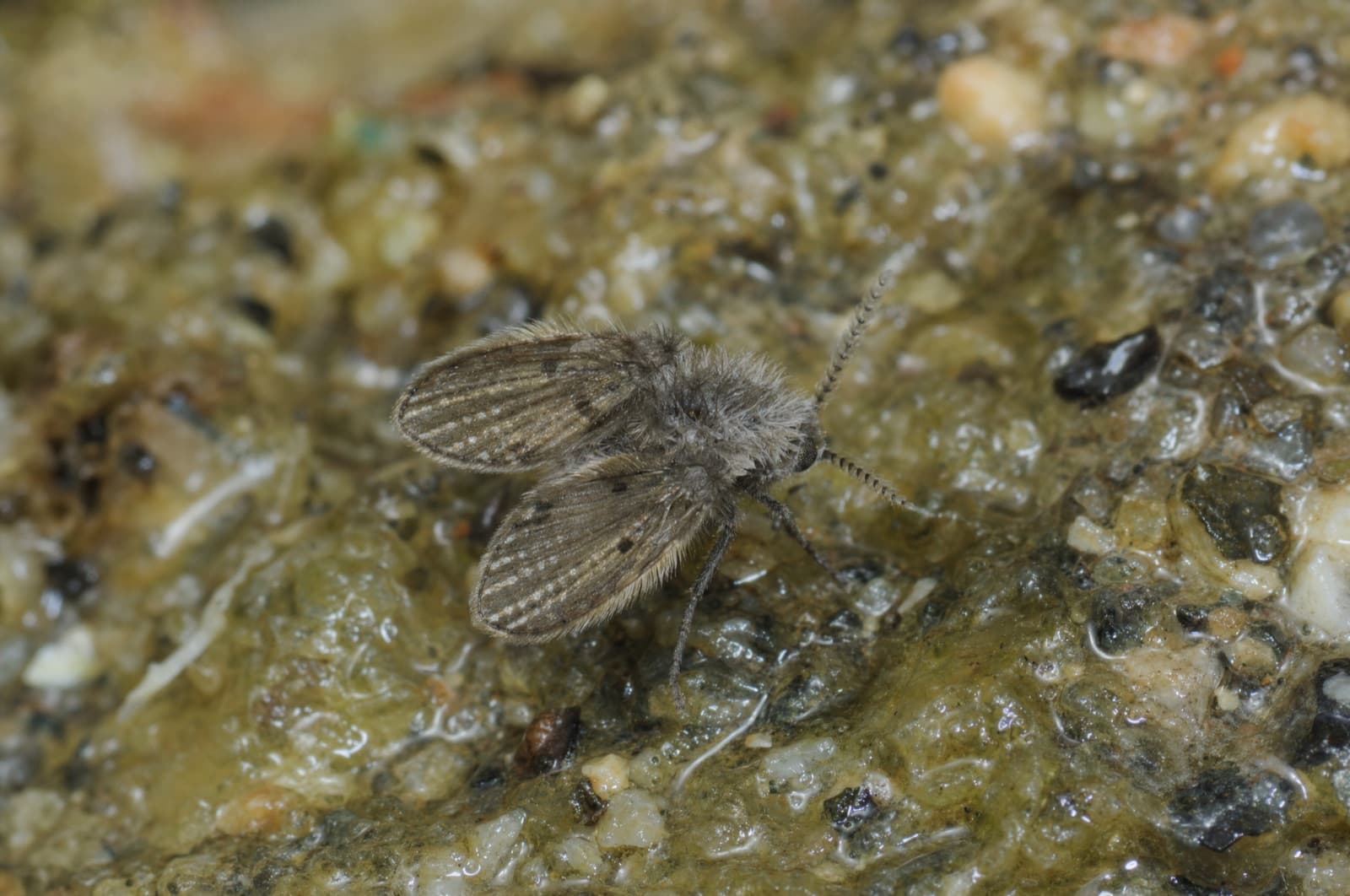
How to Get Rid of Drain Flies
At a glance
- Difficulty: Beginner
- Time: Under an hour per drain, plus a few days of enzymatic follow-up
- Cost: Low — a drain brush and an enzymatic cleaner
- Success: High once the correct drain is identified and physically scrubbed
Can you DIY Drain Fly?
The verdict on Drain Fly DIY
A beginner-friendly DIY — the fix is mechanical scrubbing, not chemicals.
Drain flies (moth flies) breed in the gelatinous organic biofilm that lines the inside of a slow or rarely-used drain. That's genuinely good news: the problem is a physical film you can scrub away, not a hidden colony you have to hunt down. Confirm the breeding drain with an overnight clear-tape test, scrub the pipe walls with a stiff brush, then follow with an enzymatic cleaner. No pest license or specialized equipment required.
The 5 DIY methods — honestly graded
Every approach graded for this species, in IPM order — prevention first, chemistry late. Pick a method to see how it works, the steps, and what it actually takes.
Prevention / Exclusion
Works wellIdentifying the exact breeding drain is the first step every other track depends on.
Drain flies stay close to the drain they emerged from, so confirming the source with a simple test focuses your cleaning effort on the right pipe instead of guessing.
Best for: Confirming which drain to treat before you scrub anything
Run the clear-tape test
Tape a piece of clear tape sticky-side down over each suspect drain opening overnight. Check in the morning for trapped flies.
TipTest infrequently-used drains too — floor drains, basement laundry drains, and unused bathroom sinks are common overlooked sources.Keep drains flushed
Run water through infrequently used drains regularly to prevent biofilm from building up in the first place.
Tools & materials
Why DIY falls short here
Not scare tactics — the specific, proportionate reasons a home attempt can stall for this species.
Pouring bleach and calling it done
Bleach and thin cleaners glance off the water-resistant biofilm; larvae keep developing in what's left behind.
Treating the wrong drain
Flies stay close to their breeding site — without a clear-tape test to confirm the source, you can scrub the wrong fixture entirely.
How risky is it, really?
An honest read — most nuisance species are genuinely low risk, and we say so.
Drain flies are a pure nuisance with no meaningful health risk. They're weak fliers that stay near their breeding site, don't bite, and carry no documented disease risk in a home setting.
- Nuisance around sinks and showersCommon
Cosmetic and annoying, not hazardous
UC IPM / extension pest-management literature
- Disease transmissionRare
Negligible in a residential setting
UC IPM / extension pest-management literature
Drain Flies Keep Coming Back?
If scrubbing and enzymatic treatment aren't holding, a hidden plumbing issue could be feeding the problem. Anchor Pest Services offers full inspections across southern and central New Hampshire. Family-owned since 2017, NH license #782664.
Call a pro when…
- Flies persist after scrubbing and enzymatic treatment on every drain in the affected area
- You suspect a cracked pipe or broken seal feeding organic buildup somewhere inaccessible
- You'd rather have a full inspection to rule out other breeding sources
General Pest Control
Most drain fly problems are a straightforward DIY fix. A pro adds value if flies persist after thorough scrubbing across every drain, which can point to a plumbing issue like a cracked pipe or a broken seal beyond a drain brush's reach.
Keep them out
- Run water through infrequently used drains at least weekly
- Scrub drains periodically as routine maintenance, not just when flies appear
- Fix slow leaks before they create standing organic buildup
Drain flies in New Hampshire homes
Drain flies show up year-round in NH homes wherever a drain sees inconsistent use — a basement laundry sink, a guest bathroom, or a floor drain. Warm, humid months can accelerate biofilm buildup, making a spring or early-summer drain-cleaning pass a good preventive habit.
Peak season
Warm, humid months, though drains can breed them any time of year
Make sure it's a Drain Fly
Two quick detours worth taking — confirm the ID, then learn what drew it in so it doesn't come back.
Frequently asked
Sources & further reading(3)
- [1]UC Statewide IPM Program — Drain Flies
Biofilm biology and mechanical control guidance
extensionverified 2026-07-13 - [2]Southland Organics — How to Get Rid of Drain Flies
Enzymatic/bio-cleaner mechanism
industryverified 2026-07-13 - [3]Bahama Plumbing — Drain Fly Treatment
Mechanical scrubbing and extension-consistent guidance
industryverified 2026-07-13
Written & reviewed by
VerifiedDaniel Brady
NH-Licensed Pesticide Applicator · License #782664 (NHDAMF, RSA 430)
Daniel Brady is the New Hampshire–licensed applicator behind Anchor Pest Services, a family-owned pest control company serving the Manchester area since 2017.
Last updated July 2026
Other species you can tackle
Same category — the dot shows each one's DIY verdict at a glance (green = friendly, amber = doable with care, red = call a pro).
Professional Pest Control
Drain Flies Keep Coming Back?
If scrubbing and enzymatic treatment aren't holding, a hidden plumbing issue could be feeding the problem. Anchor Pest Services offers full inspections across southern and central New Hampshire. Family-owned since 2017, NH license #782664.
- NH-licensed applicators (#782664)
- Free inspection — same-day service across southern NH
NH License #782664 · No obligation · We answer in person
Your next step
- Book a NH pro
Pest Control Services
Licensed, family-owned pest control across southern NH.
Book now - What to do next
Drain Flies in New Hampshire — ID, Signs & How to Get Rid of Them
Read the answer - Also relevant
Drain Flies in New Hampshire — ID, Signs & How to Get Rid of Them
Read the answer - Also relevant
Filth Fly Prevention: Sanitation Stops Flies at the Source
Read the answer - Also relevant
What Attracts Drain Flies to Your House?
Read the answer - Also relevant
Mechanical Filth Fly Control: Find the Source, Not Just the Fly
Read the answer