
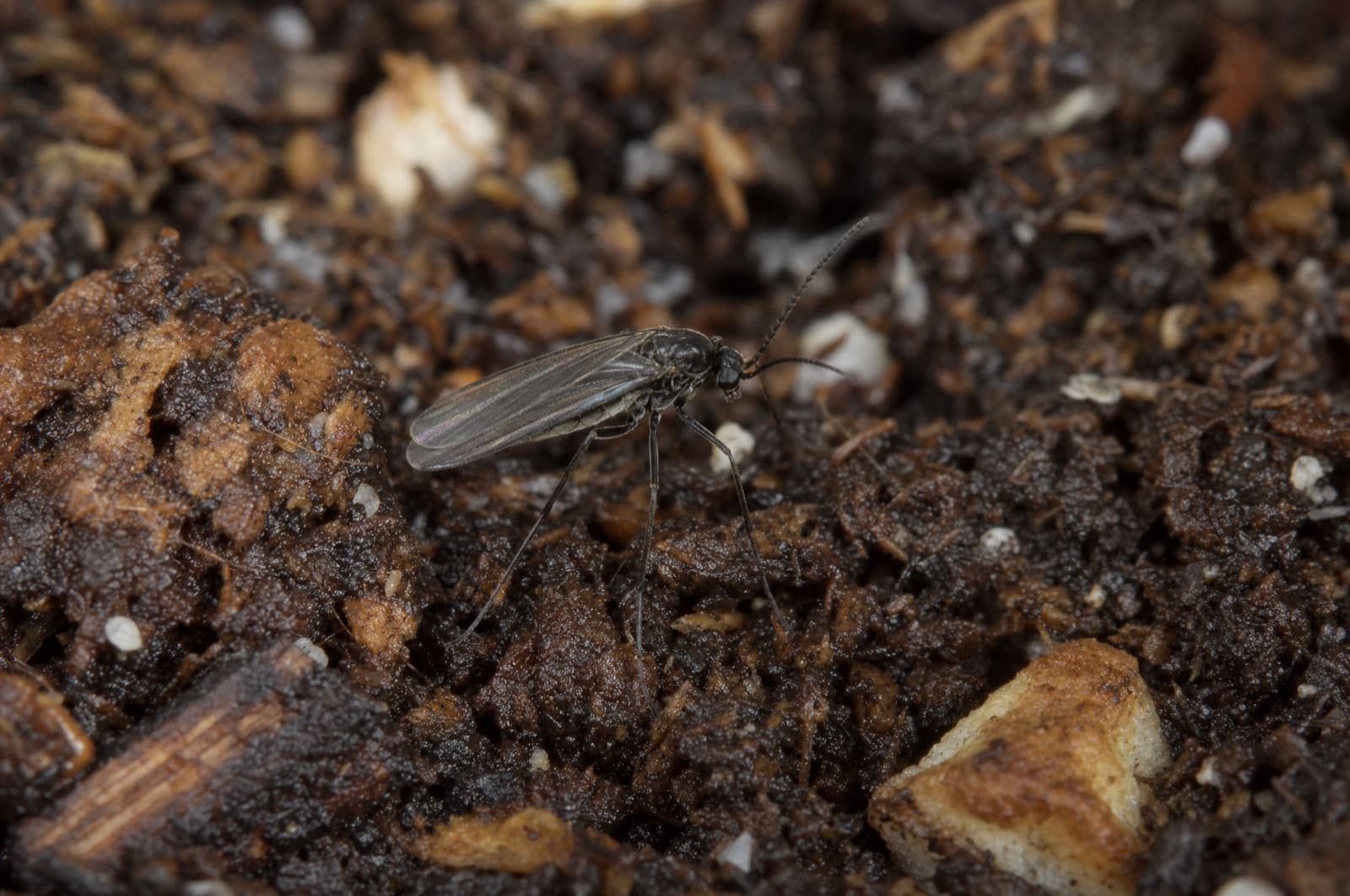
How to Get Rid of Fungus Gnats
At a glance
- Difficulty: Beginner
- Time: Ongoing watering-habit change; a Bti drench cycle takes 1-2 weeks
- Cost: Low — yellow sticky cards and a Bti product
- Success: High with consistent watering changes and, if needed, a Bti drench
Can you DIY Fungus Gnat?
The verdict on Fungus Gnat DIY
A beginner-friendly DIY — the fix is a soil drench, not a surface spray.
Fungus gnats breed in the moist top layer of overwatered houseplant soil, not in the air around your plants. That means the fix targets the soil, not the visible adults: let the top inch or two of soil dry between waterings, and for persistent cases, apply a Bti (Bacillus thuringiensis israelensis) soil drench that kills larvae with high efficacy and no toxicity to people or pets. This is the cluster's best example of a biological control that genuinely works — no pest license needed.
The 5 DIY methods — honestly graded
Every approach graded for this species, in IPM order — prevention first, chemistry late. Pick a method to see how it works, the steps, and what it actually takes.
Prevention / Exclusion
Works wellDrying the soil surface is the root-cause fix — most cases resolve with this alone.
Fungus gnat larvae need consistently moist soil to survive. Letting the top layer dry between waterings removes the conditions they depend on.
Best for: Every case — this alone resolves most mild infestations
Let the top 1-2 inches dry between waterings
Check soil moisture with a finger or a moisture meter before watering, and wait until the top layer is dry.
TipBottom-watering (setting the pot in a water tray) keeps the surface drier than top-watering.Improve drainage
Make sure pots have drainage holes and aren't sitting in standing water in a saucer.
Top-dress with coarse sand or grit
A layer of coarse sand or grit on top of the soil deters adult gnats from laying eggs there.
Tools & materials
Why DIY falls short here
Not scare tactics — the specific, proportionate reasons a home attempt can stall for this species.
Killing adults only
Larvae in the soil keep developing and emerging as new adults regardless of how many flying gnats you catch or spray — you have to treat the soil.
Overwatering continues
Moist soil re-invites egg-laying even after a successful Bti treatment, so the watering habit change has to stick, not just the one-time treatment.
How risky is it, really?
An honest read — most nuisance species are genuinely low risk, and we say so.
Fungus gnats are a houseplant nuisance. Adults don't bite and pose negligible human disease risk; the main concern is cosmetic or, in heavy infestations, some root damage to seedlings.
- Seedling or plant root damage in heavy infestationsOccasional
Larvae can feed on fine roots when populations are large, mostly affecting seedlings and cuttings
EPA / Summit Chemical
- Human bites or diseaseRare
None documented — fungus gnats pose no meaningful human health risk
EPA / Summit Chemical
Fungus Gnats Everywhere in Winter?
If soil-drying and a Bti drench aren't enough, there may be a broader moisture issue. Anchor Pest Services offers full inspections across southern and central New Hampshire. Family-owned since 2017, NH license #782664.
Call a pro when…
- Gnats persist despite soil-drying and a Bti drench across all affected plants
- You suspect a source outside your houseplants, like a damp crawlspace
- A large plant collection makes tracking down every source impractical alone
General Pest Control
Fungus gnats are almost always a DIY-solvable houseplant problem. A pro is rarely needed, but general pest control can help if gnats seem to be coming from somewhere beyond your houseplants, like a crawlspace with persistent moisture.
Keep them out
- Let soil dry between waterings — the single most important habit change
- Use well-draining soil and pots with drainage holes
- Quarantine and inspect new plants before adding them to your collection
Fungus gnats in New Hampshire homes
Fungus gnats are a year-round indoor houseplant issue in NH, but they often become more noticeable in winter, when homes are sealed up, humidity drops, and residents tend to overwater plants trying to compensate. Adjusting watering frequency for the season is often enough to prevent a recurring problem.
Peak season
Winter, tied to indoor heating season and overwatering habits
Make sure it's a Fungus Gnat
Two quick detours worth taking — confirm the ID, then learn what drew it in so it doesn't come back.
Frequently asked
Sources & further reading(3)
- [1]EPA — Bti for Mosquito Control
Bti mechanism, safety profile, registration status
govverified 2026-07-13 - [2]Summit Chemical — Kill Fungus Gnats on Houseplants with Bti
Bti soil-drench application, reapplication schedule
industryverified 2026-07-13 - [3]
Written & reviewed by
VerifiedDaniel Brady
NH-Licensed Pesticide Applicator · License #782664 (NHDAMF, RSA 430)
Daniel Brady is the New Hampshire–licensed applicator behind Anchor Pest Services, a family-owned pest control company serving the Manchester area since 2017.
Last updated July 2026
Professional Pest Control
Fungus Gnats Everywhere in Winter?
If soil-drying and a Bti drench aren't enough, there may be a broader moisture issue. Anchor Pest Services offers full inspections across southern and central New Hampshire. Family-owned since 2017, NH license #782664.
- NH-licensed applicators (#782664)
- Free inspection — same-day service across southern NH
NH License #782664 · No obligation · We answer in person
Your next step
- What to do next
Fungus Gnats in New Hampshire — ID, Signs & How to Get Rid of Them
Read the answer - What to do next
Do Indoor Leaves Get Pests Too?
Read the answer - What to do next
How Can I Stop Fungal Growth on Leaves?
Read the answer - Also relevant
Where Do Flies Go In The Winter?
Read the answer - Related guide
How to Get Rid of Springtails
Read the answer