
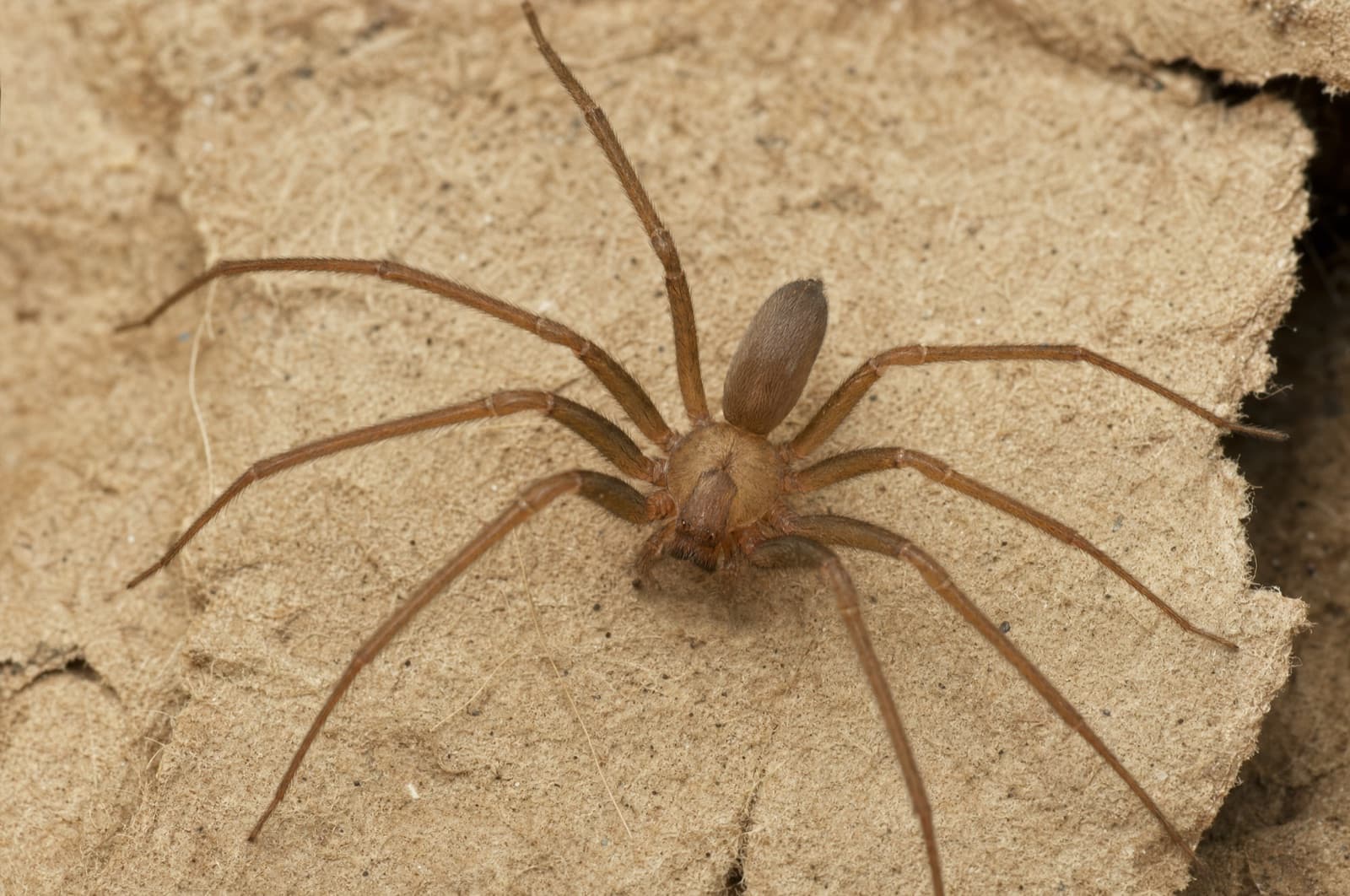
How to Get Rid of Brown Recluse Spiders — and Why You Probably Don't Have One
At a glance
- Difficulty: Beginner
- Time: Minutes to compare against look-alikes; a specimen submission if you want certainty
- Cost: Low — free comparison, or a modest specimen ID fee through UNH Extension
- Success: High for correctly ruling it out; low relevance for actual 'treatment' since the species isn't here
Can you DIY Brown Recluse Spider?
The verdict on Brown Recluse Spider DIY
The honest first step isn't treatment — it's confirming you actually have this species, because in New Hampshire you almost certainly don't.
The brown recluse (Loxosceles reclusa) is not established in New England. UNH Magazine states the species 'lives only in an area from the central Midwest to the Gulf,' and Penn State Extension lists established populations in just 16 states — New Hampshire is not among them. Yet, per UNH Magazine, 'brown recluse bites by the thousands have been diagnosed in states far outside its range, from California to New Hampshire' — a well-documented misdiagnosis pattern. The honest DIY here is identification first: what you're seeing is almost certainly a local look-alike, and the 'treatment' most homeowners need is ruling this species out, not fighting it.
The 5 DIY methods — honestly graded
Every approach graded for this species, in IPM order — prevention first, chemistry late. Pick a method to see how it works, the steps, and what it actually takes.
Prevention / Exclusion
Works wellGeneral clutter and storage reduction is good practice regardless of species — it also happens to be the right move if a specimen ever arrives as a stowaway.
Reducing storage clutter and shaking out stored clothing, shoes, and boxes removes hiding spots for any spider, and is the specific precaution to take if you've recently moved items from a recluse-endemic region (central Midwest to the Gulf).
Best for: General good practice; the one scenario where it matters most is recent items from recluse territory
Reduce clutter and storage piles
Declutter basements, garages, and closets; store items off the floor and away from walls.
Shake out stored items
Shake out shoes, gloves, and clothing that have been stored for a while, and inspect boxes shipped or moved from recluse-endemic states before unpacking them indoors.
Tools & materials
Why DIY falls short here
Not scare tactics — the specific, proportionate reasons a home attempt can stall for this species.
Treating a species that isn't there
Any DIY 'recluse treatment' plan is aimed at a species not established in New Hampshire — the effort and any chemical use is wasted on the wrong target.
Misidentification drives the wrong response
Wolf spiders, cellar spiders, and other common brown house spiders are routinely mistaken for brown recluses; acting on the wrong ID causes unnecessary fear or, worse, ignoring a genuinely different problem (like a skin infection) that needs medical attention instead.
Skipping medical evaluation of a real wound
A worsening or necrotic-looking lesion blamed on a 'spider bite' delays proper diagnosis — the American Academy of Family Physicians notes many such lesions turn out to be MRSA or another condition entirely.
How risky is it, really?
An honest read — most nuisance species are genuinely low risk, and we say so.
In New Hampshire, the practical risk from a genuine brown recluse bite is negligible because the species is not established here. UNH Magazine confirms it 'lives only in an area from the central Midwest to the Gulf.' Where the real risk lies is misdiagnosis: skin lesions from other causes — including MRSA — are frequently and wrongly attributed to a 'recluse bite' in non-endemic regions, which can delay appropriate medical treatment.
- Genuine established-population biteRare
Effectively negligible in NH; occasional stowaway specimens do not establish breeding populations here
UNH Magazine / Penn State Extension
- Misdiagnosis of a non-spider wound (e.g., MRSA)Occasional
A well-documented pattern in the medical literature in non-endemic regions; delays proper treatment
American Academy of Family Physicians
- In its true endemic range (not NH): dermonecrotic lesion or systemic loxoscelismRare
About 90% of confirmed bites in endemic areas cause no reaction or a small self-healing papule; systemic reaction occurs in under 1% and is most dangerous in children — this applies to the Midwest/Gulf range, not New Hampshire
Penn State Extension / Wikipedia (peer-sourced medical literature)
Get a Confirmed Identification, Not a Guess
Brown recluse spiders aren't established in New Hampshire, but we can help you confirm what you're actually dealing with and address any genuine spider issue. Anchor Pest Services serves southern and central New Hampshire, family-owned since 2017, NH license #782664.
Call a pro when…
- You want a specimen professionally identified rather than guessing
- You've recently moved belongings from a recluse-endemic state (central Midwest to the Gulf) and want a precautionary inspection
- A wound is worsening, expanding, or not healing — see a physician promptly, not a pest control company
General Pest Control
The right 'pro' step here usually isn't pest control — it's identification and, if you have a real wound, a physician. Anchor can help confirm what you're seeing and rule out genuine pest issues; for anything resembling an infected or worsening wound, see a doctor rather than treating it as a pest problem.
Keep them out
- Inspect boxes and belongings moved from recluse-endemic states before unpacking indoors
- Reduce clutter and storage piles generally
- Submit any suspect specimen to UNH Extension for confirmed identification rather than guessing
Brown recluse spiders and New Hampshire — the range fact, plainly stated
The brown recluse is not an established New Hampshire species. Penn State Extension's list of the 16 states with established populations (Alabama, Arkansas, Georgia, Illinois, Indiana, Iowa, Kansas, Kentucky, Louisiana, Mississippi, Missouri, Nebraska, Ohio, Oklahoma, Tennessee, Texas) does not include New Hampshire or any New England state. Per Penn State, 'outside their native range… the risk of being bitten is virtually nonexistent.' What actually lives here: cellar spiders, wolf spiders, and other harmless brown house spiders that are frequently — and understandably — mistaken for a recluse.
Peak season
Not applicable — this is not an established NH species
First-frost anchor
Manchester first hard frost ~Oct 19 (50%) / Oct 29 (80%), NOAA 1991–2020
Make sure it's a Brown Recluse Spider
Two quick detours worth taking — confirm the ID, then learn what drew it in so it doesn't come back.
Frequently asked
Sources & further reading(5)
- [1]UNH Magazine — Brown Recluse Spider range and misdiagnosis
Range confirmation; misdiagnosis pattern across non-endemic states including NH
academicverified 2026-07-13 - [2]Penn State Extension — Brown Recluse Spiders
16-state established range list; bite risk outside range 'virtually nonexistent'
extensionverified 2026-07-13 - [3]American Academy of Family Physicians — Brown Recluse Spider Bites
Endemic-region-only bites; MRSA misdiagnosis pattern
medicalverified 2026-07-13 - [4]NH Department of Agriculture, Markets & Food — Insects, Spiders, and Ticks
NH-specific pest identification resources
govverified 2026-07-13 - [5]NPR — Is That a Brown Recluse Spider Bite or Skin Cancer?
Misdiagnosis pattern reporting
newsverified 2026-07-13
Written & reviewed by
VerifiedDaniel Brady
NH-Licensed Pesticide Applicator · License #782664 (NHDAMF, RSA 430)
Daniel Brady is the New Hampshire–licensed applicator behind Anchor Pest Services, a family-owned pest control company serving the Manchester area since 2017.
Last updated July 2026
Other species you can tackle
Same category — the dot shows each one's DIY verdict at a glance (green = friendly, amber = doable with care, red = call a pro).
Professional Pest Control
Get a Confirmed Identification, Not a Guess
Brown recluse spiders aren't established in New Hampshire, but we can help you confirm what you're actually dealing with and address any genuine spider issue. Anchor Pest Services serves southern and central New Hampshire, family-owned since 2017, NH license #782664.
- Identification-first approach
- NH-licensed applicators (#782664)
- Free inspection — same-day service across southern NH
NH License #782664 · No obligation · We answer in person
Your next step
- What to do next
Brown Recluse Spider: Is It in New Hampshire? (No)
Read the answer - What to do next
Wolf Spider in New Hampshire: ID, Bite & Is It a Recluse
Read the answer - What to do next
Brown Dog Tick in NH: The Tick That Infests Houses
Read the answer - Related guide
How to Get Rid of Brown Dog Ticks
Read the answer - Related guide
Pest Control in Bedford: What's Actually Different Here?
Read the answer