
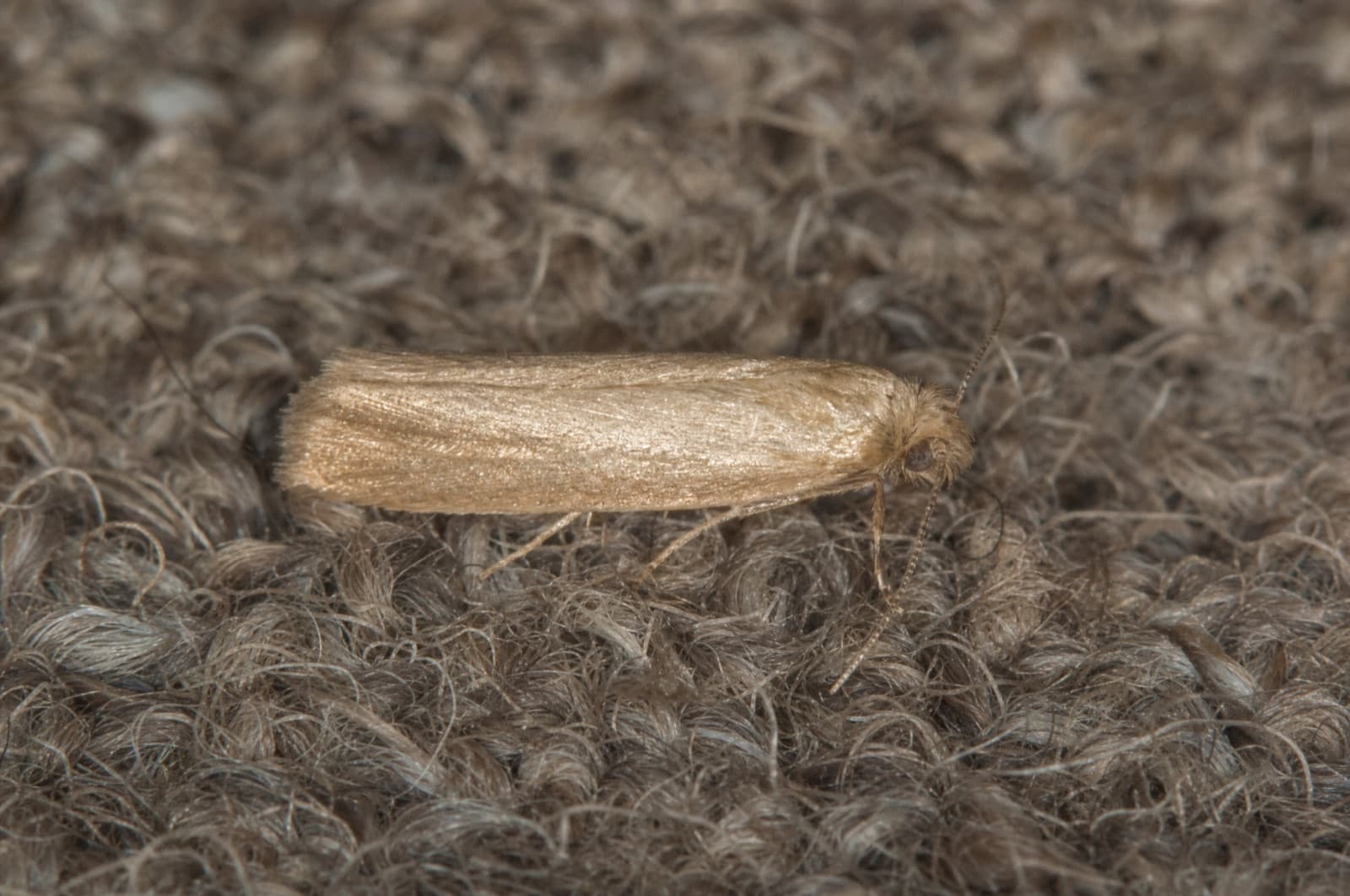
What Attracts Clothes Moths to Your House?
At a glance
- Short answer: Clothes moths aren't attracted to your house. They arrive already inside a wool sweater, a fur coat, or a secondhand rug.
- The verdict: You didn't attract it — you carried it in
The attractant verdict
Four possible answers to why this species turned up. Three stay unlit — and that's the argument: the honest answer could have been any of them, and for this species it wasn't.
Clothes moths aren't attracted to your house. They arrive already inside a wool sweater, a fur coat, or a secondhand rug.
Our own previous page said clothes moths are "drawn to your home mainly by the presence of natural fibers and certain conditions that make them feel comfortable," language that implies the moth is scouting for wool the way an ant scouts for sugar.
Eggs or larvae already present on a carried-in item — most often secondhand clothing, a used rug, or upholstered furniture containing wool, fur, feathers, or silk. Clothes moths are negatively phototactic and weak fliers, so they rarely arrive by flying in from outside.
“Clothes moths don't fly toward your house looking for wool. The wool arrives with them already on it.”
Why it's here, in full
Why "attracted to your house" doesn't fit this species
Clothes moths are among a small group of organisms able to digest keratin — the protein in wool, fur, silk, and feathers — but that dietary specialization doesn't mean the moth searches for a house that has it. NC State Extension describes the actual pathway directly: eggs or larvae "hitchhike into a home on articles containing wool or other animal fibers, particularly secondhand clothing, upholstered furniture, and woolen scraps." The moth (or its eggs) is already on the item before it crosses the threshold.
That matters because clothes moths are weak, light-avoiding fliers — University of Kentucky Entomology notes the larvae prefer dark, undisturbed areas like closets and storage boxes, and adults don't even feed. An organism with almost no capacity or motivation to travel toward a structure on its own is not a good candidate for "attraction" in the ants-and-food sense; it's cargo.
Persistence explains the fabric, not the arrival
Once eggs or larvae are inside on a carried item, whether they persist depends on finding more keratin-rich material sitting undisturbed — a stored sweater, an unused rug, pet hair accumulated in a quiet corner. That's a real and useful distinction: a wool coat worn and cleaned regularly is rarely infested, while one boxed up in a dark closet for years is a much likelier host, not because the house attracted moths to that closet, but because an already-arrived population went undisturbed there long enough to grow. The house's role is passive throughout — it's the carried item, not the structure, doing the work of arrival.
How to tell it's actually this species
Real signs only — a species with four honest tells gets four, and stops. Where a sign is weak on its own, we say so.
Irregular holes in wool, fur, feathers, or silk items — sweaters, coats, rugs, or upholstery
Silken tunnels or webbing on the surface of stored woolens or in closet corners
Small, pale, cast-off larval skins or fine debris near an affected fabric item
Could be something else: Similar debris can come from carpet beetle larvae, which feed on many of the same materials; the two are often confused.
Small tan or buff-colored adult moths seen flying weakly near closets or storage areas, usually at night
Could be something else: Clothes moths avoid light and are rarely seen in the open; a moth flying in daylight near a window is more likely a different species.
Want clothes moths gone?
This page only answers why it's here. Every removal step for this exact species — what to seal, what to set, what actually works — lives on its own dedicated guide.
Two questions, two pages
Here: why it turned up at all — the honest answer, blame removed.
There: the step-by-step removal guide for this exact species.
Key takeaways
- Clothes moths don't fly toward your house looking for wool. The wool arrives with them already on it.
- Cleanliness isn't the deciding factor here — the actual vector is what matters.
- What actually matters: secondhand items, shelter.
- If it's already inside, removal is a different question — see /top-diy-methods/clothes-moth.
Already seeing fabric damage?
This page is about why clothes moths showed up. Treatment for an active infestation is covered at /top-diy-methods/clothes-moth.
Frequently asked
Sources(2)
- [1]NC State Extension — Clothes Moths and Carpet Beetles: Identifying and Controlling Fabric Pests
Clothes moth eggs and larvae hitchhiking in on secondhand clothing, furniture, and woolen scraps
extensionverified 2026-07-17 - [2]University of Kentucky Entomology — Clothes Moths (ENTFACT-609)
Clothes moth larvae's preference for dark, undisturbed storage areas and adult behavior
extensionverified 2026-07-17
Written & reviewed by
VerifiedDaniel Brady
NH-Licensed Pesticide Applicator · License #782664 (NHDAMF, RSA 430)
Daniel Brady is the New Hampshire–licensed applicator behind Anchor Pest Services, a family-owned pest control company serving the Manchester area since 2017.
Last updated Jul 2026
It arrives on the fabric, not by flying in
Found holes in wool or fur items?
Same-day inspections across southern and central New Hampshire — we'll tell you honestly how far it's spread.
- Family-owned in Manchester since 2017
- NH commercial applicator #782664, category F1
- We will tell you when the answer is do nothing
NH License #782664 · No obligation · We answer in person
Your next step
- What to do next
Clothes Moths in New Hampshire: Holes in Wool & How to Stop Them
Read the answer - Also relevant
How to Get Rid of Clothes Moths
Read the answer - Also relevant
Can moths destroy clothes or carpets?
Read the answer - Also relevant
Where Do Moths Go in the Winter? NH Moth Timing Guide
Read the answer - Also relevant
Can moths become a winter issue indoors?
Read the answer