
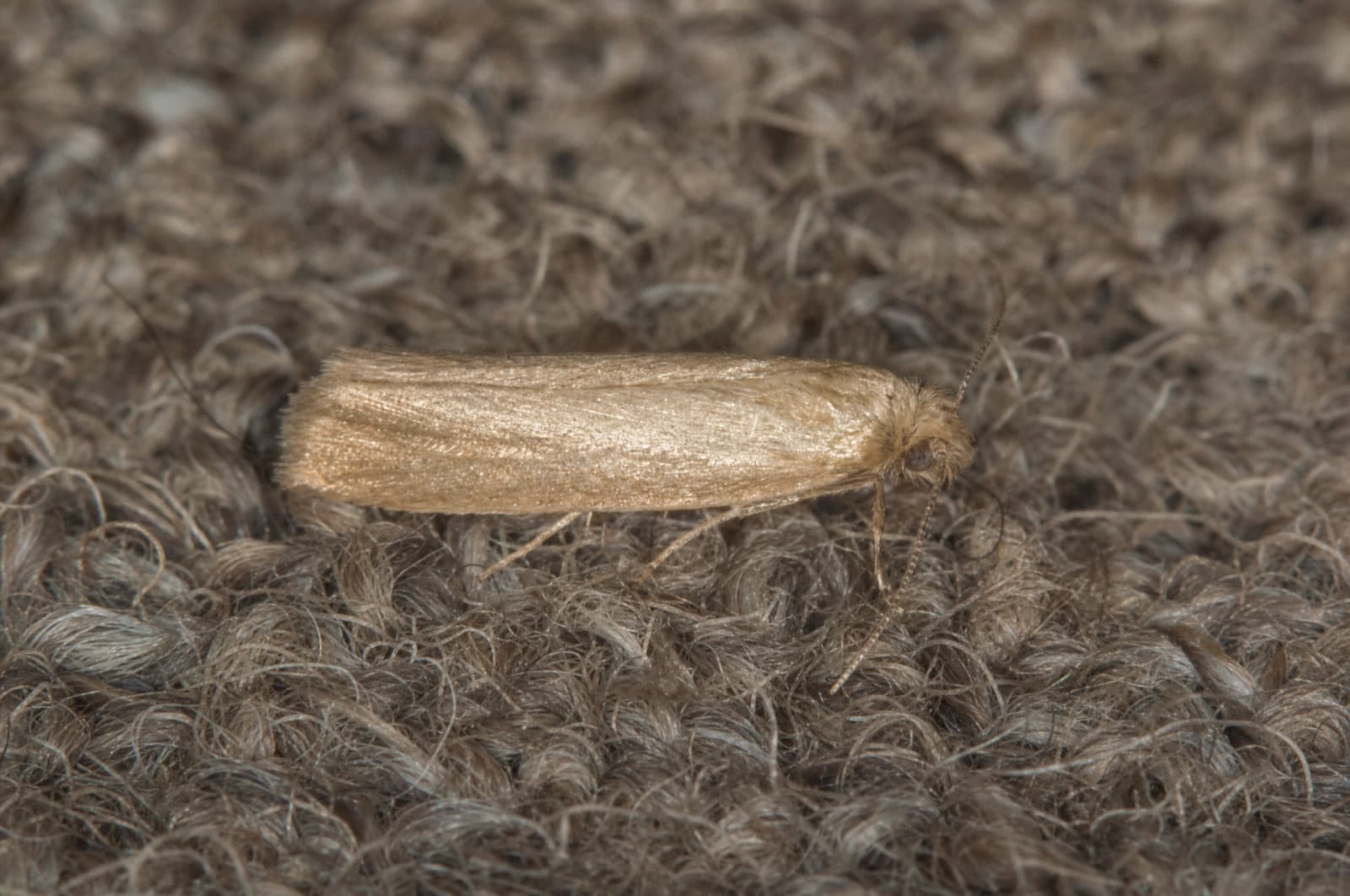
How to Get Rid of Clothes Moths
At a glance
- Difficulty: Intermediate
- Time: A weekend to launder, freeze, and store affected items; ongoing monitoring with traps
- Cost: Low — laundering, a freezer, airtight containers, and pheromone traps
- Success: Good with thorough cleaning and airtight storage; slower if hidden non-clothing keratin sources go unfound
Can you DIY Clothes Moth?
The verdict on Clothes Moth DIY
A DIY win once you know it's the larvae, not the moths, doing the damage.
Webbing and casemaking clothes moth larvae feed on keratin — wool, fur, feathers, silk, and animal-bristle items — and will only touch a synthetic blend if it contains wool fiber; pure synthetics and cotton aren't food sources. The larval stage does the eating, and it hides in folds, closet corners, and under furniture, out of sight. Control is genuinely doable: launder or freeze what's infested, store clean natural-fiber items airtight, and use pheromone traps to monitor — but it takes finding every hidden larva and food source, not just the moths you see flying.
The 5 DIY methods — honestly graded
Every approach graded for this species, in IPM order — prevention first, chemistry late. Pick a method to see how it works, the steps, and what it actually takes.
Prevention / Exclusion
Works wellAirtight storage of clean natural-fiber items is the most durable fix — larvae can't start an infestation on what they can't reach.
Clothes moth larvae are drawn to soiled wool, fur, and silk — body oils, food stains, and sweat make items more attractive. Storing clean items in sealed containers removes both the food source and the access point.
Best for: Protecting stored wool, fur, and heirloom textiles long-term
Clean before you store
Launder or dry-clean wool, fur, silk, and feather items before long-term storage — soiled fabric is far more attractive to larvae than clean fabric.
Store airtight
Use sealed plastic bins or garment bags with tight closures for off-season natural-fiber clothing, rugs, and heirlooms.
TipVacuum closets, edges, and under furniture periodically — larvae feed in undisturbed dust and lint too.
Tools & materials
Why DIY falls short here
Not scare tactics — the specific, proportionate reasons a home attempt can stall for this species.
Hidden larvae go unfound
Larvae feed in undisturbed folds, closet corners, and under furniture where they're easy to miss, so a quick look at hanging clothes misses the actual infestation.
Relying on pheromone traps alone
Traps only catch males and confirm activity — they don't stop egg-laying females, so treating them as the whole solution lets the population continue.
Non-clothing keratin sources overlooked
Felt, brushes, taxidermy, and other animal-fiber items outside the closet can host larvae and reseed an infestation you thought you'd cleared.
How risky is it, really?
An honest read — most nuisance species are genuinely low risk, and we say so.
Clothes moths pose no bite, sting, or disease risk to people or pets. The real-world harm is damage to wool, silk, fur, and feather items — genuinely upsetting for a valuable garment or heirloom rug, but not a health threat, which is why the priority is finding and treating fabric, not fumigating a room.
- Damage to wool, fur, silk, and feather garments, rugs, or heirloomsCommon
The main practical harm if an infestation goes unaddressed — protect valuable natural-fiber items in sealed storage
UC IPM
- Synthetic-fiber and cotton items affectedRare
Larvae need keratin to develop, so pure synthetics and cotton are not a food source and are essentially safe
UC IPM
- Bite, sting, or disease transmission to people or petsRare
Not documented — clothes moths pose no direct health risk
UC IPM
Still Finding Damage After Cleaning?
A hidden non-clothing source can keep reseeding an infestation. Anchor Pest Services offers a full inspection and treatment plan across southern and central New Hampshire. Family-owned since 2017, NH license #782664.
Call a pro when…
- Infestation persists across multiple rooms despite thorough cleaning and storage
- You can't locate the hidden source (old rugs, taxidermy, unused furniture)
- Valuable heirloom textiles need a professional-grade treatment approach
General Pest Control
Most clothes moth cases are a solvable DIY laundering-and-storage job. A pro is worth it for a heavy, recurring infestation across multiple rooms, or when you can't locate the non-clothing source that keeps reseeding it.
Keep them out
- Launder or dry-clean natural-fiber items before long-term storage
- Store wool, fur, and silk in airtight containers or garment bags
- Vacuum closets and carpet edges regularly, even without visible activity
Clothes moths in New Hampshire
New Hampshire's cold winters push more wool clothing, blankets, and rugs into long-term closet and attic storage than warmer climates — exactly the undisturbed conditions clothes moths favor. Checking stored winter wool before you pack it away each spring, and again before you unpack it each fall, catches problems before a full season of undisturbed feeding.
Peak season
Year-round indoors, most damage accumulating during long seasonal storage
First-frost anchor
Manchester first hard frost ~Oct 19 (50%) / Oct 29 (80%), NOAA 1991–2020
Make sure it's a Clothes Moth
Two quick detours worth taking — confirm the ID, then learn what drew it in so it doesn't come back.
Frequently asked
Sources & further reading(2)
- [1]UC Statewide IPM Program — Clothes Moths
Larval feeding habits, host-material specificity, laundering/freezing control, cedar limitations
extensionverified 2026-07-13 - [2]National Pesticide Information Center — Clothes Moths
Non-chemical control methods, prevention guidance
govverified 2026-07-13
Written & reviewed by
VerifiedDaniel Brady
NH-Licensed Pesticide Applicator · License #782664 (NHDAMF, RSA 430)
Daniel Brady is the New Hampshire–licensed applicator behind Anchor Pest Services, a family-owned pest control company serving the Manchester area since 2017.
Last updated July 2026
Other species you can tackle
Same category — the dot shows each one's DIY verdict at a glance (green = friendly, amber = doable with care, red = call a pro).
Professional Pest Control
Still Finding Damage After Cleaning?
A hidden non-clothing source can keep reseeding an infestation. Anchor Pest Services offers a full inspection and treatment plan across southern and central New Hampshire. Family-owned since 2017, NH license #782664.
- Source-finding inspection
- NH-licensed applicators (#782664)
- Free inspection — same-day service across southern NH
NH License #782664 · No obligation · We answer in person
Your next step
- What to do next
Clothes Moths in New Hampshire: Holes in Wool & How to Stop Them
Read the answer - What to do next
Can moths destroy clothes or carpets?
Read the answer - Also relevant
What Attracts Clothes Moths to Your House?
Read the answer - Also relevant
Where Do Moths Go in the Winter? NH Moth Timing Guide
Read the answer