
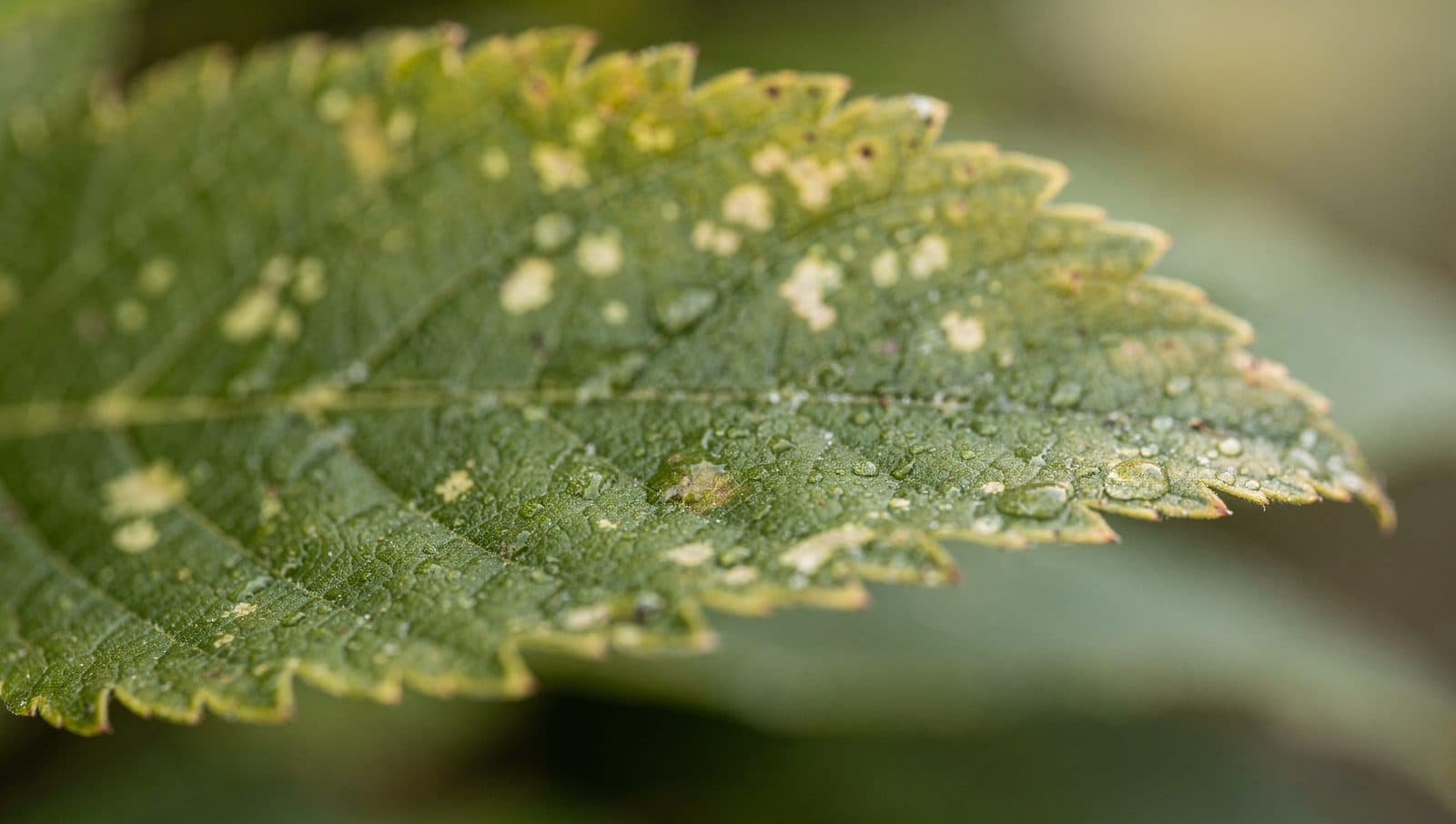
How Do I Fix Holes in Basil Leaves?
Holes in basil leaves are almost always chewing pests — slugs, Japanese beetles, or caterpillars — and it's a garden job, not pest control.
At a glance
- The verdict: Usually a pest
- Who fixes it: You
- Category: Leaf-Symptom Diagnosis (pest vs disease vs care)
The short answer
Holes in basil leaves are typically chewing damage from slugs and snails, Japanese beetles, caterpillars, or flea beetles, and the shape of the hole usually names the culprit. Ragged holes with slime trails, worse after rain or overnight, point to slugs; skeletonized leaves with just the veins left point to Japanese beetles; scattered larger holes point to caterpillars; and tiny shot-holes point to flea beetles. Fix it by matching the control to the pest — hand-picking, iron-phosphate slug bait, row cover, or insecticidal soap from a garden center — after a quick night inspection with a flashlight. This is edible-herb garden pest control, not a job for a pest-control company.
Pest, disease, or how you're caring for it?
Most leaf problems aren't pests at all. Here's the honest split — the most likely cause, the less likely ones, and how to tell them apart before you treat anything.
- PestMost likelythe usual cause
Ragged holes with slime trails from slugs/snails (worse at night and after rain); skeletonized, lacy leaves from Japanese beetles (June–July); scattered larger irregular holes from caterpillars/loopers; tiny 'shot-holes' from flea beetles; earwig nibbling at leaf edges.
slugs and snailsJapanese beetlescaterpillars/loopersflea beetlesearwigsThe tell:The hole pattern names the culprit: slime = slugs, skeletonized veins = beetles, pinholes = flea beetles, ragged bites with frass nearby = caterpillars.
- Diseasea less common cause
Bacterial or fungal leaf spots that kill a patch of tissue, which then dries and drops out, leaving a hole with a discolored rim — the 'shot-hole' disease effect. Four-lined plant bug feeding also leaves small sunken spots that can look disease-like.
bacterial leaf spotfungal shot-hole effectfour-lined plant bug feeding spotsThe tell:A ring or halo of discolored tissue surrounds the hole, and you can often find similar spots elsewhere on the plant that haven't dropped out yet.
- Care / environmenta rare cause
Mechanical damage from hail, wind-driven debris, garden tools, or rough handling while harvesting.
hail damagemechanical/tool damagewind abrasionThe tell:Damage is random in shape and location, shows no slime, frass, or discolored rim, and doesn't spread to new leaves over time.
Check the plant at night with a flashlight for slugs and their slime trails. By day, look for metallic-green Japanese beetles skeletonizing leaves, tiny flea beetles hopping when disturbed, or caterpillars tucked on the undersides. If holes have a discolored ring instead of clean bite marks, suspect disease first.
Who actually fixes this?
Start here
You
Basil is an edible herb, and the fixes — hand-picking pests, iron-phosphate slug bait, floating row cover, and insecticidal soap for soft-bodied pests — are homeowner and garden-center jobs, not structural pest control.
- Garden center — You want a specific slug bait, row cover, or an insecticidal soap/product recommendation safe to use on an herb you plan to eat.
- UNH Extension — You can't identify the culprit from the hole pattern — UNH Cooperative Extension's Insect & Arthropod ID service can confirm it from a photo or sample.
The details, straight
Match the hole pattern to the culprit
Basil's soft, tender leaves attract several common chewing pests, and each leaves a distinct signature. Slugs and snails leave ragged, irregular holes and telltale slime trails, feeding mostly at night or after rain — university extension sources note they're most active in cool, damp conditions. Japanese beetles feed in groups during June and July, skeletonizing leaves down to a lacy network of veins. Caterpillars and loopers chew larger, more haphazard holes and often leave dark frass (droppings) nearby. Flea beetles leave a scatter of tiny round 'shot-holes,' and earwigs nibble ragged edges, mostly overnight.
Ruling out disease and mechanical damage
A smaller share of hole-like damage on basil comes from disease rather than chewing. Bacterial or fungal leaf-spot pathogens can kill a small patch of leaf tissue, which dries out and eventually falls away, leaving a hole ringed by discolored, often yellowed or browned tissue — a very different look from a clean chewed bite. Four-lined plant bug feeding leaves small sunken spots that can also look disease-like at first glance. Mechanical damage from hail, wind, or rough handling rounds out the small remaining share, and it's identifiable mainly by its randomness — no slime, no frass, no consistent pattern, and no spread to new growth.
The fix, once you know the culprit
For slugs, hand-pick at night, set out shallow beer traps, or use an iron-phosphate slug bait, which is considered safer around pets and edible plants than older metaldehyde baits. For Japanese beetles, hand-picking into soapy water works for light infestations. For soft-bodied caterpillars and other chewing insects, an insecticidal soap or a product labeled for vegetable gardens, applied per the label, is the standard next step from a garden center. Floating row cover physically excludes many chewing pests without any spray at all. If you're not sure what's chewing your basil, UNH Cooperative Extension's Insect & Arthropod ID service can identify it before you treat.
Key takeaways
- Holes in basil leaves are almost always chewing pests, not disease — slugs, Japanese beetles, caterpillars, or flea beetles.
- The hole's shape names the culprit: slime = slugs, skeletonized veins = beetles, pinholes = flea beetles.
- A smaller share is disease (a 'shot-hole' effect from leaf-spot pathogens) or mechanical damage.
- Fix it with hand-picking, iron-phosphate slug bait, row cover, or insecticidal soap from a garden center.
- This is a garden pest problem on an edible herb, not a job for a pest-control company.
Not sure what's chewing your basil?
The hole pattern usually names the culprit — slime trails, skeletonized leaves, or shot-holes each point to a different pest.
See the full pest-vs-disease triageA note for New Hampshire basil growers
UNH Cooperative Extension notes slugs thrive in New Hampshire's cool, damp summer nights, and Japanese beetle adults are a well-known regional pest active roughly late June through August — both common culprits behind holed basil here. If you can't tell what's chewing, UNH Extension's Insect & Arthropod Identification service can confirm it, since a slug problem and a beetle problem call for different responses. Anchor Pest Services focuses on the structural and yard pests around your home, not the bugs in your herb garden, but Extension is the resource to use.
NH-licensed applicator #782664 (NHDAMF, RSA 430) · NEPMA member · family-owned since 2017.
Related questions
Sources(4)
- [1]University of Minnesota Extension — Slugs (Melinda Myers guidance)
Slug feeding behavior, ragged holes, nighttime/damp-weather activity
extensionverified 2026-07-14 - [2]Clemson HGIC — Insecticidal Soaps for Garden Pest Control
Insecticidal soap efficacy on soft-bodied chewing/sucking pests and application guidance
extensionverified 2026-07-14 - [3]University of Maryland Extension — Vegetable Insect Pest Keys
Identifying chewing damage patterns on vegetable and herb crops
extensionverified 2026-07-14 - [4]UNH Cooperative Extension — Insect & Arthropod Identification Services
Free NH insect/arthropod ID service for identifying a pest before treatment
extensionverified 2026-07-14
Written & reviewed by
VerifiedDaniel Brady
NH-Licensed Pesticide Applicator · License #782664 (NHDAMF, RSA 430)
Daniel Brady is the New Hampshire–licensed applicator behind Anchor Pest Services, a family-owned pest control company serving the Manchester area since 2017.
Last updated 2026-07-14
Your next question
Honest pest help for New Hampshire homes
Basil Pests Are Garden Care — Your Home Is Our Job
Chewing pests on your basil are a garden problem, and we'll always say so rather than overselling a treatment you don't need from us. Where Anchor Pest Services genuinely helps is the structural and yard pests around your home — rodents, ants, ticks, and moisture pests. Family-owned since 2017, NH license #782664, serving Manchester, Nashua, Concord and nearby towns.
- Honest routing — chewing pests on an edible herb aren't ours to spray
- NH-licensed applicators (#782664) for the structural pests around your home
- Free quote across southern and central New Hampshire
NH License #782664 · No obligation · We answer in person
Your next step
- Related guide
What Causes Holes in Leaves?
Read the answer - Related guide
What Bugs Eat Holes in Leaves?
Read the answer - Related guide
Do Coffee Grounds or Garlic Repel Leaf Insects?
Read the answer - Related guide
Why Do Leaves Turn Black After Watering?
Read the answer - Related guide
Are Yellowing Leaves Always a Disease?
Read the answer