
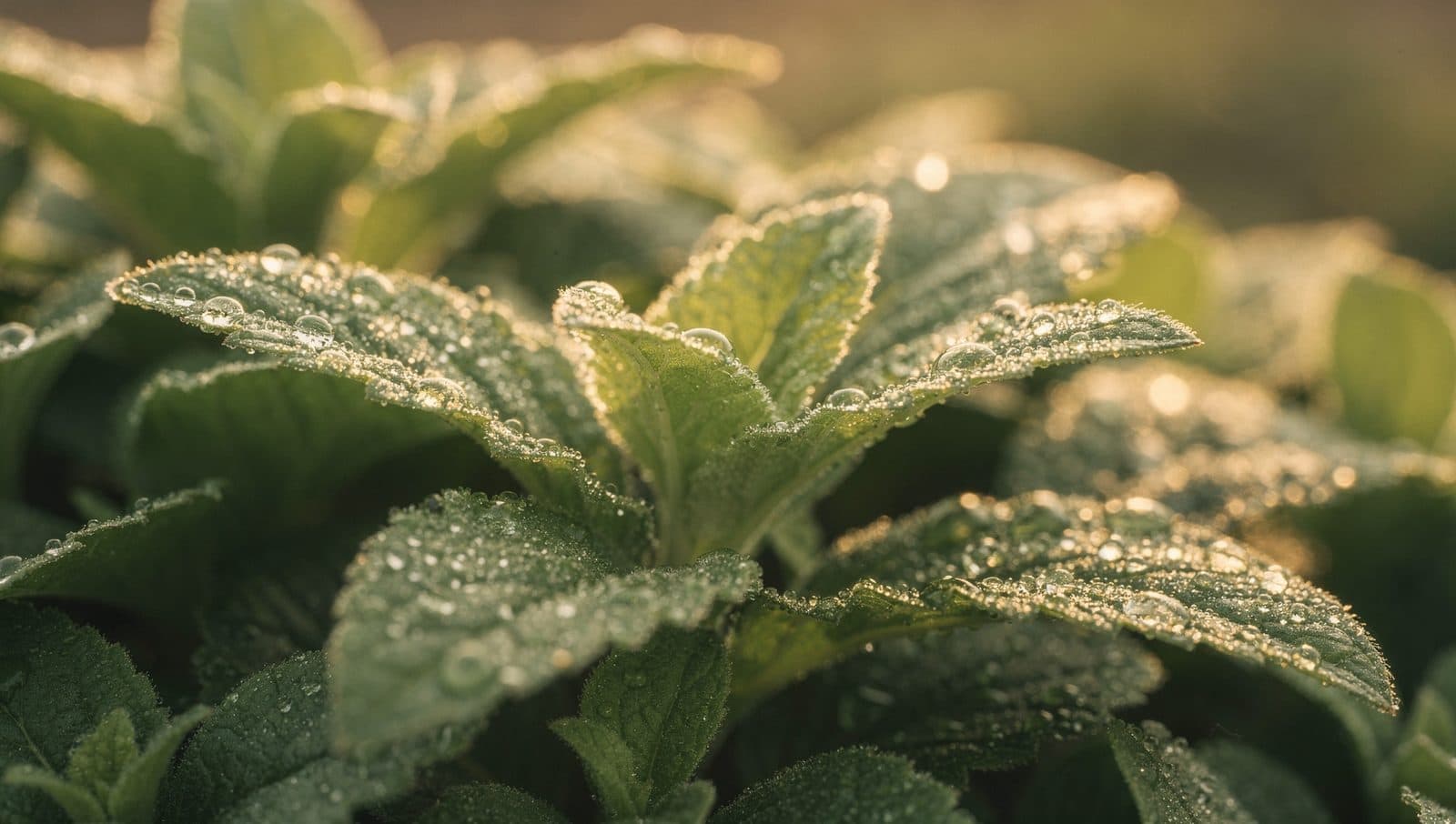
How Does Humidity Affect Leaf Health?
Humidity rarely damages leaves directly — it tilts the odds toward disease at the high end and spider mites at the low end, and airflow is the lever that matters either way.
At a glance
- The verdict: It depends — cuts both ways
- Who fixes it: You
- Category: Leaf-Pest ID & Environmental Factors
The short answer
Humidity rarely harms leaves directly, but it strongly tilts the odds toward one problem or another. High humidity and poor air circulation favor fungal diseases such as powdery mildew, and damp, crowded plantings raise leaf-spot and blight risk. Paradoxically, very low humidity combined with heat favors spider mites instead. So the honest question isn't whether humidity is good or bad for leaves — it's which problem your current conditions are inviting, and improving airflow is your main lever no matter which direction the humidity swings.
Who actually fixes this?
Start here
You
Spacing plants, pruning for airflow, adjusting watering timing, and managing indoor humidity are homeowner-level cultural fixes, not a pest-control or disease-treatment job.
- Garden center — A high-value plant already has visible powdery mildew or a heavy mite infestation and needs a targeted fungicide or miticide.
- UNH Extension — You want a disease confirmed rather than assumed from symptoms alone — UNH Extension's Plant Diagnostic Lab is the local authority (verify current sample-intake status, as it has referred some disease samples to University of Maine and Cornell labs).
The details, straight
High humidity: the disease side of the ledger
Powdery mildew is the clearest example of humidity-driven leaf disease. Colorado State Extension notes that incidence "increases as relative humidity rises to 90 percent," with the fungus preferring "high humidity at night and low humidity during the day" around 70–80°F. Unusually for a leaf fungus, powdery mildew doesn't actually need free water sitting on the leaf surface to infect it — humidity alone is enough, which is part of why it shows up even during dry spells as long as nighttime humidity stays high.
Why crowding and shade make it worse
Powdery mildew and related leaf-spot diseases are, per extension guidance, "common in crowded plantings where air circulation is poor and in damp, shaded areas" — conditions that trap humidity right at the leaf surface rather than letting it dissipate. Spacing plants further apart, pruning for better airflow, and watering in the morning rather than the evening (so foliage dries out during daylight) are the standard cultural fixes, and they work by managing airflow and surface moisture rather than by changing the ambient humidity itself.
Low humidity: the pest side of the ledger
Spider mites flip the humidity relationship on its head. Oregon State University Extension describes ideal mite conditions as "temperatures in the 80s (F) and above, and low humidity (less than 50%)" — the opposite of what favors powdery mildew. For houseplants specifically, raising ambient humidity around a plant can make it measurably less attractive to spider mites, which is why misting or grouping humidity-loving houseplants together sometimes does double duty as pest prevention, not just care.
Finding the right indoor balance
Indoors, the CDC recommends keeping home humidity "no higher than 50%" to limit mold growth for human health reasons — and that same general range happens to help houseplants avoid both disease and mite extremes at once. The honest bucket to file this all under is cultural, not pest-driven: humidity problems call for airflow, spacing, and watering-timing fixes, not an insecticide or fungicide reached for reflexively before you've addressed the underlying moisture and airflow conditions.
Key takeaways
- High humidity (up to about 90% relative humidity) sharply raises powdery mildew risk; the fungus doesn't need free water on the leaf to infect it.
- Crowded, poorly ventilated, shaded plantings trap humidity at the leaf surface and worsen fungal disease risk.
- Low humidity (under about 50%) combined with heat in the 80s°F favors spider mites instead — the opposite condition from mildew.
- Raising humidity around houseplants can make them less attractive to spider mites.
- Airflow, spacing, and watering timing — not the humidity level alone — are the practical levers for leaf health.
Humid nights, mildew mornings?
High humidity favors fungal disease; low humidity plus heat favors spider mites. See how to read your own yard's conditions.
See the full triageHumidity in the New Hampshire growing season
New Hampshire summers run humid, and UNH Cooperative Extension notes that the same warm, moist conditions that stress foliage also favor leaf diseases like powdery mildew — a plant-health issue, not a pest one. That humidity does have a pest angle indoors and at the foundation, where damp conditions draw the moisture pests Anchor Pest Services does handle. For the leaf-health side, UNH Extension's guidance on airflow and sanitation is the resource to use; we stick to the structural and yard pests around your home.
NH-licensed applicator #782664 (NHDAMF, RSA 430) · NEPMA member · family-owned since 2017.
Related questions
Sources(4)
- [1]Colorado State University Extension — Powdery Mildews
Humidity thresholds and temperature range favoring powdery mildew
extensionverified 2026-07-14 - [2]University of Minnesota Extension — Powdery Mildew in the Flower Garden
Crowded, shaded, poorly ventilated plantings worsening mildew risk
extensionverified 2026-07-14 - [3]Oregon State University Extension — How to Recognize and Manage Spider Mites in the Home Garden
Low humidity and high heat as ideal spider mite conditions
extensionverified 2026-07-14 - [4]CDC — Mold (About)
Recommendation to keep indoor humidity no higher than 50% to limit mold
govverified 2026-07-14
Written & reviewed by
VerifiedDaniel Brady
NH-Licensed Pesticide Applicator · License #782664 (NHDAMF, RSA 430)
Daniel Brady is the New Hampshire–licensed applicator behind Anchor Pest Services, a family-owned pest control company serving the Manchester area since 2017.
Last updated 2026-07-14
Honest pest help for New Hampshire homes
Humidity Effects Are Plant Care — Your Home Is Our Job
Humidity's effect on your leaves is a cultural and disease question, and we'll always say so plainly. Where Anchor Pest Services genuinely helps is the pests around your home — rodents, ants, ticks, and moisture pests drawn to yard debris and foundation clutter. Family-owned since 2017, NH license #782664, serving Manchester, Nashua, Concord and nearby towns.
- Honest advice — humidity-driven leaf issues are plant care, not pest control
- NH-licensed applicators (#782664) for the moisture pests that damp conditions do draw
- Serving southern and central New Hampshire — free quote
NH License #782664 · No obligation · We answer in person
Your next step
- What to do next
Can indoor humidity influence fall pest presence?
Read the answer - Related guide
Why Do Leaves Get Powdery Mildew?
Read the answer - Related guide
Does Sunlight Affect Leaf Pests?
Read the answer - Related guide
Why Do Leaves Have White Powder on Them?
Read the answer - Related guide
What Causes White Spots on Rose Leaves?
Read the answer