
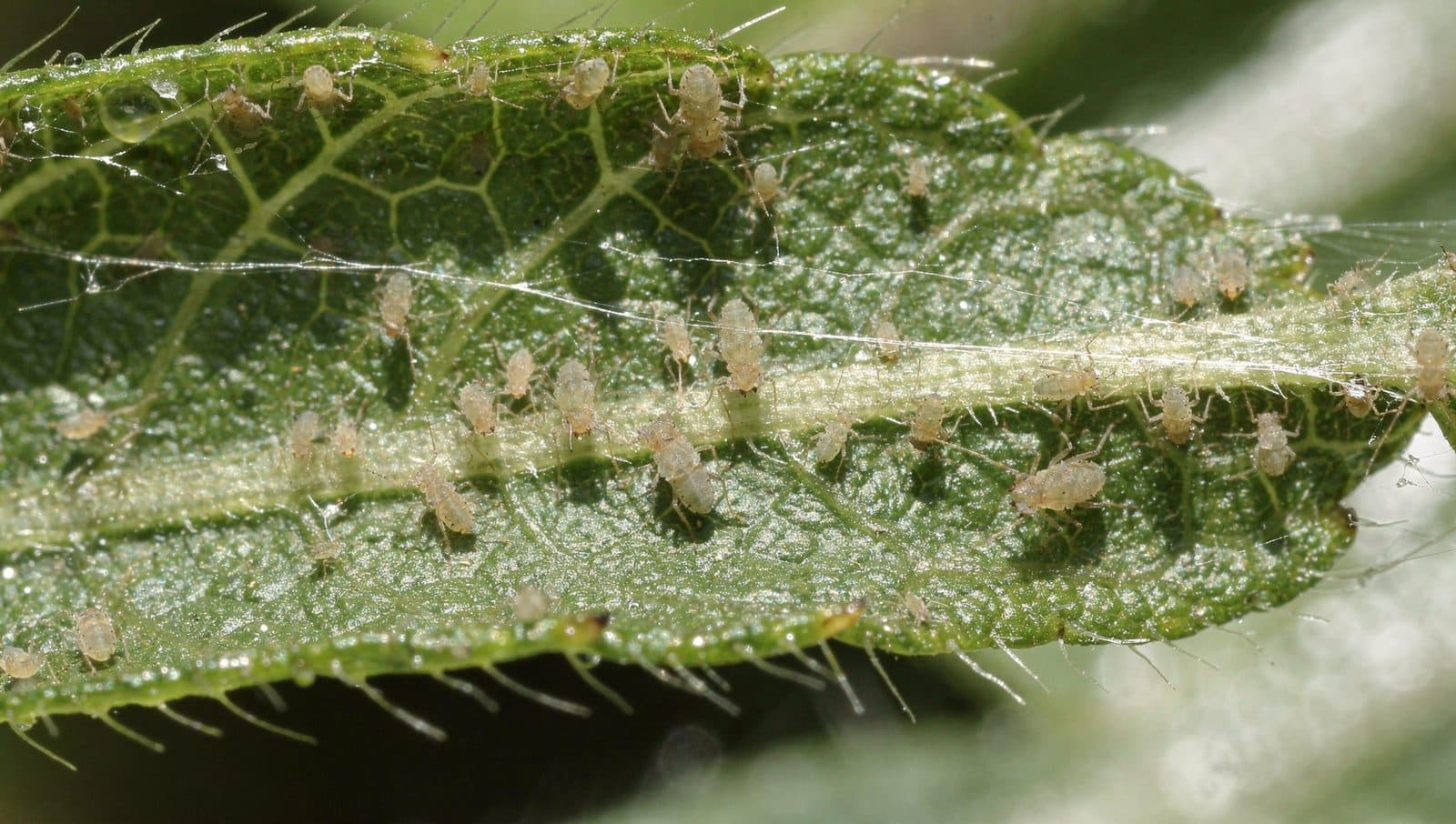
What Insects Live Under Leaves?
The underside of a leaf shelters most sap-feeders — aphids, whiteflies, spider mites, scale, and lace bugs — because it's sheltered from sun and close to the plant's plumbing.
At a glance
- The verdict: Multiple suspects
- Who fixes it: You
- Category: Leaf-Pest ID & Environmental Factors
The short answer
Leaf undersides are prime real estate for aphids, whiteflies, spider mites, scale insects, mealybugs, lace bugs, and the eggs and young of many caterpillars. They shelter there from sun, rain, and predators, and it's where they tap directly into the leaf's veins. If you flip a leaf and see clusters, cottony tufts, fine webbing, bumps that don't rub off, or rows of tiny eggs, you've found the source of the trouble. But not everything under a leaf is a pest — flip carefully, since beneficial predators hide there too.
Who's the likely culprit?
The sign: clusters, webbing, cottony tufts, bumps, or eggs on the underside of a leaf
- AphidsTop suspect
Pear-shaped, soft-bodied, and clustered along veins and new growth. University of Minnesota Extension gives the definitive tell: two "tail pipes (cornicles) found at the end of the abdomen" — no other common leaf pest has them.
- Whiteflies and their nymphsTop suspect
Adult whiteflies and their flat, pale, immobile nymphs both settle on leaf undersides. Adults scatter in a visible cloud when the plant is disturbed; the nymphs stay put and are easy to mistake for scale at a glance.
- Spider mitesPossible
University of Maryland Extension's field advice is to "inspect top of leaves for fine stippling and underneath for fine webbing" — the webbing on the underside is the confirming sign, since mites themselves are nearly too small to see.
- Scale insectsPossible
Small bumps on the underside and along stems that don't rub off like dirt or residue would. Soft scale species also excrete honeydew that seeds sooty mold on the leaf below.
- Lace bugsPossible
Stippled upper-leaf discoloration paired with dark, tar-like specks of frass on the underside. University of Nebraska guidance notes "all life stages can be found on the lower surface of leaves throughout the summer" on hosts like azalea, oak, and sycamore.
Who actually fixes this?
Start here
You
Flipping leaves to scout, hosing off light infestations, and spot-treating with insecticidal soap is standard garden and houseplant maintenance, not a structural pest issue.
- Garden center — You need a registered insecticidal soap or horticultural oil for a confirmed soft-bodied pest.
- UNH Extension — You want to confirm the ID before treating — UNH Extension's Insect & Arthropod ID service handles this for free.
- Certified arborist — The affected leaves are on a large tree canopy rather than a garden plant or shrub you can reach and treat yourself.
The details, straight
Why the underside of the leaf is pest headquarters
Leaf undersides offer shelter from direct sun, rain, and many predators, and they sit closer to the phloem tissue sap-feeders tap into. That combination makes the underside the default hiding spot for the majority of small plant pests, which is exactly why extension guidance repeatedly tells gardeners to flip the leaf first when troubleshooting a plant problem, rather than relying on what's visible from above. A plant that looks fine from a few feet away can be hosting a growing aphid or mite colony that only shows up once you turn a leaf over.
Reading the pattern to narrow it down
Clustered, soft-bodied insects along the veins point to aphids; a cloud that flies up when disturbed points to whiteflies; fine, non-geometric webbing points to spider mites; small bumps that don't rub off point to scale; and dark tar-like specks paired with stippling point to lace bugs. Caterpillar eggs, laid in neat rows or clusters on the underside, are a fifth possibility — most Brassica and vegetable-garden caterpillars start there. Matching the visual pattern to this list gets you to a confident ID faster than trying to identify a single insect in isolation.
Don't skip the predator check
Before reaching for a spray, look closely at what's actually under the leaf. Lady beetle larvae look nothing like the familiar red-and-black adult — they're elongated, spiny, and alligator-shaped, often gray or orange-and-black — and lacewing larvae are similarly spiky predators that eat aphids and mites voraciously. Killing these by mistake removes free pest control and can make the real problem worse. If you're not sure whether you're looking at a pest or a predator, a hand lens and a quick photo to UNH Extension settles it before you spray.
Key takeaways
- Leaf undersides shelter most sap-feeders because they're sheltered from sun and close to the plant's veins.
- Cornicles (paired tailpipes) confirm aphids; fine webbing confirms spider mites; bumps that don't rub off confirm scale.
- Lace bugs leave stippling above and dark tar-like frass below — a two-sided tell.
- Beneficial predator larvae (lady beetle, lacewing) also live under leaves and are easy to mistake for pests.
- None of these insects invade your home — this is plant care, not structural pest control.
Flip the leaf before you spray
Most of what lives under a leaf is identifiable in seconds with a hand lens — and some of it is a predator eating your actual problem.
See the full culprit IDA note for New Hampshire yards
Most of what lives under fallen leaves in New Hampshire — beetles, springtails, millipedes, and other decomposers — is beneficial and part of how leaf litter breaks down, and UNH Cooperative Extension encourages leaving some leaf cover in beds and wild corners to support them over winter. The exception near a home is litter banked against the foundation, which can shelter rodents and moisture pests. Anchor Pest Services handles that structural and yard-pest side; the beneficial insects in your garden beds aren't ours to treat, and we'd say so plainly.
NH-licensed applicator #782664 (NHDAMF, RSA 430) · NEPMA member · family-owned since 2017.
Related questions
Sources(4)
- [1]University of Minnesota Extension — Aphids
Cornicle tell distinguishing aphids from other sap-feeders
extensionverified 2026-07-14 - [2]University of Maryland Extension — Spider Mites on Vegetables
Stippling on top of leaves, fine webbing underneath as the mite tell
extensionverified 2026-07-14 - [3]University of Minnesota Extension — Scale Insects
Scale insect honeydew and identification on leaf undersides
extensionverified 2026-07-14 - [4]NC State Extension — Extension Gardener Handbook, Insects
General insect ID framework for garden and landscape pests
extensionverified 2026-07-14
Written & reviewed by
VerifiedDaniel Brady
NH-Licensed Pesticide Applicator · License #782664 (NHDAMF, RSA 430)
Daniel Brady is the New Hampshire–licensed applicator behind Anchor Pest Services, a family-owned pest control company serving the Manchester area since 2017.
Last updated 2026-07-14
Your next question
Honest pest help for New Hampshire homes
Leaf Pests Are Plant Care — But Your Home Is Our Job
Insects living under a leaf are garden work, and we'll always say so. Where Anchor Pest Services genuinely helps is the pests around your home — rodents, ants, ticks, and moisture pests drawn to yard debris and foundation clutter. Family-owned since 2017, NH license #782664, serving Manchester, Nashua, Concord and nearby towns.
- Honest read — most leaf-litter insects are beneficial, and we'll tell you so
- NH-licensed applicators (#782664) for the pests that move from litter toward a foundation
- Rodent, ant, tick, and moisture-pest work across southern and central NH
NH License #782664 · No obligation · We answer in person
Your next step
- Related guide
What Insects Live on Tree Leaves?
Read the answer - Related guide
Can Leaf Pests Spread to My Home?
Read the answer - Related guide
Why Do Leaves Get Sticky Under Trees?
Read the answer - Related guide
Are Leaf Pests Harmful to Pets?
Read the answer - Related guide
Do Fallen Leaves Attract Pests?
Read the answer