
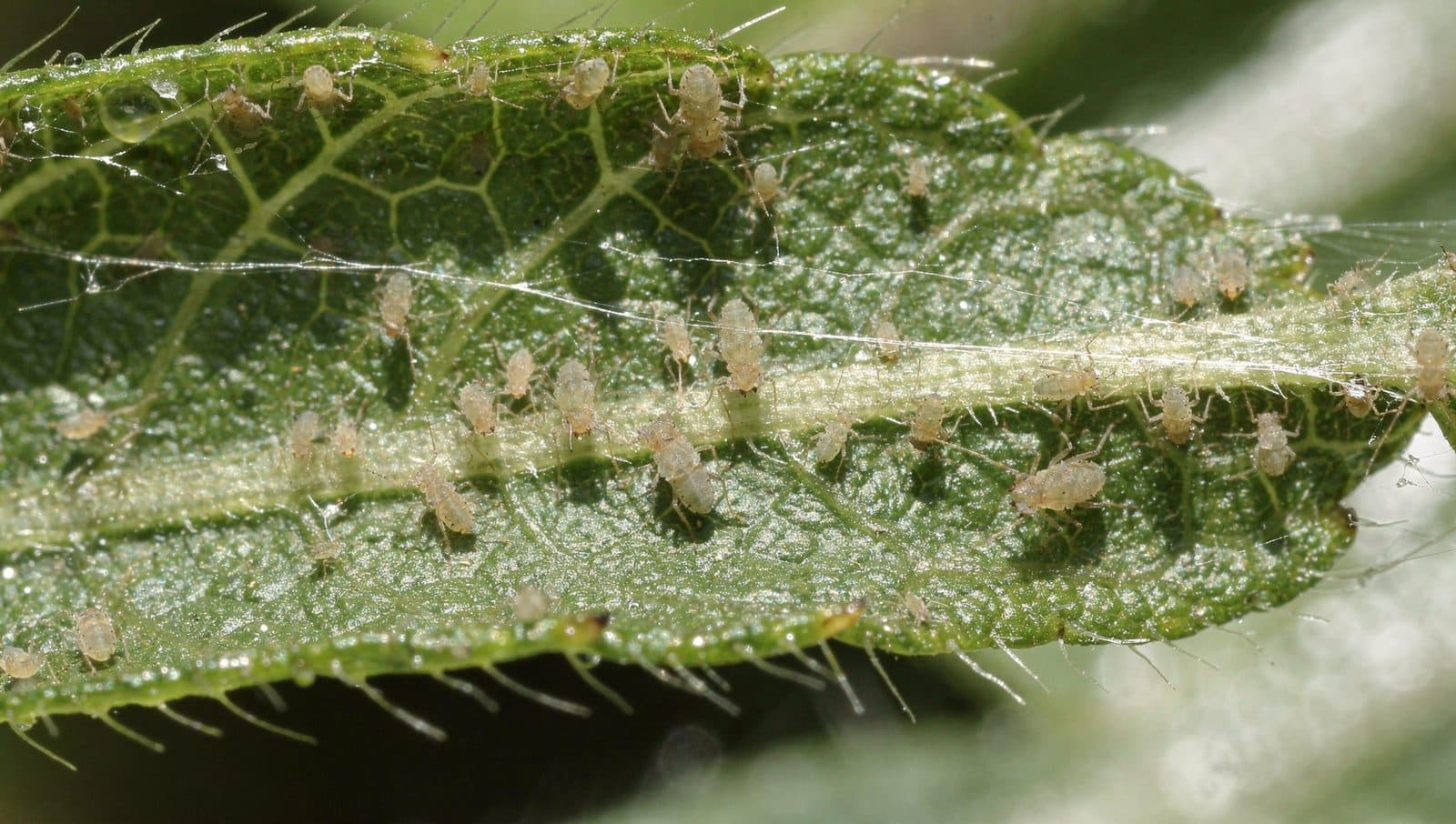
What Are Those Tiny White Bugs on Leaves?
Tiny white bugs on leaves are almost always whitefly, mealybug, or a pale aphid — the fastest ID is behavioral: fly = whitefly, cottony and still = mealybug, webbing = mites, not insects.
At a glance
- The verdict: Multiple suspects
- Who fixes it: You
- Category: Leaf-Pest ID & Environmental Factors
The short answer
Tiny white bugs on leaves are most often whiteflies, mealybugs, white or pale aphids, or — mistaken for insects — spider mites. The single fastest test: if a cloud of tiny white specks flies up when you disturb the plant, that's whiteflies; if they sit still in cottony white tufts wedged into leaf joints, that's mealybugs; if there's fine silky webbing, that's spider mites (arachnids, not insects). All are soft-bodied sap-feeders that live on the plant, not in your house. Confirm with a hand lens before treating anything.
Who's the likely culprit?
The sign: tiny white specks, flecks, or fluff on leaves and stems
- WhitefliesTop suspect
Tiny, triangular, snow-white winged insects on leaf undersides that scatter in a visible cloud the moment the plant is bumped. Costa Farms' Senior IPM Manager Michelle Opela puts the tell plainly: "Whiteflies are pretty easy, because they are white and they fly." They leave sticky honeydew behind and can seed sooty mold.
- MealybugsTop suspect
Oval, soft insects coated in white waxy fluff that look like tiny cotton balls wedged into leaf joints, stem crotches, and leaf undersides. They barely move. NC State Extension notes females lay hundreds of eggs in a dense, fluffy egg sac, and Iowa State Extension warns they're difficult to control because their waxy coating shrugs off contact sprays.
- White or pale aphids (including woolly aphids)Possible
Pear-shaped and clustered on tender new growth, with two small tailpipe-like cornicles at the rear — the giveaway aphids alone have. Woolly aphids wear white waxy filaments and tend to show up on trees rather than houseplants.
- Spider mitesLook-alike
Not insects at all — tiny arachnids. Look for fine webbing on the undersides and yellow-white stippling on the upper leaf surface instead of a discrete white bug. See the webbing page below for the paper-tap confirmation test.
Who actually fixes this?
Start here
You
Confirming which sap-feeder you have and hosing it off or spot-treating with insecticidal soap is homeowner-level garden or houseplant care, not structural pest control.
- Garden center — You need a registered insecticidal soap or horticultural oil once you've confirmed which pest it is.
- UNH Extension — You can't confidently tell the four suspects apart — UNH Cooperative Extension's Insect & Arthropod ID service will confirm it from a sample or photo.
The details, straight
How to tell the four suspects apart in under a minute
Behavior beats color for tiny white pests, because all four look roughly similar to the naked eye. Bump or gently shake the plant: a visible cloud of white specks taking flight means whiteflies. If the white bugs sit motionless in fluffy, cotton-like clumps at leaf joints and along stems, that's mealybugs — their waxy coating is a defense, not decoration. Pear-shaped bodies clustered on new growth, with two small tubes at the rear end, point to aphids, some of which run pale or white rather than green or black. And if you see fine, silky webbing rather than a distinct bug, you're looking at spider mites, which are arachnids, not insects, and thrive in hot, dry conditions.
Why none of these invade your home
Whiteflies, mealybugs, aphids, and spider mites are obligate plant feeders — they need living plant sap to survive, and they don't nest in walls, pantries, or furniture the way structural pests do. UNH Extension notes the greenhouse whitefly common in New Hampshire "does not overwinter outdoors in New Hampshire; it can only survive the winter in greenhouses," underscoring how plant-bound this group is. At most, an infested plant can spread its pest to your other houseplants when placed nearby — which is why quarantining new plants for a few weeks is smart. None of this is a reason to call a pest-control company.
What to do once you've identified it
For a light infestation, a firm spray of water knocks whiteflies, aphids, and mite webbing off effectively. For anything that persists, a registered insecticidal soap or horticultural oil applied thoroughly to leaf undersides — out of direct sun and hot temperatures — handles all three soft-bodied insect suspects on contact; mealybugs are the toughest of the group because their wax coating resists contact sprays, so expect to repeat treatment. These products have no residual effect, so coverage and repetition matter more than strength. Skip vinegar and other homemade acid sprays — they scorch the leaf faster than they touch the bug.
Key takeaways
- Behavior is the fastest ID: flies when disturbed = whitefly; cottony and still = mealybug; fine webbing = spider mite (not an insect); pear-shaped on new growth = aphid.
- All four are sap-feeders that live on the plant — none of them infest your home the way a structural pest does.
- Not every white speck is a bug: shed skins, mineral residue, and powdery mildew can all look like a pest at a glance.
- A firm water spray or insecticidal soap on leaf undersides handles most cases; mealybugs are the hardest to knock out because of their waxy coating.
- Not sure which one you have? UNH Extension's Insect & Arthropod ID service will confirm it for free.
Not sure which of the four it is?
Whitefly, mealybug, aphid, and spider mite all look like "tiny white bugs" — but they behave differently, and the right fix depends on which one you have.
See the full culprit IDA note for New Hampshire growers
Greenhouse whitefly, the species most New Hampshire gardeners encounter, can't survive an outdoor New Hampshire winter — per UNH Extension it "does not overwinter outdoors in New Hampshire; it can only survive the winter in greenhouses" — so outdoor whitefly flare-ups are a warm-season, greenhouse, or houseplant story here, not a year-round yard problem. If you're unsure which of the four suspects you're looking at, UNH Cooperative Extension's free Insect & Arthropod Identification service and the Ask UNH Extension Infoline (1-877-EXT-GROW) can confirm it before you treat anything.
NH-licensed applicator #782664 (NHDAMF, RSA 430) · NEPMA member · family-owned since 2017.
Related questions
Sources(4)
- [1]University of Wisconsin Horticulture Extension — Mealybugs
Mealybug egg-laying, waxy coating, and difficulty of contact-spray control
extensionverified 2026-07-14 - [2]UNH Cooperative Extension — Insect & Arthropod Identification
Free NH insect ID service; greenhouse whitefly cannot overwinter outdoors in NH
extensionverified 2026-07-14 - [3]Iowa State University Extension — Diagnosing Houseplant Problems Caused by Insect Pests
Mealybugs are difficult to control due to protected feeding and waxy coating
extensionverified 2026-07-14 - [4]University of Minnesota Extension — Aphids
Aphid cornicle tell and quarantine advice for new plants
extensionverified 2026-07-14
Written & reviewed by
VerifiedDaniel Brady
NH-Licensed Pesticide Applicator · License #782664 (NHDAMF, RSA 430)
Daniel Brady is the New Hampshire–licensed applicator behind Anchor Pest Services, a family-owned pest control company serving the Manchester area since 2017.
Last updated 2026-07-14
Your next question
Honest pest help for New Hampshire homes
Leaf Pests Are Plant Care — But Your Home Is Our Job
Identifying bugs on your plants is garden work, and we'll always say so plainly. Where Anchor Pest Services genuinely helps is the pests around your home — rodents, ants, ticks, and moisture pests drawn to yard debris and foundation clutter. Family-owned since 2017, NH license #782664, serving Manchester, Nashua, Concord and nearby towns.
- Identification first — we help you tell whitefly from mealybug from mites before anything else
- NH-licensed (#782664) for structural and yard pests; leaf sap-feeders are garden-center territory
- Serving southern and central New Hampshire homes, not your windowsill plants
NH License #782664 · No obligation · We answer in person
Your next step
- Related guide
Why Do Leaves Have White Powder on Them?
Read the answer - Related guide
What Causes White Spots on Rose Leaves?
Read the answer - Also relevant
Tiny Ants in Your House: The Under-4mm ID Guide for New Hampshire Homes
Read the answer - Related guide
How Can I Keep Leaves from Attracting Bugs Again?
Read the answer - Related guide
What Bugs Eat Holes in Leaves?
Read the answer