
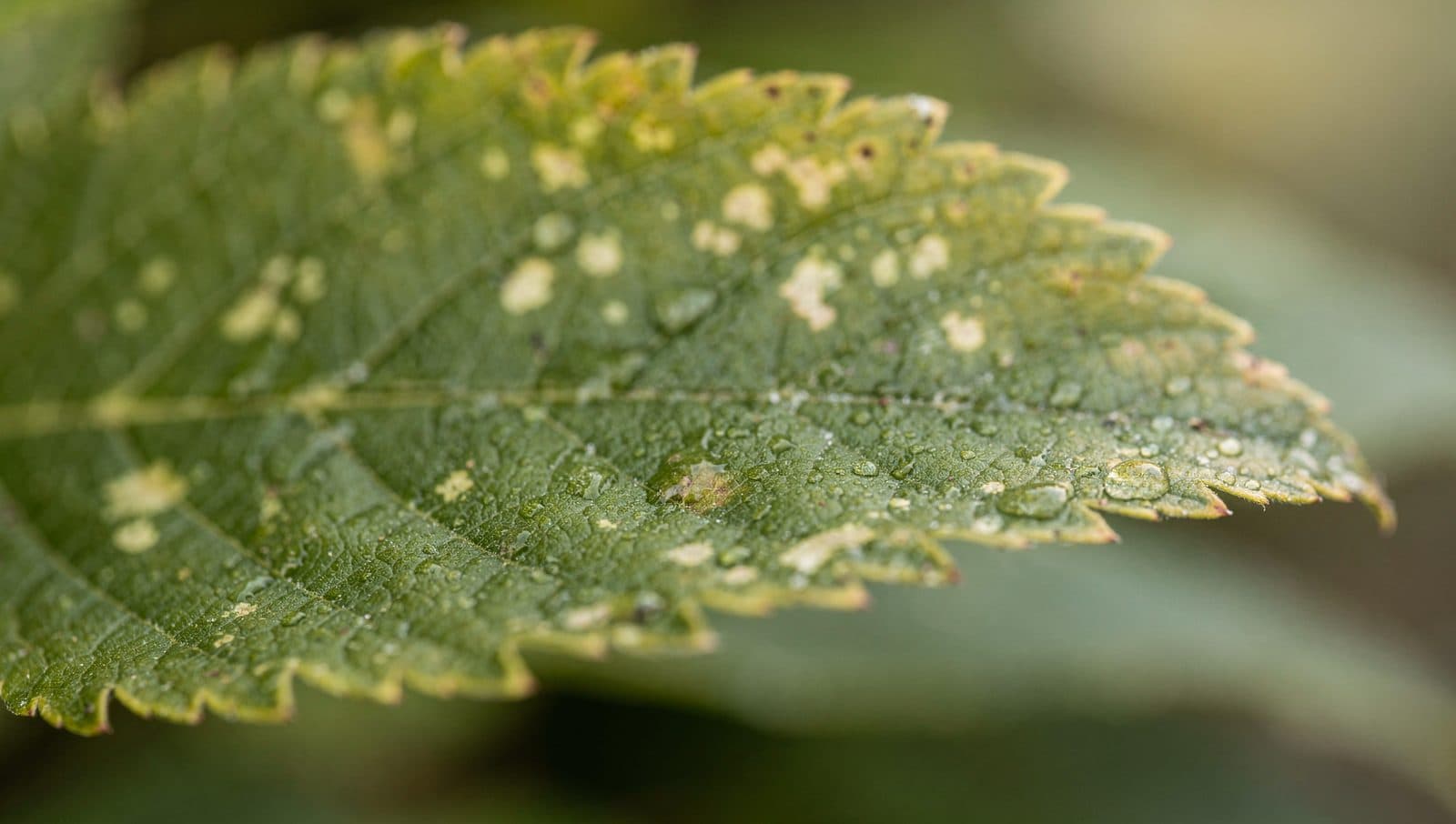
Why Do Leaves Have White Powder on Them?
White powder on leaves is powdery mildew — a fungal disease affecting hundreds of plant species, not a bug or a residue you can rinse off.
At a glance
- The verdict: Usually a disease
- Who fixes it: You
- Category: Leaf-Symptom Diagnosis (pest vs disease vs care)
The short answer
A white or gray, dusty coating on leaves is the signature of powdery mildew, one of the most common plant diseases, caused by any of several closely related fungi depending on the plant species. It typically appears first on upper leaf surfaces and new growth, thrives in warm days with cool, humid nights, and smears like talc if you rub it. Powdery mildew rarely kills an established plant outright but can stunt growth and reduce flowering if left untreated across a season. The fix is garden care — better airflow, morning watering, resistant varieties, and a garden-center fungicide — not pest control.
Pest, disease, or how you're caring for it?
Most leaf problems aren't pests at all. Here's the honest split — the most likely cause, the less likely ones, and how to tell them apart before you treat anything.
- DiseaseMost likelythe usual cause
Powdery mildew fungi (many closely related species, each specializing in certain plant hosts) producing a white-to-gray, dusty growth mostly on the upper leaf surface, spreading to buds and new shoots. Thrives in warm days and cool, humid nights and doesn't need free water on the leaf to develop.
powdery mildew on roses, cucurbits, lilacs, phlox, and many other ornamentals and vegetablesThe tell:The powder rubs off like talc when you touch it and reappears within days; it develops without needing standing water on the leaf, unlike many other fungal diseases.
- Care / environmenta less common cause
Hard-water mineral spotting from overhead watering, dust accumulation, or a spray/fertilizer residue that can look pale or whitish from a distance.
hard-water mineral residuedust buildupspray/fertilizer depositThe tell:It rinses off cleanly with water and does not return or spread to new growth the way an active fungal infection does.
- Pesta rare cause
Waxy white masses from mealybugs or woolly aphids, or heavy two-spotted spider mite stippling that can read as a pale, dusty look from a distance.
mealybug/woolly aphid waxspider mite stipplingThe tell:Waxy clumps have a cottony, three-dimensional texture rather than a flat powder, and mite damage comes with fine webbing on the underside.
Powdery mildew smears like chalk between your fingers and returns within days. Mineral or spray residue wipes away clean and stays gone. Insect wax or webbing has body structure you can see up close, rather than a uniform dusty film.
Who actually fixes this?
Start here
You
Powdery mildew is managed with garden care — pruning for airflow, watering the soil rather than the foliage, sanitation, resistant varieties, and a garden-center fungicide — not with a structural pest-control treatment.
- Garden center — You want a fungicide product suited to the specific plant, or a resistant variety recommendation for replanting.
- UNH Extension — You're unsure of the diagnosis, the infection is severe, or it's spreading fast across a valuable planting — UNH Cooperative Extension's plant diagnostic services can confirm it.
The details, straight
Powdery mildew: the leading cause, by a wide margin
Powdery mildew isn't a single organism but a group of closely related fungal species, each usually specialized to a particular set of host plants — one species on roses, another on cucurbits, another on lilacs or phlox, for example. Extension resources across the country, including Oregon State's SolvePestProblems and the Pacific Northwest Plant Disease Management Handbook, consistently describe the same signature: a white-to-gray, dusty growth appearing first on the upper leaf surface and on new growth, developing best on warm days with cool, humid nights. Unlike many fungal diseases, powdery mildew doesn't require free water sitting on the leaf to establish and spread, which is part of why it shows up even during relatively dry spells if humidity is high.
Ruling out the non-disease look-alikes
Before treating for disease, it's worth quickly ruling out the two other buckets, since the fix is completely different. Hard-water spotting from overhead sprinkler irrigation, dust, or a dried fertilizer/spray residue can all look pale or whitish from across a room or yard, but none of these smear into a fine powder or reappear after a good rinse. On the pest side, mealybugs and woolly aphids produce a cottony white wax that has visible three-dimensional texture rather than a flat, dusty coating, and heavy spider mite damage comes bundled with fine webbing on the leaf underside — neither behaves like the talc-like smear of true powdery mildew.
What actually treats it
Cultural steps come first: prune and space plants for airflow, water the soil in the morning rather than overhead, and remove and dispose of (don't compost) heavily infected leaves so spores don't accumulate. Choose resistant varieties when replanting a plant that struggles with mildew every year. For an active outbreak, a fungicide from a garden center labeled for powdery mildew on your specific plant, applied per the label, is the standard treatment; cool, dry, cloudy weather naturally slows the disease, while consistent airflow reduces reinfection through the rest of the season.
Key takeaways
- White, dusty powder on leaves is almost always powdery mildew, a fungal disease — not an insect problem.
- It smears like talc and returns within days; that's the tell that rules out mineral or spray residue.
- It develops without needing standing water on the leaf, unlike many other fungal diseases.
- Fix it with airflow, morning soil watering, sanitation, resistant varieties, and a labeled garden-center fungicide.
- Mold and mildew spores can irritate allergy or asthma sufferers — those with respiratory sensitivity should take basic precautions and see a doctor if symptoms persist.
Rub it before you spray anything
White powder that smears like talc and comes back is a fungus. Confirm the cause before reaching for a pest spray that won't touch it.
See the full pest-vs-disease triageA note for New Hampshire gardeners
Humid summer nights across southern and central New Hampshire create favorable conditions for powdery mildew on roses, lilacs, phlox, cucurbits, and many other garden plants. If a fungicide and better airflow aren't turning it around, UNH Cooperative Extension's plant diagnostic services and the free Ask UNH Extension Infoline (1-877-EXT-GROW) can help confirm the diagnosis (note: UNH's plant-disease lab has at times referred physical samples to University of Maine or Cornell labs — worth checking current status). Anchor Pest Services focuses on the structural and yard pests around your home, not disease on your plants, but we're glad to point you to the right resource.
NH-licensed applicator #782664 (NHDAMF, RSA 430) · NEPMA member · family-owned since 2017.
Related questions
Sources(5)
- [1]Oregon State University — SolvePestProblems: Powdery Mildew on Roses
Powdery mildew symptoms and development conditions
extensionverified 2026-07-14 - [2]PNW Plant Disease Management Handbook — Rose Powdery Mildew
Fungal biology and spore germination conditions
academicverified 2026-07-14 - [3]WSU Hortsense — Rose: Powdery Mildew
Cool, dry, cloudy conditions favor disease development
extensionverified 2026-07-14 - [4]CDC — Mold and Health
Allergy/asthma/immunocompromised risk from mold spore exposure
govverified 2026-07-14 - [5]EPA — Mold and Health
Mold as an allergen/irritant to eyes, skin, throat, and lungs
govverified 2026-07-14
Written & reviewed by
VerifiedDaniel Brady
NH-Licensed Pesticide Applicator · License #782664 (NHDAMF, RSA 430)
Daniel Brady is the New Hampshire–licensed applicator behind Anchor Pest Services, a family-owned pest control company serving the Manchester area since 2017.
Last updated 2026-07-14
Your next question
Honest pest help for New Hampshire homes
Plant Disease Is Garden Care — Your Home Is Our Job
Powdery mildew on your plants is a fungal disease, and we'll always say so rather than overselling a pest treatment you don't need. Where Anchor Pest Services genuinely helps is the structural and yard pests around your home — rodents, ants, ticks, and moisture pests. Family-owned since 2017, NH license #782664, serving Manchester, Nashua, Concord and nearby towns.
- We name white powder as fungal disease, not something to bill you for
- NH pest license #782664 — free quote and same-day availability
- Serving homeowners across southern and central New Hampshire
NH License #782664 · No obligation · We answer in person
Your next step
- Related guide
Why Do Leaves Get Powdery Mildew?
Read the answer - Related guide
What Causes White Spots on Rose Leaves?
Read the answer - Related guide
What Are Those Tiny White Bugs on Leaves?
Read the answer - Related guide
How Does Humidity Affect Leaf Health?
Read the answer - Related guide
Can Leaf Fungus Kill a Plant?
Read the answer