
Why Are Tree Leaves Dropping Early?
Early tree leaf drop is most often a stress response, and for most trees it's water: dropping leaves ahead of schedule is how a tree cuts its losses in a hot, dry, or otherwise stressful stretch.
At a glance
- The verdict: Usually stress — often not an emergency
- Who fixes it: Certified arborist
- Category: Leaf-Symptom Diagnosis (pest vs disease vs care)
The short answer
For most trees, early leaf drop before fall color even starts is the tree protecting itself, and the leading cause is drought or heat stress: as one extension source puts it, when trees drop leaves early, 'for most trees, the answer is water.' Disease — foliar fungi like anthracnose or tar spot, or a vascular wilt — accounts for a meaningful share of cases, especially when the dropped leaves show spots or one side of the canopy thins first. A smaller share traces to heavy insect defoliation or wood-boring pests. Because it's a whole-tree condition, this is honestly an ISA-certified arborist's call, not a spray-and-hope project.
Pest, disease, or how you're caring for it?
Most leaf problems aren't pests at all. Here's the honest split — the most likely cause, the less likely ones, and how to tell them apart before you treat anything.
- Care / environmentMost likelythe usual cause
Even, whole-canopy thinning that follows a hot, dry stretch or a period of heat stress, with leaves dropping green or only lightly discolored.
Drought stressExtreme heatRoot damage or soil compactionRecent transplant or construction disturbance nearbyThe tell:Correlate the timing with recent weather — a hot, dry spell in the weeks before the drop is the strongest cultural signal.
- Diseasea less common cause
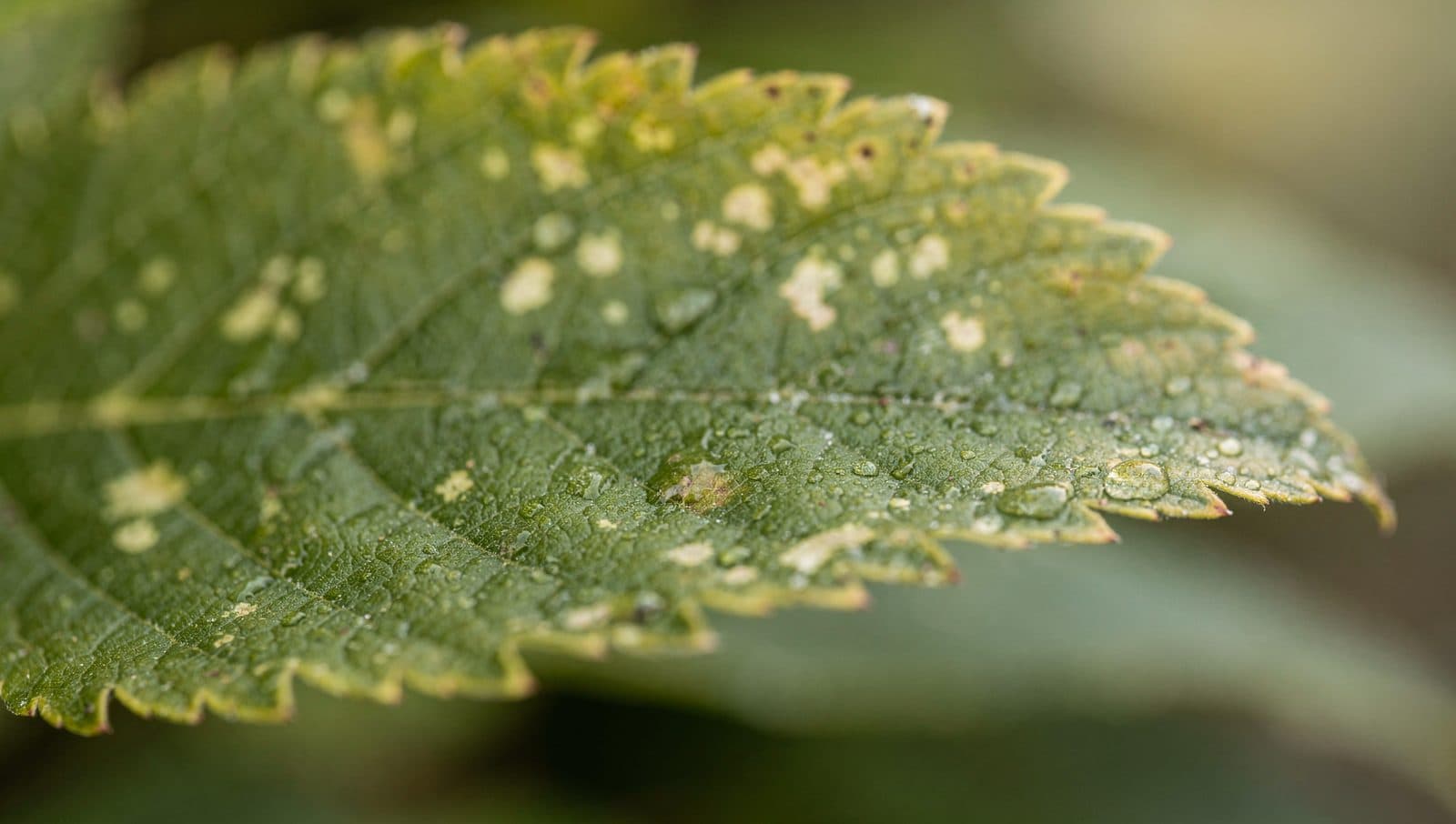
Dropped leaves carry visible spots, blotches, or lesions before falling, or the thinning is worse on one side/branch of the tree rather than even across the whole canopy.
AnthracnoseTar spot and other foliar leaf-spot fungiVerticillium or Fusarium vascular wiltThe tell:Inspect the fallen and remaining leaves for spots or lesions; check for one-sided thinning, which suggests a vascular disease rather than general stress.
- Pesta rare cause
Visible chewing damage, defoliating caterpillars, or small entry holes and sawdust-like frass on the trunk or branches.
Heavy caterpillar or beetle defoliationWood-boring beetles girdling a branchThe tell:Look for chewed leaf margins, frass, or small round exit holes in the bark before assuming stress or disease.
Ask what changed recently — a hot, dry stretch points to stress; spots or lesions on the dropped leaves point to a foliar disease; one-sided thinning with internal staining points to a vascular wilt; and visible chewing or bark holes point to insects. Most cases resolve on the first check.
Trees are also seasonal and species-variable — some species (like certain maples or black walnuts) naturally shed leaves earlier in late summer as a normal response to a dry year, which extension sources note isn't necessarily an emergency.
Who actually fixes this?
Start here
Certified arborist
Diagnosing whole-tree stress, disease, or pest pressure accurately — and deciding whether any intervention is actually warranted — takes an ISA-certified arborist's on-site assessment, not a guess from the ground.
- UNH Extension — You want the specific disease or cause confirmed, or a second opinion before committing to any tree work — UNH's diagnostic services and the Ask UNH Extension Infoline are a free starting point.
- You — The likely cause is drought stress on a young or recently planted tree — deep, infrequent watering during dry spells and mulching (not piled against the trunk) are within a homeowner's control.
The details, straight
Why 'the answer is water' most of the time
Trees drop leaves early as a survival strategy: keeping a full canopy costs water through transpiration, and when a tree can't keep up with demand during a hot or dry stretch, shedding some leaves reduces that demand and protects the rest of the tree. University of Connecticut Extension notes plainly that when homeowners ask why trees are dropping leaves early, 'for most trees, the answer is water' — and Penn State Extension similarly links extreme heat to leaf scorch and premature drop as an abiotic (non-living-cause) stress response. This kind of drop tends to be even across the whole canopy and the leaves often look otherwise green or only lightly discolored.
When disease is driving the drop
Foliar diseases like anthracnose and tar spot can trigger noticeably early leaf drop, especially after a cool, wet spring that favors fungal growth — and while these are often cosmetic on a mature, otherwise healthy tree, heavy anthracnose infection can cause real twig dieback that's worth an arborist's attention. Vascular wilts like Verticillium are a more serious possibility: they invade the tree's water-conducting tissue and typically cause one-sided thinning or dieback rather than even canopy-wide drop, along with visible streaking under the bark on affected branches.
The smaller pest-driven share
Heavy defoliation from caterpillars or beetles, or a wood-boring insect girdling a branch from the inside, can also cause premature leaf loss — but these cases usually come with visible evidence: chewed foliage, frass, sawdust-like debris at the base of the trunk, or small round exit holes in the bark. Absent that physical evidence, insects are the least likely of the three explanations for a whole tree dropping leaves early.
Why this isn't a DIY diagnosis
Because early leaf drop can mean anything from a normal, self-limiting stress response to a serious vascular disease, getting it right matters — treating a healthy but drought-stressed tree the same way you'd treat one with Verticillium wilt wastes effort and can miss a real problem. An ISA-certified arborist can inspect the canopy, check for one-sided patterns, and take a sample if a lab diagnosis is warranted, which is the honest path forward rather than guessing from a photo.
Key takeaways
- Early leaf drop is most often a stress response to drought or heat — for most trees, 'the answer is water,' per UConn Extension.
- Foliar diseases (anthracnose, tar spot) and vascular wilts account for a meaningful share, especially with spotted leaves or one-sided thinning.
- A smaller share traces to heavy insect defoliation or wood-boring pests, usually with visible chewing or bark damage.
- Even, whole-canopy drop after a hot/dry spell = stress; one-sided thinning with internal staining = a wilt disease worth a lab check.
- This is honestly an ISA-certified arborist's call — tree health decisions shouldn't rest on a guess from the ground.
Whole-tree symptoms need a whole-tree answer
Early leaf drop is usually stress, but an ISA-certified arborist can rule out disease or a wood-boring pest before you decide it's nothing.
See the full pest-vs-disease triageA note for New Hampshire tree owners
Manchester-area summers can bring dry stretches that stress mature trees, and per Garden.org's frost-date tool (drawing on NOAA 1991–2020 Climate Normals), the area sees a 50% chance of a 32°F frost by around October 19 and an 80% chance by October 29 — a useful marker for telling normal fall senescence from a genuinely early drop earlier in the season. UNH Cooperative Extension's diagnostic services and Ask UNH Extension Infoline (1-877-EXT-GROW) are a free first stop; note UNH's Plant Diagnostic Lab has at times referred physical disease samples to the University of Maine or Cornell — worth confirming current status. Anchor Pest Services focuses on structural and yard pests, not tree-health diagnosis, but we'll point you to an arborist when that's the real need.
NH-licensed applicator #782664 (NHDAMF, RSA 430) · NEPMA member · family-owned since 2017.
Related questions
Sources(3)
- [1]University of Connecticut Extension — Is Early Leaf Drop an Indicator of Tree Health?
Premature leaf drop is usually a stress response, most often to water availability
extensionverified 2026-07-14 - [2]Penn State Extension — Abiotic Urban Tree Stressors
Extreme heat causes leaf scorch and premature leaf drop
extensionverified 2026-07-14 - [3]University of Maine Cooperative Extension — Tar Spot Fungus
Foliar fungal diseases (tar spot, anthracnose) as a cause of early leaf drop in New England
extensionverified 2026-07-14
Written & reviewed by
VerifiedDaniel Brady
NH-Licensed Pesticide Applicator · License #782664 (NHDAMF, RSA 430)
Daniel Brady is the New Hampshire–licensed applicator behind Anchor Pest Services, a family-owned pest control company serving the Manchester area since 2017.
Last updated 2026-07-14
Your next question
Honest pest help for New Hampshire homes
Tree Health Is an Arborist's Call — Your Home Is Our Job
Diagnosing a tree dropping leaves early is arborist work, and we'll say so plainly. Where Anchor Pest Services genuinely helps is the pests around your home — rodents, ants, ticks, and moisture pests drawn to leaf litter and debris against the foundation. Family-owned since 2017, NH license #782664, serving Manchester, Nashua, Concord and nearby towns.
- We separate stress and drought from a pest cause before alarming you
- NH-licensed team (#782664) with same-day service and a free quote
- Serving southern and central New Hampshire — rodents, ants, ticks, moisture pests
NH License #782664 · No obligation · We answer in person
Your next step
- Book a NH pro
Pest Control Services
Licensed, family-owned pest control across southern NH.
Book now - Related guide
What Insects Live on Tree Leaves?
Read the answer - Related guide
How Often Should I Inspect Tree Leaves?
Read the answer - Related guide
Can Temperature Changes Cause Leaf Drop?
Read the answer - Related guide
Why Are Leaves on One Side of a Tree Dying?
Read the answer - Related guide
Do Piles of Tree Leaves Attract Termites?
Read the answer