
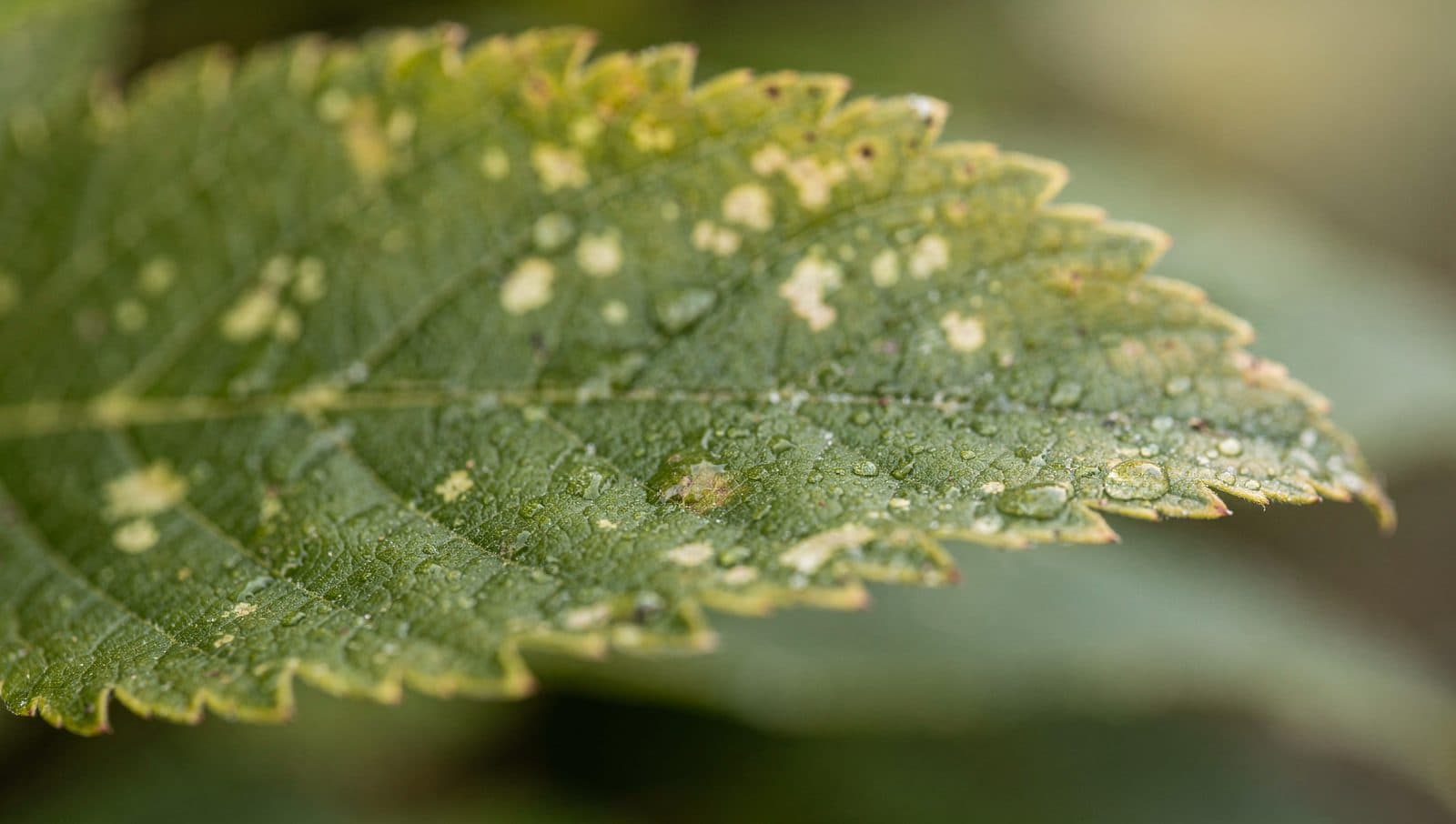
What Bugs Eat Holes in Leaves?
The usual hole-makers are beetles, caterpillars, slugs, flea beetles, earwigs, and grasshoppers, and each one leaves a signature bite you can identify.
At a glance
- The verdict: Usually a pest — chewing insects
- Who fixes it: You
- Category: Leaf-Symptom Diagnosis (pest vs disease vs care)
The short answer
Holes chewed into leaves are almost always the work of a chewing pest, not a disease or a care mistake. Japanese and other beetles skeletonize leaves between the veins, caterpillars and loopers leave larger ragged holes, slugs and snails leave ragged holes plus a slime trail worst after rain and at night, flea beetles punch tiny shot-holes, and earwigs and grasshoppers chew irregular or jagged margins. The pattern of the damage, plus whether you find frass, slime, or the insect itself, points to the culprit. True disease-caused holes and random mechanical damage are far less common than a chewing insect, and they look different up close, so a quick inspection almost always settles it.
Pest, disease, or how you're caring for it?
Most leaf problems aren't pests at all. Here's the honest split — the most likely cause, the less likely ones, and how to tell them apart before you treat anything.
- PestMost likelythe usual cause
Ragged, skeletonized, or clean-punched holes with a pattern you can match to a specific chewer, often with frass, slime, or the insect itself nearby.
Japanese and other beetles (skeletonizing, lacy leaves)Caterpillars and loopers (ragged, larger holes)Slugs and snails (ragged holes plus slime trails, worst at night)Flea beetles (tiny round shot-holes)Earwigs and grasshoppers (irregular or jagged edges)The tell:Match the damage signature to the culprit and look for frass, slime trails, or the insect itself on the leaf or nearby soil.
- Diseasea less common cause
A hole with a discolored or dead-tissue ring around it, where infected tissue died and later fell out, leaving a shot-hole effect that can look like insect feeding at a glance.
Bacterial or fungal shot-hole diseaseAnthracnose lesions that drop outThe tell:Look for a ringed or discolored margin around the hole; true pest feeding leaves a clean or ragged edge without a disease lesion.
- Care / environmenta rare cause
Random, irregular tears or punctures with no biological pattern, scattered without regard to leaf structure.
Hail damageWind-driven abrasion against another plant or structureMechanical tearing from handlingThe tell:No frass, no slime, no consistent bite pattern, and it correlates with a specific weather event or physical contact rather than ongoing feeding.
Scout at the right time of day: slugs and earwigs feed at night, so check with a flashlight and look for slime trails and daytime hiding spots under mulch or pots, while beetles and grasshoppers are usually visible feeding in daylight. Pair that with the hole's shape: skeletonized tissue between veins points to beetles, larger ragged chunks point to caterpillars, and tiny round punctures point to flea beetles.
More than one chewing pest is often active in the same garden at once, so don't stop looking once you've confirmed one culprit if damage keeps spreading.
Who actually fixes this?
Start here
You
Chewing damage in a garden bed starts with monitoring and simple hand controls, checking at night for slugs, scouting by day for beetles, and hand-picking or using barriers before reaching for any product.
- Garden center — Hand-picking and barriers aren't keeping up and you want a targeted product such as an iron-phosphate slug bait, row cover, or insecticidal soap for soft-bodied stages.
- UNH Extension — You can't identify the culprit from the damage pattern and want confirmation before treating.
The details, straight
Reading the hole to find the bug
The single most useful diagnostic is the shape and pattern of the damage. Skeletonized leaves, where the green tissue between veins is eaten away but the veins remain like lace, point to Japanese beetles and similar leaf beetles. Larger, ragged holes chewed from the leaf margin or middle are typical of caterpillars and loopers. Tiny, numerous round holes scattered across a leaf, sometimes called shot-holes, are the classic sign of flea beetles. Ragged holes with ragged, torn edges and a dried slime trail nearby point to slugs and snails, which feed at night and rest in cool, damp hiding spots by day.
The evidence that confirms it
Beyond the hole shape, look for the physical evidence chewing insects leave behind. Frass, which looks like small dark pellets, often collects near caterpillar feeding sites. A dried, silvery slime trail visible in daylight confirms slug or snail activity from the night before, even if you never see the animal itself. Silk webbing at a feeding site is another caterpillar tell. If you find none of this and the holes have a discolored, ringed margin instead, you're more likely looking at a disease that killed tissue before it fell out, not an actively feeding insect.
Matching the fix to the culprit
Once you've identified the chewer, the fix is usually simple and doesn't require broad-spectrum spraying. Hand-picking beetles into soapy water in the early morning when they're sluggish, using iron-phosphate slug bait or beer traps for slugs, installing floating row cover to physically exclude flea beetles and caterpillars, and encouraging natural predators all work well for these visible chewing pests. Insecticidal soap or a targeted product can help with heavier infestations of soft-bodied larvae, but identify the pest first, since a product aimed at the wrong culprit wastes effort and can still cause leaf burn if misapplied.
Key takeaways
- Chewing holes in leaves are almost always a pest problem, not disease or care error.
- The hole's shape names the culprit: skeletonized = beetles, ragged and large = caterpillars, tiny and round = flea beetles, ragged with slime = slugs.
- Frass, slime trails, and silk are the physical evidence that confirms an active pest rather than a disease shot-hole.
- Time-of-day scouting matters: slugs and earwigs feed at night, beetles and grasshoppers by day.
- This is a garden-center and hand-control job, not structural pest control.
Not sure which bug is doing this?
Matching the hole pattern, timing, and evidence to the right culprit is the fastest way to fix it without wasting a product on the wrong pest.
See the full pest-vs-disease-vs-care triageA note for New Hampshire gardeners
Japanese beetles are typically active in southern New Hampshire from late June into July or August, feeding by day and often clustering in groups on roses, grapes, and other favorite plants, while slugs are worst during the cooler, damper stretches of spring and fall that are common in the region. UNH Cooperative Extension's Ask UNH Extension Infoline (1-877-EXT-GROW) is a free resource for confirming which chewing pest you're dealing with before you buy a product.
NH-licensed applicator #782664 (NHDAMF, RSA 430) · NEPMA member · family-owned since 2017.
Related questions
Sources(3)
- [1]University of Minnesota Extension — Slugs in Home Gardens
Slug biology, nocturnal feeding pattern, and slime-trail evidence
extensionverified 2026-07-14 - [2]University of Minnesota Extension — Fourlined Plant Bugs
Distinguishing plant-bug feeding damage from fungal or bacterial leaf-spot disease
extensionverified 2026-07-14 - [3]Virginia Cooperative Extension — Master Gardener Handbook, Chapter 6: Diagnosing Plant Damage
Matching chewing-damage patterns (skeletonized, ragged, shot-hole) to specific insect culprits
extensionverified 2026-07-14
Written & reviewed by
VerifiedDaniel Brady
NH-Licensed Pesticide Applicator · License #782664 (NHDAMF, RSA 430)
Daniel Brady is the New Hampshire–licensed applicator behind Anchor Pest Services, a family-owned pest control company serving the Manchester area since 2017.
Last updated 2026-07-14
Your next question
Honest pest help for New Hampshire homes
Garden Chewing Pests Are Garden Work — But Your Home Is Our Job
Bugs eating holes in your garden leaves are a garden-center and monitoring job, and we'll always say so rather than oversell a treatment you don't need. Where Anchor Pest Services genuinely helps is the pests around your home: rodents, ants, ticks, and moisture pests drawn to leaf litter and debris against the foundation. Family-owned since 2017, NH license #782664, serving Manchester, Nashua, Concord and nearby towns.
- ID before treatment — beetle, caterpillar, or slug all point to different fixes
- NH-licensed applicators (#782664) for structural and yard pests, not garden defoliators
- Rodent, ant, tick, and moisture-pest coverage across southern and central NH
NH License #782664 · No obligation · We answer in person
Your next step
- Related guide
What Causes Holes in Leaves?
Read the answer - Related guide
How Do I Fix Holes in Basil Leaves?
Read the answer - Related guide
How Can I Keep Leaves from Attracting Bugs Again?
Read the answer - Related guide
What Insects Live on Tree Leaves?
Read the answer - Related guide
Do Ants Harm Leaves or Just Eat Sap?
Read the answer - Related guide
Can Air Pollution Damage Leaves?
Read the answer