
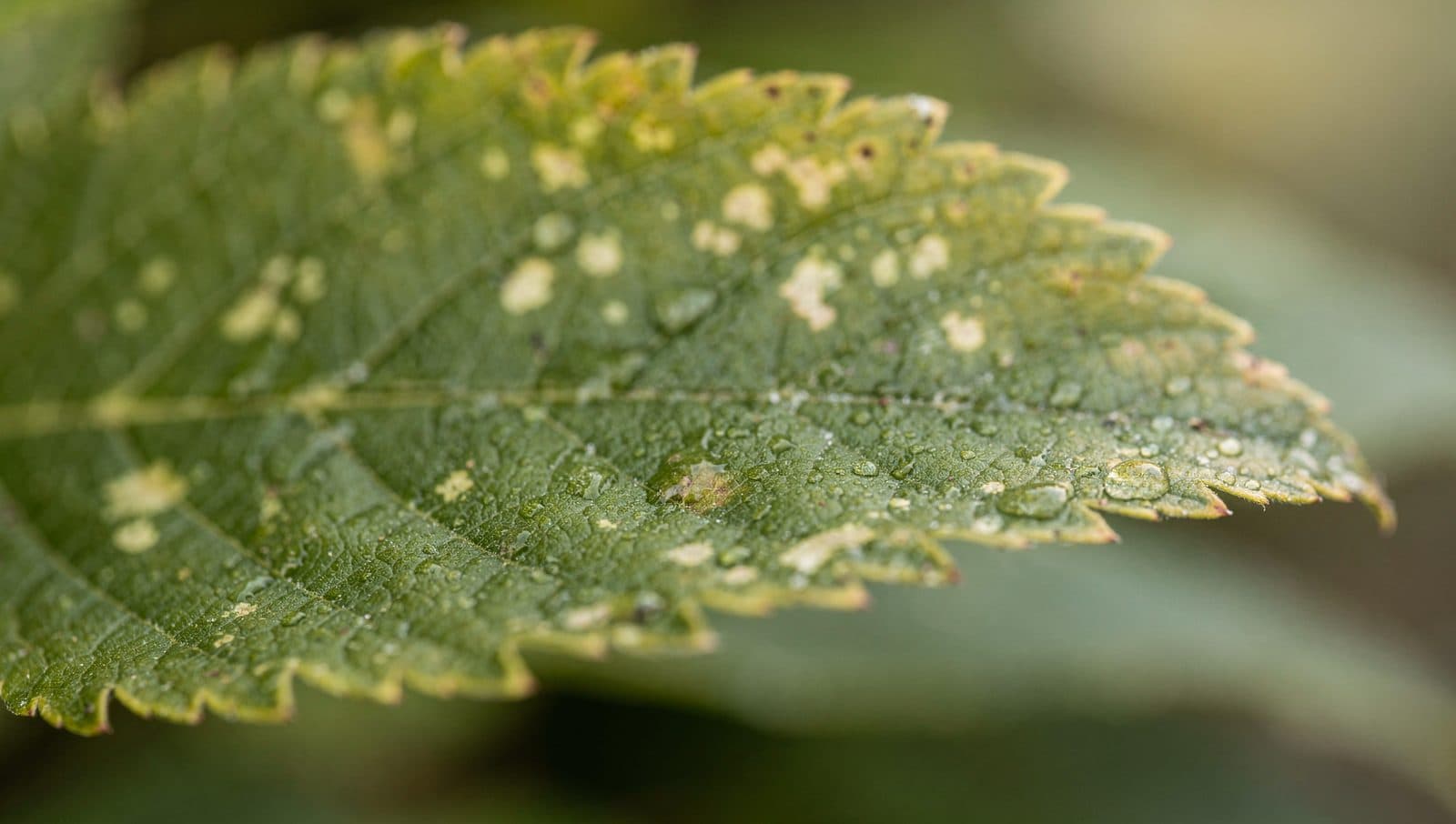
What Causes Holes in Leaves?
Holes almost always mean chewing insects or slugs — and the pattern of the hole names the culprit.
At a glance
- The verdict: Usually a pest
- Who fixes it: You
- Category: Leaf-Symptom Diagnosis (pest vs disease vs care)
The short answer
Holes chewed into leaves are, in the large majority of cases, caused by chewing pests — beetles, caterpillars, slugs and snails, flea beetles, earwigs, or grasshoppers — and the shape of the hole is the fastest clue to which one. Skeletonized leaves with just the veins left point to Japanese beetles; ragged holes with slime trails point to slugs; scattered larger holes with dark droppings nearby point to caterpillars; tiny round 'shot-holes' point to flea beetles. A smaller share of hole-like damage comes from disease, where a fungal or bacterial leaf spot kills tissue that later drops out and leaves a hole with a discolored rim, or from mechanical damage like hail. This is a garden pest problem, handled with garden-center products, not pest control.
Pest, disease, or how you're caring for it?
Most leaf problems aren't pests at all. Here's the honest split — the most likely cause, the less likely ones, and how to tell them apart before you treat anything.
- PestMost likelythe usual cause
Japanese beetles (skeletonizing leaves down to the veins, active June–July), caterpillars and loopers (large, ragged holes, often with dark frass nearby), slugs and snails (ragged holes with slime trails, worse at night and after rain), flea beetles (tiny round shot-holes), earwigs and grasshoppers (chewed margins).
Japanese beetlescaterpillars/loopersslugs and snailsflea beetlesgrasshoppersThe tell:Frass (droppings), slime trails, skeletonized veins, or chewed margins — some visible sign of the animal responsible, even if you don't see the pest itself.
- Diseasea less common cause
A 'shot-hole' effect where a fungal or bacterial leaf-spot pathogen kills a small patch of tissue, which dries out and eventually falls away, leaving a hole; anthracnose can behave this way on several ornamental and fruit species.
shot-hole disease (fungal/bacterial leaf spot)anthracnoseThe tell:The hole has a discolored, often yellow or brown, ring around its edge, and similar spots that haven't dropped out yet are often visible elsewhere on the plant.
- Care / environmenta rare cause
Mechanical damage from hail, wind-driven debris, garden tools, or general physical wear and tear.
hail damagewind/mechanical abrasiontool damageThe tell:The damage is random in shape and placement, shows no slime, frass, or discolored rim, and doesn't spread to new leaves over time.
Look for the sign of the animal responsible — frass, slime, skeletonized veins, or a chewed margin — versus a ringed spot where dead tissue has simply fallen out (disease). Random, patternless holes with no biological signs point to mechanical damage instead.
Who actually fixes this?
Start here
You
Chewing damage on garden and landscape plants is addressed with homeowner and garden-center controls — hand-picking, slug bait, row cover, or insecticidal soap — matched to whichever pest the hole pattern points to.
- Garden center — You've identified the culprit and want a specific product recommendation — slug bait, row cover, or insecticidal soap.
- UNH Extension — You can't tell what's causing the holes from the pattern alone — UNH Cooperative Extension's Insect & Arthropod ID service can confirm it.
The details, straight
Match the hole to the culprit
The vast majority of leaf holes come down to a small set of well-known chewing pests, and the shape and pattern of the damage is usually enough to make a confident call without ever seeing the insect itself. Japanese beetles feed in groups and skeletonize leaves, leaving behind a lacy network of veins. Caterpillars and loopers chew larger, more irregular holes and often leave visible dark frass nearby. Slugs and snails leave ragged holes and unmistakable slime trails, feeding mostly at night or during damp weather. Flea beetles leave a scatter of tiny, round shot-holes, and grasshoppers or earwigs chew notches from leaf margins inward.
When it's disease, not a bug
A smaller share of hole-like damage isn't chewing at all. Some fungal and bacterial leaf-spot pathogens, including certain anthracnose infections, kill a small patch of leaf tissue outright; that dead tissue eventually dries, becomes brittle, and falls out of the leaf, leaving behind a hole. The giveaway is the rim: disease-caused holes usually keep a discolored, yellowed, or browned border around the opening, and nearby leaves often show similar spots that haven't progressed to falling out yet. True chewing damage, by contrast, leaves a clean or ragged bite mark without that consistent discolored ring.
The fix, once you've named the culprit
For slugs, nighttime hand-picking, shallow traps, or an iron-phosphate slug bait (considered a lower-risk option around pets and edible plants than older formulations) are standard. For Japanese beetles, hand-picking into soapy water is effective for light populations. For caterpillars, flea beetles, and other soft-bodied chewing insects, an insecticidal soap or a product labeled for the specific plant, applied per the label from a garden center, is the usual next step. Floating row cover physically excludes many pests without any spray. If the pattern doesn't clearly match a pest and you suspect disease, sanitation — removing and disposing of affected leaves — is the right first move rather than an insecticide.
Key takeaways
- Holes in leaves are usually chewing pests — Japanese beetles, caterpillars, slugs, flea beetles, or grasshoppers — not disease.
- The hole's shape names the culprit: skeletonized veins = beetles, slime trails = slugs, shot-holes = flea beetles.
- A smaller share of hole-like damage is a disease 'shot-hole' effect, told apart by a discolored rim around the hole.
- Match the fix to the pest: hand-picking, iron-phosphate slug bait, row cover, or insecticidal soap from a garden center.
- This is a garden and landscape pest problem, not a job for a pest-control company.
Not sure what's chewing your plants?
The shape of the hole usually names the culprit — skeletonized veins, slime trails, or shot-holes each point to a different pest.
See the full pest-vs-disease triageA note for New Hampshire gardens and landscapes
Japanese beetles are a well-known regional pest in New Hampshire through June and July, and slugs thrive in the region's cool, damp summer nights. If you can't identify what's chewing your plants, UNH Cooperative Extension's Insect & Arthropod ID service and the free Ask UNH Extension Infoline (1-877-EXT-GROW) can help. Anchor Pest Services focuses on the structural and yard pests around your home, not the bugs chewing on your garden plants, but we're glad to point you to the right resource.
NH-licensed applicator #782664 (NHDAMF, RSA 430) · NEPMA member · family-owned since 2017.
Related questions
Sources(4)
- [1]University of Minnesota Extension — Slugs (Melinda Myers guidance)
Slug feeding behavior, nighttime activity, ragged holes with slime trails
extensionverified 2026-07-14 - [2]Oregon State University Extension — Japanese beetle management
Japanese beetle skeletonizing feeding pattern and seasonal timing
extensionverified 2026-07-14 - [3]University of Maryland Extension — Vegetable Insect Pest Keys
Identifying chewing damage patterns on garden plants
extensionverified 2026-07-14 - [4]UNH Cooperative Extension — Insect & Arthropod Identification Services
Free NH insect/arthropod ID service for identifying a pest before treatment
extensionverified 2026-07-14
Written & reviewed by
VerifiedDaniel Brady
NH-Licensed Pesticide Applicator · License #782664 (NHDAMF, RSA 430)
Daniel Brady is the New Hampshire–licensed applicator behind Anchor Pest Services, a family-owned pest control company serving the Manchester area since 2017.
Last updated 2026-07-14
Your next question
Honest pest help for New Hampshire homes
Chewed Leaves Are Garden Care — Your Home Is Our Job
Holes in your garden or landscape plants are a garden-pest issue, and we'll always say so rather than overselling a treatment you don't need from us. Where Anchor Pest Services genuinely helps is the structural and yard pests around your home — rodents, ants, ticks, and moisture pests. Family-owned since 2017, NH license #782664, serving Manchester, Nashua, Concord and nearby towns.
- Diagnosis first — we help you separate a chewing insect from disease or weather damage
- NH-licensed (#782664) for structural and yard pests; garden defoliators route elsewhere
- Ant, rodent, tick, and moisture-pest work across southern and central New Hampshire
NH License #782664 · No obligation · We answer in person
Your next step
- Related guide
What Bugs Eat Holes in Leaves?
Read the answer - Related guide
How Do I Fix Holes in Basil Leaves?
Read the answer - Related guide
What Causes Sticky Residue on Leaves?
Read the answer - Related guide
What Insects Live on Tree Leaves?
Read the answer - Related guide
What Causes Brown or Black Leaf Spots?
Read the answer