
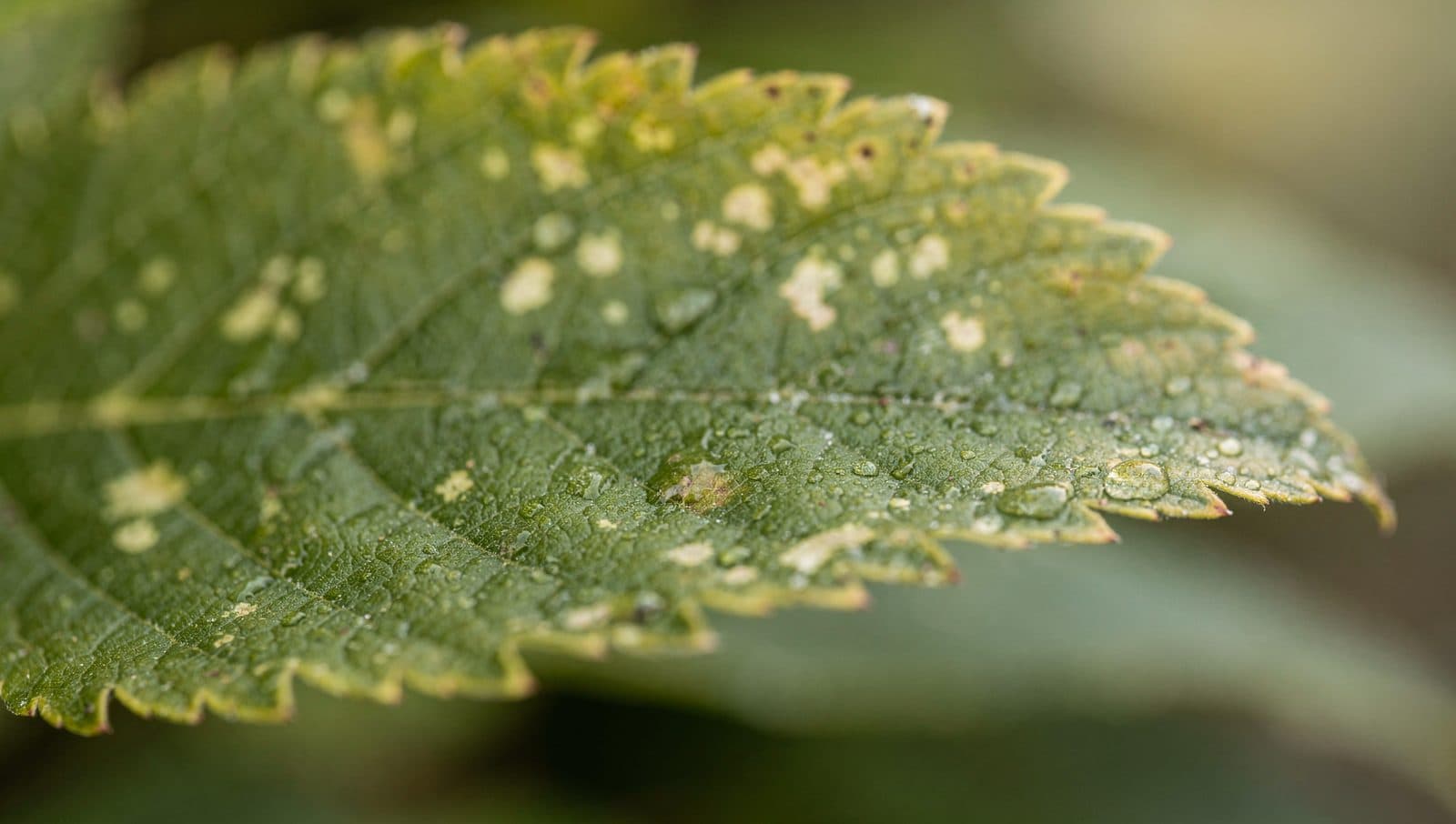
Why Are My Hydrangea Leaves Brown?
Brown hydrangea leaves are most often leaf scorch from water stress and sun — a physiological problem, not a bug — though fungal leaf spot is possible.
At a glance
- The verdict: Usually a care issue
- Who fixes it: You
- Category: Leaf-Symptom Diagnosis (pest vs disease vs care)
The short answer
Brown hydrangea foliage is most often leaf scorch: the leaves lose water faster than the roots can resupply it, usually from a combination of inadequate watering, strong sun and heat, wind, or root and salt damage. Fungal leaf-spot diseases such as Cercospora or bacterial leaf spot are a real second possibility, distinguished by discrete spots rather than margin browning. Pests like the four-lined plant bug or spider mites are the least likely cause, and they leave sunken feeding wounds or stippling rather than a scorched margin. Checking where the browning sits on the leaf — the edge versus scattered spots — is the fastest way to tell these apart.
Pest, disease, or how you're caring for it?
Most leaf problems aren't pests at all. Here's the honest split — the most likely cause, the less likely ones, and how to tell them apart before you treat anything.
- Care / environmentMost likelythe usual cause
Crisp, uniform browning concentrated along the leaf margins and tips, usually worst on the sun-exposed or top side of the plant.
Leaf scorch from inadequate watering combined with strong sun and heatWind damage increasing water lossRoot damage or salt exposure limiting water uptakeThe tell:Margin and tip browning that's uniform, crisp, and concentrated on the sunniest side of the plant, with no ringed spots or halos.
- Diseasea less common cause
Discrete, defined spots rather than edge browning, often starting on lower leaves and spreading upward in wet conditions.
Cercospora leaf spotAnthracnoseBacterial leaf spotThe tell:Spots with a defined edge or halo that start low on the plant and spread to more leaves after rain or humid weather.
- Pesta rare cause
Small, sunken, roundish brown spots or a fine stippled bronzing, concentrated where insects have been feeding.
Four-lined plant bug feeding (sunken round spots)Spider mites causing stipplingThe tell:Sunken feeding wounds or fine stippling with webbing, rather than a clean scorched margin or a spreading disease lesion.
Check where the browning sits: crisp, uniform margin and tip browning on the sunniest side of the plant means scorch. Discrete spots with a defined edge that start low and spread in wet weather mean disease. Sunken round spots or fine stippling with webbing mean a pest.
Who actually fixes this?
Start here
You
Leaf scorch, the most likely cause, is a watering and site issue you can address directly — deeper, more consistent watering and afternoon shade resolve most cases.
- Garden center — You've confirmed discrete leaf-spot lesions and want a fungicide, or you've confirmed a pest and need an insecticidal soap.
- UNH Extension — You want the specific cause confirmed rather than guessing — UNH Cooperative Extension's plant diagnostic services can help.
The details, straight
What leaf scorch actually is
WSU Hortsense describes leaf scorch plainly: it 'results when the leaves lose water faster than it can be supplied by the roots,' whether from inadequate watering, strong sun and heat, wind, or damage to the roots themselves. Hydrangeas are especially prone to this because many varieties have large, thin leaves that lose water quickly, particularly during a hot, dry stretch or when planted in a spot with more direct afternoon sun than the plant prefers. The result is crisp, brown margins and tips — uniform in shape, without the ringed spots or halos that mark a fungal lesion.
Why watering depth matters more than frequency
Shallow, frequent watering encourages roots to stay near the surface, where they dry out faster and are more vulnerable to heat stress; deep, less frequent watering encourages a more resilient root system that can better keep up with the plant's water demands during hot weather. Mulching around the base of the plant helps retain soil moisture and moderates soil temperature, and providing afternoon shade — either from nearby plantings or the natural position of the garden bed — reduces the water-loss pressure that drives scorch in the first place.
When it's a fungal leaf spot instead
Cercospora leaf spot, anthracnose, and bacterial leaf spot are all documented on hydrangea, and they present very differently from scorch: discrete, defined spots rather than edge browning, often starting on lower or older leaves and spreading upward and outward across the plant during wet or humid weather. If you see distinct spots with a visible margin or halo, rather than a uniform scorched edge, treat disease as the more likely cause and consider removing affected leaves and improving airflow around the plant as a first step.
The pest exception
Four-lined plant bug feeding leaves small, sunken, roughly round spots where the insect has punctured the leaf and fed on the cell contents underneath, which can be mistaken for either scorch or disease at a glance. Spider mites cause a different but related look — fine, pale-to-bronze stippling, usually with webbing on the leaf undersides in a heavy infestation. Both are a distant third cause for hydrangea browning and are confirmed by finding the insect, its feeding wounds, or webbing directly on the plant.
Key takeaways
- Crisp, uniform browning along the leaf edge, worst on the sunny side, is scorch — a watering and sun-exposure issue, not disease.
- Discrete spots with a defined edge that spread in wet weather point to a fungal or bacterial leaf spot instead.
- Deep, consistent watering, mulch, and afternoon shade are the practical fixes for scorch.
- Sunken round spots or fine stippling with webbing point to a pest, but this is the least likely cause.
- This is a plant-care or plant-disease question, not a pest-control question.
Not sure it's scorch or disease?
Learn the five at-home checks that separate pests, disease, and care problems before you reach for a fungicide.
See how to tell pest from diseaseA note for New Hampshire gardeners
Southern and central New Hampshire falls in USDA hardiness zones 5b–6a (per the USDA Plant Hardiness Zone Map), which sits at the cold edge for some bigleaf hydrangeas — winter dieback and spring cold snaps can stress the plant and surface later as browning or scorched foliage. Hydrangeas planted in a spot that gets more intense afternoon sun than expected are especially prone to scorch during New Hampshire's hot, humid July and August stretches, even with regular watering. If you suspect a fungal leaf spot rather than scorch, UNH Cooperative Extension's plant diagnostic services can help confirm it before you treat. Anchor Pest Services handles the structural and yard pests around your home, not the watering and siting of your hydrangeas.
NH-licensed applicator #782664 (NHDAMF, RSA 430) · NEPMA member · family-owned since 2017.
Related questions
Sources(3)
- [1]WSU Hortsense — Hydrangea: Leaf Scorch
Leaf scorch defined as water loss exceeding root supply, driven by watering, sun/heat, wind, or root damage
extensionverified 2026-07-14 - [2]University of Maryland Extension — Salt or Fertilizer Damage on Trees
Marginal browning from salt/fertilizer as a look-alike for water-stress scorch
extensionverified 2026-07-14 - [3]Connecticut Agricultural Experiment Station — Common Diseases of Maple
General leaf-spot fungal disease pattern (defined spots, wet-weather spread) as a differential against scorch
academicverified 2026-07-14
Written & reviewed by
VerifiedDaniel Brady
NH-Licensed Pesticide Applicator · License #782664 (NHDAMF, RSA 430)
Daniel Brady is the New Hampshire–licensed applicator behind Anchor Pest Services, a family-owned pest control company serving the Manchester area since 2017.
Last updated 2026-07-14
Your next question
Honest pest help for New Hampshire homes
Hydrangea Care Is Plant Care — But Your Home Is Our Job
Correcting watering and siting for a hydrangea is garden work, and we'll always tell you so. Where Anchor Pest Services genuinely helps is the pests around your home — rodents, ants, ticks, and moisture pests drawn to leaf litter and debris against the foundation. Family-owned since 2017, NH license #782664, serving Manchester, Nashua, Concord and nearby towns.
- We call hydrangea browning what it is — water, sun, or disease, not a bug
- New Hampshire license #782664 — free quotes, honest scope, no upsell
- Home and yard pest work across southern and central NH
NH License #782664 · No obligation · We answer in person
Your next step
- Book a NH pro
Pest Control Services
Licensed, family-owned pest control across southern NH.
Book now - Related guide
Why Do Leaves Get Brown Edges or Spots?
Read the answer - Related guide
What Causes Brown or Black Leaf Spots?
Read the answer - Related guide
Can Too Much Fertilizer Burn Leaves?
Read the answer - Related guide
Why Do Leaves Turn Black After Watering?
Read the answer - Related guide
Why Do Leaves Fall Off Suddenly?
Read the answer