
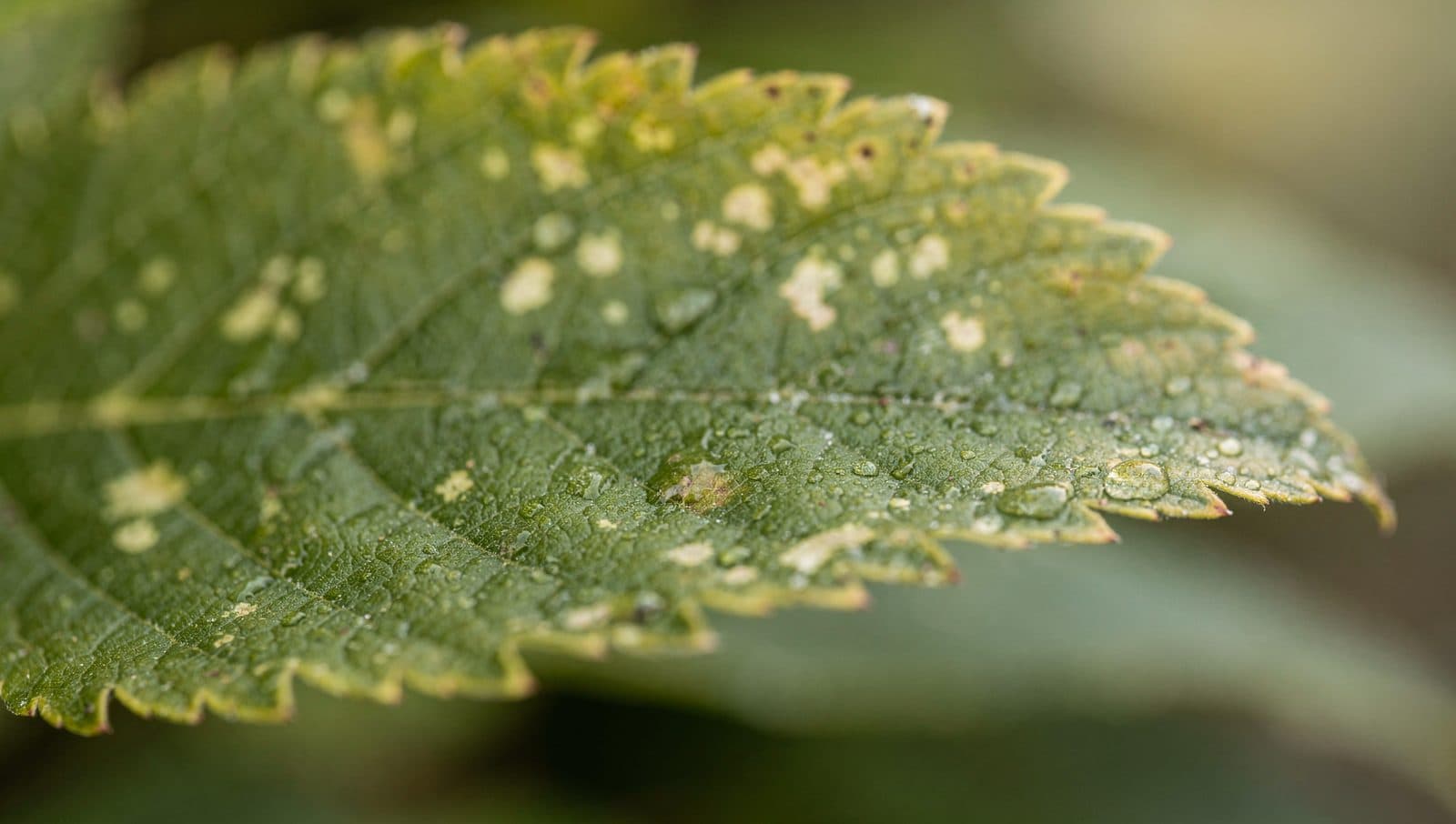
Why Are My Leaves Curling or Wilting?
Curling and wilting are a plant's stress signal — most often water stress, sometimes sap-sucking pests riding new growth, and occasionally a vascular disease — so probe the soil before you reach for anything else.
At a glance
- The verdict: Usually water stress, but check the tips first
- Who fixes it: You
- Category: Leaf-Symptom Diagnosis (pest vs disease vs care)
The short answer
Curling or wilting leaves are a general distress signal, not a specific diagnosis, and the honest split leans cultural: about half the time it's water stress (too much or too little), heat, wind, or herbicide drift. Roughly three in ten cases trace to aphids or mites clustered on tender new growth, distorting it as they feed. The rest are vascular diseases like Verticillium or Fusarium wilt, or a virus, which tend to show up one-sided with internal streaking. Start by checking soil moisture and flipping the newest leaves before assuming it's a bug.
Pest, disease, or how you're caring for it?
Most leaf problems aren't pests at all. Here's the honest split — the most likely cause, the less likely ones, and how to tell them apart before you treat anything.
- Care / environmentMost likelythe usual cause
Uniform curling or drooping across the plant, sometimes worse in the afternoon heat and recovering by morning; can also follow herbicide drift or root disturbance.
Overwatering or underwateringHeat and wind stressHerbicide driftRoot damage from digging or compactionThe tell:Probe the soil — bone-dry or waterlogged both explain it. Drift damage often shows a directional pattern (worse on the side facing the source).
- Pesta less common cause
Curling concentrated on the newest growth and shoot tips, sometimes with a sticky honeydew film or visible clusters of small soft-bodied insects.
AphidsSpider mitesBroad mites on tender new leavesThe tell:Flip the newest leaves and check the growing tips — live insects, stippling, or fine webbing point to a pest, not water.
- Diseasea rare cause
Wilting that starts on one side of the plant or one branch, with leaves that stay wilted even after watering.
Verticillium wiltFusarium wiltPlant viruses (mosaic patterns)The tell:Cut a wilting stem — dark streaking in the internal tissue (vascular staining) points to a wilt disease, not a watering problem.
Check the soil first — if it's soggy or bone-dry, that's your answer. If the soil moisture looks normal, flip the newest leaves for pests. If wilting is one-sided and persists after watering, slice a stem and look for internal discoloration; that's a job for a diagnostic lab, not a spray.
These three causes overlap in practice — a plant stressed by poor watering is also more vulnerable to mites, and severe pest pressure can itself cause wilting. Treat the attribution as a starting point for triage, not a single verdict.
Who actually fixes this?
Start here
You
Most curling and wilting traces back to a watering, heat, or care issue that the plant's owner controls directly — check the soil before treating anything.
- Garden center — You find aphids or mites on the new growth — an insecticidal soap or horticultural oil, applied to leaf undersides, is the standard fix.
- UNH Extension — Wilting is one-sided and persists after watering, or you find dark streaking inside a cut stem — that needs a diagnostic lab, not a guess.
The details, straight
Why water stress is the leading cause
Leaves curl or droop as a defense mechanism — reducing the surface area exposed to sun and wind cuts water loss when a plant can't keep up with demand. That happens with both underwatering (roots simply can't supply enough water) and overwatering (saturated soil damages roots and cuts off their ability to take up water at all), which is why curling can show up even in soil that looks plenty wet. Heat, wind, and recent herbicide drift onto a plant you didn't mean to spray can produce a similar look. The fastest check is the soil itself: dry and crumbling, or soggy and heavy, either one explains the symptom without any pest or pathogen involved.
When it's a pest riding the new growth
Aphids and spider mites both prefer the softest, newest leaves, and their feeding distorts tissue as it expands, which reads as curling. Aphids cluster visibly at shoot tips and leaf undersides and often leave a sticky honeydew residue; mites are harder to see but leave fine stippling and webbing on the underside of curled leaves. Because they concentrate on new growth rather than the whole plant, pest-driven curling tends to look patchier and more localized than the uniform droop of water stress.
The disease possibility — and why it needs a lab, not a spray
Vascular wilt diseases like Verticillium and Fusarium invade a plant's water-conducting tissue and block it from the inside, so leaves wilt even when soil moisture is fine — often starting on one side of the plant or a single branch. Cutting into a wilting stem and finding brown or greenish streaking under the bark is the classic tell. There's no home fix for a confirmed vascular wilt; it calls for a diagnostic lab to confirm the pathogen and, for a tree or shrub, an ISA-certified arborist to advise on the plant's prognosis.
The at-home check, in order
Work through it in three steps: soil moisture first (most cases end here), then the newest leaves for pests, then — only if wilting persists on one side despite normal watering — a stem cut for vascular staining. Skipping straight to a spray before checking water is the single most common misstep on this symptom, and it's why curling/wilting questions rarely have one clean answer.
Key takeaways
- About half of curling/wilting cases are water stress — too much or too little, plus heat, wind, or herbicide drift.
- Roughly three in ten trace to aphids or mites feeding on tender new growth, distorting it as it expands.
- The remainder are vascular wilt diseases or viruses, usually one-sided with internal stem staining — a lab job, not a spray.
- Check soil moisture first, then flip the newest leaves for pests, then cut a stem only if wilting persists despite normal watering.
- There's no single verdict here — treat the attribution as a triage starting point, not a diagnosis.
Not sure if it's water, a bug, or something worse?
The three-step check — soil, new growth, then the stem — sorts most curling and wilting cases without guesswork.
See the full pest-vs-disease triageA note for New Hampshire gardeners
Curling and wilting are plant-care and diagnostic questions, and UNH Cooperative Extension's Ask UNH Extension Infoline (1-877-EXT-GROW) is a free resource for talking through the pattern before you assume the worst. If it looks like a vascular wilt (one-sided, internal staining), UNH's Plant Diagnostic Lab has at times referred physical samples to the University of Maine or Cornell diagnostic clinics — worth checking current status before you send anything in. Anchor Pest Services focuses on the structural and yard pests around your home, not the leaves on your plants, but we're glad to point you toward the right resource.
NH-licensed applicator #782664 (NHDAMF, RSA 430) · NEPMA member · family-owned since 2017.
Related questions
Sources(3)
- [1]University of Maryland Extension — Nutrient Deficiency of Trees and Shrubs
Water/nutrient-driven leaf stress patterns and diagnostic approach
extensionverified 2026-07-14 - [2]UC Statewide IPM Program — Spider Mites
Spider mite feeding causes stippling/curling on new growth; water-stress link
extensionverified 2026-07-14 - [3]MSU Extension — Verticillium Wilt Refresher
One-sided wilt with internal vascular staining, requires lab confirmation
extensionverified 2026-07-14
Written & reviewed by
VerifiedDaniel Brady
NH-Licensed Pesticide Applicator · License #782664 (NHDAMF, RSA 430)
Daniel Brady is the New Hampshire–licensed applicator behind Anchor Pest Services, a family-owned pest control company serving the Manchester area since 2017.
Last updated 2026-07-14
Your next question
Honest pest help for New Hampshire homes
Curling Leaves Are Plant Care — Your Home Is Our Job
Diagnosing a curling houseplant or garden leaf is horticulture, and we'll say so plainly. Where Anchor Pest Services genuinely helps is the pests around your home — rodents, ants, ticks, and moisture pests drawn to leaf litter and debris against the foundation. Family-owned since 2017, NH license #782664, serving Manchester, Nashua, Concord and nearby towns.
- Curling and wilting is usually care, not pests — and we'll tell you so
- State-licensed in NH (#782664) — free estimate and prompt scheduling
- Structural and yard pests around the home — southern and central New Hampshire
NH License #782664 · No obligation · We answer in person
Your next step
- Book a NH pro
Pest Control Services
Licensed, family-owned pest control across southern NH.
Book now - Related guide
Why Are Citrus Leaves Curling?
Read the answer - Related guide
Can Overwatering Make Leaves Unhealthy?
Read the answer - Related guide
Why Do Leaves Turn Black After Watering?
Read the answer - Related guide
Are Yellowing Leaves Always a Disease?
Read the answer - Related guide
Why Are the Leaves on My Plants Turning Yellow?
Read the answer