
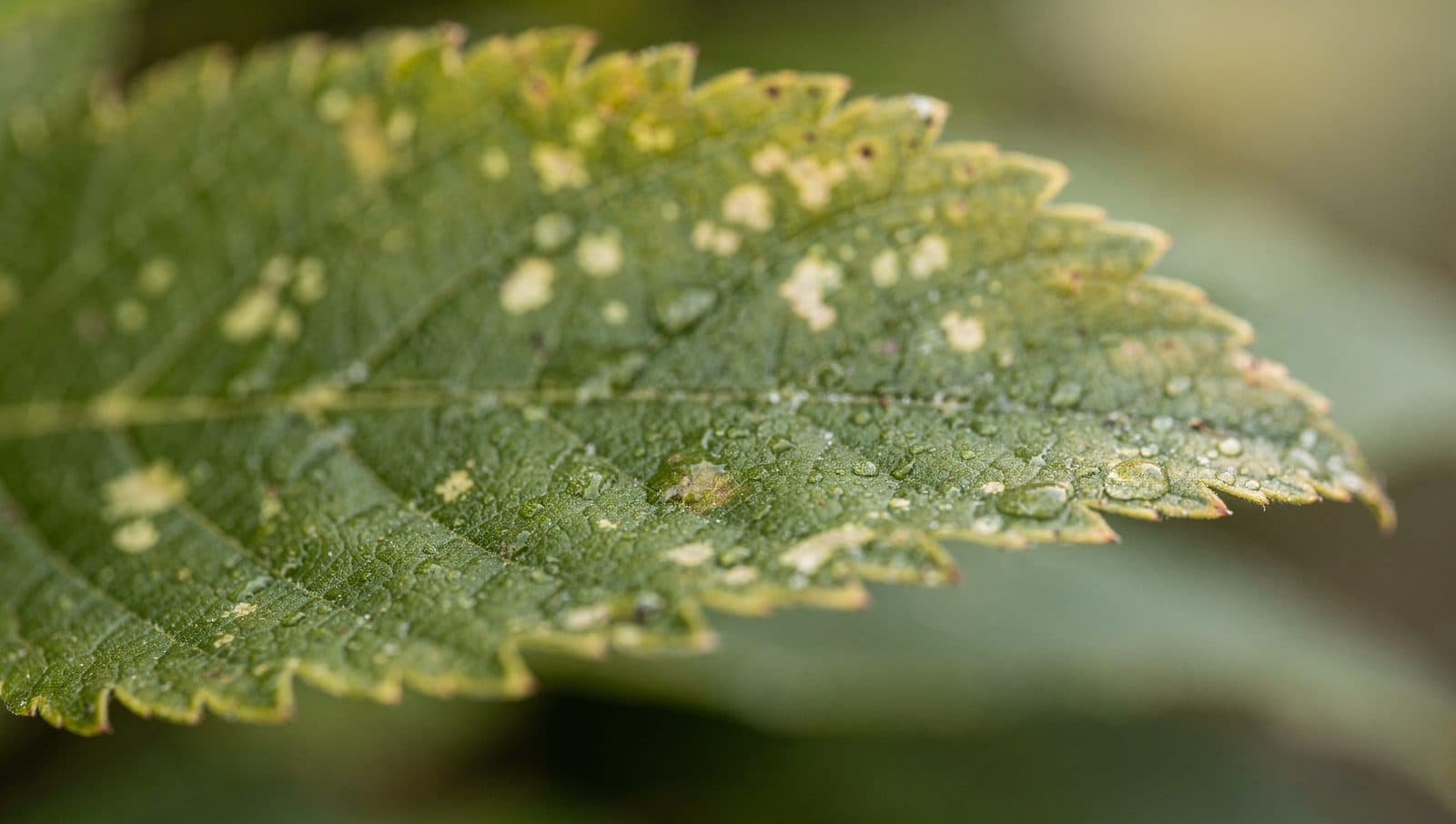
Why Are Citrus Leaves Curling?
Curling citrus leaves are most often sap-sucking pests like aphids, but water stress and cold run a close second, so check the new growth and the soil before you treat anything.
At a glance
- The verdict: Mixed — pest and cultural run close
- Who fixes it: You
- Category: Leaf-Symptom Diagnosis (pest vs disease vs care)
The short answer
Citrus leaf curl doesn't have one dominant cause the way some leaf symptoms do. Sap-sucking pests, especially aphids clustering on tender new shoots, are the single most common culprit, and they leave honeydew and visible insects behind. Water stress, whether drought, overwatering and poor drainage, nutrient deficiency, or a recent cold snap, runs a close second and causes a similar inward curl without any insects present. Fungal or bacterial disease is possible but less common, usually alongside visible spots or lesions. Inspect the new growth and check the soil moisture before assuming either bucket; on citrus, both are genuinely common enough that you need to actually look rather than guess.
Pest, disease, or how you're caring for it?
Most leaf problems aren't pests at all. Here's the honest split — the most likely cause, the less likely ones, and how to tell them apart before you treat anything.
- PestMost likelythe usual cause
New shoots and young leaves distorted and curled, often with a sticky honeydew film, ants patrolling the stems, or a silvery, snaking trail across the leaf surface.
Aphids clustering on tender new growthSpider mitesCitrus leaf miner (silvery serpentine tunnels)PsyllidsThe tell:Check the newest shoots and leaf undersides for clusters of small insects, honeydew, or ant activity; citrus leaf miner leaves a distinctive silvery squiggle across the leaf.
- Care / environmenta less common cause
A more uniform, whole-plant curl that rolls the leaf inward to conserve water, with no insects present, often paired with dry or waterlogged soil or a recent cold spell.
Drought or heat stressOverwatering or poor drainageNutrient deficiencyRecent cold exposureThe tell:Probe the soil moisture and think back over recent temperature swings; the curl is uniform across the plant rather than concentrated on new growth.
- Diseasea rare cause
Curling accompanied by other visible symptoms such as leaf spots, lesions, or dieback, rather than curling as the only sign.
Fungal leaf-spot diseasesBacterial infectionsThe tell:Look for spots, lesions, or discoloration accompanying the curl; disease-driven curl is rarely the only symptom present.
Start at the newest growth: aphids, mites, and leaf miner are found there first, along with honeydew, ants, or the leaf miner's silvery trail. If the newest shoots are clean of insects, check the soil moisture and recall any recent cold snap or feeding change; a uniform curl with dry or soggy soil and no pests points to water or nutrient stress instead.
On citrus specifically, pest and cultural causes are close enough in frequency that assuming one without checking the new growth and the soil is a common mistake.
Who actually fixes this?
Start here
You
The first step either way is a two-part check you can do yourself: inspect the newest leaves for insects and honeydew, then check the soil moisture and recent temperature history, before treating anything.
- Garden center — You confirm aphids, mites, or another sap-sucking pest and want an insecticidal soap or horticultural oil labeled for citrus.
- UNH Extension — You can't tell pests from a watering or nutrient problem, or you suspect a citrus disease.
The details, straight
Why aphids and other pests are the single most common cause
University of Hawaii's cooperative extension notes that curling citrus leaves are most commonly caused by the presence of aphids, which cluster on tender new shoots, feed by piercing the tissue, and cause the leaf to curl and distort as it grows around the feeding damage. Spider mites and citrus leaf miner produce a similar curling effect: mites through fine stippling and webbing, and leaf miner through visible silvery, winding tunnels just under the leaf surface that pucker and curl the leaf as they develop. All three are visible on close inspection of new growth, and honeydew or ant activity is a strong additional clue for aphids specifically.
Why water and temperature stress look almost identical
Citrus responds to both drought and waterlogging with a similar inward leaf curl, since the plant is trying to reduce water loss through the leaf surface either because it can't find enough water in dry soil or because damaged, oxygen-starved roots in soggy soil can't take up the water that's there. A sudden cold snap can trigger the same protective curling response even when soil moisture is fine. Extension guidance on citrus consistently flags overwatering, poor drainage, and nutrient or salt stress as major contributors to citrus foliage problems, alongside pest damage, which is exactly why this symptom sits in the mixed category rather than leaning cleanly to one bucket.
What to actually do about it
Start by looking closely at the newest growth for insects, webbing, honeydew, or the leaf miner's silvery trail. If you find pests, an insecticidal soap or horticultural oil labeled for citrus, applied to leaf undersides and out of direct hot sun, is the standard garden-center fix. If the new growth is clean, check the soil: let it dry appropriately between waterings if it's staying soggy, or water more consistently if it's bone dry, and consider whether a recent cold night lines up with the curling. If neither check gives you a clear answer, or you also see leaf spots or dieback, that's worth a call to UNH Cooperative Extension before you spray anything.
Key takeaways
- Curling citrus leaves split close to evenly between pests (mainly aphids) and water or temperature stress.
- Aphids, mites, and citrus leaf miner concentrate on new growth and leave visible insects, honeydew, or a silvery trail.
- Water and cold stress cause a more uniform curl with no insects present.
- Check the newest shoots first, then the soil moisture, before treating anything.
- This is a garden-center and home-inspection job, not structural pest control.
Pest or watering problem? Check the new growth first.
Citrus leaf curl is one of the few symptoms where pest and cultural causes run neck and neck. Inspect the newest shoots and the soil before you treat.
See the full pest-vs-disease-vs-care triageA note for New Hampshire citrus growers
Citrus isn't winter-hardy anywhere in New Hampshire — the state's USDA zones 5b–6a (per the USDA Plant Hardiness Zone Map) are far below what citrus tolerates — which is exactly why it's grown here in containers that overwinter indoors, concentrating the cold-stress and light-change curling described below. Citrus in New Hampshire is almost always grown in containers that move indoors for winter, which makes cold-stress curling especially common right around the first frost window in Manchester, roughly October 19 to 29 per NOAA-based climate normals, and again in early spring when plants move back outside too soon. If curling shows up right after a move indoors or outdoors, weigh that temperature and light change heavily before assuming pests. UNH Cooperative Extension's Ask UNH Extension Infoline (1-877-EXT-GROW) is a free resource for confirming a suspected pest or nutrient problem on container citrus.
NH-licensed applicator #782664 (NHDAMF, RSA 430) · NEPMA member · family-owned since 2017.
Related questions
Sources(2)
- [1]University of Hawaii CTAHR Master Gardeners — Citrus Problems: Leaf Curling
Aphids as the most likely cause of curling citrus leaves
extensionverified 2026-07-14 - [2]UC Master Gardeners of San Luis Obispo County — Yellow Citrus Leaves
Overwatering, poor drainage, and nutrient/salt stress as major citrus foliage stressors
extensionverified 2026-07-14
Written & reviewed by
VerifiedDaniel Brady
NH-Licensed Pesticide Applicator · License #782664 (NHDAMF, RSA 430)
Daniel Brady is the New Hampshire–licensed applicator behind Anchor Pest Services, a family-owned pest control company serving the Manchester area since 2017.
Last updated 2026-07-14
Your next question
Honest pest help for New Hampshire homes
Citrus Care Is Garden Work — But Your Home Is Our Job
Curling citrus leaves are a garden-center and container-care question, and we'll always say so rather than oversell a treatment you don't need. Where Anchor Pest Services genuinely helps is the pests around your home: rodents, ants, ticks, and moisture pests drawn to leaf litter and debris against the foundation. Family-owned since 2017, NH license #782664, serving Manchester, Nashua, Concord and nearby towns.
- Potted citrus questions get routed to the right resource, not a truck roll
- NH-licensed (#782664) — free assessment, same-day service when it's ours
- Yard and structural pest control from Nashua to Concord and nearby towns
NH License #782664 · No obligation · We answer in person
Your next step
- Related guide
Why Are My Leaves Curling or Wilting?
Read the answer - Related guide
Can Too Much Fertilizer Burn Leaves?
Read the answer - Related guide
Why Are Tree Leaves Dropping Early?
Read the answer - Related guide
How Often Should I Treat Leaves for Pests?
Read the answer - Related guide
Why Do Leaves Turn Black After Watering?
Read the answer