
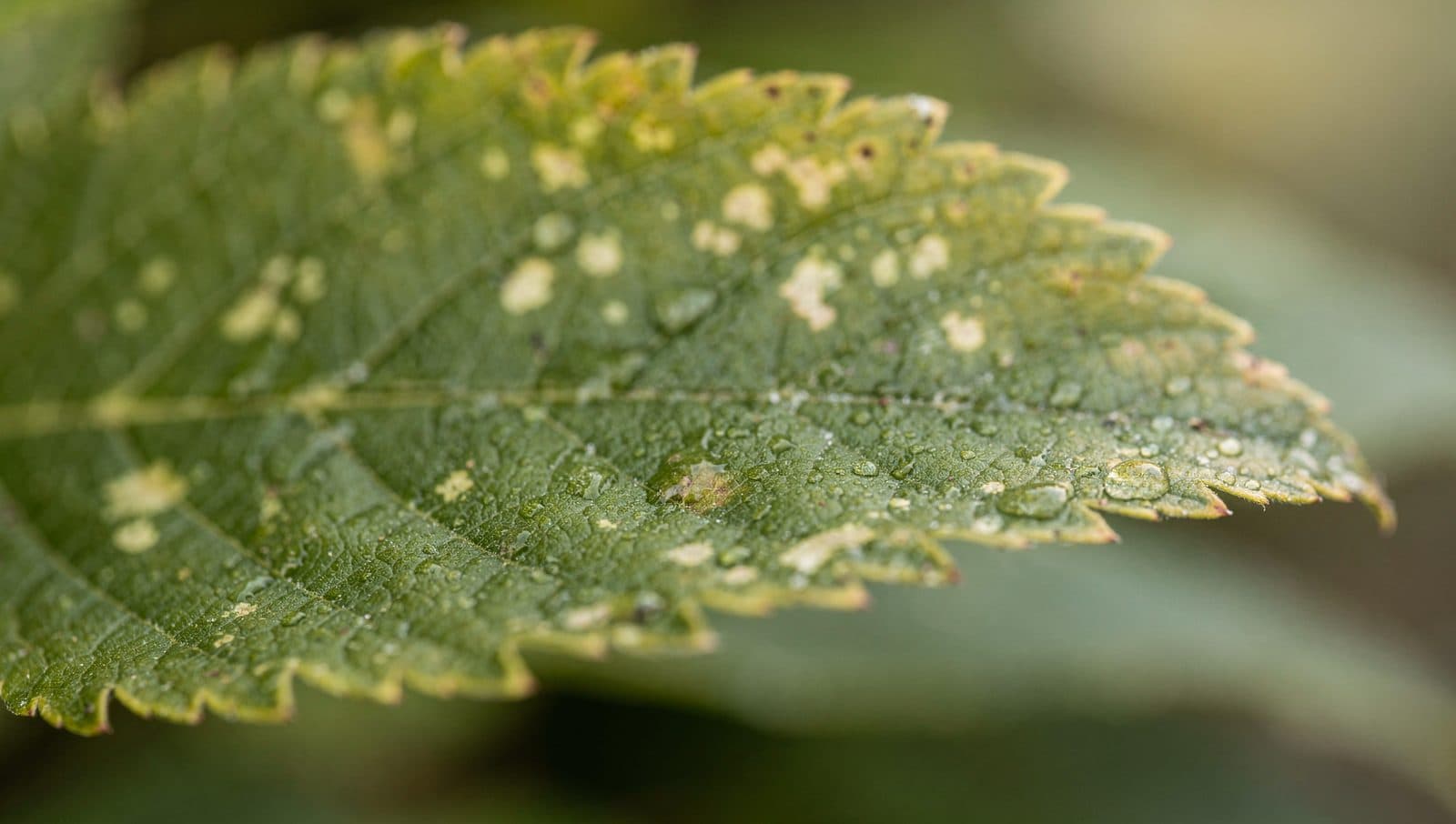
Why Are My Maple Tree Leaves Spotted?
Spotted maple leaves are almost always a fungal disease — most often tar spot, sometimes anthracnose — and for most maples it's cosmetic and doesn't threaten the tree's health.
At a glance
- The verdict: Almost always a disease — usually harmless
- Who fixes it: You
- Category: Leaf-Symptom Diagnosis (pest vs disease vs care)
The short answer
Yes, this one really is mostly a disease, and the good news is it's usually not serious. Maple tar spot is the most common cause: raised, black, tar-like spots up to about an inch or more across, often ringed with a yellow halo, showing up in late summer. University of Wisconsin Extension is direct about it — for most maples, tar spot 'is not a serious disease' and 'does not kill trees or shrubs.' Maple anthracnose is the other common fungal cause, producing irregular brown patches along the veins, usually after a cool, wet spring, and it can occasionally cause twig dieback worth an arborist's attention. The fix for both is fall leaf cleanup, not a spray.
Pest, disease, or how you're caring for it?
Most leaf problems aren't pests at all. Here's the honest split — the most likely cause, the less likely ones, and how to tell them apart before you treat anything.
- DiseaseMost likelythe usual cause
Raised, black, tar-like spots up to roughly an inch or more across, often with a yellow halo, appearing in mid-to-late summer (tar spot); or irregular tan-to-brown patches that follow the leaf veins, appearing in a cool, wet spring, sometimes with twig dieback (anthracnose).
Maple tar spot (Rhytisma species)Maple anthracnosePhyllosticta or Septoria leaf spotThe tell:Try to wipe the spot off — tar spot and anthracnose lesions are embedded in the leaf tissue and won't rub off, unlike a residue or mold sitting on the surface.
- Care / environmenta less common cause
Browning or scorched patches that follow sun exposure or leaf margins rather than appearing as discrete round or vein-following spots, sometimes from de-icing salt or drought.
Leaf scorch from drought or heatSalt damage near a roadside or drivewaySunscaldThe tell:The pattern follows exposure — margins, the sun-facing side of the canopy, or proximity to a salted walkway — rather than random or vein-following spotting.
- Pesta rare cause
Fine stippling or bronzing across the leaf surface, sometimes with fine webbing on the undersides, rather than distinct dark spots.
Spider mitesLace bugsThe tell:Check leaf undersides for stippling and webbing — this looks like fine speckling rather than the raised black spots or vein-following patches of the fungal diseases.
Raised black spots with a yellow halo, appearing by late summer and not wiping off, are tar spot — cosmetic and low-concern on most maples. Irregular brown patches that follow the leaf veins, appearing after a cool wet spring and possibly paired with twig dieback, are anthracnose and warrant a closer look, especially if dieback continues. Scorched margins or sun-side browning are cultural, not fungal.
Tar spot and anthracnose can occur on the same tree in the same season, and a wet spring followed by a normal summer can produce both — sanitation (raking and disposing of fallen leaves) is the shared fix for both diseases.
Who actually fixes this?
Start here
You
Fall sanitation — raking up and disposing of fallen, infected leaves rather than leaving them to overwinter under the tree — is the standard, extension-recommended response and is well within a homeowner's ability; fungicide treatment of a large, mature tree is rarely necessary or practical for tar spot.
- Certified arborist — You're seeing anthracnose-pattern spotting with actual twig dieback, or the tree's overall health looks concerning beyond cosmetic leaf spots — an ISA-certified arborist can assess whether treatment is warranted.
- UNH Extension — You want the spot confirmed as tar spot vs. anthracnose vs. something else, or you're unsure whether dieback is serious — UNH Extension's diagnostic services can help.
The details, straight
Tar spot: the most likely explanation, and mostly cosmetic
Maple tar spot, caused by fungi in the Rhytisma genus, produces raised, black, tar-like spots that can grow up to roughly three-quarters of an inch to an inch and a half across, often with a yellow halo, developing as the season progresses into late summer. It looks dramatic — heavily infected leaves can be covered with dozens of spots — but University of Wisconsin Horticulture Extension is unambiguous that for most maples, tar spot 'is not a serious disease' and 'does not kill trees or shrubs.' Michigan State and University of Maine Extension agree it's primarily a cosmetic concern that alarms homeowners more than it threatens the tree.
Anthracnose: less common, but worth a closer look
Maple anthracnose shows up differently — irregular, tan-to-brown necrotic patches that tend to follow the leaf veins, typically appearing after a cool, wet spring that favors the fungus. Unlike tar spot, anthracnose can occasionally cause twig dieback in addition to leaf spotting, which is the point where it's worth a closer look rather than assuming it's purely cosmetic. Extension sources treat anthracnose as generally manageable on an established, otherwise healthy tree, but repeated dieback over multiple seasons is a reason to bring in an arborist.
Why the fix is raking, not spraying
Both tar spot and anthracnose fungi overwinter in fallen, infected leaves and release spores the following spring to reinfect new growth. That life cycle is exactly why extension sources across multiple states — Michigan State, University of Wisconsin, University of Maine, Iowa State — all emphasize fall sanitation over fungicide: raking up and disposing of (or hot-composting) fallen leaves in autumn reduces the following year's spore load far more practically than spraying a large, mature tree, which is difficult to do thoroughly and rarely justified for a cosmetic disease.
Ruling out the look-alikes
Because tar spot and anthracnose lesions are embedded in the leaf tissue itself, they won't wipe off — that's the quickest way to distinguish them from something like sooty mold sitting on the surface of a sticky, honeydew-coated leaf, which does wipe away. Cultural scorch and salt damage tend to follow a leaf's margin or the sun-exposed side of the canopy rather than appearing as discrete spots, and pest-driven stippling from mites or lace bugs looks like fine speckling rather than the larger, defined lesions of a fungal disease.
Key takeaways
- Spotted maple leaves are almost always fungal — most often tar spot, sometimes anthracnose — not a pest problem.
- Tar spot produces raised black spots with a yellow halo by late summer and, per University of Wisconsin Extension, 'is not a serious disease' for most maples.
- Anthracnose follows leaf veins, appears after a cool wet spring, and can occasionally cause twig dieback worth an arborist's attention.
- Both fungi overwinter in fallen leaves — raking and disposing of them each fall is the standard fix, not a fungicide spray.
- Spots that wipe off (sooty mold) or follow leaf margins/sun exposure (cultural scorch) are the honest look-alikes to rule out first.
Rake, don't spray, for most maple leaf spots
Tar spot and anthracnose both overwinter in fallen leaves — fall cleanup is the honest, extension-recommended fix.
See the full pest-vs-disease triageA note for New Hampshire maple owners
Maples are among the most common shade and street trees across Manchester, Nashua, and Concord, and tar spot is a familiar late-summer sight on them in New England's humid climate. UNH Cooperative Extension and University of Maine Extension both cover tar spot as a regional, largely cosmetic concern; the Ask UNH Extension Infoline (1-877-EXT-GROW) is a free resource if you want a specific ID or want to confirm anthracnose versus tar spot. Anchor Pest Services focuses on the structural and yard pests around your home, not fungal leaf disease, but we're glad to point you to the right resource — and fall leaf cleanup around your foundation is one place our work and this one actually overlap, since leaf litter against the house can also harbor rodents and moisture pests.
NH-licensed applicator #782664 (NHDAMF, RSA 430) · NEPMA member · family-owned since 2017.
Related questions
Sources(4)
- [1]University of Wisconsin Horticulture — Tar Spot of Trees and Shrubs
Tar spot is cosmetic and does not kill trees or shrubs for most maples
extensionverified 2026-07-14 - [2]University of Maine Cooperative Extension — Tar Spot Fungus
Tar spot and anthracnose biology and regional New England context
extensionverified 2026-07-14 - [3]Michigan State University Extension — Black Polka Dots on Maple: Tar Spot
Fall leaf sanitation as the standard homeowner response to tar spot
extensionverified 2026-07-14 - [4]Michigan State University Extension — Maple Anthracnose
Anthracnose symptoms, vein-following pattern, and potential for twig dieback
extensionverified 2026-07-14
Written & reviewed by
VerifiedDaniel Brady
NH-Licensed Pesticide Applicator · License #782664 (NHDAMF, RSA 430)
Daniel Brady is the New Hampshire–licensed applicator behind Anchor Pest Services, a family-owned pest control company serving the Manchester area since 2017.
Last updated 2026-07-14
Your next question
Honest pest help for New Hampshire homes
Maple Leaf Spots Are a Fungus — Your Home Is Our Job
Tar spot and anthracnose are fungal leaf diseases, not a pest problem, and we'll say so plainly. Where Anchor Pest Services genuinely helps is the pests around your home — rodents, ants, ticks, and moisture pests drawn to leaf litter and debris against the foundation, which is exactly where that fall maple-leaf cleanup pays double duty. Family-owned since 2017, NH license #782664, serving Manchester, Nashua, Concord and nearby towns.
- We call maple leaf spot a fungal disease — the fix is raking, not spraying
- Licensed and insured in New Hampshire (#782664) — free, honest quote
- Manchester-area and central New Hampshire structural and yard pest control
NH License #782664 · No obligation · We answer in person
Your next step
- Book a NH pro
Pest Control Services
Licensed, family-owned pest control across southern NH.
Book now - Related guide
Why Are There Black Dots or Mold on My Leaves?
Read the answer - Related guide
What Insects Live on Tree Leaves?
Read the answer - Related guide
How Often Should I Inspect Tree Leaves?
Read the answer - Related guide
Why Do Leaves Get Sticky Under Trees?
Read the answer - Related guide
Why Are Leaves on One Side of a Tree Dying?
Read the answer