
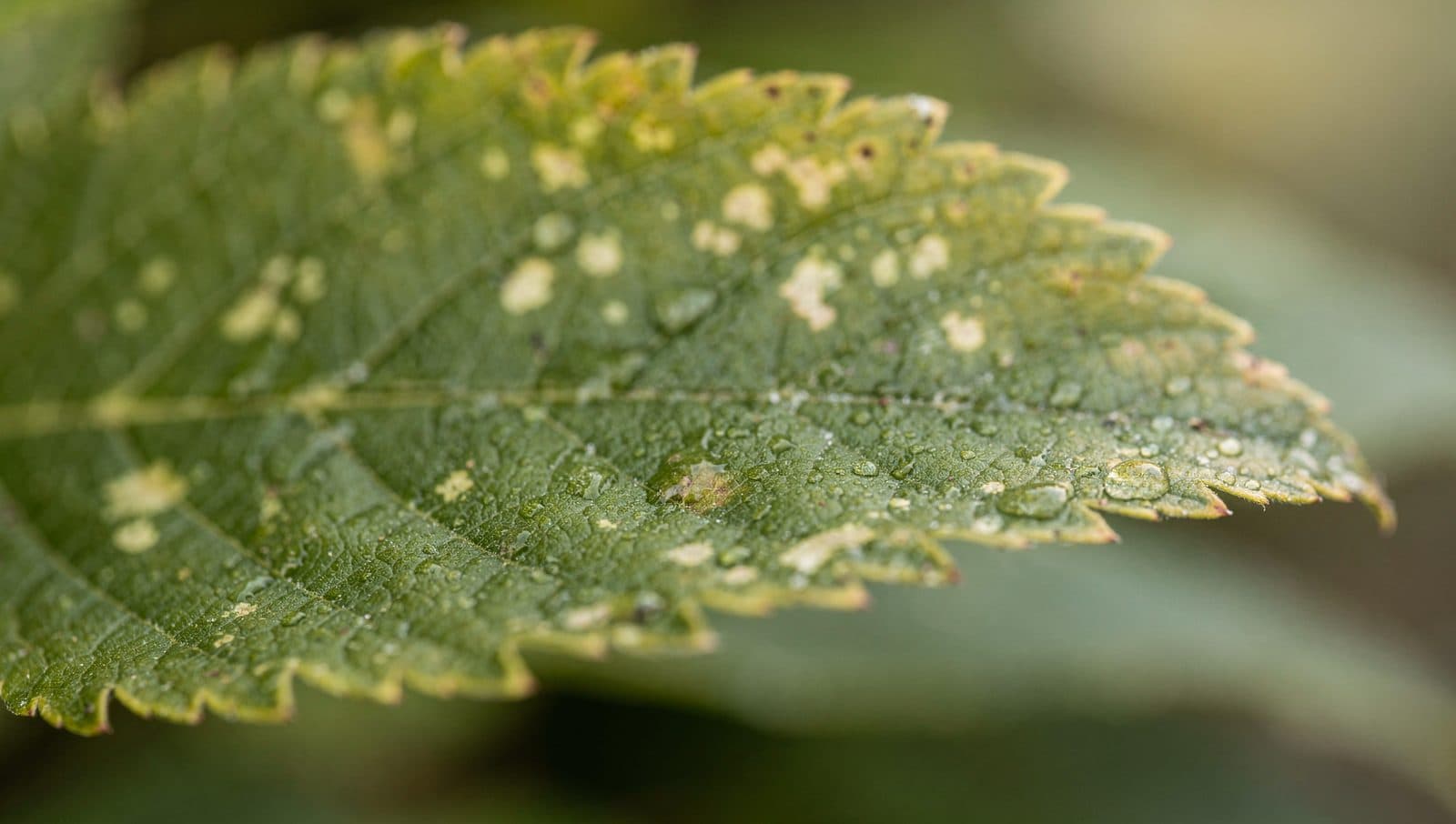
Why Do New Leaves Die Before They Grow?
When the newest growth dies at the tip, the usual culprit is a calcium or boron problem at the growing point — driven by inconsistent watering — not a bug.
At a glance
- The verdict: Usually a care issue
- Who fixes it: You
- Category: Leaf-Symptom Diagnosis (pest vs disease vs care)
The short answer
New leaves dying before they fully form is most often a growing-point disorder tied to calcium or boron, and the real root cause is usually erratic watering rather than a true soil shortage of either nutrient — both elements move through the plant with water, so uneven watering interrupts delivery to the youngest, fastest-growing tissue. Root rot or a crown/tip blight from overwatering is the leading disease look-alike, since damaged roots can't deliver nutrients either. Pests like aphids, mites, or borers deforming tender new growth are the least likely cause, and they're usually visible on the tip itself. Watering consistency is the single highest-leverage fix here.
Pest, disease, or how you're caring for it?
Most leaf problems aren't pests at all. Here's the honest split — the most likely cause, the less likely ones, and how to tell them apart before you treat anything.
- Care / environmentMost likelythe usual cause
The very newest tissue — the growing tip or the youngest unfurled leaves — blackens, curls, or dies first, while older leaves stay normal.
Calcium deficiency at the growing point (the same family of disorder as blossom-end rot and tipburn)Boron deficiency, which can make new growth blacken and rot at the tipErratic or inconsistent watering, the real driver behind most of these deficienciesTransplant or repotting shock and root damageThe tell:Damage concentrated on the newest growth, paired with a recent history of inconsistent watering — letting the plant dry out between heavy waterings rather than watering evenly.
- Diseasea less common cause
New-growth death paired with root or crown symptoms elsewhere on the plant, rather than an isolated tip problem.
Root rot following overwateringCrown or tip blight pathogensThe tell:Check the roots — mushy, brown, foul-smelling roots point to rot rather than a nutrient-delivery problem at the tip.
- Pesta rare cause
Distorted, stunted, or dying new growth with insects visibly present on the tender tissue.
Aphids or mites clustering and feeding on tender new growthBorers damaging a stem or shoot near the tipThe tell:Flip the new growth and look for pests directly on the tip — a nutrient-driven dieback rarely comes with visible insects.
Damage concentrated on the newest tissue with a recent history of inconsistent watering points to a calcium or boron problem. Check the roots for rot if the whole plant seems to be struggling, not just the tip. Flip the new growth for pests before assuming it's a nutrient issue — a genuine deficiency dieback usually shows up without any insects present.
Who actually fixes this?
Start here
You
This pattern is driven overwhelmingly by watering consistency, which is something you control directly — steady, even watering resolves most cases without any product.
- Garden center — You want a calcium or boron amendment to rule out an actual soil-level shortage, though watering consistency should be corrected first.
- UNH Extension — You want to confirm a true nutrient deficiency in the soil rather than a watering-delivery problem — UNH Cooperative Extension offers soil testing.
The details, straight
Why the newest growth is the first to fail
Calcium and boron are both delivered to the plant through water moving up from the roots, and both are needed most at the growing point — the actively dividing, fastest-growing tissue at a shoot tip or new leaf. Cornell Cooperative Extension explains that disorders in this family are caused by calcium deficiencies at the growing point, but notes that the true culprit is typically not a calcium deficiency in the soil itself — the soil usually has enough calcium — but rather erratic watering that interrupts the steady flow needed to carry it to the tip. That's why the newest, most calcium-hungry tissue is the first and often only part of the plant to show damage.
Boron and the classic 'growing point dies' pattern
Boron plays a similar role to calcium in supporting new cell growth, and a deficiency shows up in an equally distinctive way. University of Minnesota Extension describes the pattern plainly: with boron deficiency, 'the new leaves in the growing point may turn black and rot.' Like calcium, boron uptake depends on consistent water movement through the plant, so the practical fix overlaps heavily with fixing calcium-delivery problems — steady, even watering rather than a feast-or-famine cycle of drought followed by heavy watering.
Ruling out root rot and transplant shock
If new-growth death is happening alongside other signs of a struggling plant — wilting, yellowing, or a general decline rather than just a dead tip — check the roots. Overwatering can trigger root or crown rot, and a plant with damaged roots can't deliver water (or the calcium and boron it carries) to the growing point regardless of soil nutrient levels. A recent transplant or repotting can also shock a plant enough to affect new growth temporarily, though this is less specifically documented for new-leaf death than for general leaf drop; give a recently transplanted or repotted plant time and steady care before assuming a deeper problem.
When it's actually a pest
Aphids and mites are drawn to tender new growth precisely because it's the softest, most nutrient-rich tissue on the plant, and heavy feeding can distort or stunt a new shoot enough that it looks like it's dying rather than growing. Borers tunneling into a stem near the tip can cause similar dieback. The distinguishing feature is visibility: a pest-driven dieback almost always comes with the insect itself, sticky honeydew, or visible tunneling somewhere on or near the affected tissue, while a calcium or boron problem shows up with no insects at all.
Key takeaways
- New-growth dieback usually traces to calcium or boron delivery, and the root cause is almost always erratic watering, not a true soil shortage.
- The tell is location: damage concentrated on the newest tip, with older leaves normal, points to this cultural pattern.
- Steady, even watering is the single highest-leverage fix — more consistent than adding fertilizer.
- Check the roots if the whole plant seems to be struggling, not just the growing tip — that points toward rot instead.
- Pests are the least likely cause and are almost always visible on the affected tissue itself.
Not sure it's watering?
Learn the five at-home checks that separate pests, disease, and care problems before you add a fertilizer or spray.
See how to tell pest from diseaseA note for New Hampshire gardeners
New Hampshire's summer weather swings between hot, dry stretches and heavy rain can make watering consistency genuinely harder to maintain than in a more even climate, which is exactly the pattern that triggers calcium and boron delivery problems at the growing point. A soil test through UNH Cooperative Extension can confirm whether calcium or boron levels themselves are actually low, which is uncommon, versus a watering-consistency issue, which is common. Anchor Pest Services handles the structural and yard pests around your home, not the watering routine for your garden.
NH-licensed applicator #782664 (NHDAMF, RSA 430) · NEPMA member · family-owned since 2017.
Related questions
Sources(4)
- [1]Cornell Cooperative Extension (CVP) — Environmental Causes of Tip Burn on Transplants
Calcium deficiency disorders at the growing point are typically caused by erratic watering, not a true soil calcium shortage
extensionverified 2026-07-14 - [2]University of Minnesota Extension — Boron for Minnesota Soils
Boron deficiency causing new growth at the growing point to turn black and rot
extensionverified 2026-07-14 - [3]NC State Extension — Tobacco Calcium (Ca) Deficiency
Calcium deficiency killing the growing tip and youngest foliage first
extensionverified 2026-07-14 - [4]Iowa State University Extension — Boron Deficiency (Growing Point Dies)
Boron deficiency symptoms concentrated at the shoot tip / growing point
extensionverified 2026-07-14
Written & reviewed by
VerifiedDaniel Brady
NH-Licensed Pesticide Applicator · License #782664 (NHDAMF, RSA 430)
Daniel Brady is the New Hampshire–licensed applicator behind Anchor Pest Services, a family-owned pest control company serving the Manchester area since 2017.
Last updated 2026-07-14
Your next question
Honest pest help for New Hampshire homes
New-Growth Dieback Is Plant Care — But Your Home Is Our Job
Correcting a watering routine is garden work, and we'll always tell you so. Where Anchor Pest Services genuinely helps is the pests around your home — rodents, ants, ticks, and moisture pests drawn to leaf litter and debris against the foundation. Family-owned since 2017, NH license #782664, serving Manchester, Nashua, Concord and nearby towns.
- We name new-growth dieback as a nutrient/water issue, not an infestation
- NH-licensed (#782664) — free assessment, same-day service when it's ours
- Yard and structural pest control from Nashua to Concord and nearby towns
NH License #782664 · No obligation · We answer in person
Your next step
- Book a NH pro
Pest Control Services
Licensed, family-owned pest control across southern NH.
Book now - Related guide
Why Do Leaves Turn Black After Watering?
Read the answer - Related guide
Why Are the Leaves on My Plants Turning Yellow?
Read the answer - Related guide
Can Too Much Fertilizer Burn Leaves?
Read the answer - Related guide
Why Do Leaves Fall Off Suddenly?
Read the answer - Related guide
Can Wet Leaves Cause Fungus or Rot?
Read the answer