
Can Rats Travel Between Connected Houses?
At a Glance
- Short answer: Yes — through shared walls, utility chases, and plumbing/wiring penetrations.
- Key fact: A rat needs only about a ½-inch gap to cross between attached structures.
- NH relevance: Older duplexes and row houses in Manchester and Nashua often have unsealed shared-wall utility penetrations.
- Action needed: Coordinate with the connected neighbor — trapping and sealing only your side usually doesn't hold.
The short of it
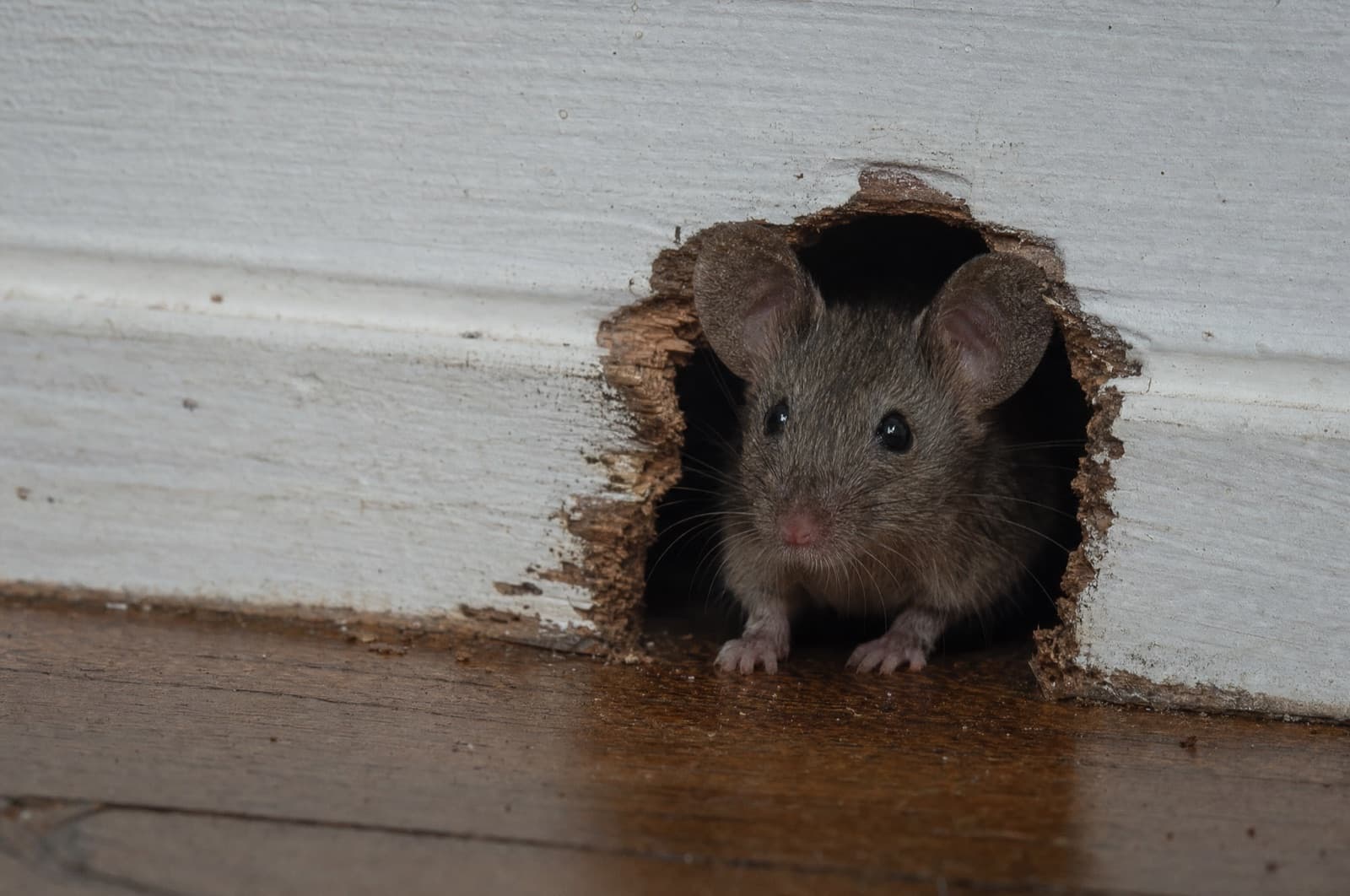
Townhouses, duplexes, and row houses share more than a property line. Rats crawl along pipes and electrical conduit and gnaw through a wide range of building materials, turning shared utility chases into corridors between attached homes. They need only about a ½-inch gap to pass through, so any unsealed shared-wall or utility penetration is usable. Peer-reviewed research on shared-wall multi-family structures backs this up — infestations cluster significantly in units connected by walls, floors, or ceilings, which is the same underlying pattern seen in apartment buildings.
Can Rats Travel Between Connected Houses — By the Numbers
½ in
Smallest gap a rat needs to cross a shared wall or chase
150 ft
Typical rat foraging range — easily covers an attached structure
1
Peer-reviewed study linking shared walls to shared infestations
Both sides
How many units need treating for control to hold in attached housing
The full picture
How rats cross between attached homes
The University of Nebraska Extension documents rodents crawling along pipes and electrical conduit and gnawing through a wide range of building materials — the same behavior that lets them move through shared-wall cavities and utility chases connecting attached homes. A rat needs only about a ½-inch gap to pass, so any unsealed penetration where plumbing, wiring, or ductwork crosses a shared wall is a usable route between structures.
The research backs the pattern
Peer-reviewed work on shared-wall multi-family dwellings found rodent infestations cluster significantly in units connected by a common wall, floor, or ceiling — direct evidence that the animals are moving through those shared structural elements rather than each unit developing a problem independently. Attached houses follow the same physical logic as apartment buildings, just at a smaller scale.
Why treating just your side usually fails
A rat's normal foraging range of about 150 feet, extending up to a mile under stress, easily spans an entire attached structure, so a colony established on one side has no trouble reaching the other. Trapping and sealing only your unit can clear the rats currently inside it, but if the connected home stays infested and shares even one unsealed penetration, rats re-enter on an ongoing basis.
What actually works
Coordinate with the connected homeowner or neighbor: trap simultaneously on both sides, and seal shared-wall and utility penetrations from whichever side gives better access. In rental or condo-association situations, this is often a matter for the HOA or property manager to organize, since one owner typically can't seal a shared wall unilaterally.
Bottom line — Rats move freely between connected houses through shared walls and utility chases, needing only a ½-inch gap. Peer-reviewed research confirms infestations cluster in connected structures — treating one side alone rarely holds; coordinate simultaneous trapping and sealing with the attached neighbor.
Rats crossing between attached homes?
Anchor coordinates trapping and sealing across duplexes, townhouses, and row houses — not just one side.
Why this matters in New Hampshire
Older mill-town duplexes and row houses across Manchester, Nashua, and surrounding communities frequently have shared-wall utility penetrations that were never sealed against rodents, and cross-structure activity typically rises heading into Manchester's first hard frost — about October 19 at 50% probability, October 29 at 80% (NOAA 1991–2020) — as rats seek warm indoor refuge. In attached housing, that seasonal push affects both sides of the structure at once.
Key local data
Older southern-NH homes with unlined foundation vents, stone cellars, and softwood trim offer rodents ready entry and chewable material (UNH Cooperative Extension).
- NH-licensed applicator · #782664
- Same-day service
- Family-owned since 2017
Service Area Map
Southern New Hampshire
Frequently asked
Written & reviewed by
VerifiedDaniel Brady
NH-Licensed Pesticide Applicator · License #782664 (NHDAMF, RSA 430)
Daniel Brady is the New Hampshire–licensed applicator behind Anchor Pest Services, a family-owned pest control company serving the Manchester area since 2017.
Professional Rodent Control
Shared-Wall Rat Control, Coordinated Right
Anchor Pest Services works with both sides of attached housing to trap and seal shared-wall and utility-chase gaps — the only way it actually holds. Family-owned since 2017, NH license #782664.
- Same-day service across southern NH
- NH-licensed applicators (#782664)
- Free inspection — no flat-price guesswork
NH License #782664 · No obligation · We answer in person
Your next step
- Book a NH pro
Rodent Control
Book now - Next step
When Are Rats Most Active? NH Rat Timing Guide
Read the answer - Related guide
Can Mice Spread From One Apartment to Another?
Read the answer - Related guide
What Materials Can Rats Not Chew Through?
Read the answer - Related guide
Do Rats Come Back After Being Removed?
Read the answer - Related guide
What Is the Difference Between a Mouse and a Rat?
Read the answer