
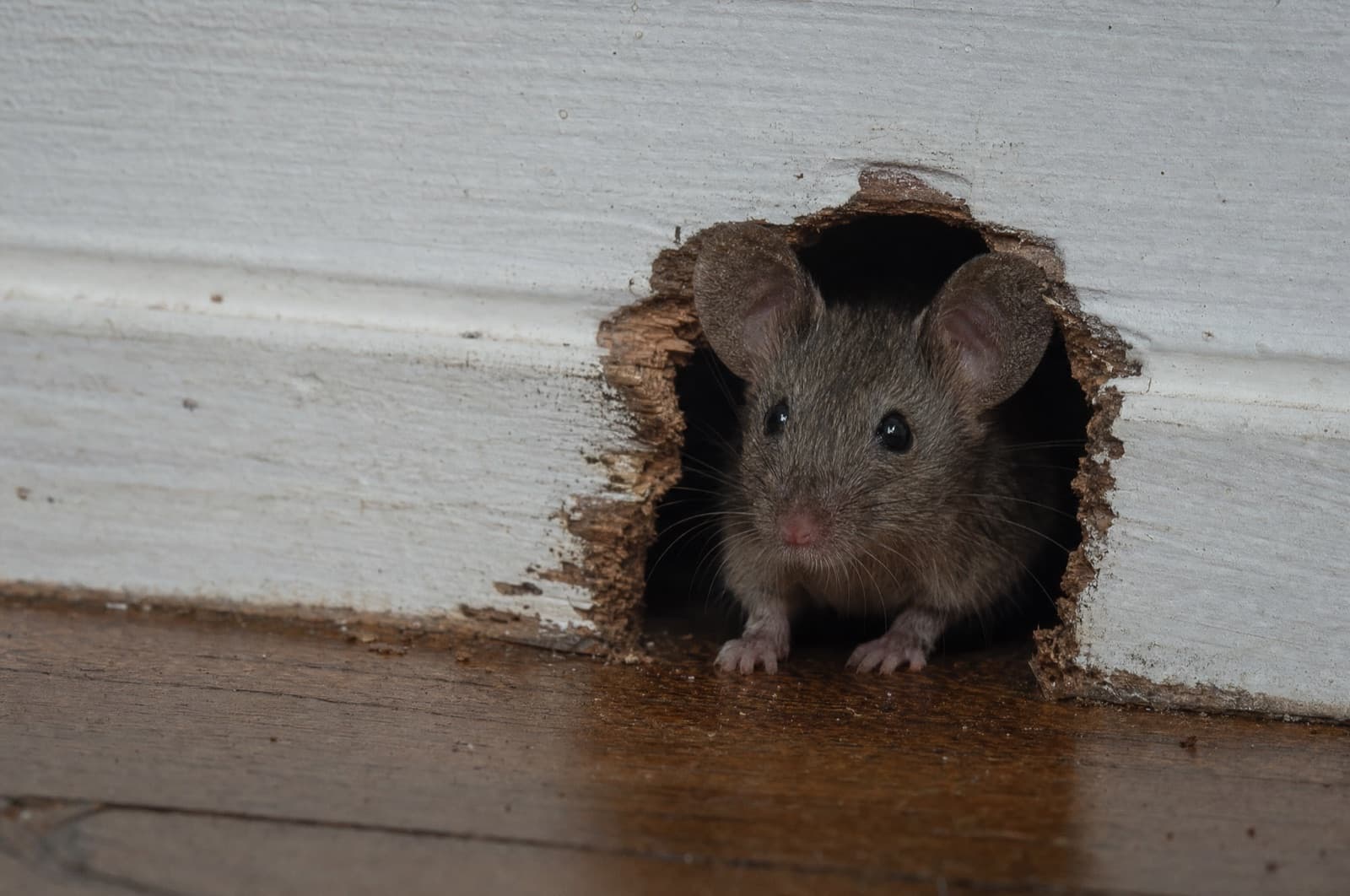
How Do I Get Rats Out of an Attic?
At a Glance
- Short answer: Trap, confirm the attic is empty, then seal — never seal an occupied attic.
- Key fact: Sealing before confirming vacancy traps rats inside to die and decay — extension guidance explicitly warns against this.
- NH relevance: Roof rats reach NH attics via overhanging branches and rooflines; trim trees back from the roofline as part of exclusion.
- Action needed: Watch for a week of no new activity before sealing any opening.
The short of it
Attic rats — usually roof rats, given their preference for elevated nesting — need a specific sequence, not just traps or just sealing. The University of Nebraska Extension is direct on this: don't close an opening until the species is identified and a control program is decided, because sealing while rats are still inside traps them to die and decay in an inaccessible void. The reliable order is: identify and trap along attic runways, confirm the attic is vacant for about a week, then exclude by screening vents and sealing roofline and utility gaps with metal and hardware cloth.
How Do I Get Rats Out of an Attic — By the Numbers
~300 ft
Typical roof rat travel range from its nest
¼ in
Smallest roofline/utility gap that needs sealing
~1 week
Recommended vacancy-confirmation period before sealing
4 steps
Identify, trap, confirm vacant, then exclude
The full picture
Step 1: Identify and inspect
Attic activity in New Hampshire is commonly roof rats, which favor elevated nesting over the ground-level burrows Norway rats prefer, and typically enter via overhanging tree branches, power lines, or gaps along the roofline. Look for droppings, gnaw marks on rafters or wiring, and greasy rub marks near likely entry points before deciding on a plan.
Step 2: Trap — don't seal yet
Pre-bait unset snap traps along attic runways and rafters for a few days, then set them. This is also the step where the most important warning applies: the University of Nebraska Extension states plainly not to close an opening until the species has been identified and a control program decided on. Seal too early and any rat still inside dies in a void you can't reach, causing weeks of odor, fly and maggot activity, and a cleanup problem far worse than the original one.
Step 3: Confirm vacancy before you seal anything
Watch for roughly a week with no new droppings and no disturbance to any monitoring materials (like a loosely placed newspaper plug at a suspected opening) before treating the attic as empty. Only then move to permanent exclusion.
Step 4: Exclude — seal it so they can't come back
Trim overhanging branches that give roof rats a bridge to the roofline, screen attic and gable vents, and seal roofline and utility penetrations larger than ¼ inch with metal flashing and hardware cloth — materials rats can't chew through, unlike caulk or foam alone. Finish by cleaning droppings and nesting material with the CDC wet-clean method: air the space out, spray with disinfectant, and never sweep or vacuum dry droppings, which aerosolizes contaminants.
Bottom line — Identify, trap, confirm the attic is vacant for about a week, then seal roofline and utility gaps with metal and hardware cloth. Sealing before confirming vacancy is the single most common and costly mistake in attic rat removal.
Rats in the attic?
Anchor confirms vacancy before sealing anything — trap first, exclude second, in the order that actually works.
Why this matters in New Hampshire
Mature tree cover across southern and central New Hampshire gives roof rats easy bridges from overhanging branches straight onto rooflines, and attic activity often intensifies heading into Manchester's first hard frost — about October 19 at 50% probability, October 29 at 80% (NOAA 1991–2020) — as rats seek a warm, elevated refuge for winter. Trimming branches back from the roofline before that seasonal push is one of the highest-leverage prevention steps for NH attics.
Key local data
Norway rats are established across New Hampshire's cities and towns (UNH Cooperative Extension); roof rats are essentially absent from the Northeast (Cornell).
- NH-licensed applicator · #782664
- Same-day service
- Family-owned since 2017
Service Area Map
Southern New Hampshire
Frequently asked
Sources (4)
- [1]
- [2]
- [3]
- [4]
Written & reviewed by
VerifiedDaniel Brady
NH-Licensed Pesticide Applicator · License #782664 (NHDAMF, RSA 430)
Daniel Brady is the New Hampshire–licensed applicator behind Anchor Pest Services, a family-owned pest control company serving the Manchester area since 2017.
Professional Rodent Control
Attic Exclusion Done in the Right Order
Anchor Pest Services traps and confirms vacancy before sealing an attic — never the reverse — then closes roofline and utility gaps with metal and hardware cloth. Family-owned since 2017, NH license #782664.
- Same-day service across southern NH
- NH-licensed applicators (#782664)
- Free inspection — no flat-price guesswork
NH License #782664 · No obligation · We answer in person
Your next step
- Book a NH pro
Rodent Control
Book now - Next step
Are rodents more likely to breed indoors during winter?
Read the answer - Related guide
What Noises Do Rats Make in Walls?
Read the answer - Related guide
How Do I Get Rid of Mice in Walls?
Read the answer - Related guide
When Are Rats Most Active Indoors?
Read the answer - In your area
Where Do Rats Go In The Winter?
Read the answer