
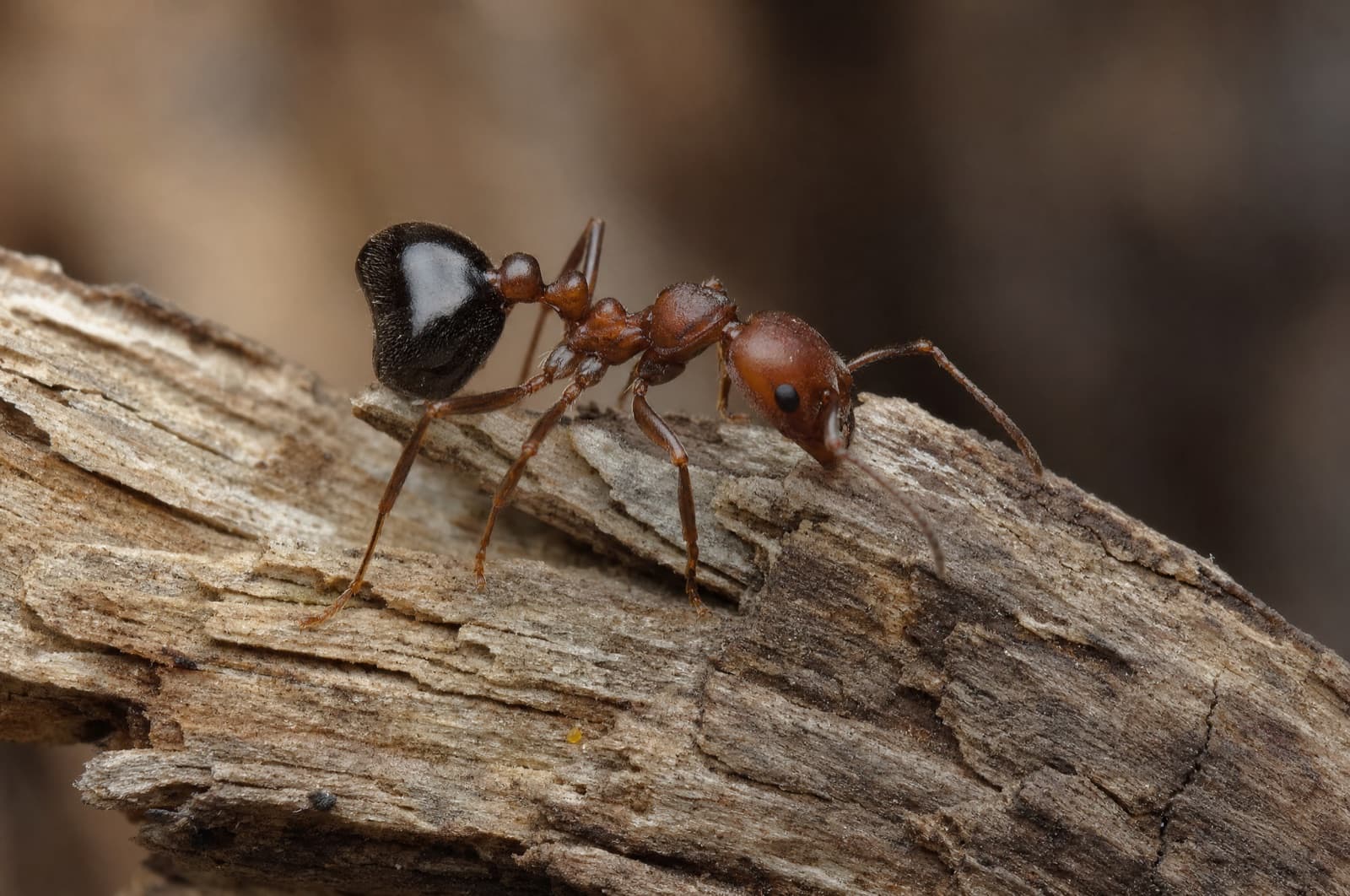
How to Get Rid of Acrobat Ants
At a glance
- Difficulty: Beginner
- Time: Days to weeks for bait to work; an afternoon to address moisture and seal entry points
- Cost: Low — a labeled bait station and basic moisture repairs
- Success: High with bait plus fixing the moisture source that drew them in
Can you DIY Acrobat Ant?
The verdict on Acrobat Ant DIY
Genuinely easy DIY — the real work here is correcting the fear, not the ants.
Acrobat ants (Crematogaster spp.) are a low-risk nuisance ant that nests in moist, decaying wood, often old carpenter-ant or termite galleries. Once you fix the moisture source that attracted them and place a labeled bait on their trail, control is straightforward. The one thing worth being blunt about: some older pest content wrongly listed "anaphylaxis, organ failure, or death" as acrobat-ant risks. That's not supported by entomological literature — these ants rarely sting, and when they do, it's minor and short-lived.
The 5 DIY methods — honestly graded
Every approach graded for this species, in IPM order — prevention first, chemistry late. Pick a method to see how it works, the steps, and what it actually takes.
Prevention / Exclusion
Works wellThe most durable fix — acrobat ants nest almost exclusively in moist, decaying wood, so removing the moisture removes the reason they're there.
Acrobat ants become a structural pest specifically because they favor moist, decaying wood — often old carpenter-ant or termite galleries, foam insulation, or wall voids with a leak behind them. Fixing the moisture source removes the habitat that draws them in, rather than just treating the symptom.
Best for: Stopping recurrence, not just this season's trail
Find and fix the moisture source
Repair leaks, replace water-damaged wood, and improve crawlspace ventilation — acrobat ants are a reliable signal of a moisture problem worth fixing regardless of the ants.
Trim vegetation touching the house
Cut back tree limbs and shrubs contacting the structure; these are a common trail route indoors.
Seal entry points
Caulk gaps around windows, soffits, and utility line penetrations.
Tools & materials
Why DIY falls short here
Not scare tactics — the specific, proportionate reasons a home attempt can stall for this species.
Fear drives the wrong response, not the ants
Outdated content claiming acrobat ants cause anaphylaxis, organ failure, or death pushes homeowners toward panic spraying and unnecessary escalation. The accurate picture — a nuisance ant that rarely bites or stings unless provoked — supports calm, cheap bait-and-exclusion DIY, not alarm.
Missing the moisture source
Because acrobat ants track decayed wood, baiting without fixing the underlying leak or water damage invites re-infestation from the same or a new colony.
Spraying instead of baiting
A fast contact kill removes foragers but leaves the queen and brood in the wood void untouched.
How risky is it, really?
An honest read — most nuisance species are genuinely low risk, and we say so.
Corrected risk grade: acrobat ants are low-risk. Older pest content wrongly listed anaphylaxis, organ failure, and death as risks for this species — there is no credible entomological basis for that. The sourced reality is that acrobat ants rarely sting, and when they do, it's a minor, short-lived irritation, not a medical emergency.
- Minor, rare defensive bite or sting if a nest is directly handledRare
U.S. and Canadian acrobat ant species rarely use their sting, and when they do, the pain is fairly minor and short-lived
Texas A&M Urban Entomology
- A nest indoors signals moisture-damaged wood worth repairingOccasional
Acrobat ants nest in moist, decaying wood — treat the sighting as a moisture-repair prompt
eXtension Ant Pests
- Rare stripping of wire insulation near a nestOccasional
An uncommon but documented nuisance, not a health risk
NC State Extension
Acrobat Ants Keep Returning?
If the nest is inside a wall void or the water damage feeding it is extensive, Anchor Pest Services handles inspection and treatment across southern and central New Hampshire. Family-owned since 2017, NH license #782664.
Call a pro when…
- You suspect the nest is inside a wall void you can't access
- The water damage feeding the colony is extensive or structural
- Trails persist after weeks of correctly placed bait
General Pest Control
Most acrobat-ant activity is a straightforward DIY bait-and-moisture-repair job. A pro is worth calling if you can't locate the nest, the moisture damage is extensive, or trails persist despite correct baiting.
Keep them out
- Fix leaks and replace water-damaged wood promptly
- Ventilate crawlspaces to reduce moisture
- Trim vegetation touching the house
Acrobat ants in New Hampshire
Acrobat ants are a common nuisance ant in NH homes, typically showing up wherever there's moisture-damaged or decaying wood — old carpenter-ant or termite galleries, a leaky roof valley, or a damp sill plate. Trails are most active in the warmer months as workers forage indoors for food, often along tree limbs touching the house.
Peak season
Spring through fall foraging season
First-frost anchor
Manchester first hard frost ~Oct 19 (50%) / Oct 29 (80%), NOAA 1991–2020
Make sure it's a Acrobat Ant
Two quick detours worth taking — confirm the ID, then learn what drew it in so it doesn't come back.
Frequently asked
Sources & further reading(3)
- [1]NC State Extension — Acrobat Ants
Corrected risk grade — acrobat ants do not sting noticeably
extensionverified 2026-07-13 - [2]Texas A&M Urban Entomology — Acrobat Ants
Sting biology, rarely used, minor and short-lived
extensionverified 2026-07-13 - [3]eXtension — Ant Pests: Acrobat Ants
Nesting in moist, decaying wood; bait mechanism
extensionverified 2026-07-13
Written & reviewed by
VerifiedDaniel Brady
NH-Licensed Pesticide Applicator · License #782664 (NHDAMF, RSA 430)
Daniel Brady is the New Hampshire–licensed applicator behind Anchor Pest Services, a family-owned pest control company serving the Manchester area since 2017.
Last updated July 2026
Other species you can tackle
Same category — the dot shows each one's DIY verdict at a glance (green = friendly, amber = doable with care, red = call a pro).
Professional Pest Control
Acrobat Ants Keep Returning?
If the nest is inside a wall void or the water damage feeding it is extensive, Anchor Pest Services handles inspection and treatment across southern and central New Hampshire. Family-owned since 2017, NH license #782664.
- Honest, low-risk assessment — no scare tactics
- NH-licensed applicators (#782664)
- Free inspection — same-day service across southern NH
NH License #782664 · No obligation · We answer in person
Your next step
- Book a NH pro
Ant Pest Control
Book now - What to do next
Acrobat Ant — Quick ID for New Hampshire Homeowners
Read the answer - What to do next
Ant Infestation Signs: How to Tell What Species You Have and How Bad It Is
Read the answer - What to do next
Carpenter ants vs. black ants: how to tell them apart
Read the answer - Also relevant
Acrobat Ant — Quick ID for New Hampshire Homeowners
Read the answer - Also relevant
Ant Prevention: Moisture Control Stops NH's Top Pest
Read the answer