
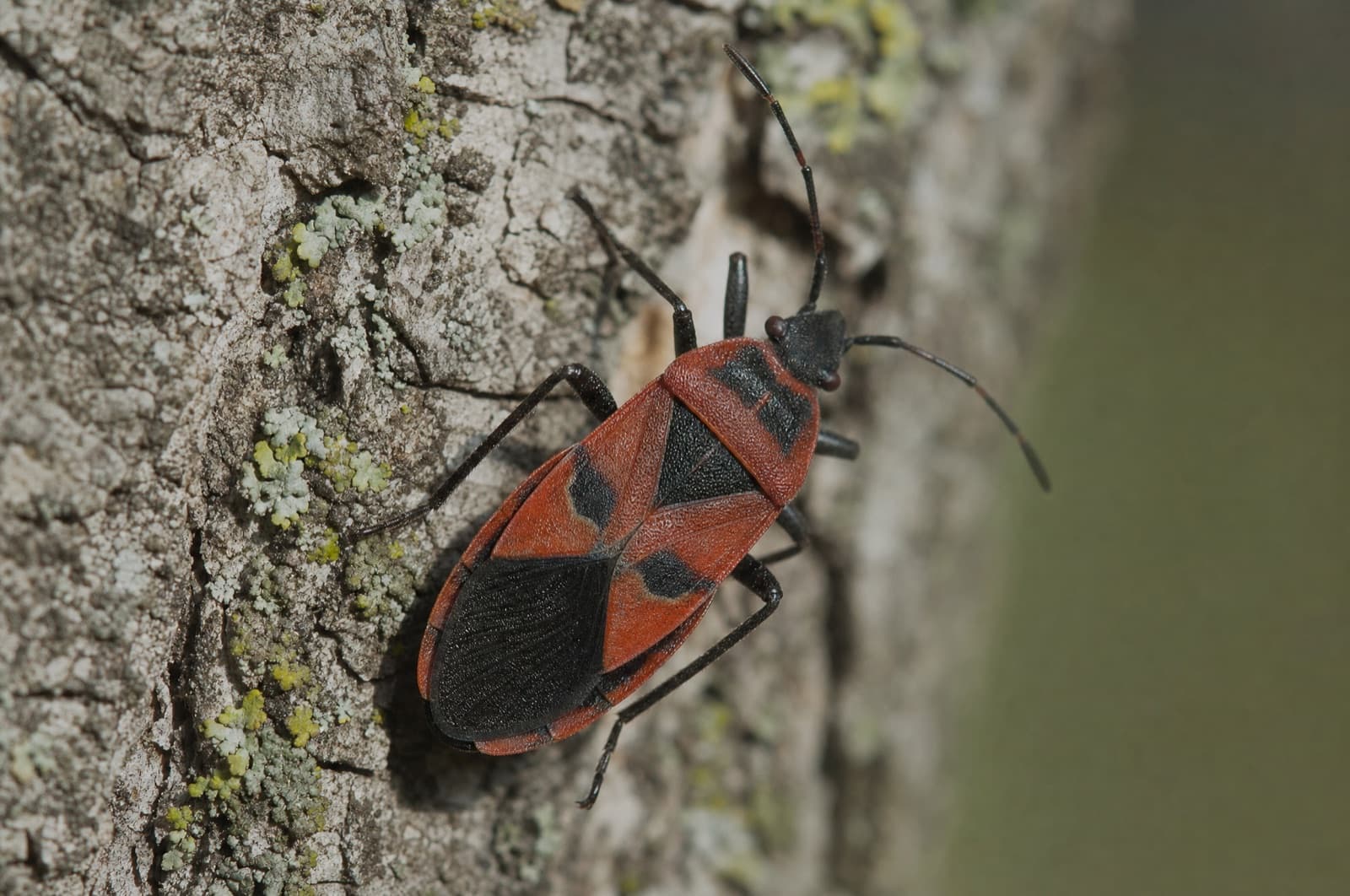
How to Get Rid of Elm Seed Bugs
At a glance
- Difficulty: Beginner
- Time: A weekend of sealing, ideally repeated before both the summer and fall entry windows
- Cost: Low — caulk, screen, and a vacuum
- Success: Good for reducing numbers with two-season sealing; homes near host elms will still see some each year
Can you DIY Elm Seed Bug?
The verdict on Elm Seed Bug DIY
A beginner-friendly DIY — but this species invades TWICE a year, not once.
The elm seed bug (Arocatus melanocephalus) is a recent arrival — first confirmed in the US in Idaho in 2012 — that feeds on elm seeds and invades buildings twice: once in mid-summer to escape heat, and again in fall to overwinter. It doesn't damage trees, buildings, or human health; the only complication is a strong odor, often described as overripe cantaloupe mixed with turpentine, when it's crushed. Sealing gaps and vacuuming handle it, but you need to seal for both entry windows, not just fall.
The 5 DIY methods — honestly graded
Every approach graded for this species, in IPM order — prevention first, chemistry late. Pick a method to see how it works, the steps, and what it actually takes.
Prevention / Exclusion
Works wellThe most durable fix — but this species has TWO entry windows a year, so seal before both.
Elm seed bugs push into buildings both in mid-summer heat and again in fall to overwinter. Closing gaps ahead of each window, rather than just once in fall, is what separates a well-sealed home from a re-invaded one.
Best for: Homes with elms nearby, done across both entry windows
Seal before both entry seasons
Caulk soffit gaps, crevices around windows and doors, and utility penetrations. Repair torn screens.
TipDo a check-and-reseal pass in early summer AND again in late summer before the fall push toward the ~Oct 19–29 frost window.CautionOne fall-only sealing pass misses the mid-summer entry wave this species is known for.Clear elm seeds near the foundation
Vacuum or sweep up fallen elm seeds close to the house — they draw bugs right up to your walls.
Tools & materials
Why DIY falls short here
Not scare tactics — the specific, proportionate reasons a home attempt can stall for this species.
Nearby elms keep re-supplying bugs
A single sealing effort doesn't stop the source — homes near host elms will see recurring pressure every year regardless of how well the building is sealed.
Two entry seasons, not one
Homeowners who seal only in fall miss the mid-summer heat-escape wave this species is known for, so gaps reopen the invasion each summer.
Short chemical residual
Exterior treatments only last about 2–4 weeks, so sprays disappoint homeowners expecting a season-long fix; sealing and vacuuming carry the real weight.
How risky is it, really?
An honest read — most nuisance species are genuinely low risk, and we say so.
Elm seed bugs are a harmless nuisance with no threat to plants, structures, or people. The only real complaint is a strong, unpleasant odor released when they're crushed.
- Strong odor when crushed (described as overripe cantaloupe and turpentine)Common
Only when crushed or aggressively swept — vacuum or hand-collect instead
University of Idaho Extension
- Bite, sting, or disease transmissionRare
Not documented for this species — it does not bite people or transmit disease
Utah State University Extension
- Damage to elm trees or the structureRare
It feeds on elm seeds, not wood or foliage in a damaging way, and causes no structural harm indoors
University of Idaho Extension
Tired of the Seasonal Elm Seed Bug Push?
Sealing for two entry windows a year is more work than most homeowners plan for. Anchor Pest Services handles exclusion and timed exterior treatment across southern and central New Hampshire. Family-owned since 2017, NH license #782664.
Call a pro when…
- Heavy, recurring invasions from nearby elms despite consistent sealing
- You want exterior treatment timed correctly for both the summer and fall entry windows
- Entry points you can't safely reach on a multi-story home
General Pest Control
You rarely need a pro for elm seed bugs — this is a seal-and-vacuum job repeated across two seasons. The exception is a home with heavy elm cover nearby where a professionally timed exterior treatment is worth the labor savings.
Keep them out
- Seal before both the mid-summer and fall (~Oct 19–29) entry windows
- Clear fallen elm seeds from near the foundation
- Vacuum, don't crush, to avoid the odor
Elm seed bugs in New Hampshire
Elm seed bugs are a recently established species in the US, first confirmed in Idaho in 2012, and have since spread. Homes near elm trees in southern and central New Hampshire see them push indoors in mid-summer heat and again ahead of the average first hard frost, roughly October 19–29 in Manchester (NOAA) — so plan sealing checks for both windows.
Peak season
Mid-summer and again in fall before the first hard frost
First-frost anchor
Manchester first hard frost ~Oct 19 (50%) / Oct 29 (80%), NOAA 1991–2020
Make sure it's a Elm Seed Bug
Two quick detours worth taking — confirm the ID, then learn what drew it in so it doesn't come back.
Frequently asked
Sources & further reading(3)
- [1]University of Idaho Extension — Elm Seed Bug (CIS 1223)
Species biology, US establishment history, odor, control recommendations
extensionverified 2026-07-13 - [2]Utah State University Extension — Elm Seed Bug
Nuisance-only status, dual entry-season behavior
extensionverified 2026-07-13 - [3]Pacific Northwest Pest Alert Network — Elm Seed Bug
Chemical control residual limitations
extensionverified 2026-07-13
Written & reviewed by
VerifiedDaniel Brady
NH-Licensed Pesticide Applicator · License #782664 (NHDAMF, RSA 430)
Daniel Brady is the New Hampshire–licensed applicator behind Anchor Pest Services, a family-owned pest control company serving the Manchester area since 2017.
Last updated July 2026
Other species you can tackle
Same category — the dot shows each one's DIY verdict at a glance (green = friendly, amber = doable with care, red = call a pro).
Professional Pest Control
Tired of the Seasonal Elm Seed Bug Push?
Sealing for two entry windows a year is more work than most homeowners plan for. Anchor Pest Services handles exclusion and timed exterior treatment across southern and central New Hampshire. Family-owned since 2017, NH license #782664.
- Two-season exclusion timing
- NH-licensed applicators (#782664)
- Free inspection — same-day service across southern NH
NH License #782664 · No obligation · We answer in person
Your next step
- What to do next
Western Conifer Seed Bug in New Hampshire — ID & Control
Read the answer - Also relevant
Where Do Bugs Go In The Winter?
Read the answer - Also relevant
Box Elder Bugs in the House in Winter — NH Timing Guide
Read the answer - Related guide
How to Get Rid of Boxelder Bugs
Read the answer - Related guide
Elm Seed Bug — ID and Whether It's Really in New Hampshire
Read the answer