
Skip to content
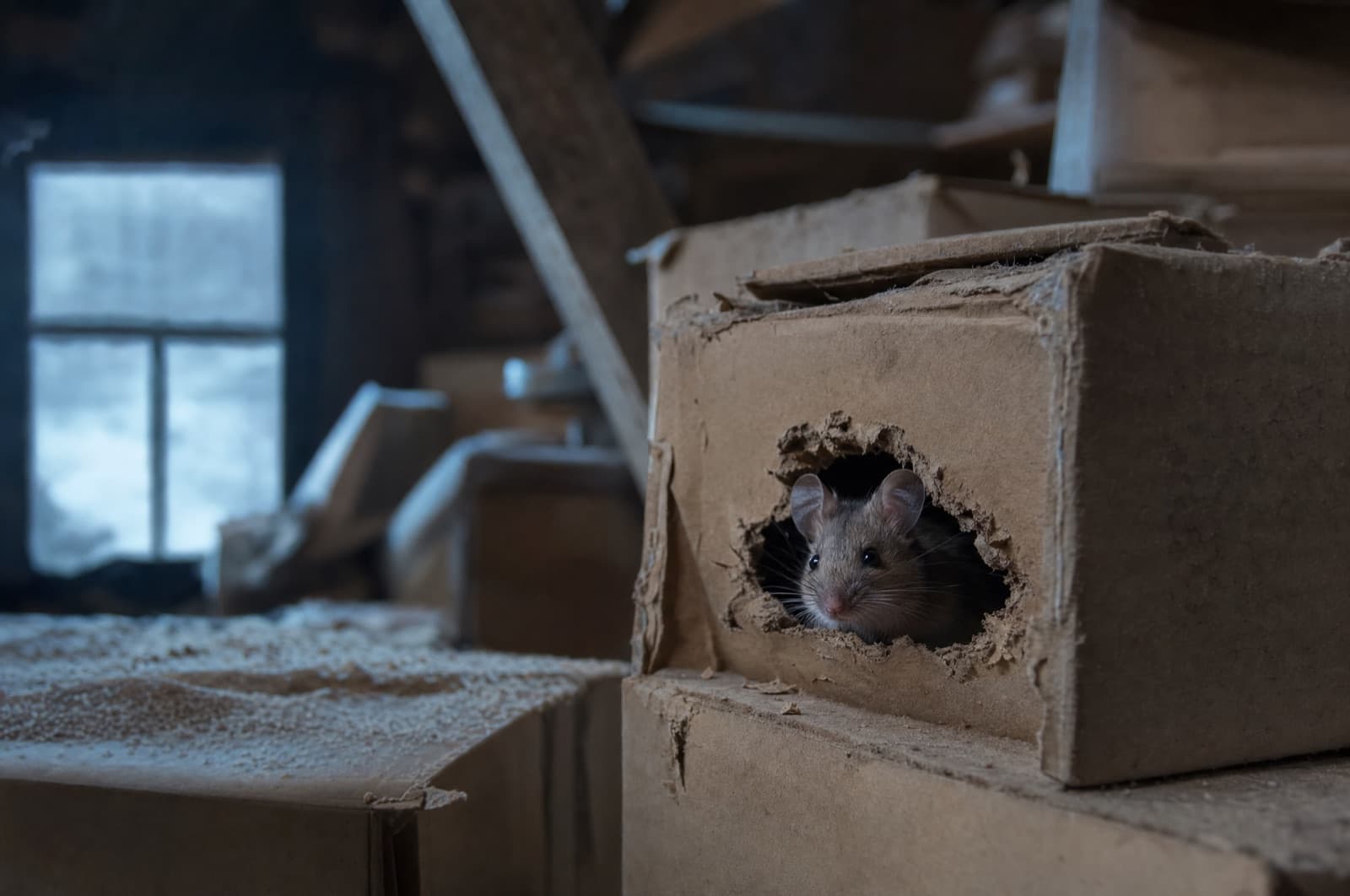
A house mouse in a gnawed cardboard storage box in a cold New Hampshire attic
Daniel Brady · NH-Licensed Pesticide Applicator · License #782664
Reviewed by Daniel Brady

What role do HVAC systems have in winter pest prevention?

Worth doing
Worth doing, with a real caveat. The genuine HVAC pest issue isn't your furnace or your ductwork — it's the holes the system creates: where refrigerant lines, condensate lines and electrical conduit pass through the foundation or wall to an outdoor unit, usually sealed at installation with foam that compresses and degrades over years. Sealing those penetrations with metal mesh and screening the outdoor unit's openings is genuinely useful and mostly a DIY afternoon. Be skeptical of anyone selling a standalone 'HVAC pest-prevention package' or duct treatment — the durable fix is mechanical sealing, not a recurring chemical service.

At a glance

  • Verdict: Worth doing
  • Who does it: You
  • Effort: An afternoon
  • Payoff: Moderate
The honest answer

The short of it

The verdict
Worth doing

The gap where your AC line leaves the wall is a mouse door your installer sealed with foam — and foam is a chew toy.

The one question under all of them

Is this actually worth doing?

Every winter job lands somewhere on one honest scale — from what genuinely matters to what our own industry is selling you. Here is where this one lands.

The job being graded
Worth doing

Packing HVAC wall and foundation penetrations — refrigerant linesets, condensate lines, electrical conduit — with copper or steel mesh and sealant, and screening outdoor-unit openings without blocking airflow

The scale
Who does it
You
Effort
An afternoon
Payoff
Moderate
What it actually does

It closes a commonly overlooked ground-level entry that has nothing to do with the HVAC system's actual function. When an outdoor condenser or heat pump is installed, the linesets and conduit running to it pass through the wall or foundation, and that penetration is typically sealed with expanding foam — a soft material that degrades and shrinks over years and is easily gnawed through, the same way foam fails at any other gap. Screens placed over air-handling openings should not be finer than about half an inch by half an inch where airflow truly matters, since overly fine mesh can restrict the unit's performance (Building America/PNNL) — this is a case where the exclusion material has to be chosen with the mechanical system in mind, not just the pest.

The line

The gap where your AC line leaves the wall is a mouse door your installer sealed with foam — and foam is a chew toy.

Our honest lane

Anchor can identify and help seal HVAC penetrations as part of a broader exclusion inspection, and we're glad to. What we won't sell is a duct-based chemical treatment marketed as 'HVAC pest prevention' — pesticide circulated through ductwork isn't a substitute for closing the physical gap, and if you hear that pitch from anyone, including us, the honest question to ask is what specific gap is being sealed with what material. Duct or insulation repair inside the system itself is an HVAC contractor's job, not a pest control one.

In depth

The full picture

01

The real HVAC pest problem is a hole, not the system

It's easy to assume 'HVAC and pests' means something about the ductwork itself, or about the unit somehow attracting insects. The actual mechanism is simpler and more mundane: any HVAC system with an outdoor component — a central air conditioner, a heat pump — requires lines and conduit to physically pass through the building envelope, and that penetration is a hole by definition. Installers seal it, almost universally, with expanding foam, because foam is fast, cheap, and effective at the time of installation. The problem is what happens to foam over five or ten New Hampshire winters: it compresses, shrinks, and cracks, and a material that was once a snug seal becomes a gap with foam debris in it — which, notably, is itself soft enough to gnaw through if it hasn't already opened up on its own.

02

The fix, and the mesh-sizing detail that matters

The durable version of this fix is the same principle as sealing any other gap: pack the opening with copper or steel mesh, then seal over it, so there's a hard material underneath rather than just foam. This is a straightforward DIY task for the wall or foundation penetration itself — the lines are usually accessible from outside near the outdoor unit.

Where this differs from a standard door or window gap is the outdoor unit's own vents and intake openings, which need airflow to function. Building science guidance specifically cautions against mesh finer than about half an inch by half an inch on these openings, because anything tighter can measurably restrict airflow and hurt the system's efficiency (Building America/PNNL). That's a case where excluding pests and preserving mechanical performance are in tension, and the fix is choosing the right mesh size for that specific opening rather than defaulting to the finer quarter-inch mesh used elsewhere in the house.

03

Where the upsell risk actually lives

This is one of the few pages in this cluster where the industry has a genuine incentive to oversell, so it's worth naming plainly. An 'HVAC pest-prevention package,' an annual 'system pest-proofing' add-on, or duct fogging sold as a standalone service should all prompt the same question: what specific gap is being sealed, and with what material? The durable fix here is mechanical — metal mesh and sealant at a physical penetration — not a recurring chemical treatment applied inside ductwork. Pesticide circulated through an HVAC system is not a substitute for closing the hole, and any pitch that treats it as one is selling activity rather than exclusion.

Key takeaways
5 points
  • The real HVAC pest issue is the wall/foundation penetration for refrigerant lines and conduit, not the ductwork or furnace itself.
  • Installation-grade foam around these penetrations degrades over years and is soft enough to gnaw through.
  • The durable fix is copper or steel mesh packed into the gap, then sealed — a DIY afternoon at the outdoor unit.
  • Screens on the outdoor unit's own vents shouldn't be finer than about half an inch, or airflow and efficiency suffer.
  • Be skeptical of any 'HVAC pest-prevention package' or duct treatment sold as a standalone service — ask what specific gap is being sealed and how.
New Hampshire context

HVAC penetrations in a New Hampshire winter

Manchester's first hard frost typically arrives between October 19 and 29 (NOAA), and the freeze-thaw cycling that follows through a full New Hampshire winter is exactly what accelerates foam degradation at HVAC penetrations faster than in a milder climate — the material expands and contracts with temperature swings and becomes brittle sooner. Checking this gap in the fall, before the ground freezes and while the outdoor unit is still easily accessible, is more practical than discovering the problem mid-winter.

This is one entry point among several worth checking together — see our ranked overview of the most vulnerable areas of a house in winter for how it compares to the higher-payoff gaps.

  • NH-licensed #782664

    Southern New Hampshire

  • Family-owned

    Since 2017

  • Honest routing

    Even when it isn’t us

We serve these communities

ManchesterNashuaConcordDerryBedfordSalemHudsonAmherst

Not sure which gap around your HVAC lines actually matters?

We'll identify the penetration and tell you honestly whether it needs sealing — no duct treatment upsell.

Follow-up questions

Frequently asked

Sources & citations(3)
  1. extension.org (Wildlife Damage Management) — Rodent Exclusion Methods

    Sealing utility and lineset penetrations with metal mesh as durable exclusion

    extensionverified 2026-07-16
  2. Building America / PNNL — Screens & Other Deterrents

    Mesh sizing on air-handling openings without restricting airflow

    govverified 2026-07-16
  3. NOAA — Manchester, NH freeze climatology

    Manchester first hard frost timing — the seasonal anchor for foam degradation and fall inspection

    govverified 2026-07-16

Written & reviewed by

Verified

Daniel Brady

NH-Licensed Pesticide Applicator · License #782664 (NHDAMF, RSA 430)

Daniel Brady is the New Hampshire–licensed applicator behind Anchor Pest Services, a family-owned pest control company serving the Manchester area since 2017.

Verify license

Last updated Jul 2026

Honest pest help for New Hampshire homes

We Seal Penetrations. We Don't Sell Duct Treatments.

Sealing an HVAC lineset penetration with metal mesh is a DIY afternoon, and we'd rather tell you that than sell a package around it. Anchor Pest Services will identify HVAC-related gaps as part of a full exclusion inspection, honestly, without upselling a chemical duct service that doesn't hold up. Family-owned since 2017, NH license #782664, serving Manchester, Nashua, Concord and nearby towns.

  • Honest advice — we'll tell you when a hardware-store fix beats a service package
  • NH-licensed applicators (#782664) — free inspection, same-day service
  • Full-home exclusion inspections across southern and central New Hampshire

NH License #782664 · No obligation · We answer in person